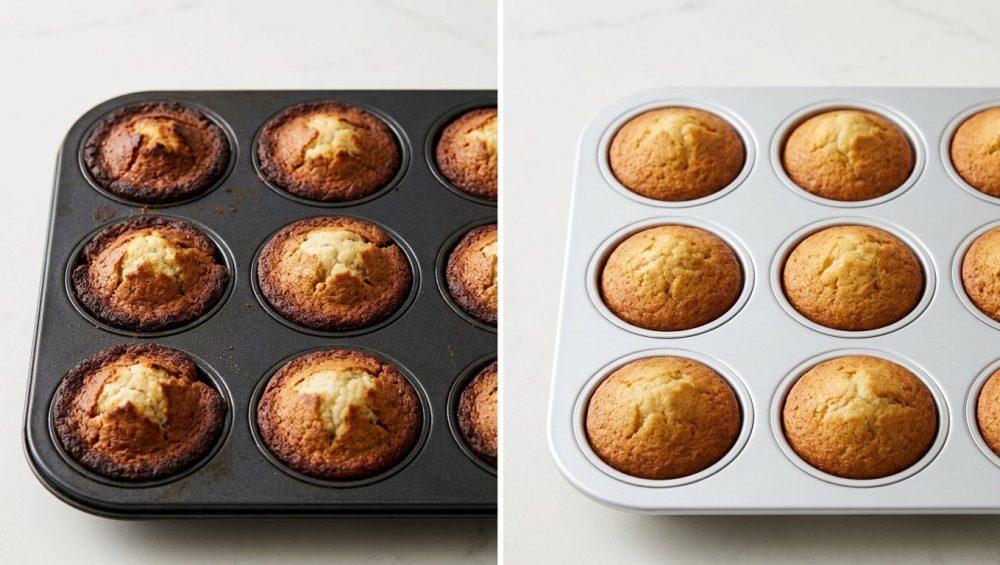
Listen up, my fellow weekend warriors. We need to have a serious, intervention-style conversation about why your brownies are currently doubling as construction-grade hockey pucks. You followed the recipe to the absolute letter. You splurged on the expensive, high-fat Dutch-processed cocoa powder. You meticulously melted your butter, folded in your dry ingredients with the gentle touch of a saint, and hovered by the oven window like a nervous expectant parent. Yet, somehow, when the timer finally chimed, you pulled out a pan of pure betrayal. The edges of your brownies are burnt, dry, and practically weaponized, while the center remains a molten, underbaked puddle of despair.
Before you throw your favorite whisk across the kitchen and swear off baking forever, let me stop you right there. It is not your fault. It is not your oven. It is not the recipe. The true culprit is sitting right there on your cooling rack, mocking you: your cheap, dark-colored nonstick baking pan.
Baking is not just an art; it is a hard science dictated by the uncompromising laws of thermodynamics. And when you bake in a dark metal pan, you are essentially fighting a losing battle against physics. Today, we are going to tear down the pretentious chef-speak and look at the hard, undeniable data behind thermal dynamics in bakeware. We are going to explore exactly how pan color and material drastically alter heat absorption, and I am going to give you a highly specific, immediate hardware upgrade that will eliminate hard, dry pastry edges from your life forever.
The Great Brownie Betrayal: Why It’s Not Your Baking Skills
There is a pervasive myth in the home cooking community that baking requires some sort of innate, magical talent. I firmly believe that absolutely anyone can cook and bake like a seasoned expert without setting foot in a culinary school. The difference between a frustrated home baker and a professional pastry chef usually comes down to one thing: the quality and thermal properties of their equipment.
The Symptom: Crispy Edges and Raw Centers
Let’s diagnose the classic brownie failure. When you pour room-temperature batter into a pan and shove it into a 350-degree oven, a race begins. The goal is for the heat to penetrate the batter evenly, coagulating the proteins and gelatinizing the starches at a steady pace so the entire dessert finishes baking at the exact same moment.
However, when you use a dark pan, the edges of the batter are subjected to a massive, hyper-accelerated blast of thermal energy. The perimeter of your brownie sets rapidly, forming a hard crust within the first fifteen minutes of baking. Once that crust sets, it acts as a thermal insulator, effectively blocking the gentle heat required to cook the center of the pan. The middle of your brownie remains a soupy, raw mess. By the time you leave the pan in the oven long enough for the center to finally set, the outer two inches of your dessert have been completely obliterated by overbaking. It is a major reason your banana bread sinks in the middle despite following all the instructions perfectly.
The Grocery Store Aisle Trap: Cheap, Toxic, and Dark
So, why do we all own these terrible pans? Because the cookware industry knows that we love convenience. If you walk down the baking aisle of any standard grocery store, you will be met with a sea of dark gray and black nonstick bakeware. They are incredibly cheap to manufacture, usually stamped out of paper-thin carbon steel, and then sprayed with a dark, synthetic nonstick coating to hide the inferior metal underneath.
I have a strict, uncompromising “no-go” rule when it comes to toxic, cheap kitchenware, and these pans are public enemy number one. Not only do they ruin your food through uneven heat distribution, but that dark nonstick coating is notoriously fragile. After a few rounds of cutting brownies directly in the pan, the coating inevitably scratches, flakes, and begins peeling directly into your food. This degradation is the sneaky reason your non-stick pans keep losing their slip after a few months of use. We deserve better than mystery metals and peeling chemicals.
The Physics of Your Oven: Radiant Heat and Emissivity
To understand why your dark pan is ruining your weekend baking projects, we have to endure a brief, painless science lesson. Put away the pretentious culinary jargon; we are talking pure, unadulterated physics.
How Ovens Actually Cook Your Food
Your home oven utilizes three primary methods of heat transfer: conduction, convection, and radiation. Conduction is the direct transfer of heat (like the hot metal pan touching the batter). Convection is the transfer of heat through the air (the hot air circulating around the oven cavity). But the third method, thermal radiation, is the silent killer of baked goods.
When you turn your oven on, the heavy metal heating elements at the top and bottom glow red hot. These elements blast intense infrared radiation throughout the oven box. This radiant heat does not need air to travel; it beams directly from the heating element and strikes whatever is sitting on your oven rack. How your baking pan reacts to that direct blast of infrared radiation dictates the fate of your dessert.
The Albedo Effect in Your Kitchen
Think back to the last time you stood outside in the blazing July sun. If you were wearing a white t-shirt, you probably felt reasonably comfortable. The white fabric reflected the sun’s radiant energy away from your body. But if you were wearing a black t-shirt, you likely felt like you were roasting alive. The dark fabric actively absorbed the sun’s rays, converting that radiant energy into intense, localized heat.
This exact same phenomenon, known as the albedo effect, is happening inside your oven. A light-colored, shiny pan acts like the white t-shirt. It reflects the harsh infrared radiation emitted by the oven’s heating elements, allowing the pan to warm up gradually and gently. A dark, matte pan acts like the black t-shirt. It acts as a thermal sponge, aggressively absorbing the radiant heat and instantly transferring it into the perimeter of your baked goods.
Emissivity and Absorptivity: The Science of Dark Bakeware
If we want to get incredibly precise, we need to talk about emissivity. Emissivity is a scientific measurement (ranging from 0 to 1) that dictates how efficiently a material’s surface absorbs and emits thermal radiation. A theoretical “perfect black body” that absorbs 100% of the radiant heat it encounters has an emissivity of 1.0.
Here is the data that will change how you bake forever: standard, polished aluminum has a remarkably low emissivity rating of roughly 0.05. It is essentially a thermal mirror, reflecting 95% of the direct radiant heat. On the other hand, dark, matte nonstick coatings possess an extraordinarily high emissivity rating, often clocking in between 0.85 and 0.90.
Let that sink in. Your dark grocery store brownie pan is absorbing radiant oven heat up to eighteen times more efficiently than a light-colored aluminum pan. No amount of careful mixing or expensive vanilla extract can save your batter from that kind of localized thermal assault.
The Dark Nonstick Pan: A Thermodynamic Disaster
Now that we understand the underlying physics, let’s look at exactly how this plays out during a standard weeknight baking session, and why I violently advocate against these pans for anything requiring a delicate touch.
Why Dark Pans Overheat Your Batter
Because of their massive emissivity rating, dark pans heat up at a terrifying speed. In controlled, side-by-side kitchen tests utilizing infrared surface thermometers, researchers have found that the surface temperature of a dark nonstick pan can run 15 to 20 degrees Fahrenheit hotter than a light aluminum pan placed in the exact same oven for the exact same amount of time.
When the outer edges of your brownie batter hit a surface that is 20 degrees hotter than intended, the batter effectively fries. The moisture evaporates instantly, leaving behind a dry, crumbly crust. This rapid expansion and setting of the edges is crucial to understanding why your cakes are dense and unevenly baked. The sides set into a rigid wall, while the center continues to expand, forcing the middle of the cake to dome aggressively and crack open.
The Nonstick Coating Curse: Peeling, Toxic Mystery Metals
Beyond the thermal nightmare, we must address the elephant in the room: the nonstick coating itself. Most cheap dark bakeware is coated with polytetrafluoroethylene (PTFE) or similar synthetic compounds. While these coatings are technically safe at low temperatures, they degrade rapidly when exposed to high heat or the sharp edge of a metal spatula.
I firmly believe that professional-level results are achievable at home, but not if you are using gear that actively poisons your food. When these dark coatings inevitably begin to peel, they expose the cheap, thin carbon steel underneath. This thin steel is highly susceptible to thermal shock, which is exactly why your baking sheets keep warping when exposed to sudden temperature changes. You are left with a pan that is toxic, warped, and completely incapable of baking a straight, even dessert.
The Maillard Reaction on Overdrive
The Maillard reaction is the chemical process responsible for browning proteins and sugars, creating those deep, complex, caramel flavors we love in roasted meats and baked goods. It typically kicks into high gear around 300 degrees Fahrenheit.
When you use a dark pan, the extreme heat absorption forces the bottom and sides of your batter into the Maillard reaction almost immediately. By the time the center of your brownie reaches a food-safe temperature, the edges have blown right past the Maillard reaction and straight into carbonization (a fancy word for burning). This is why the bottom of your cookies always seem to scorch. While the secret power of chilling dough can certainly help slow down the baking process, a light-colored pan is your absolute best defense against a burnt bottom.
The Holy Grail of Bakeware: Light-Colored Anodized Aluminum
If dark nonstick pans are the villain of this story, what is the hero? Walk into the back of any high-end professional bakery, and you will not see a single piece of dark, peeling nonstick bakeware. Instead, you will see towering racks of heavy, light-colored, uncoated metal. To bake like a pro, you need to gear up like one, and that means investing in light-colored anodized aluminum.
What is Anodized Aluminum? (And Why It’s Safe)
Aluminum is a phenomenal metal for baking, but in its raw state, it has a few drawbacks. Raw aluminum is highly reactive to acidic foods (like lemon juice or tomatoes), which can cause the metal to leach a metallic taste into your food. To solve this, high-quality manufacturers use a process called anodization.
Anodizing is an electrochemical process that forces oxygen ions to bond with the aluminum atoms on the surface of the pan. This is not a synthetic chemical coating that can peel off; it is a structural transformation of the metal itself. The anodizing process thickens the aluminum’s natural oxide layer, making the surface completely non-reactive, safe, and up to three times harder than standard aluminum. You get all the thermal benefits of aluminum with zero toxicity, no peeling coatings, and a surface that will literally last a lifetime.
Reflectivity: Baking Evenly from Edge to Center
Because anodized aluminum retains a relatively light, matte-silver finish, its emissivity remains incredibly low. When you place an anodized aluminum pan into a hot oven, it reflects the harsh infrared radiation away from the batter.
Instead of violently frying the edges of your dessert, the pan absorbs the heat gradually and gently. This allows the perimeter of your brownies to bake at the exact same pace as the center. The result? A perfectly level, evenly baked dessert with a chewy, tender edge and a fudgy, fully-set middle. No more domed cakes, no more burnt cookie bottoms, and no more raw centers.
Thermal Conductivity: The Ultimate Heat Manager
Reflectivity is only half of the magic; the other half is thermal conductivity. Thermal conductivity measures how efficiently a material transfers heat through its own mass. The cheap carbon steel used in dark nonstick pans is a notoriously terrible conductor of heat (clocking in at around 16 to 50 W/mK). This means that wherever the oven’s heat hits the steel, that specific spot gets incredibly hot, creating massive “hot spots” that scorch your food.
Aluminum, however, is an absolute powerhouse of thermal conductivity, boasting a rating of 205 W/(m/K). When heat strikes an aluminum pan, the metal immediately pulls that thermal energy and distributes it rapidly and evenly across the entire surface of the pan. There are no hot spots. The batter in the dead center of the pan receives the exact same amount of thermal energy as the batter in the very corners.
The Masterclass: How to Transition to Better Bakeware
Upgrading your gear is the first step, but as a resourceful home cook, you need to know how to pilot your new equipment. Switching from a dark nonstick pan to a professional-grade anodized aluminum pan requires a few minor adjustments to your workflow, but the payoff is exponential.
Adjusting Your Recipes for Light Metal Pans
Because almost all modern baking recipes published in mainstream cookbooks and blogs are tested using standard (often dark) consumer bakeware, you may need to adjust your approach when using proper aluminum.
If you are using a light-colored aluminum pan, the bake will be gentler and slower. You may find that your brownies or cakes need an additional three to five minutes in the oven to fully set. Conversely, if you are currently stuck in a vacation rental and are forced to use a dark nonstick pan, you must actively fight the pan’s high emissivity. The baking authority King Arthur Baking strongly recommends reducing your oven temperature by 25 degrees Fahrenheit when forced to bake in a dark pan. This lowers the intensity of the radiant heat, giving the center of your dessert a fighting chance to cook before the edges turn to stone.
Ditching the Toxic Gear (A Serious PSA)
I cannot stress this enough: purge your kitchen of bad gear. If your dark nonstick pans are scratched, flaking, or warped, throw them in the recycling bin immediately. They are actively harming your food and potentially your health.
While we are on the subject of dangerous bakeware, we’ve all heard the horror stories of a glass baking dish shattered into a million pieces across the kitchen floor. Glass is an insulator, not a conductor, and it suffers from severe thermal shock when moving from a cool counter to a hot oven. Anodized aluminum will never shatter, it will never peel, and it will never rust. It is a buy-it-for-life investment that usually costs less than twenty dollars.
Pan Prep 101: Parchment Paper and Butter
Because anodized aluminum does not feature a slippery, synthetic PTFE coating, you actually have to prep your pans like a professional. This is a good thing.
For brownies and cakes, always use the “sling” method. Smear a light coating of softened butter across the bottom and sides of the aluminum pan. Then, press a sheet of parchment paper into the pan, leaving an overhang on two sides so you can easily lift the baked goods out later. The butter acts as an adhesive to hold the parchment flat against the metal, ensuring sharp, clean edges.
While let’s talk about the hidden flaw in silicone baking mats when trying to achieve a perfect bake: silicone is a thermal insulator. If you place a thick silicone mat inside an aluminum pan, you are blocking the conductive heat transfer from the metal to the food. Stick to standard parchment paper; it is incredibly thin and allows the aluminum’s superior thermal conductivity to do its job without interference.
Real-World Data: The Temperature Difference
I know I am throwing a lot of science at you, but I promised you a data-backed dive, and I deliver on my promises. Let’s look at the actual numbers that prove why your dark pans are sabotaging your weekends.
The 15-Degree Variance Rule
Extensive kitchen testing using infrared surface thermometers has consistently proven the devastating impact of dark bakeware. When a dark pan and a light aluminum pan are placed side-by-side in a 350-degree oven, the surface of the dark pan consistently registers between 15 and 20 degrees Fahrenheit hotter than the light pan within the first fifteen minutes of baking.
In the world of pastry, a 20-degree variance is the difference between a Michelin-star dessert and a kitchen disaster. That excess heat is solely responsible for evaporating the moisture out of your brownie’s perimeter, leaving you with a dense, unchewable crust.
Baking Times and Visual Cues
Because pan materials vary, you must learn to rely on visual and tactile cues rather than a rigid kitchen timer. A timer is a suggestion; your eyes are the final judge.
When baking brownies in an anodized aluminum pan, look for the edges to pull away from the sides of the pan by just a fraction of a millimeter. The top should be glossy and slightly cracked, and a toothpick inserted into the center should come out with moist, fudgy crumbs attached—not wet batter, and certainly not completely clean. If you pull them out when the toothpick is bone dry, you have already overbaked them.
Beyond Brownies: What Else Your Dark Pans Are Ruining
The dark pan curse does not stop at brownies. That high-emissivity thermal sponge is likely wreaking havoc across your entire baking repertoire.
Cookies, Cakes, and the Bottom-Burn Phenomenon
If your cookies spread into giant puddles before they bake, or if the bottoms are consistently blackened while the tops remain pale, your dark baking sheet is to blame. The dark metal absorbs the oven’s radiant heat so aggressively that it melts the butter in your cookie dough instantly, causing the structure to collapse before the flour has a chance to hydrate and set.
Once you stop scooping your flour and start weighing it with a digital scale, upgrading to a light-colored aluminum half-sheet pan is the single most important step you can take to achieve bakery-quality cookies. The gentle heat reflection of the aluminum allows the cookie to rise and set evenly, producing a tender, chewy center and a perfectly golden-brown bottom.
Roasting Vegetables: The One Exception (Sort Of)
Is there ever a time when you actually want to use a dark pan? Yes, but strictly for savory applications.
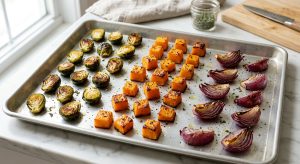
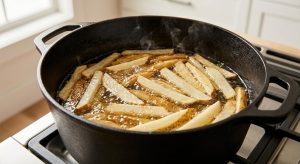
If you are roasting Brussels sprouts, fingerling potatoes, or broccoli florets, you actively want that aggressive, high-heat Maillard reaction. You want the vegetables to fry against the surface of the pan, creating a deeply caramelized, crispy exterior. In this specific scenario, a dark pan’s high emissivity works in your favor. However, I still refuse to recommend dark nonstick pans for this, because roasting vegetables usually requires temperatures of 400 to 425 degrees Fahrenheit—temperatures that will rapidly degrade cheap synthetic nonstick coatings.
Instead, if you want aggressive browning for savory roasting, use a heavy-duty, uncoated carbon steel pan or a well-seasoned cast iron skillet. They offer the dark surface required for high emissivity, but without the toxic, peeling chemicals.
The Warping Metal Problem
Finally, we must address the terrifying sound when your baking sheet pops in the oven like a firecracker. Cheap dark pans are notoriously thin. When they heat up rapidly due to their high emissivity, the thin steel expands unevenly. The stress builds until the metal violently buckles, launching your perfectly spaced cookies into a chaotic pile. High-quality, commercial-grade anodized aluminum pans are manufactured with rolled, encapsulated steel rims that physically prevent the aluminum from warping, even under intense broiler heat.
Your Action Plan for Perfect Baking
Baking does not have to be a stressful, unpredictable chore. You do not need a culinary degree, and you certainly do not need to settle for burnt, dry, hockey-puck brownies. You simply need to respect the physics of your kitchen.
Your action plan is simple:
- Audit Your Bakeware: Go into your kitchen cabinets right now and pull out every dark, peeling, flimsy nonstick baking pan you own. Thank them for their service, and throw them away.
- Upgrade to Anodized Aluminum: Invest in a set of heavy-gauge, light-colored, uncoated anodized aluminum pans. They are inexpensive, completely safe, and will outlast you.
- Master the Prep: Embrace parchment paper and butter.
- Adjust Your Temperatures: If you ever find yourself forced to use a dark pan in a pinch, drop the oven temperature by 25 degrees Fahrenheit to mitigate the aggressive radiant heat absorption.
By swapping out your toxic, high-emissivity dark pans for highly conductive, reflective aluminum, you are instantly leveling up your baking game. You will achieve perfectly even bakes, tender edges, and fudgy centers every single time. Now, preheat that oven, prep your new aluminum pan, and go show those brownies who is boss.