The Tragedy of the Steamed Steak
Listen, we need to have a serious talk about what you are doing to your expensive cuts of meat. You go to the butcher, you drop a small fortune on a beautifully marbled ribeye, and you bring it home with dreams of achieving that steakhouse-quality, deeply caramelized, mahogany crust. You heat up your skillet, you drop the meat in, and the popping starts. Hot oil launches a violent assault on your forearms, your backsplash, and your freshly wiped counters. Panic sets in. In a desperate bid to protect your kitchen and your skin, you grab the nearest solid glass or metal pan lid and slam it down over the skillet.
Congratulations. You just ruined dinner.
If you have ever stared into a pan and wondered why your steaks turn out gray, soggy, and profoundly depressing, that solid lid is the culprit. By trying to block the grease, you inadvertently built a miniature sauna for your beef. You trapped the steam, dropped the surface temperature of the meat, and completely halted the complex chemical reactions required for flavor development.
Let’s be real: professional chefs do not steam their steaks, and neither should you. You do not need a culinary degree to cook like an absolute expert, but you do need to understand the basic physics of your kitchen. And more importantly, you need the right gear. There is no excuse for scrubbing your stovetop for twenty minutes after a simple weeknight meal when a brilliant, inexpensive solution exists. Enter the fine-mesh, food-grade stainless steel splatter screen. It is the ultimate culinary shield—a tool that lets the steam escape while keeping the burning oil exactly where it belongs.
Grab a glass of wine, pull up a stool, and let’s dive into the fascinating, snarky, and highly scientific world of why your meat is pale, why hot oil hates you, and how a simple metal screen is about to revolutionize your weekend cooking projects.
The Food Science of Searing Versus Steaming
To understand why a solid lid is the enemy of a good sear, we have to strip away the pretentious chef-speak and look at the actual chemistry happening in your skillet. Specifically, we need to talk about the Maillard reaction.
The Magic of the Maillard Reaction
The Maillard reaction is a complex chemical process that occurs between amino acids (proteins) and reducing sugars when food is subjected to high heat. Discovered by French chemist Louis-Camille Maillard in 1912, this reaction is the sole reason why seared meat tastes infinitely better than boiled meat. It is responsible for the rich aromas, the complex savory flavors, and that gorgeous golden-brown color.
But here is the catch that ruins millions of dinners every single night: the Maillard reaction does not even begin to kick in until the surface temperature of the food reaches approximately 285°F to 330°F (140°C to 165°C).
Water, as you hopefully remember from high school science, boils at 212°F (100°C). As long as there is liquid water on the surface of your steak, the temperature of that surface cannot exceed 212°F. The heat energy from your burner is entirely wasted on the latent heat of vaporization—converting that liquid water into steam—instead of browning your food. This is why the simple act of patting it dry with a paper towel before cooking is a non-negotiable step for any home cook.
The Solid Lid Trap
Now, let’s look at what happens when you panic about grease splatter and throw a solid lid over your frying pan.
As the residual moisture in the meat evaporates, it turns into steam and rises. Because the lid is solid, that steam has nowhere to go. It hits the cooler underside of the lid, condenses back into liquid water droplets, and rains right back down onto your steak. You have effectively created a closed-loop rainstorm inside your skillet.
Because the meat is now sitting in a puddle of boiling water, the surface temperature plummets back down to 212°F. The Maillard reaction abruptly stops. The crust dissolves. Your expensive ribeye is now being poached in its own sad juices. Incidentally, this is the exact same reason your ground beef steams instead of browning when you overcrowd the pan on a busy Tuesday night. Moisture is the enemy of the crust.
The Physics of the Splatter (Why Hot Oil Attacks You)
If moisture ruins the meat, why does it also make the oil act like a tiny, aggressive volcano? The answer lies in fluid dynamics and thermodynamics.
When you place a piece of food into a hot pan coated with oil, you are introducing water into an environment that is significantly hotter than water’s boiling point. Cooking oils routinely reach temperatures of 350°F to 400°F (175°C to 200°C) during a hard sear.
Because water is denser than oil, any water droplets released by the meat immediately sink to the bottom of the pan, sliding underneath the layer of hot fat. Once trapped against the scorching metal, that water superheats and flashes into steam almost instantly.
The Vapor Explosion Cavity
When water turns into steam, it expands to over 1,500 times its original liquid volume. This rapid, violent expansion beneath the surface of the heavy oil creates what physicists call an “explosion cavity”. The steam forms a high-pressure bubble that violently bursts upward through the oil, acting like a microscopic piston.
As this steam bubble breaches the surface and pops, it ejects a high-velocity jet of scalding oil into the air. That is the sizzling, popping sound you hear, and that is exactly what hits your skin and leaves your kitchen looking like a grease bomb went off.
You cannot stop this physical reaction from happening—it is an inevitable byproduct of searing fresh food. But you can control where those airborne oil droplets go without trapping the steam.
The “No-Go” Rule: Stop Buying Toxic, Cheap Kitchen Garbage
Before we talk about the right tool for the job, I have to enforce my absolute strictest kitchen rule: we do not buy cheap, toxic, landfill-bound garbage. The market is flooded with poorly designed splatter screens that are actively dangerous to your health and your food. If you want to cook like a pro, you have to banish mystery materials from your kitchen.
The Nightmare of Non-Stick Splatter Screens
Some absolute genius in a corporate boardroom decided it would be a great idea to coat splatter screens in non-stick chemicals like PTFE (Polytetrafluoroethylene, commonly known as Teflon). This is a catastrophic design flaw.
PTFE coatings belong to a family of chemicals known as PFAS (per- and polyfluoroalkyl substances)—the infamous “forever chemicals”. While a non-stick skillet is somewhat safe if kept at moderate temperatures, a splatter screen is subjected to a brutal environment. It sits directly over a 400°F pan, completely exposed to the open heat column of your gas or electric burner.
Studies show that PTFE begins to degrade and break down at temperatures above 500°F (260°C). When this happens, the coating releases toxic perfluorinated gases into the air. Inhaling these fumes causes a highly documented medical condition called polymer fume fever, colloquially known as “Teflon flu,” which causes severe chills, headaches, and chest tightness. Furthermore, as the cheap coating degrades, it flakes and peels, dropping microscopic flakes of toxic plastic directly into your food. The fast track to ruining your nonstick pans is overheating them, and a splatter screen is inherently overheated by design.
The Problem with Silicone and Flimsy Rims
You might be tempted by those brightly colored silicone splatter screens. Don’t be. While high-quality, food-grade silicone is heat resistant, it has a terrible habit of absorbing aerosolized grease and holding onto odors. Just like how cheap silicone spatulas taste soapy after a few rounds in the dishwasher, a silicone splatter screen will eventually smell like rancid bacon fat no matter how hard you scrub it. Furthermore, the holes in silicone screens are punched out and relatively large, meaning they let far more oil escape than a woven metal mesh.
Then there is the issue of cheap, lightweight metal screens. If you buy a five-dollar screen from a discount bin, you are buying a product with a thin, weak outer rim. When exposed to the intense, fluctuating heat of a stovetop, cheap metals expand and contract unevenly. The same thermal shock that dictates why frying pans keep warping applies to flimsy screens. After three uses, it will warp into a permanent potato-chip shape, refusing to sit flat on your pan and allowing grease to shoot out the sides.
Anatomy of the Ultimate Stainless Steel Splatter Screen
So, if we are throwing the non-stick and silicone garbage in the trash, what is the alternative? The only tool you should ever use for this job is a fine-mesh, heavy-duty, 304 food-grade stainless steel splatter screen. Here is exactly what you need to look for to ensure you are buying a tool that will last a lifetime.
304 (18/8) Food-Grade Stainless Steel
Not all stainless steel is created equal. You want a screen explicitly made from 304 stainless steel (often labeled as 18/8, meaning it contains 18% chromium and 8% nickel). The chromium interacts with oxygen to form a microscopic, self-healing passive layer that prevents rust and corrosion, while the nickel adds extreme durability and resistance to harsh acidic environments (like tomato sauces). It will never peel, it will never off-gas toxic fumes, and it can withstand the brutal heat of a commercial dishwasher.
The Fine Twill Mesh Weave
The magic of a high-quality splatter screen lies in the geometry of the mesh. You are looking for a high mesh-count, double-thick twill weave.
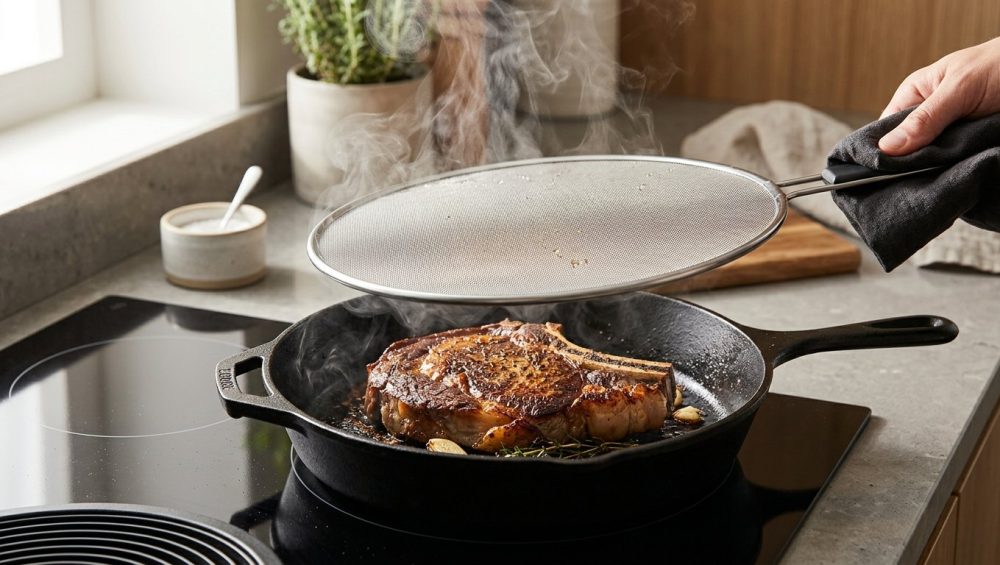
Here is why the physics work beautifully: a water vapor molecule (steam) is incredibly tiny, while an aerosolized droplet of hot cooking oil is comparatively massive. The microscopic gaps in a fine stainless steel mesh are large enough to allow the tiny steam molecules to pass through completely unobstructed, meaning your pan remains a dry, high-heat environment perfectly calibrated for the Maillard reaction. However, those same gaps are too small for the large, viscous oil droplets to pass through. When the exploding oil jets hit the screen, the mesh catches them, and the oil safely drips right back down into the pan. You get a perfect crust, and your countertops stay immaculate.
Ergonomic, Heat-Resistant Handles and Resting Feet
A professional-grade screen will have a handle that does not conduct heat. Look for solid stainless steel wire handles that are attached securely to the rim, or high-quality heat-resistant grips. Avoid cheap plastic handles that will melt if they accidentally slide too close to the gas flame.
Finally, the unsung hero of a great splatter screen design: resting feet. When you take the grease-covered screen off the pan to flip your steak, you have to put it down somewhere. Screens with small metal resting feet elevate the greasy mesh off your countertop, keeping your prep surfaces sanitary and saving you from yet another cleanup chore.
Beyond the Steak: Five Brilliant Uses for Your Splatter Screen
I am a firm believer that time is money, especially when it comes to weekday meals. I despise “unitaskers”—kitchen tools that only do one highly specific job and waste drawer space. Fortunately, a heavy-duty stainless steel splatter screen is one of the most versatile multi-taskers in your culinary arsenal.
1. The Ultimate Sauce Reducer
When you are simmering a thick marinara, a bolognese, or a fruit reduction, the viscous liquid acts like a geyser. Thick bubbles rise slowly, trap steam, and violently burst, painting your kitchen walls with red sauce. Placing a splatter screen over the pot allows the water content to evaporate rapidly (thickening your sauce faster) while completely blocking the tomato shrapnel.
2. The Lazy Cook’s Colander
If you are boiling a small batch of potatoes or a quick pot of vegetables, you do not need to dirty a massive colander. Simply hold your sturdy stainless steel splatter screen tightly against the rim of the pot and tip it over the sink to drain the boiling water. The fine mesh catches everything, and it takes two seconds to rinse off.
3. The Emergency Steamer
Need to steam some delicate asparagus or dumplings but don’t have a bamboo steamer? Place your splatter screen over a pot of rapidly boiling water, lay your vegetables directly on the stainless steel mesh, and cover them lightly with a metal bowl. The steam rises right through the screen, cooking the food gently and evenly.
4. A Makeshift Cooling Rack
If you just pulled a batch of cookies out of the oven and realize all your wire racks are occupied, a clean, flat splatter screen makes a phenomenal emergency cooling rack. The tight mesh supports delicate baked goods while allowing air to circulate underneath, preventing soggy bottoms.
5. Safe Shallow Frying
Whether you are making weekend fried chicken, crispy eggplant parmesan, or Sunday morning bacon, the splatter screen is mandatory. Shallow frying produces some of the most violent vapor explosions in the kitchen. The screen protects your eyes and skin from severe burns without turning your crispy fried chicken into a soggy, steamed disaster.
The Sassy Sous-Chef’s Step-by-Step Guide to a Flawless, Splatter-Free Sear
Alright, let’s put all this science and physics into practice. Here is your foolproof, step-by-step masterclass on how to sear a steak perfectly using your new favorite tool.
Step 1: Moisture is the Enemy
Remove your steak from the fridge and aggressively pat it down with paper towels until the surface is bone dry. Remember the thermodynamics we discussed: any water left on the surface will stall the temperature at 212°F and trigger violent oil explosions. If you want to be a true perfectionist, salt the meat and leave it uncovered in the fridge overnight. The salt draws out the moisture, and the circulating air dries the surface to a tacky finish, practically guaranteeing a flawless Maillard reaction.
Step 2: Heat Management
Place your heavy skillet (cast iron, carbon steel, or multi-clad stainless) on the burner and preheat it thoroughly. If you are tired of how everything sticks to your stainless steel, proper temperature control is your best friend. Wait until the pan is hot enough that a drop of water beads up and dances across the surface—this indicates you have reached the proper temperature. The secret to prevent protein adhesion lies in mastering the pan’s heat before the meat ever touches the metal.
Step 3: The Oil and The Drop
Add a high-smoke-point fat (like clarified butter, beef tallow, or avocado oil) to the pan. Carefully lay the steak into the pan, laying it away from your body so any initial oil displacement splashes toward the back of the stove, not onto your shirt.
Step 4: Deploy the Shield
Immediately place your 304 stainless steel splatter screen over the pan. You will hear a furious sizzling and popping as the internal moisture of the meat hits the hot fat. Look closely at the screen: you will see steam easily rising through the mesh, while the tiny, dangerous droplets of oil are caught by the woven wire and safely returned to the pan.
Step 5: The Flip and The Rest
When it is time to flip the meat, lift the screen by its stay-cool handle and set it down on your counter (relying on those brilliant little resting feet so your counter stays clean). Flip the meat, replace the screen, and finish the sear. Once the steak hits your desired internal temperature, pull it off the heat and let it rest.
Step 6: Effortless Cleanup
Because you used a screen instead of a lid, your steak has a dark, crispy, steakhouse-quality crust. Because you used a screen instead of leaving the pan totally open, your stovetop is completely free of grease. And before you start dulling your chef’s knife by scraping burnt bits off your counters, all you have to do is toss that high-quality 304 stainless steel screen straight into the dishwasher. It won’t rust, it won’t warp, and it won’t complain.
The Bottom Line
Cooking does not have to be a messy, chaotic, or intimidating chore. You do not need to accept gray, steamed meat as a reality of home cooking, and you certainly do not need to accept grease burns as a hazard of the hobby.
By understanding the basic science of the Maillard reaction and the physics of oil splatter, you empower yourself to take control of your kitchen. Ditch the solid lids when searing. Throw away the toxic, peeling non-stick screens and the smelly silicone gimmicks. Invest in a heavy-duty, fine-mesh, food-grade stainless steel splatter screen. It is a wildly inexpensive upgrade that will instantly elevate the quality of your food, protect your physical safety, and buy back your precious time on a Tuesday night by eliminating stovetop cleanup.
Now get back in the kitchen, dry off that steak, and sear with absolute confidence. You’ve got this.