It is a rainy Saturday night here in Germany on this lovely July 18, 2026. The wine is poured, the movie is queued up on the television, and you have just triumphantly carried a massive bowl of freshly popped stovetop popcorn to the couch. You toss a handful into your mouth, expecting that ethereal, satisfying, shatter-in-your-mouth crunch. But instead? You find yourself chewing on what feels like salty packing peanuts. It is an absolute culinary tragedy.
Making a batch of dense, rubbery, squeaky stovetop popcorn is one of those rookie kitchen mistakes that can instantly ruin a perfectly good weekend movie night. But put down that chemical-laden, artificially flavored microwave bag right now. We are going to fix this, and we are going to fix it with science.
I firmly believe that anyone can cook like an absolute expert in a standard home kitchen without a fancy culinary degree. You just need to understand the basic mechanics of what is happening inside your cookware. Today, we are leaving no stone unturned. We are going to break down the exact thermodynamic physics of a popping kernel, the critical importance of lid venting, the absolute necessity of safe cookware, and the precise temperature controls required to achieve popcorn perfection. By the end of this masterclass, you will not only know how to execute a flawless batch of stovetop popcorn, but you will also learn how to leverage these skills to host a stunning, interactive DIY popcorn seasoning bar for your next casual gathering.
Listen up, weekend culinary hobbyists. It is time to elevate your snack game.
The Food Science of the Pop: Anatomy of a Kernel
I know you did not come here for a biology lecture, but if you want to manipulate food to your will, you need to understand the raw materials you are working with. A popcorn kernel is not just a dried seed; it is a microscopic, highly pressurized thermodynamic vessel waiting to detonate.
Every single kernel of popcorn (specifically the Zea mays everta variety) consists of three primary components: the germ (the tiny seed embryo), the endosperm (hard and soft starches that make up the bulk of the kernel), and the pericarp (the hard, protective outer hull). The magic of popcorn—and the reason it is the only type of corn that aggressively pops in this manner—lies entirely in the structural integrity of that pericarp and the moisture hidden deep within the endosperm.
The Moisture Sweet Spot
Here is the most critical piece of data you need to internalize: a perfect popcorn kernel contains exactly 13.5% to 14% moisture.
If the moisture content drops below that sweet spot, the kernel will not be able to generate enough internal steam to breach the hull. These are the infuriating “old maids”—the unpopped kernels that sink to the bottom of your bowl and threaten to crack your molars. Conversely, if the moisture content is too high, the structural integrity of the kernel is compromised, leading to a weak, pathetic pop that results in a dense, chewy texture.
This is exactly why how you store your popcorn matters. If you are keeping your kernels in a flimsy, half-open plastic bag in the back of a humid pantry, or worse, in the refrigerator where the dry air actively sucks the moisture out of the kernels, you are setting yourself up for failure. Popcorn kernels must be stored in a completely airtight glass or plastic container at room temperature, away from direct sunlight.
Gelatinization and the Big Explosion
When you drop a kernel into hot oil, an incredible sequence of physical and chemical reactions occurs in a matter of seconds. As the heat penetrates the tough pericarp, the trace amount of water trapped inside the starchy endosperm begins to heat up. Because the pericarp is incredibly strong and completely sealed, the water cannot escape. Instead, it turns into superheated steam.
As the temperature climbs past 212°F (100°C), the internal pressure of the kernel skyrockets. The hard starch inside the kernel begins to melt, mixing with the superheated steam to form a thick, gelatinous goo. The pressure continues to build until it reaches roughly 135 pounds per square inch (PSI), at a temperature of about 356°F (180°C).
At this exact thermodynamic breaking point, the pericarp can no longer contain the pressure. It ruptures violently. The sudden, massive drop in pressure causes the superheated steam to expand instantly, inflating the gelatinized starch into a massive, airy foam. As this foam hits the cooler air outside the kernel, the starch instantly solidifies, locking in that familiar, fluffy, cloud-like shape.
This violent, beautiful explosion is what gives popcorn its crunch. But as we are about to discover, that very same steam is also the exact reason your popcorn turns into a chewy nightmare.
The Enemy of Crunch: Why Your Popcorn Turns Chewy
Americans consume an astonishing 14 to 17 billion quarts of popped popcorn every single year. Yet, a tragic percentage of that popcorn is consumed in a subpar, rubbery state. If your stovetop popcorn is coming out chewy, soggy, or squeaky against your teeth, there are two primary culprits at play.
The Steam Trap: Your Lid is Ruining Everything
This is the absolute most common mistake home cooks make, and it is the exact reason your popcorn is chewy.
Remember that superheated steam that causes the kernel to explode? Once the kernel pops, that steam is released into the surrounding environment. If you are popping a half-cup of kernels in a medium saucepan, you are releasing a significant volume of water vapor into the air in a matter of seconds.
If you are using a standard pot with a heavy, tightly sealed glass or metal lid, that steam has absolutely nowhere to go. It rises, hits the relatively cooler surface of the lid, condenses back into liquid water droplets, and rains directly back down onto your freshly popped, delicate starch clouds.
You are no longer frying or air-popping your corn; you are actively steaming it. The dry, airy foam of the popped endosperm acts like a highly absorbent sponge, soaking up all that trapped moisture. The result is a soggy, leathery, chewy texture that completely ruins the snacking experience.
The solution to this is aggressive, uncompromising ventilation. We will cover the exact venting protocols in the technique section, but know this: trapped steam is the ultimate enemy of crunch.
The Stale Kernel Catastrophe
The second reason for chewy popcorn is the degradation of your raw ingredients. As we established, the 13.5% to 14% moisture barrier is non-negotiable. If you are using a dusty jar of kernels that has been sitting in your pantry since the last presidential election, the moisture content has likely evaporated down to 10% or lower.
When stale kernels are heated, they do not produce enough steam to create a violent, expansive explosion. Instead, the hull weakly cracks open, and the starch barely inflates, resulting in a small, dense, hard, and incredibly chewy piece of popcorn. If your venting technique is flawless but your popcorn is still coming out like rubber, it is time to throw the kernels into the compost bin and buy a fresh batch.
The “No-Go” Rule: Banish Toxic Gear from Your Popcorn Game
As a home cook who cares about the quality of the food you serve your friends and family, you need to be ruthless about the equipment you use. I have a strict, uncompromising “No-Go” rule when it comes to toxic, cheap kitchenware, and stovetop popcorn is where this rule matters most.
The Perils of Peeling Non-Stick and Mystery Metals
To properly pop corn, you need to bring your cooking oil up to a temperature of roughly 400°F to 460°F. This is a high-heat cooking application.
If you are attempting to make stovetop popcorn in a cheap, lightweight aluminum pan coated in a traditional PTFE (Teflon) non-stick surface, I am officially staging an intervention. Traditional non-stick coatings begin to break down and degrade when subjected to temperatures above 400°F. As they degrade, they can release invisible, toxic fumes into your kitchen air. Furthermore, the aggressive shaking required to pop corn will quickly scratch and ruin the delicate non-stick surface, causing chemical flakes to peel off into your food.
Throw the peeling non-stick pans in the garbage. They have no place in a mindful, health-conscious home kitchen.
The Holy Trinity of Popcorn Vessels
To achieve a flawless pop without burning the kernels or poisoning your guests, you need a vessel with excellent thermal mass (to hold heat evenly) and a safe, non-toxic cooking surface. Here are the only three options you should be considering:
1. The Heavy-Bottomed Stainless Steel Pot:
A high-quality, tri-ply stainless steel saucepan or stockpot (usually 3 to 4 quarts in size) is the gold standard for everyday home cooks. The aluminum core sandwiched between the stainless steel ensures rapid, even heat distribution, while the non-reactive steel surface is completely safe at high temperatures.
2. Carbon Steel or Enameled Cast Iron:
These materials offer incredible heat retention. Once they get hot, they stay hot, which is perfect for maintaining the ambient temperature needed to pop a massive batch of corn. However, if your poorly seasoned cast iron skillet constantly leaves black specks on your food, you will want to strip and re-season it before using it for pristine white popcorn. Enameled cast iron (like a French Dutch oven) is a fantastic, non-reactive alternative.
3. The Whirley Pop (The Specialty Route):
If you are serious about hosting popcorn bars, investing in a dedicated stovetop popcorn popper like the Whirley Pop is highly recommended. These specialized pots feature a built-in mechanical stirring mechanism attached to a hand crank on the handle. This allows you to constantly agitate the kernels without ever lifting the pot off the heat source. More importantly, their lids are specifically designed with ventilation gaps to let steam escape naturally. Just ensure you purchase the stainless steel version rather than the thin, reactive aluminum model.
Mastering the Stovetop Pop: The Flawless Technique
Now that we understand the science and have banished the toxic gear, it is time to execute. Making perfect stovetop popcorn on a busy weekday or a lazy weekend requires precision, but it is entirely achievable if you follow these strict steps.
Oil Selection: Smoke Points Matter
You cannot pop corn in butter. I repeat, do not put raw butter in a screaming hot pan to pop your kernels. Butter contains milk solids and about 15% water. At 400°F, those milk solids will instantly burn, turning into bitter, acrid black chunks that will ruin the entire batch.
You need a pure cooking fat with a high smoke point. Refined coconut oil is the absolute classic choice (it is what movie theaters use to get that signature flavor). Avocado oil is another phenomenal, health-conscious option with a massive smoke point of 520°F. Peanut oil and clarified butter (ghee) also work beautifully.
And please, stop relying on aerosol cooking sprays to coat your cookware for this process. The chemical propellants and soy lecithin emulsifiers in those cans cannot withstand the high heat of popping and will polymerize into an impossible-to-clean sticky brown residue on the sides of your beautiful stainless steel pots. Use real, liquid cooking oil. Three tablespoons of oil per half-cup of kernels is the golden ratio.
Temperature Control: The 3-Kernel Test
The biggest mistake home cooks make is dumping all their kernels into cold oil and slowly heating the pot. This causes the kernels to sit in warm oil for far too long, leading to uneven heating and a high percentage of old maids.
Instead, utilize the brilliant “3-Kernel Test.”
Place your pot on the stove over medium-high heat. Add your three tablespoons of high-heat oil, and drop exactly three popcorn kernels into the center of the pot. Do not walk away. Stand there and watch them.
As the oil heats up, those three kernels act as your built-in culinary thermometers. When the oil reaches the perfect popping temperature of roughly 400°F, those three kernels will pop. The moment the third kernel pops, your oil is ready.
Immediately remove the pot from the heat source. Pour in your remaining half-cup of kernels, give the pot a quick swirl to coat them all in the hot oil, and then—this is the crucial step—wait exactly 30 seconds.
Why? Because taking the pot off the heat and waiting 30 seconds allows the temperature of the oil to equalize with the cold kernels. It brings every single kernel in that pot up to a uniform temperature just below the 356°F popping threshold.
After 30 seconds, place the pot back onto the medium-high heat. Because all the kernels are now perfectly temperature-matched, they will all reach the popping threshold at the exact same time. You will experience a massive, uniform crescendo of popping, rather than a slow, agonizing trickle that results in the first kernels burning while the last ones pop.
The Agitation Station: Shake It Like You Mean It
Once the pot is back on the heat and the popping begins in earnest, you cannot be passive. You must agitate the pan. Gently slide the pot back and forth across the burner every few seconds. This constant motion serves two purposes: it prevents the popped kernels from resting on the scorching hot bottom of the pan and burning, and it allows the heavier, unpopped kernels to fall through the popped corn to the bottom where the heat is concentrated.
The Venting Protocol: Let That Steam Escape
As the violent popping commences, the steam release will be massive. If you are using a standard pot with a lid, you must leave the lid slightly ajar. Crack it open just a fraction of an inch—enough to let the visible clouds of steam escape, but narrow enough to prevent the ballistic popcorn kernels from flying all over your kitchen.
If you want to completely eliminate the risk of trapped moisture, ditch the solid lid entirely and use a fine mesh splatter screen to let all the steam escape while safely containing the oil and the flying kernels. This one simple tool swap guarantees the crispiest, airiest popcorn you have ever tasted.
The popping will start as a furious roar. When the pops slow down to about one pop every two to three seconds, immediately kill the heat and dump the popcorn into a massive, wide serving bowl. Do not let it sit in the hot pot, or the residual heat will scorch the bottom layer.
Hosting the Ultimate Mindful Popcorn Bar
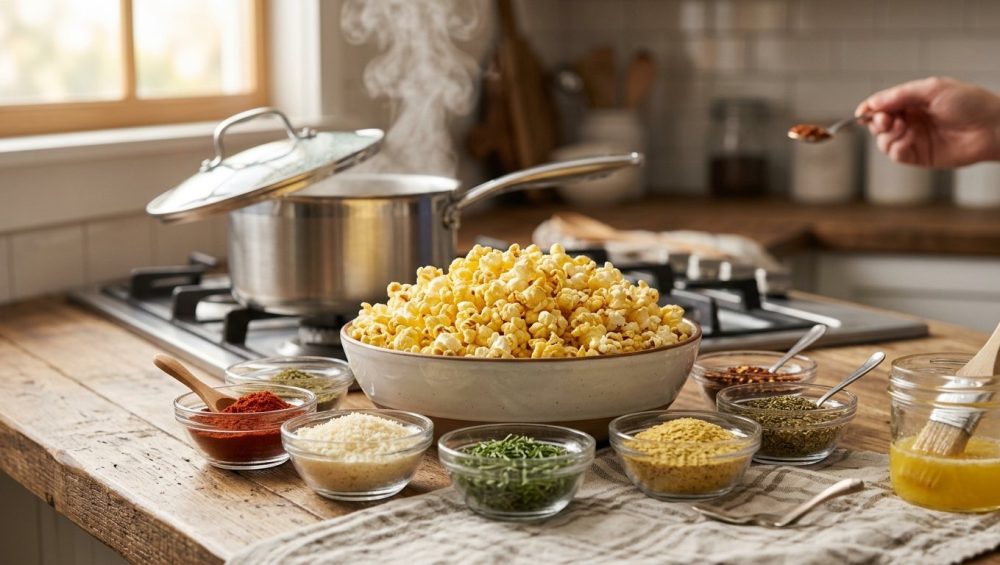
Now that you have mastered the flawless, perfectly crisp, steam-free stovetop pop, it is time to turn this humble snack into an event. Hosting a DIY popcorn seasoning bar is one of the most brilliant, budget-friendly, and interactive ways to entertain guests during a casual weekend gathering, a movie night, or an autumn bonfire.
It requires minimal active cooking time, allows guests to customize their own experience, and completely eliminates the stress of formal plating.
The Logistics of a DIY Snack Station
To host a mindful popcorn bar, preparation and spatial staging are everything. You want to create a flow that prevents bottlenecks in your kitchen.
First, pop a massive baseline batch of plain popcorn just before your guests arrive. Use a very neutral oil, like refined coconut or avocado, so the base flavor doesn’t clash with the toppings. Transfer the pristine, crispy popcorn into the largest, widest wooden or ceramic bowl you own. Place this anchor bowl at the start of your kitchen island or dining table.
Next to the main bowl, provide a stack of individual serving vessels. Classic red-and-white striped paper popcorn bags are incredibly charming and inexpensive, but reusable wooden bowls or wide-mouthed mason jars work beautifully as well. Provide a large metal scoop so guests aren’t digging their unwashed hands into the communal supply.
The Fat Binder: How to Make Seasonings Actually Stick
Here is the most common complaint about DIY popcorn bars: guests sprinkle a beautiful array of dry spices over their popcorn, take a bite, and taste absolutely nothing. When they reach the bottom of their bowl, they find a sad, concentrated puddle of dry seasoning that simply refused to adhere to the kernels.
Dry spices will not stick to dry popcorn. You need a binding agent. However, if you just melt a stick of standard grocery store butter and pour it over the bowls, the high water content in the butter will instantly turn your perfectly crisp popcorn into a soggy, shrinking, dissolving mess.
The secret to maximum flavor adhesion without sacrificing crunch is fat without water. You have two elite options here:
1. The Oil Spritzer:
Provide your guests with a pump-action oil mister filled with a high-quality, neutral oil (like avocado oil) or a lightly infused oil (like garlic or truffle oil). A fine, microscopic mist of oil coats the complex surface area of the popcorn without drenching it, providing the perfect tacky surface for dry spices to cling to.
2. Clarified Butter (Ghee):
If you want that authentic, rich, movie-theater butter flavor, you must remove the water. You can buy jars of ghee at the store, or you can slowly melt unsalted butter on the stove, skim the white milk solids off the top, and carefully pour off the pure golden butterfat, leaving the water behind. For an insane flavor upgrade, you can even use it to make a better brown butter for an incredibly nutty, caramelized drizzle that contains zero moisture. Keep the clarified butter warm in a small fondue pot or a thermal carafe so guests can lightly drizzle it over their portions.
Pulverize Your Spices
The second reason seasonings fail to stick is particle size. Standard kosher salt or coarse sea salt crystals are heavy, geometric blocks. They will bounce right off the curves of a popcorn kernel and plummet to the bottom of the bowl.
To achieve flawless, even seasoning distribution, you must pulverize your spices into a microscopic dust. If you don’t want to buy commercial “popcorn salt,” simply run your kosher salt through a burr pepper grinder or a dedicated electric spice mill until it resembles powdered sugar. Do the same for any dried herbs, chili flakes, or granulated sugars you plan to serve. The finer the powder, the better it will grip the fat-coated popcorn.
Savory, Spicy, and Sweet: Flavor Profiles That Pop
When setting up the bar, present your pulverized, custom seasoning blends in small, elegant glass shakers or tiny bowls with miniature serving spoons. Do not overwhelm your guests with twenty random spices; curate three or four distinct, highly developed flavor profiles that they can mix and match.
Here are three foolproof, sophisticated flavor profiles that will absolutely blow your guests away.
The Umami Bomb
This is for the savory snackers who crave deep, rich, complex flavors. The base of this blend is nutritional yeast, which provides an incredibly savory, cheesy, nutty profile without any actual dairy.
Combine half a cup of nutritional yeast with a teaspoon of pulverized kosher salt, a half-teaspoon of garlic powder, a quarter-teaspoon of smoked paprika, and a pinch of MSG (if you aren’t afraid of flavor). To elevate this even further, don’t just dump raw spices directly onto your popcorn without thinking about their raw, chalky bite; if you are making a wet drizzle, you can actually bloom these spices gently in warm ghee before serving to unlock their essential oils. For a dry shaker, the nutritional yeast acts as the perfect, powdery binding agent.
The Truffle Parmesan Elegance
This is the luxury option that pairs perfectly with a crisp, dry white wine or a glass of champagne.
You will need real, high-quality Parmigiano-Reggiano block cheese. Grate it as finely as humanly possible using a microplane zester. The cheese must be feathery and light to melt seamlessly onto the warm popcorn. If you rely on those pre-shredded bags from the grocery store, the cellulose anti-caking coating on the cheese strands will completely prevent them from melting or adhering to the kernels.
Mix the microplaned parmesan with a pinch of finely ground black pepper and a dash of sea salt. Have your guests mist their popcorn with a high-quality white truffle oil before tossing it with the cheese blend. The earthy, pungent aroma of the truffle combined with the salty, nutty parmesan is an absolute masterpiece.
The Sweet and Salty Classic (Kettle Corn Style)
You must provide a sweet option to balance the palate.
In a spice grinder, pulverize a quarter-cup of granulated white sugar, a tablespoon of high-quality ground cinnamon, a heavy pinch of sea salt, and a tiny, almost imperceptible dash of cayenne pepper. Grinding the sugar is critical here; standard granulated sugar is too heavy to stick properly. The powdered sugar will instantly melt into the warm ghee or oil mist, creating a faux-caramel glaze, while the cinnamon provides warmth and the cayenne delivers a surprising, sophisticated kick on the back of the palate.
Troubleshooting Your Popcorn Disasters
Even with the best intentions, the kitchen is a chaotic environment, and things can occasionally go sideways. If your popcorn bar hits a snag, here is how to diagnose and fix the most common issues without breaking a sweat.
Burnt Bottoms and Bitter Bites
If you pour your popcorn into the serving bowl and notice a layer of charred, blackened kernels at the bottom, your heat management failed. This usually happens for one of three reasons:
- You walked away: You stopped shaking the pan, allowing the bottom layer of kernels to sit in direct contact with the heat source for too long.
- Your heat was too high: While you need 400°F oil, blasting your burner on its absolute maximum setting can push the thin layer of oil past its smoke point, scorching the delicate starches before they even have a chance to pop.
- You used the wrong vessel: If you tried to use a thin, cheap pot that creates aggressive hot spots, burning is inevitable. And if you’ve ever had a glass baking dish shattered in the oven, you understand that glass cannot handle rapid, uneven temperature fluctuations; never use a glass pot on a direct stovetop flame for popping corn. Stick to heavy-bottomed stainless steel.
Unpopped Kernels (The Old Maids)
Finding a few unpopped kernels at the bottom of the bowl is a natural, unavoidable part of the thermodynamic process. However, if a quarter of your batch refuses to pop, you have a problem.
As discussed, this is almost always a moisture issue. But if you know your kernels are fresh and stored properly, the culprit is likely your temperature curve. If you skip the “3-Kernel Test” and the 30-second resting phase, the kernels heat up unevenly. The first few kernels will pop, and in your panic to prevent them from burning, you will pull the pot off the heat before the rest of the kernels reach the 356°F popping threshold. Follow the temperature equalization steps religiously, and your old maid count will plummet.
The Importance of Proper Storage
If you go through the effort of making these incredible, finely powdered custom seasoning blends for your popcorn bar, you want them to last for future movie nights. However, if you leave them sitting out in standard shakers, you might find that your custom spices turn into hard bricks due to the ambient humidity in your kitchen.
Powdered sugar and pulverized salt are highly hygroscopic, meaning they actively pull moisture out of the air. Always store your leftover popcorn seasonings in completely airtight glass jars, and drop a food-safe silica gel packet into the jar to absorb any residual moisture. They will remain perfectly powdery and ready to stick for months.
Your Weekend Movie Night, Elevated
Cooking does not have to be an intimidating, stressful chore reserved for people in crisp white chef coats. It is simply about understanding the basic rules of heat, moisture, and high-quality equipment.
By mastering the science of the 14% moisture barrier, executing the 30-second temperature equalization trick, ruthlessly venting your steam to protect the crunch, and utilizing water-free fats to bind your pulverized spices, you have completely removed the guesswork from stovetop popcorn.
You no longer have to settle for chewy, rubbery, microwaveable disappointments. You are now fully equipped to host a stunning, interactive, mindful popcorn bar that will leave your guests absolutely speechless.
So pour another glass of wine, preheat that heavy-bottomed stainless steel pot, and get to popping. You’ve got this.