The Weeknight Poultry Predicament
Start with the universal struggle. You buy a pack of boneless, skinless chicken breasts with the best of intentions. You want to eat healthy. You want to save money. You want to feel like a responsible adult who doesn’t rely on the delivery driver knowing your dog’s name. But then, Wednesday night rolls around, you cook that chicken, and you are left chewing on a piece of meat that has the exact textural properties of a memory foam mattress. It is dry. It is stringy. It requires a gallon of water just to swallow.
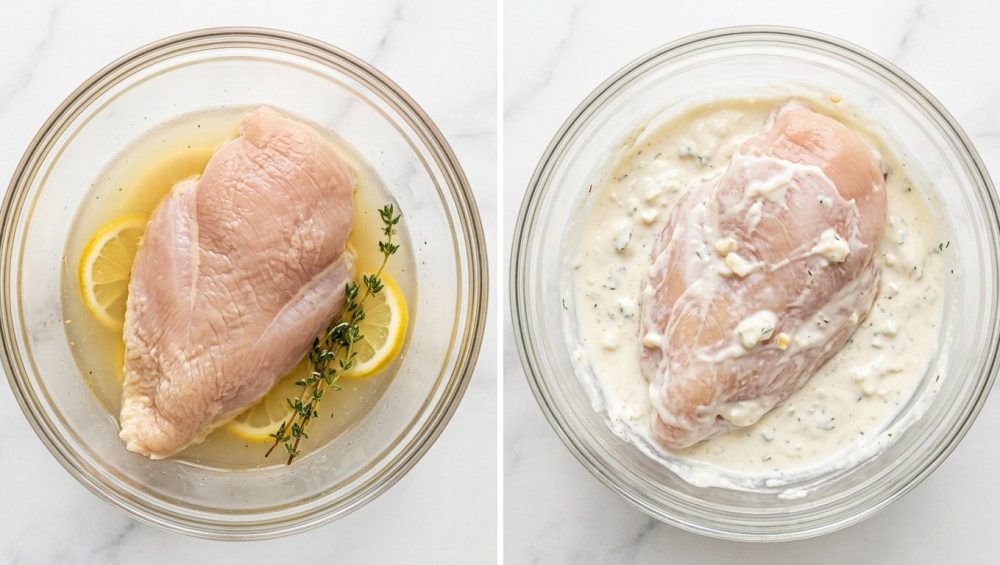
If you are wondering why your chicken always turns out dry, the answer often lies in your marinade. For decades, we have been fed a massive culinary lie. We have been told that to tenderize meat, we need to assault it with the most aggressive, lip-puckering acids we can find in our pantries. We drown our poultry in Italian dressing, straight lemon juice, or harsh vinegars, crossing our fingers and hoping for a miracle. Spoiler alert: the miracle never comes. Instead, you are left with a piece of meat that is somehow chalky on the outside and rubbery on the inside.
You blame yourself. You think you overcooked it. You think you lack the innate culinary gene. But I am here to tell you, as your resident sassy sous-chef and biggest kitchen cheerleader, that it is not your fault. You do not need a culinary degree to make mind-blowing food. Mastering the art of the kitchen doesn’t require a fancy degree; it just requires a basic understanding of what is actually happening in your mixing bowl. Today, we are going to dive deep into the fascinating, slightly nerdy, and entirely game-changing science of meat tenderization. We are going to ditch the harsh acids and embrace the magical, tenderizing superpower of a simple yogurt marinade.
The Acid Trap: Why Lemon Juice and Vinegar Are Ruining Your Dinner
Let’s get one thing straight: acidity is a wonderful thing in the culinary world. A squeeze of lemon juice at the very end of a dish can wake up flat flavors and balance rich fats. But when it comes to raw chicken, harsh acids are not your friends. They are microscopic bullies.
To understand why, we have to look at the food science of protein denaturation. Raw meat is essentially a complex network of bundled protein fibers, primarily actin and myosin, surrounded by water. When you introduce a highly acidic environment—like lemon juice, which sits at a notoriously low pH of around 2.0 to 2.5, or white vinegar, which hovers around 2.4—you are subjecting those proteins to a violent chemical shock.
The Microscopic Muscle Squeeze
When those harsh acids hit the surface of the chicken, they rapidly protonate the actin and myosin proteins. This causes the protein strands to unwind (denature) and then violently snap back together, forming tight new bonds. This process is called cross-linking. As these proteins tightly bind to one another, they literally squeeze out the moisture trapped between them.
If you have ever made ceviche, you have seen this process in action. The acid in the lime juice “cooks” the fish, turning it firm and opaque without a single drop of heat. That firming action is exactly what is happening to your chicken breast. The acid is prematurely cooking the outside of the meat.
If you leave a chicken breast in a lemon juice marinade for more than an hour or two, the surface proteins become so tightly bound that the exterior turns into a mushy, chalky paste, while the interior remains completely unaffected. When you finally throw that chicken into a hot skillet, the already-denatured exterior instantly overcooks, while the heat struggles to penetrate to the center. The result? A dinner that requires a chainsaw to cut through. We all want simple weeknight dinners that don’t require a culinary degree, and aggressively curing our weeknight poultry in citrus juice is the fastest way to ruin them.
The Magic of Lactic Acid: A Gentler Approach
Enter yogurt. Humans have been using yogurt to marinate meat for centuries, particularly in Middle Eastern, Mediterranean, and South Asian cuisines. Think of the incredibly tender, juicy chicken in a classic chicken tikka masala, or the perfectly charred, melt-in-your-mouth chicken shish taouk. These cultures didn’t need a laboratory to tell them that yogurt works miracles; they just knew that dairy makes meat taste undeniably better.
But since we are living in the modern era, let’s look at the science. Why does yogurt succeed where lemon juice fails? The secret lies in lactic acid.
Yogurt is a fermented dairy product. During the fermentation process, live bacteria cultures consume the lactose (milk sugars) and convert it into lactic acid. Unlike the aggressive citric acid in lemons or the acetic acid in vinegar, lactic acid is remarkably mild. A standard plain yogurt has a pH hovering between 4.0 and 4.6.
Controlled Denaturation
Because lactic acid is so much milder, it doesn’t shock the proteins into a violent, moisture-expelling panic. Instead, it partially dissociates and penetrates the meat slowly. It gently relaxes the protein walls, denaturing them in a highly controlled manner. This slow, gentle relaxation allows the muscle fibers to unwind just enough to create tiny micro-pockets within the meat.
Here is the brilliant part: because the yogurt itself is mostly water and fat, it actually drives moisture into those newly created micro-pockets. Instead of squeezing water out, a yogurt marinade actively hydrates the chicken breast. Furthermore, because lactic acid acts so slowly, you have a massive window of forgiveness. You can leave chicken in a yogurt marinade for 12 to 24 hours without any risk of it turning into a mushy, chalky disaster. It is the ultimate time-saving hack for the busy professional. You can toss your chicken in yogurt on Sunday night, completely forget about it on Monday, and cook it on Tuesday, and it will still be absolute perfection.
The Secret Weapon: Calcium and Calpain Enzymes
If lactic acid were the only thing yogurt had going for it, it would still be a superior marinade. But yogurt has a secondary, highly scientific trick up its sleeve, and it is the real reason dairy-marinated meats achieve that legendary, buttery texture. It all comes down to calcium and a family of enzymes called calpains.
Let’s put on our lab coats for a second. Inside muscle tissue, there are naturally occurring, endogenous enzymes called calpains. These enzymes are responsible for breaking down muscle fibers, and they are a major player in the natural aging and tenderizing process of meat. However, calpains are calcium-dependent, meaning they require the presence of calcium ions to activate and do their job.
The Inside-Out Tenderization Process
When you coat a chicken breast in yogurt, you are not just exposing it to lactic acid; you are bathing it in a highly bioavailable source of dairy calcium. As the mild lactic acid gently opens up the protein structures on the surface of the meat, it creates pathways for the calcium from the yogurt to slowly penetrate the muscle fibers.
Once that calcium enters the meat, it interacts with the calcium ions already present in the tissue, triggering a localized activation of those calpain enzymes. The activated calpains act like microscopic molecular scissors, gently snipping away at the tough myofibrillar proteins (like desmin and titin) deep within the meat.
This means that a yogurt marinade isn’t just tenderizing the surface of the chicken; it is literally initiating a biological breakdown of the tough muscle fibers from the inside out. It is a one-two punch of culinary physics: the lactic acid gently relaxes the exterior, while the calcium activates the enzymes that tenderize the interior. This is why dairy-marinated chicken is never stringy. The physical structure that causes stringiness has been systematically dismantled by the meat’s own enzymes.
The Viscosity Advantage and Flavor Delivery
Beyond the complex biochemistry of acids and enzymes, yogurt possesses a distinct physical advantage over liquid marinades: viscosity.
When you pour a vinaigrette over a chicken breast, most of it immediately slides off and pools at the bottom of the bowl. You are left with a piece of meat that is barely coated, meaning the chemical reactions are highly localized and inefficient.
Yogurt, especially thick, whole-milk Greek yogurt, is a colloidal suspension. It clings tenaciously to the surface of the meat. This thick, protective coating serves two crucial functions. First, it completely seals the chicken, locking in the meat’s natural moisture and preventing it from evaporating while it sits in the fridge. Second, it acts as a highly efficient delivery vehicle for flavor.
Fat-Soluble Magic
Spices, herbs, and aromatics like garlic and ginger contain essential oils and flavor compounds that are largely fat-soluble. Because whole-milk yogurt contains a healthy dose of dairy fat, it acts as a solvent, extracting the maximum amount of flavor from your spices. As the lactic acid opens up those micro-pockets in the meat, the yogurt carries those fat-soluble flavor compounds deep into the muscle fibers.
This is how you get chicken that is seasoned all the way through, rather than just tasting like a bland piece of meat wearing a highly seasoned jacket. If you are trying to figure out how to fix your food when a recipe goes sideways, understanding how fat carries flavor is half the battle.
The “No-Go” Rule on Toxic Kitchen Gear
Now, before we talk about how to actually cook this beautifully marinated chicken, we need to have a serious conversation about your equipment. I am your sassy sous-chef, which means I love you enough to tell you the harsh truth: if you are cooking this pristine, scientifically perfected chicken in a scratched, peeling, $15 non-stick pan you bought at a discount store five years ago, you are committing a culinary crime.
I have absolutely zero patience for cheap, toxic kitchenware. Those mystery-metal pans with the flaking black Teflon coatings are not just ruining your food; they are leaching forever chemicals into your dinner. We do not tolerate that here. I beg you to stop ruining your nonstick pans with aerosol cooking sprays, which contain emulsifiers that bake into an impenetrable, sticky resin, completely destroying the pan’s surface. But more importantly, I want you to graduate to real, durable cookware.
When you are stocking up on essential kitchen tools for beginners, a good thermometer is mandatory, but a high-quality skillet is your true workhorse. For cooking yogurt-marinated chicken, you need a pan that can handle high heat and deliver a serious sear. That means you need stainless steel, carbon steel, or cast iron.
If you are intimidated by stainless steel because everything sticks to it, you just don’t know the physics of heat. Always perform the water drop test before adding your protein. Heat your dry stainless steel pan over medium heat. Drop a tiny bead of water into the pan. If it sizzles and evaporates immediately, the pan is too cold. If it shatters into a million tiny droplets, it’s too hot. But if the water forms a perfect, mercury-like bead that glides effortlessly across the surface, you have reached the Leidenfrost point. The moisture in the chicken will instantly vaporize upon contact, creating a microscopic layer of steam that will prevent food from sticking to your skillet.
If you prefer cast iron, that is a fantastic choice for retaining heat. Just make sure you clean your cast iron with a chainmail scrubber to preserve the seasoning without stripping away decades of hard-earned polymerization. Real cookware empowers you to cook like a pro; toxic cookware holds you back.
The Maillard Reaction: Why Yogurt Creates the Perfect Crust
One of the biggest complaints home cooks have about chicken breasts is that they look pale, sad, and unappetizing. We eat with our eyes first, and a grey piece of poultry is deeply depressing. This is where our yogurt marinade performs its final, most spectacular magic trick: accelerating the Maillard reaction.
The Maillard reaction is the chemical process that occurs when amino acids (proteins) and reducing sugars are subjected to heat. It is the reaction responsible for the browning of bread, the searing of a steak, and the roasting of coffee beans. It creates hundreds of new, complex flavor compounds that register on our palates as savory, roasted, and deeply delicious.
When you marinate chicken in yogurt, you are coating it in a thick layer of dairy proteins (casein and whey) and milk sugars (lactose). When that coated chicken hits a screaming hot stainless steel or cast iron skillet, those dairy proteins and sugars rapidly caramelize. The lactose browns beautifully, creating a thick, charred, deeply flavorful crust on the outside of the chicken, while the inside remains perfectly insulated and juicy.
This crust isn’t just about aesthetics; it is about texture. The contrast between the aggressively seared, slightly charred exterior and the ultra-tender, juicy interior is the hallmark of restaurant-quality cooking. While I usually rave about a baking steel for pizzas, today we’re talking poultry, and the intense, conductive heat of a heavy skillet is exactly what you need to trigger this glorious browning effect.
Building the Ultimate Yogurt Marinade
Now that you understand the chemistry, the biology, and the thermodynamics, it is time to put this knowledge into practice. Building a yogurt marinade is incredibly simple, and it requires exactly zero pretentious chef-speak.
Step 1: Choose the Right Base
Do not use low-fat or fat-free yogurt. The fat is essential for carrying flavor compounds and protecting the meat from drying out. You want plain, whole-milk Greek yogurt. Greek yogurt has been strained of its excess whey, making it thicker and more concentrated, which helps it cling to the chicken better than standard runny yogurt. And please, for the love of all things culinary, make sure it is plain. Vanilla-scented garlic chicken is a mistake you only make once.
Step 2: Add the Aromatics
This is where you get to play. Yogurt is a blank canvas that readily absorbs and amplifies whatever flavors you introduce. A classic Mediterranean profile might include minced garlic, lemon zest (save the juice for a finishing squeeze after cooking!), dried oregano, and a splash of high-quality olive oil.
If you want to go the South Asian route, load that yogurt up with grated fresh ginger, minced garlic, garam masala, turmeric, smoked paprika, and a pinch of cayenne pepper. The lactic acid will carry these vibrant spices deep into the chicken, giving you a flavor profile that is indistinguishable from your favorite takeout spot.
Step 3: Salt Generously
Salt is the only ingredient that actually penetrates the meat alongside the lactic acid. It works via osmosis, drawing out a tiny bit of moisture, dissolving into a brine, and then reabsorbing into the muscle fibers, seasoning the chicken from the inside out. Do not be shy with the kosher salt in your marinade.
Step 4: The Marination Window
Toss your chicken breasts into a bowl or a heavy-duty zip-top bag, pour the yogurt marinade over them, and massage it in until every square inch is heavily coated.
Because we are relying on the gentle power of lactic acid and the slow activation of calpain enzymes, time is your friend. You can get away with a quick 30-minute marinate if you are in a desperate weeknight rush, but to truly experience the magic, you need to give it time. Aim for a minimum of 4 hours, but ideally, let it ride in the refrigerator for 12 to 24 hours. The yogurt will slowly work its tenderizing magic while you sleep, go to work, and live your life.
Step-by-Step: The Foolproof Weeknight Method
When it is time to cook, efficiency is the name of the game. We are busy people, and time is money. Here is your fail-safe, step-by-step method for executing the perfect yogurt-marinated chicken breast.
1. The Prep
Take the chicken out of the fridge about 20 minutes before you plan to cook it. Taking the chill off the meat ensures it cooks evenly. Do not rinse the chicken. You want that thick layer of yogurt clinging to the meat. If there are massive, gloopy clumps, you can gently wipe away the excess with your fingers, but leave a healthy coating on the surface. That coating is going to become your crust.
2. The Sear
Place your heavy skillet (stainless steel, carbon steel, or cast iron) over medium-high heat. Let it get properly hot. Add a tablespoon of a high-smoke-point oil, like avocado oil or ghee. Carefully lay the chicken breasts into the pan, laying them away from you to prevent hot oil from splattering onto your favorite shirt.
3. The Patience
Do not touch the chicken. Do not prod it. Do not try to aggressively flip it after sixty seconds. The dairy proteins in the yogurt need time to caramelize and release from the pan. If you try to force it, you will tear the crust right off. Let it sear undisturbed for about 5 to 7 minutes on the first side. You will see a beautiful, dark golden-brown crust forming around the edges.
4. The Flip and Finish
Once the chicken releases easily from the pan, flip it over. At this point, if your chicken breasts are particularly thick, you may want to lower the heat to medium so the outside doesn’t burn before the inside finishes cooking. Cook for another 5 to 7 minutes on the second side.
The only way to truly know if your chicken is done is by using a digital instant-read thermometer. Insert the probe into the thickest part of the breast. You are looking for a temperature of 160°F (71°C). It will carry over to the USDA recommended 165°F (74°C) while it rests. Do not guess. Do not cut into it to check. Trust the thermometer.
5. The Mandatory Rest
Remove the chicken from the pan and place it on a cutting board. Now, walk away. You must let the meat rest for at least 5 to 10 minutes. While the chicken was cooking, the heat drove the moisture toward the center of the meat. If you slice into it immediately, all of that hard-earned, enzyme-tenderized moisture will bleed out onto your cutting board, leaving you with a dry piece of meat. Resting allows the muscle fibers to relax and redistribute the juices evenly throughout the breast.
The Final Verdict on Fowl Play
Cooking shouldn’t be a source of stress, and you absolutely shouldn’t be settling for mediocre, tough, stringy weeknight dinners. By swapping out those harsh, aggressive acids for the gentle, scientifically proven power of a yogurt marinade, you are taking control of the chemistry in your kitchen.
You are utilizing lactic acid to gently relax protein structures. You are harnessing the power of dairy calcium to activate the meat’s own natural tenderizing enzymes. You are using the viscosity of yogurt to lock in moisture and drive fat-soluble flavors deep into the muscle fibers. And you are leveraging milk sugars to trigger a flawless Maillard reaction for a restaurant-quality crust.
This isn’t just a recipe; it is a fundamental shift in how you approach poultry. It is proof that with a little bit of knowledge and the right technique, anyone can produce mind-blowing food in a standard home kitchen. So throw away the bottled vinaigrettes, banish the straight lemon juice from your raw poultry, and embrace the dairy aisle. Your weeknight chicken is about to get a massive, deeply flavorful, and incredibly tender upgrade. Now go pour yourself a glass of wine, grab your favorite skillet, and show that poultry who is boss.