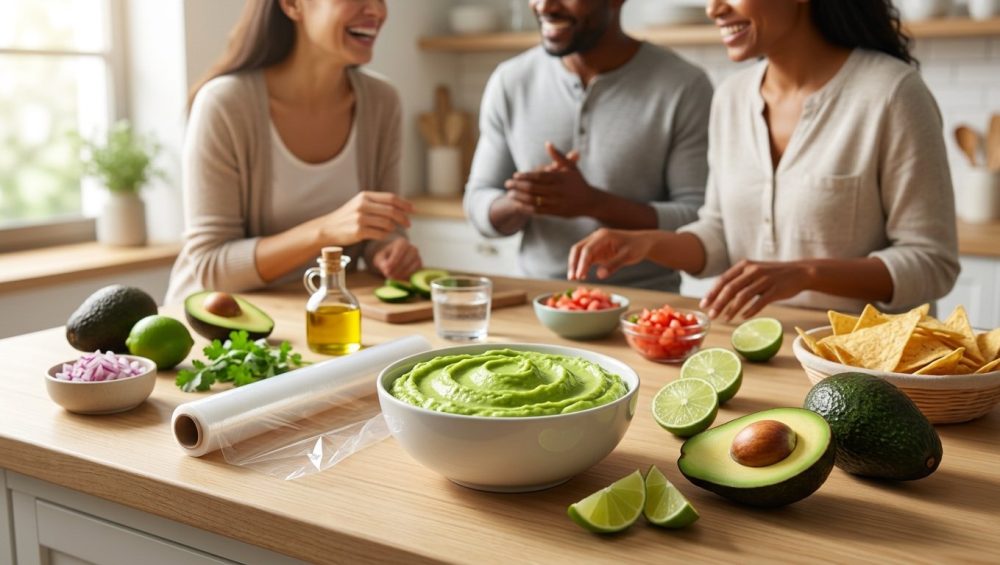
The Cold, Hard Truth About Your Guacamole
Listen to me, weekend culinary warriors. We have all been exactly there. You have spent your entire Saturday afternoon curating a gorgeous, magazine-worthy grazing board. You’ve meticulously folded the prosciutto into delicate little meat roses. You’ve arranged the artisanal crackers with the precision of a Swiss watchmaker. And right in the center, sitting like a crown jewel, is a bowl of freshly mashed, vibrantly green guacamole. You pat yourself on the back, pour a glass of wine, and wait for your guests to arrive.
But twenty minutes later, disaster strikes. You look over at your masterpiece, and that beautiful, emerald-green dip has transformed into a sad, murky, brownish-gray sludge that looks like it was dredged out of a swamp. Suddenly, your stress levels spike. You are frantically scraping off the top layer with a spoon, hiding the brown evidence in the trash, and losing your mind before anyone has even rung the doorbell.
If you want to host a relaxed dinner party, you simply cannot be chained to your cutting board, frantically mashing avocados three minutes before your guests walk in. Time is money, and when it comes to weekend hosting, your time should be spent enjoying the fruits of your labor, not panicking over oxidized produce.
I firmly believe that absolutely anyone can cook like an expert and produce mind-blowing food without a fancy culinary degree. But to do that, you have to stop relying on old wives’ tales and start understanding the actual science of your ingredients. We are going to permanently solve your brown guacamole problem today. No fluff, no pretentious chef-speak, just hard culinary science and foolproof techniques that will allow you to prep your dip hours in advance.
The Chemistry of the Sad, Brown Avocado
To defeat the enemy, you must first understand the enemy. And in this case, the enemy is a highly aggressive chemical reaction known as enzymatic browning.
Avocados are biologically engineered to protect themselves. When you slice into an avocado, you are essentially initiating a microscopic trauma response. Inside the cells of the avocado flesh are complex organic compounds called phenols (specifically, catechol). Safely separated from these phenols, floating in the cytoplasm of the cell, is an enzyme called polyphenol oxidase (PPO). As long as the avocado remains whole and the cell walls are intact, the phenols and the PPO never meet. They live in peaceful, green harmony.
But the moment you drag a blade through that flesh or crush it with a fork, you tear down those cellular walls. The phenols and the PPO are violently thrown together. However, they need a third partner to trigger the reaction: oxygen. When the PPO, the phenols, and the oxygen from the air combine, the enzyme catalyzes the oxidation of the phenols, converting them into compounds called quinones.
Quinones are highly reactive. They rapidly link together—a process called polymerization—to form long, complex chains called melanins. Yes, melanin. The exact same dark brown pigment that determines human skin color and causes apples, bananas, and potatoes to turn brown. From an evolutionary standpoint, this is a brilliant defense mechanism. The brown melanin acts as a physical scab to protect the damaged fruit, and the quinones are actually toxic to certain bacteria, preventing the bruised fruit from rotting instantly in the wild.
But on your dip board? It is a visual tragedy. And it is a tragedy that happens on a massive scale. According to the latest 2026 agricultural data, the United States imported a record-breaking 304 million pounds of avocados just for the Big Game weekend alone. The global avocado market is projected to skyrocket past $19 billion this year. Do you have any idea how many thousands of tons of that expensive, premium fruit end up in the municipal garbage because home cooks don’t know how to stop the enzymatic browning process? It is a staggering waste of money and resources. Mastering the art of the kitchen means respecting your ingredients enough to preserve them properly.
The Physical Culprits: Why Your Prep Method Matters
Before we even talk about how to store the guacamole, we need to talk about how you are making it. The physical tools you use have a direct, scientifically proven impact on how fast your avocado turns brown.
The Cellular Destruction of a Dull Blade
Let’s get one thing straight: a sharp knife slices, but a dull knife crushes. When you use a razor-sharp chef’s knife to halve an avocado or dice it for a chunky dip, the blade severs the cell walls cleanly. It damages only the exact microscopic layer of cells that it touches.
When your kitchen knives get dull, they do not slice. They tear, rip, and pulverize the delicate cellular structure of the fruit. A dull blade creates a massive wake of destruction, rupturing thousands of additional cells on either side of the cut. More ruptured cells mean a massive, uncontrolled release of polyphenol oxidase. This is exactly why the real reason you weep over your cutting board is your dull knife, which crushes the onion cells and releases a flood of volatile sulfur compounds into your eyes. The same exact principle applies to your avocados. If you want greener guacamole, sharpen your knife.
The Reactive Metal Problem
Polyphenol oxidase is a metallic enzyme. Its active site contains copper. Because of this, the browning reaction is actually catalyzed (sped up) by the presence of certain reactive metals. If you are mashing your guacamole in a cheap, unlined copper bowl, an old cast iron skillet, or a low-grade reactive metal container, you are literally throwing gasoline on the enzymatic fire. Always prepare and store your guacamole in non-reactive vessels. High-fired glazed ceramics, heavy-duty glass, or high-quality 18/10 stainless steel are your only acceptable options.
The Cutting Board Contamination
We also need to address your prep surface. When your cutting board keeps cracking and splintering, it becomes a porous trap for bacteria, old acidic juices, and ambient moisture. If you are dicing your avocados on a degraded, un-oiled wooden board that just soaked up the acidic juices of a tomato, you are introducing unpredictable variables to the pH of your fruit before it even hits the bowl. Use a clean, properly maintained board.
Debunking the Garbage Hacks You’ve Been Fed
The internet is a cesspool of terrible culinary advice. If you search for ways to keep guacamole green, you will be bombarded with absurd, useless “hacks” pushed by people who have clearly never worked in a functional kitchen. Let’s aggressively debunk these right now.
The Pit Myth
This is perhaps the most pervasive and infuriating myth of all. The idea is that if you bury the avocado pit in the center of your bowl of mashed guacamole, it will magically prevent the whole batch from turning brown.
This is scientific nonsense. The pit does not emit a magical, anti-oxidizing force field. The only reason the guacamole directly underneath the pit stays green is because the pit is a solid physical object that blocks oxygen from touching that specific, exact millimeter of mashed avocado. The rest of the bowl, which is fully exposed to the air, will still turn into brown sludge. Throw the pit in the compost bin where it belongs.
The Lemon Juice Overload
Yes, acid inhibits polyphenol oxidase. The enzyme has an optimal working pH of around 5.0 to 7.0. If you drastically lower the pH by introducing a highly acidic substance like lemon or lime juice, the enzyme denatures and stops working.
The problem is the dosage. To lower the pH of a bowl of fatty, alkaline avocado enough to completely halt the browning process, you have to add an offensive amount of citrus juice. You end up with a watery, sour, acidic soup that completely masks the rich, nutty, buttery flavor of the avocado. We are making guacamole, not a margarita. A proper squeeze of lime is essential for flavor balance, but it is not a viable long-term preservation strategy.
The Olive Oil Slick
Some food bloggers recommend pouring a thick layer of olive oil over the top of the guacamole to seal out the air. While oil does create a barrier, it is a terrible solution for a dip board. When it is time to serve, you either have to pour the expensive oil down the drain (a massive waste), or stir it into the dip. Stirring half a cup of raw olive oil into an already fat-heavy avocado dip completely destroys the texture, turning it into a greasy, heavy, slick mess.
The “No-Go” Rule: Banishing Toxic Kitchenware from Your Dip Board
We need to pause for a serious conversation about the gear you are using to store your food. I have a strict “no-go” rule when it comes to toxic, cheap kitchenware, and nothing sets me off quite like the standard advice to “press a sheet of plastic wrap directly against the surface of the guacamole.”
Standard cling wrap is often made from polyvinyl chloride (PVC) or low-density polyethylene (LDPE). Not only is PVC an environmental nightmare, but it is frequently manufactured with plasticizers like phthalates to make it flexible. These chemicals are known endocrine disruptors. When you press cheap plastic wrap directly into a high-fat food like avocado, the fats can actually facilitate the leaching of these chemical compounds right into your dip. Have you ever wondered why your plastic containers stain orange after holding tomato sauce? It is because cheap plastics are highly porous and readily absorb and exchange compounds with your food.
Furthermore, plastic wrap is not even an effective oxygen barrier! Polyethylene is highly permeable to oxygen molecules. Even if you press it down perfectly, oxygen is still slowly diffusing right through the plastic and browning your dip.
This applies to your pans and tools, too. Just as cooking spray is the enemy of high-quality cookware because of its chemical propellants, cheap plastic wrap is the enemy of fresh food. If you want to be a resourceful home cook, invest in reusable, food-grade, odor-free silicone lids, heavy glass storage containers, or natural beeswax wraps. Stop wrapping your beautiful, expensive ingredients in toxic garbage.
The Ultimate Preservation Strategies: What Actually Works
Now that we have eliminated the nonsense, let’s talk about the exact, scientifically backed methods that will actually keep your guacamole vibrant green for up to 48 hours. This is how you reclaim your time and sanity.
The Water Shield Method (The Absolute Gold Standard)
If you want to prep your guacamole hours—or even a full day—before your guests arrive, you must utilize the magic of a water seal. This is the single most effective oxygen-barrier technique in existence, relying on basic fluid dynamics.
Oxygen diffuses through water roughly 10,000 times slower than it diffuses through the air. By creating a literal water shield over your avocado, you are building an impenetrable fortress against enzymatic browning. And before you panic: no, the water will not make your guacamole soggy. Avocados are incredibly dense in natural fats, and as we all know, fat and water inherently repel each other. The water simply sits harmlessly on top.
How to execute the Water Shield for Mashed Guacamole:
- The Flattening: Transfer your freshly made guacamole into your heavy glass or ceramic storage container. Using the back of a spoon, aggressively pack the dip down to eliminate any hidden air pockets. Smooth the top surface until it is completely flat and level, like a freshly paved road.
- The Pour: Take a measuring cup filled with cold tap water. Hold a spoon upside down just above the surface of the guacamole. Gently pour about half an inch of water over the back of the spoon so it cascades softly onto the dip without disturbing the smooth surface.
- The Seal: Snap your airtight, non-toxic lid onto the container and place it in the refrigerator. The cold temperature will further slow down any residual enzymatic activity.
- The Reveal: When your guests arrive, pull the container out of the fridge. Gently tip the container over the sink and pour the water off. Give the guacamole one quick, vigorous stir to incorporate any microscopic droplets left behind, and transfer it to your serving bowl. It will be as flawlessly green as the second you mashed it.
How to execute the Water Shield for Leftover Halves:
If you only used half an avocado and want to save the rest for tomorrow’s toast, fill a small glass container halfway with cold water. Place the avocado half, flesh-side down, directly into the water, ensuring the green surface is entirely submerged. Snap the lid on and refrigerate. When you want to eat it, pull it out and pat it dry with a paper towel. Zero browning. Zero waste.
The Acid-Wash Technique
If you are only prepping the guacamole an hour or two in advance and don’t want to mess with the water shield, you can use a modified, targeted acid technique.
Instead of dumping a quarter cup of lime juice into the mixture and ruining the flavor, make your guacamole exactly how you like it. Pack it down smoothly in the bowl. Then, take a pastry brush, dip it in pure lime juice, and gently paint a thin, concentrated layer of acid exclusively on the top exposed surface of the dip. This creates a localized, highly acidic barrier (dropping the surface pH well below the threshold PPO can survive) without altering the internal flavor profile of the dip. When it is time to serve, just stir that top layer in.
The Safe Direct-Contact Method
If you absolutely must use a physical wrap, skip the PVC. Cut a piece of unbleached parchment paper to the exact diameter of your bowl. Lightly spray one side of the parchment with a tiny bit of avocado oil. Press the oiled side of the parchment directly onto the surface of the guacamole, ensuring there are absolutely no air bubbles between the paper and the dip. The oil helps create a tighter seal, and the parchment provides a non-toxic physical barrier.
Designing the Mindful Dip Board
Now that you have the preservation science locked down, we can focus on the actual execution of your gathering. A mindful dip board is about creating an interactive, communal eating experience that feels abundant but requires zero active cooking once the guests arrive.
Prepping for Efficiency
Because you are using the Water Shield method, you can make your guacamole at 10:00 AM for a 6:00 PM party. This frees up your afternoon to focus on the dippers. You need a bench scraper to efficiently scoop up the massive piles of diced tomatoes, jalapeños, and cilantro you will be prepping for your pico de gallo and garnishes. Clean as you go. By 4:00 PM, your kitchen should be spotless, the dishwasher should be running, and you should be holding a beverage.
Mastering Thermal Mass
When you serve a dip board, the food is going to sit out at room temperature for hours. As the guacamole warms up, the enzymatic browning process accelerates, even if you preserved it perfectly beforehand.
To combat this, you must utilize the concept of thermal mass. Do not serve your guacamole in a thin, flimsy plastic bowl or a lightweight melamine dish. Serve it in a thick, heavy-walled stoneware or ceramic bowl. Place that empty serving bowl in the refrigerator or freezer for two hours before the party. When you transfer your perfectly green, water-shielded guacamole into the freezing cold stoneware, the thick walls of the bowl will retain that chill, acting as a natural refrigerator on your dining table and keeping the dip cold, safe, and green for significantly longer.
Flavor Pacing and Texture Contrast
A masterclass dip board isn’t just a bowl of guac and a bag of tortilla chips. You need contrast.
- The Crunch: Provide sturdy, salted tortilla chips, but also offer crisp, ice-water-shocked radishes, endive leaves, and thick-cut cucumber slices. The vegetables provide a refreshing, hydrating crunch that cuts through the heavy fat of the avocado.
- The Acid: Serve small ramekins of pickled red onions, pickled jalapeños, or spicy escabeche on the board. The sharp, biting vinegar acts as a palate cleanser.
- The Heat: Keep a bottle of high-quality, small-batch hot sauce on the board for guests who want to elevate the spice level of their individual bites.
The Masterclass on Guacamole Execution
Even if you preserve it perfectly, it won’t matter if the guacamole tastes like bland, watery mush. Let’s quickly review the non-negotiable rules of execution.
- The Avocado Selection: You must use Hass avocados. They have a higher fat content (around 18-20%) compared to watery Florida avocados, yielding a richer, creamier texture. They should yield to gentle pressure, but they should not feel hollow or deeply bruised.
- The Mash: Never, under any circumstances, put your avocados in a food processor or a blender. Guacamole is a rustic dip, not a baby food puree. Use a large fork or a dedicated potato masher. You want a varied texture—mostly creamy, but with distinct, satisfying chunks of intact avocado throughout.
- The Aromatics: White onion provides a sharper, more authentic bite than red or yellow onion. Mince it finely. If you have guests who are sensitive to raw onion, soak the minced onion in cold water for ten minutes before draining and adding it to the dip; this removes the harsh, biting sulfur compounds while leaving the crunch.
- The Seasoning: Avocado is incredibly fat-dense, which means it requires a shocking amount of kosher salt to properly elevate the flavor. If your guacamole tastes boring, you didn’t add enough salt. Period. Add salt gradually, tasting after every addition, until the nutty, rich flavor of the avocado suddenly pops on your palate.
Troubleshooting Your Dip Disasters
Let’s say you followed the rules, but you left the dip board out for four hours during a raging summer party, and the very top layer of the guacamole has developed a slight brownish tint.
First of all, do not panic. Take a deep breath. Is it safe to eat? Absolutely. As we discussed, that brown layer is just melanin. It is a harmless, natural compound. It might taste slightly more bitter or lack the vibrant freshness of the green dip beneath it, but it will not hurt anyone.
However, we eat with our eyes first. If it bothers you, simply take a spoon and gently skim the oxidized layer off the top. The guacamole directly underneath will still be perfectly green and ready to eat.
Hosting a gathering should bring you joy, not anxiety. By rejecting toxic kitchenware, respecting the cellular biology of your ingredients, and utilizing the flawless physics of the Water Shield method, you have completely eliminated the stress of the ticking avocado clock. You are no longer a victim to enzymatic browning. You are in total control of your kitchen. Now go sharpen your knife, chill your stoneware, and pour yourself a glass of wine. You’ve got a party to host.