The Tragedy of the Chewy Weeknight Stir-Fry
We need to have a brutally honest conversation about your weeknight stir-fries. You know exactly the scenario I am talking about. You stop by the grocery store after a long day of work, motivated by a sudden burst of culinary ambition. You drop fifteen dollars on a piece of flank steak, you meticulously chop your bell peppers, you whisk together a savory sauce of soy and sesame, and you get your rice perfectly steamed. You toss the meat into the hot pan, anticipating that glorious sizzle.
Instead, the meat immediately dumps a puddle of murky, gray water into the pan. It boils instead of sears. And when you finally sit down at the dining table, exhausted and starving, you take a bite only to discover that your beef has the exact texture and structural integrity of a Michelin tire. You chew. And you chew. And you chew some more, until your jaw gets a workout and you deeply regret not just ordering from the local takeout place down the street.
Look, darling, I don’t care if you have a culinary degree or if you burn toast on a regular basis. You deserve to eat food that doesn’t require a chainsaw to digest. The frustrating gap between the melt-in-your-mouth tender beef you get at your favorite Chinese restaurant and the rubbery, dry disaster you make at home isn’t about the quality of the meat you buy. It isn’t about having a commercial-grade stove that shoots jet engine flames. It comes down to a fundamental lack of kitchen chemistry.
Today, we are unlocking the simple magic of baking soda. For less than the cost of a cup of coffee, you can buy a little orange box that will completely revolutionize the way you cook. This isn’t pretentious chef-speak; this is a fast, foolproof, and highly scientific shortcut that transforms cheap beef into an incredibly tender, restaurant-quality masterpiece. Grab a glass of Pinot, pull up a stool, and let’s fix your dinner.
What Exactly is Velveting?
If you have ever wondered how Chinese restaurants manage to make the most economical, tough cuts of beef taste like premium filet mignon, the answer is a traditional culinary technique known as “velveting.” Velveting is the process of manipulating the structure of meat fibers before they ever hit the heat, ensuring they remain incredibly soft, juicy, and—as the name implies—velvety smooth.
The Traditional Restaurant Method
In traditional Chinese kitchens, velveting is an art form. The classical method involves thinly slicing the meat and marinating it in a specific mixture of egg whites, cornstarch, rice wine, and salt. The egg white provides an alkaline environment, while the cornstarch creates a gelatinous, protective barrier around the exterior of the meat. After marinating, the meat is briefly blanched in a large wok full of hot oil (a process called “passing through oil”) or sometimes boiling water, just until the exterior turns opaque. The meat is then removed, drained, and finally added back into the wok at the very end of the stir-fry process to be coated in sauce.
While this traditional method produces undeniably spectacular results, let’s be entirely realistic: nobody has the time, the patience, or the desire to deep-fry meat in a massive vat of oil on a random Tuesday night. I am a firm believer that time is money. Weekday cooking requires ruthless efficiency. We need the restaurant-quality texture without the restaurant-level cleanup.
The Weeknight Home Cook’s Shortcut
This is where our pantry hero steps in. Instead of a messy egg white and cornstarch slurry followed by a deep-frying session, home cooks can achieve an almost identical tenderizing effect using a simple water and baking soda solution. This technique is often referred to as “chemical velveting.” It requires exactly two ingredients, takes less than thirty seconds of active prep time, and does the heavy lifting while you are busy chopping your vegetables.
The Biochemistry of Baking Soda (No Lab Coat Required)
I promise I won’t bore you with a tedious science lecture, but understanding the “why” behind your food is the secret to tender meat. When you understand the chemistry, you stop blindly following recipes and start actually cooking.
The pH Scale and Protein Denaturation
Let’s talk about what happens when meat meets heat. Meat is naturally slightly acidic, typically sitting somewhere around 5.5 to 6.0 on the pH scale. When raw meat is dropped into a screaming hot pan, the sudden application of heat causes the proteins—specifically the myofibrillar proteins—to denature and rapidly coagulate. The muscle fibers forcefully contract. Imagine taking a soaking wet dishcloth and twisting it as hard as you can; the water is violently squeezed out. That is exactly what your steak is doing to its own juices. The moisture is forced out into the pan, leaving you with dry, tough, chewy protein fibers.
Enter sodium bicarbonate, commonly known as baking soda. Baking soda is a highly alkaline substance, boasting a pH level of around 8.3. When you coat your thinly sliced meat in a baking soda solution, you rapidly raise the pH level on the surface of the meat, shifting it from acidic to alkaline.
The Electrical Charge and Water Retention
This alkaline environment does two incredibly important things. First, it physically prevents the proteins from bonding tightly together. Because the proteins are forced to maintain a looser structure, they cannot violently contract and squeeze out their moisture when they hit the hot pan.
Second, the shift in pH actually alters the electrical charges of the amino acids within the meat. This change in electrical charge increases the muscle fibers’ capacity to bind with water molecules. The meat acts less like a contracting sponge and more like a water balloon, trapping its natural juices inside even when subjected to the blistering heat of a wok. Furthermore, the alkaline conditions weaken the tough cross-links in the connective tissue, physically breaking down the collagen that makes cheap cuts of meat so difficult to chew.
The Maillard Reaction Bonus
As an added culinary bonus, a higher pH level actually accelerates the Maillard reaction—the chemical process responsible for the beautiful, savory browning on the outside of seared meat. Because the baking soda raises the surface pH, your meat will develop a gorgeous, caramelized crust much faster than it normally would. This means you can get that perfect sear before the inside of the meat has a chance to overcook and dry out. It is a win-win situation orchestrated entirely by a one-dollar box of powder.
The Masterclass: How to Velvet Meat Step-by-Step
Knowing the science is great, but executing it flawlessly is what gets dinner on the table. If you follow these four steps, I guarantee you will never suffer through a chewy stir-fry again.
Step 1: Slicing Against the Grain
Chemical tenderization is only half of the battle; mechanical tenderization is the other. Before the baking soda even touches the meat, you must slice it correctly. Look closely at your cut of beef (flank and skirt steaks are the best examples of this). You will see long, distinct lines of muscle fibers running in one direction. This is called the “grain.”
If you slice parallel to those lines, you are leaving those tough muscle fibers completely intact, meaning your teeth will have to do the hard work of breaking them apart. Instead, you must slice perpendicular to the lines—cutting across the grain. This physically shortens the muscle fibers to a fraction of an inch, making the meat infinitely easier to chew. Make sure you’re using a sharp knife and a solid cutting board—none of that cheap glass or bamboo nonsense that is actively ruining your knives. Aim for slices that are about a quarter-inch thick.
Step 2: The Magic Ratio
The biggest mistake home cooks make with baking soda is assuming that more is better. It is not. Baking soda is a powerful chemical, and if you use too much of it, your meat will taste like a metallic, soapy disaster.
The golden ratio is incredibly simple: Use exactly 1 teaspoon of baking soda for every 1 pound of meat.
Place your sliced meat into a mixing bowl. Sprinkle the measured baking soda evenly over the top. Add about two to three tablespoons of water to the bowl. The water acts as a carrier, dissolving the baking soda and ensuring it evenly coats every single surface of the meat. Use your hands to massage the solution into the slices until the liquid is fully absorbed.
Step 3: The Waiting Game
Once the meat is coated, walk away. The baking soda needs time to work its alkaline magic on the protein structures. Let the meat sit at room temperature for 15 to 30 minutes. Do not leave it for an hour, and absolutely do not leave it in the fridge overnight. If left for too long, the baking soda will break down the meat so thoroughly that it will turn into an unappetizing, mushy paste.
This 15-to-30-minute window is not wasted time. This is exactly when you should be mincing your garlic, grating your ginger, chopping your broccoli, and whisking together your stir-fry sauce. Efficiency is the name of the game.
Step 4: The Crucial Rinse and Dry
Listen to me very carefully: you cannot skip this step. Once the 30 minutes are up, you must place the meat in a colander and rinse it thoroughly under cold running water. You want to wash away all of the excess baking soda from the surface of the meat. If you skip the rinse, your dinner will taste like a mouthful of loose change.
After rinsing, you must dry the meat aggressively. Lay the slices out on a few layers of paper towels and pat them completely dry. Throwing wet meat into a hot pan is one of those classic rookie kitchen mistakes that will guarantee a boiled, gray dinner. Water is the enemy of a good sear. The meat must be bone-dry before it hits the oil.
The “No-Go” Rule: Why Your Cookware is Ruining Your Health
Since we are talking about stir-frying, I am forced to address the elephant in the kitchen. You know my strict rules about banishing toxic kitchen gear from your home, and there is no cooking method that exposes the dangers of cheap cookware quite like a high-heat stir-fry.
The Hidden Dangers of High Heat and Teflon
Stir-frying requires screaming high heat. To get that beautiful sear and that signature smoky flavor (known as “wok hei,” or the breath of the wok), your pan needs to reach temperatures well over 400°F, often pushing closer to 500°F.
If you are attempting to stir-fry in a cheap, scratched, non-stick Teflon pan, you are not just ruining your dinner—you are actively poisoning the air in your home. Teflon (polytetrafluoroethylene, or PTFE) is generally stable at low temperatures, like when you are gently scrambling eggs. However, the moment that non-stick coating exceeds 500°F, it begins to rapidly break down and degrade.
As the coating breaks down, it releases invisible, odorless, highly toxic polyfluoroalkyl substances (PFAS) into the air. Inhaling these toxic fumes causes a very real, documented medical condition called “polymer fume fever,” which the medical community has affectionately dubbed the “Teflon flu”. The symptoms are horrific: sudden chills, high fever, severe body aches, headaches, and chest tightness. This isn’t a rare anomaly. In 2023 alone, poison control centers in the United States reported over 265 suspected cases of Teflon flu—the highest number recorded in over two decades.
If you want to know just how toxic these fumes are, look at the canary in the coal mine: pet birds. The respiratory systems of birds are incredibly fragile. If a Teflon pan is overheated in a kitchen, the resulting fumes are so toxic that they will instantly kill a pet parrot or canary in the same house. Let me be perfectly clear: if a frying pan emits a gas that can drop a bird dead from across the room, it has absolutely no business being heated up to cook your Tuesday night dinner.
The Only Pans You Should Be Using
Throw your peeling, scratched non-stick pans in the garbage immediately. If you are serious about stir-frying, you need to invest in a carbon steel wok. Carbon steel is the undisputed king of the Asian kitchen for a reason. It heats up incredibly fast, it can withstand temperatures of over 600°F without releasing a single toxic chemical, and when properly seasoned, it becomes beautifully, naturally non-stick.
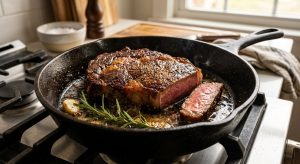
If you don’t have a wok, a heavy-bottomed tri-ply stainless steel skillet or a well-seasoned cast-iron pan will work beautifully. They retain heat exceptionally well, ensuring that when you drop your velveted meat into the pan, the temperature doesn’t instantly plummet.
Customizing the Chemistry for Different Proteins
While beef is the most dramatic beneficiary of the baking soda treatment, this chemical trick is highly versatile. You can apply the exact same science to almost any protein that suffers from weeknight overcooking.
Rescuing Cheap Beef
Flank steak, skirt steak, and chuck are the prime candidates for velveting. These cuts are heavily exercised muscles, meaning they are packed with tough connective tissue and thick muscle fibers. They are also incredibly flavorful and budget-friendly. By using the 1-teaspoon-per-pound baking soda ratio, you can buy the cheapest cut of beef at the butcher counter and serve a stir-fry that tastes like it was made with a forty-dollar tenderloin.
Saving Chicken from the Desert
Chicken breast is the most notoriously dry, unforgiving meat on the planet. Because it lacks intramuscular fat, overcooking it by even two minutes results in a chalky, stringy texture that gets stuck in your teeth. If your stir-fried chicken always turns out dry, this fifteen-minute trick will change your life. The baking soda alters the chicken’s proteins just as it does with beef, forcing the breast meat to hold onto its moisture even when subjected to the intense heat of a wok. You will be shocked at how plump and juicy the chicken remains.
The Ground Meat Miracle
Here is a brilliant secret straight from the food scientists at America’s Test Kitchen: you can velvet ground meat. Have you ever tried to brown a pound of ground beef for tacos or a meat sauce, only to watch it release a massive pool of water and boil in its own juices? That is the exact same protein-seizing problem we discussed earlier.
To fix this, toss your raw ground beef with a solution of 1/4 teaspoon of baking soda and 1 tablespoon of water per pound of meat. Let it sit for 15 minutes before cooking (no rinsing required for this tiny amount). The baking soda prevents the ground meat from seizing up, meaning it retains its moisture, browns significantly faster, and stays incredibly tender. It is a weeknight game-changer.
Debunking Velveting Myths and Avoiding Disasters
Because the internet is full of terrible cooking advice, let’s clear up a few common misconceptions about tenderizing meat.
Myth 1: Acid works just as well as baking soda.
People love to marinate meat in heavy doses of vinegar, lemon juice, or pineapple juice, claiming it tenderizes the meat. Acid does break down proteins, but it does so in a destructive way. If left too long, acidic marinades turn the outer layer of the meat into a mushy, mealy paste while leaving the center tough and dry. Baking soda (a base) prevents the proteins from seizing in the first place, resulting in a uniform, bouncy tenderness.
Myth 2: You can use baking powder instead of baking soda.
Absolutely not. Baking powder is a mixture of baking soda and a powdered acid (like cream of tartar). Because it contains its own acid, it will not raise the pH level of the meat high enough to alter the protein structure. You must use pure sodium bicarbonate.
Myth 3: You can just leave the baking soda in the marinade.
Some recipes suggest adding baking soda directly to your soy sauce marinade and cooking it without rinsing. While you can get away with this if you use a microscopic amount of baking soda, it is a massive gamble. Baking soda has a highly distinct, bitter, metallic taste. If you don’t rinse it off, you run the risk of ruining your entire dish. Take the extra thirty seconds to rinse and dry the meat. It is the only foolproof method.
The Ultimate 30-Minute Workflow
The key to pulling off simple weeknight dinners without losing your mind is mastering your prep sequence. Velveting does not add any extra time to your evening if you sequence your tasks correctly. Here is exactly how your 30-minute stir-fry should flow:
Minutes 0 to 5: The Meat Prep
Start here. Slice your beef or chicken against the grain. Toss it in a bowl with the 1 teaspoon of baking soda and a splash of water. Set it aside on the counter. Your active work here is done, but the chemistry is just beginning.
Minutes 5 to 20: The Veggies and Sauce
While the baking soda is working its magic, do your knife work. Chop your broccoli, slice your bell peppers, and mince your garlic and ginger. In a small bowl, whisk together your stir-fry sauce (soy sauce, oyster sauce, a splash of sesame oil, and a teaspoon of cornstarch). Set the table. Pour yourself that glass of wine.
Minutes 20 to 25: The Rinse and Sear
Your meat is now velveted. Dump it into a colander in the sink and rinse it thoroughly with cold water. Lay it out on paper towels and pat it aggressively dry. Heat your carbon steel wok or stainless skillet until it is smoking hot. Add a high-smoke-point oil (like avocado or peanut oil) and sear the meat in a single layer. Do not crowd the pan. Cook it for just two minutes until a crust forms, then remove it from the pan and set it aside on a plate.
Minutes 25 to 30: The Final Toss
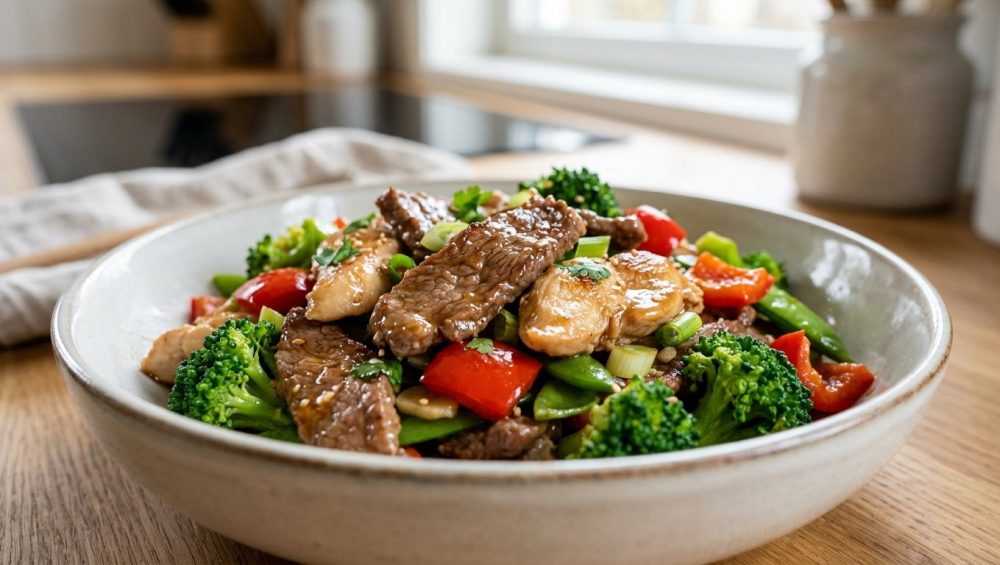
In that same hot pan, toss in your vegetables and aromatics. Stir-fry them for a few minutes until they are tender-crisp. Pour in your prepared sauce, which will immediately bubble and thicken thanks to the cornstarch. Finally, add the velveted meat back into the pan, tossing everything together for thirty seconds until it is beautifully coated and glossy.
Serve it immediately over steaming rice.
If you are serious about breaking your takeout habit, this one chemical trick is going to be your secret weapon. You don’t need a culinary degree, you don’t need expensive cuts of wagyu beef, and you certainly don’t need to chew until your jaw aches. You just need a little bit of science, a hot pan, and the confidence to know that you can absolutely cook like an expert in your own kitchen. Now get off the internet, go check your pantry for baking soda, and go make something spectacular for dinner.