Let’s get one thing straight right out of the gate: if you are still eating bland, waterlogged, sad-sponge tofu, you are doing it wrong. I say this not to judge you, but because I have been in your exact shoes. I have stood in my kitchen on a busy Tuesday night, desperately propping up a leaning tower of heavy culinary textbooks on top of a wobbly block of soy curd, praying that pressing the living daylights out of it would somehow make it taste less like a damp kitchen towel. Spoiler alert: it never works.
If you are tired of choking down rubbery, flavorless plant-based meals while pretending you enjoy them, pull up a chair. I am about to save your weeknight dinners. I firmly believe that you do not need a culinary degree to make mind-blowing food. You just need to understand a little bit of food science, and you need to let your kitchen appliances do the heavy lifting for you. In this case, your greatest ally is your freezer.
Freezing your tofu before you cook it is not just a trendy internet hack; it is a fundamental, structural transformation of the ingredient. It is the completely hands-off secret to achieving that incredibly satisfying, chewy, restaurant-quality texture without spending hours hovering over a cutting board. We are going to dive deep—and I mean extraordinarily deep—into the molecular science of why this works, the foolproof methods to execute it, and the cookware you absolutely must use to get the perfect sear. Grab a glass of wine, take a deep breath, and let’s fix your tofu game once and for all.
The Plant-Based Boom: Why Tofu Is Everywhere (And Why We Keep Messing It Up)
Before we get into the molecular magic of your freezer, we need to talk about why this ingredient has suddenly taken over our grocery stores. We are living in the golden age of the flexitarian diet. People are actively trying to incorporate more plant-based meals into their routines, not necessarily because they are strict vegans, but because they want a break from heavy meat dishes.
The statistics back this up in a massive way. According to recent market data, a staggering 59% of U.S. households purchased plant-based foods in 2024. The global tofu market was valued at $3.12 billion in 2024 and is projected to reach $3.85 billion by 2030. In the United States alone, the tofu market is experiencing a massive surge, growing at a compound annual growth rate (CAGR) of 9.0%.
But here is the glaring problem: despite buying all this tofu, most home cooks have absolutely no idea what to do with it. When you are trying to pull together simple weeknight dinners, the last thing you want is a high-maintenance protein that requires an hour of prep work. So, people treat tofu exactly like chicken. They rip open the package, chop it into sad little cubes, throw it into a hot pan with a splash of oil, and wonder why it turns into a crumbly, steaming pile of flavorless mush.
Tofu is not meat. You cannot treat it like meat. It is essentially a delicate hydrogel—a network of proteins holding onto a massive amount of water. If you do not address the water content, you will never, ever get flavor into the center of that block. This is where the freezer steps in to do the work that your heavy cookbooks and expensive tofu presses simply cannot do.
The Culinary Science of the Freeze: What Actually Happens?
To understand why freezing tofu changes everything, we have to look at the food physics. Raw, unpressed tofu is approximately 85% water. That water is suspended in a highly fragile gel made of denatured soy globulins (specifically, proteins called glycinin and β-conglycinin) and the calcium sulfate coagulants used to set the curd.
Imagine that a block of tofu is made up of millions of microscopic water balloons. Each balloon is a soy protein structure, and it is completely filled to the brim with water. This is how the moisture stays suspended inside the block. Now, think about what happens when you forget a glass bottle of water or a can of soda in the freezer. Water expands by about 9% when it freezes into ice.
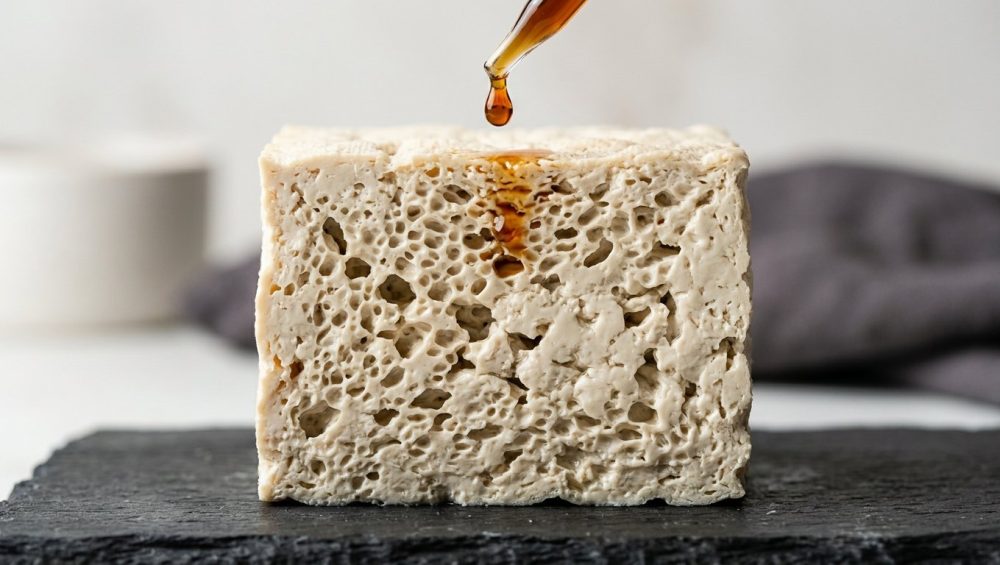
When you place a block of tofu in the freezer, the water inside those millions of tiny protein balloons begins to freeze and expand into sharp, jagged ice crystals. Because the water expands, it literally tears the protein network apart from the inside out. The ice crystals puncture the structural walls of the soy matrix, creating a vast network of tiny, sponge-like pockets.
If your chicken always turns out dry, it is usually because of overcooking and moisture loss, which ruins the meal. But with tofu, that exact moisture loss is the holy grail. Once you remove the frozen tofu from the freezer and allow it to thaw, those sharp ice crystals melt back into liquid water. But the damage to the protein structure has already been done—in the best way possible. The water simply drains out of the newly formed holes, leaving behind a highly porous, honeycomb-like structure.
The science shows that mechanical pressing alone (squishing raw tofu between plates) only achieves about a 38% moisture removal at best. However, the freezing and pressing method achieves a massive 62% to 69% moisture loss. Furthermore, freezing does not degrade the nutritional quality of the tofu; the Protein Digestibility-Corrected Amino Acid Score (PDCAAS) remains identical to fresh tofu, and the soy protein structure is stabilized, not destroyed.
The Masterclass Method: Step-by-Step Tofu Freezing
I have zero patience for pretentious chef-speak or overly complicated prep methods that waste my time. Time is money, people. Weekday meals require efficiency, which buys us the time to be absolute perfectionists on the weekends. Here is the definitive, no-nonsense, science-backed way to freeze your tofu.
Step 1: Selecting the Right Block
Not all tofu is created equal, and your results will vary wildly depending on what you buy. For this technique, you want to purchase Firm or Extra-Firm tofu. These varieties already have a denser protein matrix that can withstand the aggressive expansion of ice crystals without completely disintegrating into dust.
Do not use this method on silken tofu unless you are intentionally trying to create a crumbly, granular texture (which we will discuss later in the advanced tactics section). Silken tofu is minimally processed and incredibly fragile; freezing it will destroy its creamy consistency.
When prepping your workspace, remember that using a glass or marble surface is a fantastic way of ruining your knives, so stick to a solid wood or high-quality rubber cutting board when you eventually slice your block.
Step 2: The Freezer Strategy
There is a massive debate on the internet about whether you should drain, press, and cube your tofu before you freeze it. Some food bloggers will tell you to carefully slice it, lay it out on parchment paper, and freeze the individual cubes.
Listen to me closely: ignore them.
The easiest way is the best way. Take the entire, unopened plastic package of tofu straight from your grocery bag and throw it directly into the freezer. Do not open it. Do not drain the water. Do not press it.
Why? Because of thermodynamics. When you freeze the entire block submerged in its original packaging water, the freezing process happens much slower. In food science, the speed of freezing dictates the size of the ice crystals. Fast freezing (like spreading tiny cubes on a baking sheet) creates very small ice crystals, which causes less structural damage to the protein. Slow freezing (like freezing a dense, water-logged block) creates massive, jagged ice crystals. We want the massive ice crystals because they create the largest, most cavernous pockets in the tofu, resulting in the meatiest, chewiest texture possible. Leave it in the freezer for at least 6 to 8 hours, or ideally, just keep a stash in there permanently so you always have some on hand.
Step 3: The Thawing Protocol
When you are ready to cook, you must thaw the tofu completely. Do not try to rush this by hacking at a frozen block of soy ice with a chef’s knife.
The best method is to move the frozen package to the refrigerator the night before you plan to cook it. If you forget (because we are all human and meal prep is a myth), you can submerge the sealed plastic package in a bowl of cold water for about 15 to 20 minutes.
Do not use warm water, and absolutely do not use the microwave. Microwaving frozen tofu causes uneven heating, partial cooking of the exterior, and ruins the delicate chewy texture you just worked so hard to create.
Step 4: The Final Press
Once the block is completely thawed, cut open the plastic package and drain the liquid. You will notice immediately that the tofu looks different. It will have a slightly darker, yellowish, buttery hue, and it will feel significantly denser and spongier.
Now, you press it. But because the internal structure has already been broken by the ice crystals, you do not need to balance a cast-iron skillet and three encyclopedias on top of it. You can literally just take the block between your two hands and gently squeeze it over the sink like a kitchen sponge. The water will pour out effortlessly.
Once pressed, place it on your cutting board and slice it into your desired shapes. To transfer your perfectly cubed pieces to a bowl without them crumbling in your hands, you absolutely need a bench scraper. It is the unsung hero of kitchen prep.
Flavor Architecture and Cooking Dynamics
Now that you have a block of structurally transformed, highly porous, incredibly dry tofu, the culinary possibilities are endless. This is where the magic of flavor architecture comes into play.
The Marinade Vacuum Effect
Raw tofu is a hydrogel, meaning it is full of water. Oil and water do not mix. When you try to marinate raw tofu in a sesame oil and soy sauce mixture, the marinade literally bounces off the surface. The water inside the tofu blocks the flavor from penetrating.
Frozen and thawed tofu, however, is essentially an empty sponge. Because you have evacuated the water from those expanded ice crystal pockets, the tofu acts like a vacuum. When you toss your pressed cubes into a marinade, the liquid rushes into those microscopic caverns, flavoring the tofu all the way to the center.
A quick tip from your sassy sous-chef: if your marinade tastes flat or overly salty, you have likely forgotten that your dinner actually needs acid to balance the flavor profile. Always add a splash of rice vinegar, lime juice, or black vinegar to your soy sauce base before tossing your tofu in it. Let the cubes sit in the liquid for just 10 minutes—that is all it takes for the sponge effect to work.
Achieving the Ultimate Crisp
The reason raw tofu never gets crispy is moisture. In order to achieve the Maillard reaction (the chemical reaction between amino acids and reducing sugars that gives browned food its distinctive flavor), the surface temperature of the food must exceed the boiling point of water (212°F / 100°C). If your tofu is constantly leaking water into the hot pan, the temperature drops, and the tofu steams in its own juices instead of searing.
Because your frozen-and-thawed tofu has had up to 69% of its moisture removed, it hits the hot oil and immediately begins to fry. The exterior crisps up beautifully, creating a golden, crunchy crust that protects the chewy, meaty interior. Just like the method for perfectly browned mushrooms, you must not crowd the pan, or the tofu will steam instead of sear. Give the cubes space to breathe.
The Non-Negotiable Rule: Ditch the Toxic Cookware
We need to have a serious talk about the pan you are about to use to cook this masterpiece. I have a strict “no-go” rule on toxic kitchen gear. I absolutely despise cheap, peeling non-stick pans, and I am going to aggressively encourage you to throw yours in the trash.
The Hidden Dangers of Cheap Non-Stick
If your cheap coated skillets are already losing their slip, it means you are actively eating the chemical coating with every meal. Most conventional non-stick pans are coated with polytetrafluoroethylene (PTFE), commonly known by the brand name Teflon. PTFE belongs to a class of synthetic “forever chemicals” known as PFAS (per- and polyfluoroalkyl substances), which take decades or centuries to break down in the environment and in the human body.
Recent 2024 and 2025 data from the Ecology Center revealed that a shocking 79% of tested non-stick cooking pans were coated with PTFE. While manufacturers claim these pans are safe under “normal” use, the reality of a home kitchen is very different. When a PTFE pan is heated above 500°F (260°C)—which can happen in just a few minutes on a gas stove—the coating begins to break down and release highly toxic fumes. Inhaling these fumes causes a condition known as “polymer fume fever” or “Teflon flu,” cases of which have been actively rising in recent years.
Furthermore, as you use metal or even wooden utensils on these pans, you create microscopic abrasions that release PTFE microplastics directly into your food. There is absolutely no reason to risk your health, or the environment, for the sake of an easy cleanup.
The Right Pans for the Job
You do not need toxic chemicals to cook tofu without sticking. I strongly advocate for using well-seasoned carbon steel pans to achieve a flawless, non-toxic sear.
Carbon steel and cast iron rely on a process called polymerization, where layers of cooking oil are baked into the metal at high heat, creating a natural, incredibly slick, and 100% safe non-stick surface. If you heat your carbon steel pan properly, add a high-smoke-point oil (like avocado or grapeseed), and let the frozen-and-thawed tofu cubes sear undisturbed for 3 to 4 minutes per side, they will release perfectly from the pan with a gorgeous golden crust.
If you prefer a lighter pan, a high-quality, multi-clad stainless steel skillet is also brilliant. You just need to master temperature control. Heat the dry stainless steel pan until a drop of water dances across the surface (the Leidenfrost effect), then add your oil, then add your dry tofu. It will not stick.
Troubleshooting Your Tofu Disasters
Even with the best methods, things can occasionally go sideways. Here are the smart fixes for common rookie mistakes when freezing tofu.
The Tofu is Crumbly and Falling Apart:
You bought the wrong tofu. You likely picked up Silken or Soft tofu instead of Firm or Extra-Firm. Silken tofu has a much higher water content and a very delicate protein structure. When it freezes, the ice crystals completely obliterate the matrix, leaving you with a granular, crumbly mess. Check your labels.
The Tofu Tastes “Off” or Stale:
If your frozen tofu develops a yellowish tint or a paint-like aroma, it has suffered from lipid oxidation. Tofu contains polyunsaturated fats that are highly vulnerable to light, oxygen, and trace metals in your freezer. This is why you should freeze it in its original, sealed, opaque packaging. If you do take it out of the package to freeze, you must store it in an airtight container. You might notice that your plastic containers stay greasy after storing oily marinades, which is why I always recommend using high-quality glass storage containers for your freezer prep.
The Tofu Still Isn’t Crispy:
You either didn’t press enough water out after thawing, or you crowded the pan. Remember, moisture is the enemy of the Maillard reaction. Squeeze the thawed block thoroughly, pat the exterior dry with a clean kitchen towel, and give the cubes plenty of room in a very hot pan. And please, stop using cheap utensils; there is a distinct reason your silicone spatulas taste like soap when exposed to high heat. Invest in a solid wood turner or a stainless steel fish spatula to flip your tofu.
Can I Refreeze It?
Absolutely not. Thawing initiates protease and lipase enzymatic activity. Refreezing the tofu causes secondary ice crystal growth that will shred the remaining protein matrix into absolute mush. Once it is thawed, you need to cook it immediately or keep it in the fridge for no more than two days.
Advanced Tofu Tactics for the Weekend Hobbyist
Once you have mastered the basic freezer method for your weeknight stir-fries, you can start playing around with more advanced culinary techniques.
The Double Freeze Technique
If you want a texture that is aggressively chewy—something that can stand up to a heavy, slow-simmered stew or be threaded onto a barbecue skewer without falling apart—you can double freeze your tofu.
To do this, freeze the block in its packaging, thaw it, press the water out, and then put the pressed block back into the freezer in an airtight bag. The second freeze forces the remaining trace amounts of moisture to expand again, further stretching the protein fibers. When you thaw it for the second time, the tofu becomes incredibly dense, highly elastic, and remarkably hearty. It is the ultimate texture for a vegan “chicken” nugget or a robust curry.
Freezing Silken Tofu for Crumbles
Earlier, I told you not to freeze silken tofu because it ruins the smooth texture. However, if you want to ruin that texture on purpose, it is a brilliant hack. When silken tofu freezes and thaws, it loses its creamy consistency and becomes highly granular.
If you press this thawed silken tofu, it crumbles into a texture that is remarkably similar to ground pork or ricotta cheese. You can use these frozen-and-thawed silken crumbles as a high-protein base for a vegan bolognese sauce, a spicy mapo tofu, or a plant-based lasagna filling. It absorbs heavy, rich tomato sauces beautifully.
Final Thoughts from the Sous-Chef
Cooking should never be a stressful chore, and eating plant-based meals should never feel like a punishment. The beauty of the home kitchen is that you have the power to transform the most mundane, inexpensive ingredients into absolute culinary art, simply by understanding how they work on a molecular level.
Freezing your tofu is the ultimate testament to working smarter, not harder. By letting the passive thermodynamics of your freezer do the heavy lifting, you bypass the frustrating, messy, and ineffective methods of traditional tofu pressing. You create a sponge that eagerly soaks up your most brilliant marinades, and a protein that crisps up beautifully in a safe, non-toxic pan.
So the next time you bring home a block of tofu, do not unpack it. Do not drain it. Just throw it straight into the freezer. Your future self—standing in the kitchen on a chaotic Tuesday night, craving a crispy, deeply flavorful stir-fry—will thank you. Now get out there, ditch the Teflon, embrace the science, and start cooking like the expert you are.