Listen up, my fellow kitchen warriors. We need to have a serious, intervention-style conversation about one of the most chronically abused ingredients in the modern American home kitchen: the humble mushroom.
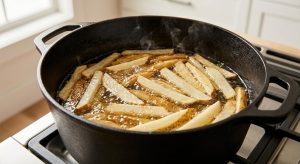
If you are like ninety percent of weekend culinary hobbyists, your current method for cooking mushrooms probably looks something like this: You slice up a beautiful carton of creminis. You place a skillet over medium heat. You pour in a generous, expensive glug of extra-virgin olive oil or melt a heavy knob of butter. Then, you toss the raw mushrooms into the fat. Almost immediately, the oil vanishes. You panic, assuming the pan is too dry, so you add more oil. A few minutes later, the mushrooms collapse, releasing a flood of murky, grey liquid into the pan. You are now standing over a stove, watching your expensive fungi boil in a depressing puddle of their own juices and excess oil. When you finally serve them, they are greasy, rubbery, and squeak against your teeth like a dog toy.
It is a culinary tragedy. But it is not your fault. You were simply taught the wrong way to cook them. If you want to fix those rubbery mushrooms and achieve that deeply browned, meaty, restaurant-quality sear at home, you have to completely reverse your process. You have to respect the science of the ingredient. And the science dictates one absolute, non-negotiable rule: Never add oil first.
Welcome to the definitive masterclass on the “dry pan” method. By the time we are done here, you will understand exactly why tossing mushrooms into hot fat is a rookie mistake, and how a naked, dry skillet is the zero-cost secret to unlocking their true potential.
The Anatomy of a Culinary Sabotage: Why Oil First Fails
To understand why the traditional method of sautéing fails so miserably, we have to look at the biological makeup of the ingredient. Mushrooms are not vegetables; they are fungi. And fungi play by a completely different set of thermodynamic rules in the skillet.
The Sponge Effect
First and foremost, mushrooms are incredibly porous. Their physical structure is essentially a network of microscopic air pockets. When you drop raw, porous mushrooms into a pan coated in hot oil, they act exactly like a dry sponge dropped into a sink. They instantly absorb the fat. This is why your pan looks bone-dry three seconds after you add the mushrooms, prompting the classic mistake of adding even more oil to compensate.
The Boiling Point Dilemma
Here is the second biological hurdle: fresh mushrooms are composed of roughly 90% water. As the heat from the stove begins to penetrate the mushroom, its cellular structure breaks down and those tiny air pockets collapse. When they collapse, they expel all of that stored water directly into your skillet.
If you added oil at the beginning, you now have a pan filled with a mixture of expelled mushroom water and the fat they previously absorbed. Because water and oil do not mix, you have inadvertently created a boiling cauldron of greasy sludge. You are no longer sautéing or searing; you are simmering your food. This is one of the most common beginner cooking mistakes, and it is the exact reason your side dishes turn out soggy and lack any depth of flavor.
The Thermodynamics of the Perfect Sear
As an experienced home cook who has set off the smoke detector more times than I care to admit, I can assure you that cooking is just applied physics and chemistry. If you want a beautiful, golden-brown crust on your food, you have to satisfy the laws of thermodynamics.
The Maillard Reaction Explained
The holy grail of savory cooking is the Maillard reaction. This is a complex chemical reaction between amino acids and reducing sugars that gives browned food its distinctive flavor, aroma, and color. It is the reason a seared steak tastes infinitely better than a boiled one, and the reason toasted bread tastes better than raw dough.
However, the Maillard reaction is highly temperature-dependent. It only kicks into high gear when the surface temperature of the food exceeds roughly 285°F (140°C).
Now, recall your high school science class: liquid water boils and turns to steam at 212°F (100°C). As long as there is liquid water in your skillet, the temperature of that liquid—and the food sitting in it—cannot physically exceed 212°F. Therefore, as long as your mushrooms are swimming in their own expelled juices, the Maillard reaction is physically impossible. They will never, ever brown.
The dry pan method solves this thermodynamic bottleneck by separating the water-evaporation phase from the fat-searing phase.
The Magic of Chitin: Why You Can’t Overcook Them
Whenever I teach this method, the immediate pushback I get is, “If I leave them in a hot, dry pan for ten minutes, won’t they overcook and turn to mush?”
Absolutely not. Unlike a zucchini, which turns into a gelatinous mess when exposed to prolonged heat, or a chicken breast, which turns into dry leather, mushrooms contain a structural cheat code: chitin.
Chitin is a tough, fibrous polysaccharide. It is the exact same heat-resistant polymer that makes up the exoskeletons of crabs, lobsters, and insects. Because chitin is incredibly resilient to heat, it provides structural integrity to the fungal cell walls. In fact, laboratory texture-analyzer tests have proven that while vegetables and meats become drastically tougher or softer under prolonged heat, mushrooms maintain their tender, meaty texture even after 40 minutes of continuous cooking.
You literally cannot overcook them in a standard sauté application. The chitin protects them. So, banish your fear of the hot pan and let the science work for you.
The Dry Pan Masterclass: A Step-by-Step Guide
It is time to ditch the pretension, roll up our sleeves, and execute the perfect sear. This method requires zero culinary degrees, zero expensive ingredients, and just a little bit of patience.
Step 1: The Great Washing Debate
For decades, pretentious chefs have screamed that you should never wash mushrooms with water, insisting you must gently brush the dirt off with a specialized, overpriced mushroom brush. I have zero patience for this kind of tedious fluff.
Mushrooms are already 90% water. Giving them a quick, vigorous rinse in a colander to remove the grit is not going to turn them into waterlogged sponges, provided you cook them correctly. Wash your produce. Just be sure to thoroughly pat them dry with a clean kitchen towel or paper towels before they hit the heat. Surface moisture is the enemy of a good sear.
Step 2: The Naked Heat
Place a high-quality skillet on the stove over medium-high heat. Let the pan get properly hot. Do not add a single drop of oil, butter, or fat. And please, for the love of all things culinary, do not spray the pan with aerosol cooking spray, which is a fantastic way of ruining your nonstick pans with impossible-to-remove polymerized residue.
Once the dry pan is hot, add your sliced mushrooms in a relatively even layer.
Step 3: The Weep and Evaporation
For the first minute, it will feel wrong. You will hear a dry, aggressive sizzle, and you will be tempted to “rescue” them with a splash of olive oil. Resist the urge.
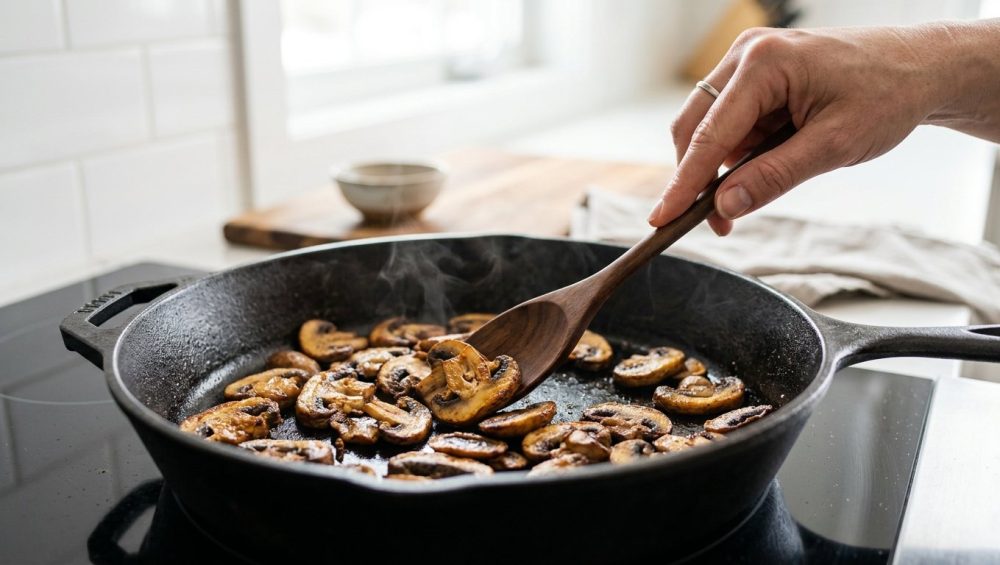
Within two to three minutes, the heat will break down the cellular structure, and the mushrooms will begin to “weep”. You will see a significant amount of liquid pool in the bottom of the pan. This is exactly what you want. Because there is no fat in the pan competing for space, this water can boil and evaporate rapidly.
Give them an occasional toss to prevent sticking, but mostly, just let them cook. You are waiting for the pan to go completely dry again. Depending on the moisture content of your specific batch, this evaporation phase can take anywhere from 5 to 10 minutes.
Step 4: The Fat and The Sear
Once the water has entirely evaporated and the pan is bone-dry, the magic happens. Now—and only now—do you introduce your fat.
Add a generous knob of butter, a glug of high-quality olive oil, or a spoonful of ghee. Because the water is gone, the temperature in the pan can immediately skyrocket past the 285°F (140°C) Maillard threshold. The mushrooms, having already collapsed their internal air pockets, will no longer act like sponges. Instead of absorbing the fat, they will fry in it.
Within minutes, they will develop a spectacular, deeply browned, crispy crust on the edges while remaining tender and incredibly meaty on the inside.
Step 5: The Aromatics (Timing is Everything)
Once you have achieved that gorgeous golden-brown sear, lower the heat slightly and add your aromatics. Toss in a sprig of fresh thyme, some finely diced shallots, and a pinch of kosher salt.
If you are using garlic, add it during the final 60 seconds of cooking. Adding garlic at the beginning of the cooking process is a surefire way to scorch it into bitter, acrid little pebbles. Holding your aromatics until the end is the ultimate secret to adding your garlic first-rate flavor without the burnt aftertaste.
Choosing Your Weapon: A Word on Cookware
You can have the best technique in the world, but if you are cooking on garbage equipment, your food will suffer. As someone who advocates fiercely for the everyday home cook, I have a strict “no-go” policy on cheap, toxic kitchenware.
The Non-Stick Nightmare
If you are attempting to get a hard, restaurant-quality sear on a $15 discount-store Teflon pan from six years ago, stop right now. Traditional non-stick coatings (PTFE) are not designed to handle the medium-high to high heat required for a proper dry-pan sear. Subjecting cheap non-stick pans to high, dry heat can cause the coating to degrade, release toxic fumes, and eventually flake directly into your food.
If you want to cook like a pro, you need to start banishing toxic kitchen gear from your cabinets immediately. Real cooking requires pans that can take a beating and hold immense thermal mass.
The Holy Trinity: Carbon Steel, Cast Iron, and Stainless
For the dry pan method, you need a skillet that retains heat beautifully and won’t warp when exposed to a dry pre-heat.
Carbon Steel: This is the undisputed workhorse of the professional restaurant industry. It is lighter than cast iron, heats up incredibly fast, and once properly seasoned, it becomes naturally non-stick without any synthetic chemicals. It is my absolute top recommendation for this technique.
Cast Iron: The classic heirloom choice. It takes longer to heat up, but once it gets hot, it stays hot. Cast iron provides a beautifully aggressive sear, making it perfect for thick-cut portobellos or creminis.
Tri-Ply Stainless Steel: Stainless steel is fantastic for developing a “fond” (the browned, caramelized bits stuck to the bottom of the pan), which is essential if you plan to make a pan sauce afterward. If you are intimidated by food sticking to un-coated metal, take a few minutes to learn about temperature control and searing on stainless steel. Once you master the heat, stainless is virtually stick-proof.
Tailoring the Technique to Your Schedule
I firmly believe that anyone can make mind-blowing food, but I also live in the real world. I know that the way you cook on a frantic Tuesday evening is vastly different from how you cook on a lazy Sunday afternoon. The beauty of the dry-pan method is its absolute versatility.
Weekday Hustle: Time is Money
When you just walked through the door at 6:00 PM and people are hungry, efficiency is your only priority. You want to master simple weeknight dinners without standing over the stove babysitting a pan.
The dry pan method is incredibly hands-off. Toss your sliced mushrooms into a hot, dry carbon steel pan, and literally walk away. Let them weep and evaporate while you chop your broccoli, whisk together a quick soy-ginger stir-fry sauce, or boil your noodles. By the time your other prep is done, the pan will be dry. Toss in a splash of toasted sesame oil, let them sear for two minutes, and you have a deeply savory, umami-packed addition to your meal. This kind of overlapping, efficient workflow is exactly how you conquer weeknight cooking anxiety and get dinner on the table fast.
Weekend Artistry: The Perfectionist’s Playground
When the weekend rolls around and you have a glass of wine in hand, you can elevate this technique into pure culinary art.
Start with a wild mushroom medley—perhaps a mix of oyster, maitake, and chanterelles. Take your time with the dry sear. Once the water is gone, add a generous amount of high-quality European butter. Let the milk solids in the butter toast and turn brown alongside the mushrooms. Add minced shallots and let them soften.
Then, deglaze the pan. Pour in a quarter-cup of dry sherry, Madeira, or a crisp white wine. The alcohol will rapidly deglaze all the incredible browned fond from the bottom of your stainless steel skillet. Let the wine reduce until it is almost entirely evaporated, turning into a thick, syrupy glaze that coats the mushrooms. Finish with a handful of finely chopped fresh parsley and tarragon. Serve this over a toasted slice of sourdough bread rubbed with raw garlic, or folded into a creamy parmesan risotto. It is a zero-fluff, restaurant-tier dish made entirely in your home kitchen.
Know Your Fungi: Adapting for Different Varieties
While the dry pan method is a universal truth for fungi, understanding the subtle differences between varieties will make you a much sharper cook. You don’t need a massive collection of essential beginner kitchen tools to handle these; you just need a sharp knife and your hands.
White Button & Cremini (Baby Bellas): These are the grocery store staples. They have an exceptionally high water content, making the dry pan method absolutely critical. Slice them thick—at least a quarter-inch—because they will shrink significantly as they lose water.
Shiitake: Shiitakes are denser and have slightly less moisture than button mushrooms, but they still benefit immensely from a dry start to concentrate their deep, woodsy flavor. Always remove the stems, as they are far too tough and fibrous to eat (save them in the freezer for homemade vegetable stock).
Oyster Mushrooms: These are delicate, lacy, and beautiful. Do not take a knife to them. Instead, use your hands to tear them into strips along their natural gills. Tearing creates jagged, uneven edges that crisp up spectacularly in the fat once the dry-pan phase is complete.
Portobello: The heavyweights. Because of their massive size and meaty texture, they make fantastic vegetarian main courses. You can dry-pan them whole. Start them gill-side down in a dry skillet, pressing them gently with a spatula to encourage the water release. Once they shrink and the water evaporates, add olive oil and baste them like a steak.
Troubleshooting the Seven Deadly Mushroom Sins
Even with a foolproof method, things can occasionally go sideways. If your mushrooms aren’t achieving that picture-perfect, golden-brown crust, you are likely committing one of these common kitchen sins:
1. You are crowding the pan.
This is the number one reason home cooks fail at searing. If you pile three pounds of mushrooms into a ten-inch skillet, they will stack on top of each other. The moisture released from the bottom layer will rise and steam the top layer. The temperature of the pan will plummet, and the water will never evaporate fast enough. Give your ingredients room to breathe. Cook in batches if necessary.
2. You are salting too early.
Salt is a magical mineral, but it is also a powerful desiccant. Through the process of osmosis, salt actively draws moisture out of cell walls. If you salt your mushrooms the moment they hit the pan, they will release their water far too aggressively. This floods the pan, drops the temperature, and delays the Maillard reaction. Always reserve your salt for the very end of the cooking process, right after you add the fat.
3. You are helicopter-parenting your food.
Put the spatula down. Constant stirring prevents the food from maintaining contact with the hot metal surface long enough to develop a crust. Searing requires sustained, uninterrupted heat. Toss them occasionally to ensure even cooking, but otherwise, let them sit in peace.
4. You are slicing them paper-thin.
Because mushrooms are 90% water, they undergo massive volume loss during cooking. If you slice them paper-thin, they will shrivel up into sad, microscopic little threads by the time the water evaporates. Cut them thick. Be bold. You want a meaty, substantial bite.
5. You are burning your aromatics.
I cannot stress this enough: garlic cooks in about 45 seconds. If you add minced garlic to a hot skillet at the same time as the mushrooms, it will spend 10 minutes exposed to high heat. It will turn black, acrid, and ruin the entire dish. If you want to stop garlic from burning, you must respect its fragility. Add it in the final minute, toss until fragrant, and immediately remove the pan from the heat.
Final Thoughts from the Sous-Chef
Cooking is not magic. It is not an exclusive club reserved for people with culinary degrees and expensive white chef coats. Cooking is simply understanding how your ingredients react to heat, and having the confidence to manipulate that reaction to your advantage.
The next time you bring home a carton of mushrooms, I challenge you to break the cycle. Ignore the instinct to drown your pan in oil. Embrace the naked heat. Let the water weep, let the steam rise, and let the science of the dry pan method do the heavy lifting.
When you finally taste a mushroom that is deeply caramelized, perfectly crispy on the edges, and bursting with concentrated umami flavor, you will never look back. Now go get your skillet hot, stop overcomplicating your weeknights, and start cooking like the expert you are perfectly capable of being.