Picture this: You have invited your favorite people over for a cozy, communal Saturday night dinner. You have spent a small fortune on beautiful, artisanal Swiss cheeses. You have cubed an entire bakery’s worth of crusty bread, blanched the vegetables to a perfect tender-crisp, and poured the wine. You stand over the stove, ready to perform the culinary magic of melting that glorious mountain of dairy into a silky, luxurious pool of savory perfection. But instead of a cohesive sauce, you watch in sheer horror as your expensive cheese rapidly separates into a terrifying, rubbery lump floating in a hot tub of greasy yellow oil. Panic sets in. You stir faster, but the oil slick only grows, and the cheese seizes into an impenetrable, squeaky mass.
Listen, I love you, but if you serve me a pot of separated, oily cheese, I will quietly judge you. Not out of malice, but out of profound disappointment, because the science of melting cheese is not some dark, inaccessible art reserved for Swiss alpine monks or culinary school graduates. It is basic, accessible chemistry. During the week, I am the queen of the thirty-minute shortcut meal because time is money and I refuse to spend my Tuesday evenings crying over a hot stove. But on a weekend? When we are gathering around a table to share a meal? I am an unapologetic perfectionist. I firmly believe that absolutely anyone can cook like an expert in a standard home kitchen, provided they understand the chemical rules of engagement.
We all want a perfectly smooth cheese night, but to achieve that, we have to stop treating fondue like a simple bowl of melted dairy and start treating it like the delicate, scientifically balanced emulsion it actually is. Today, we are going to completely demystify the food chemistry behind broken cheese, banish the anxiety of a split sauce, and arm you with the foolproof, science-backed formulas you need to host a flawless, present-focused dipping experience. Grab a whisk, pour yourself a glass of dry white wine, and let us get to work.
The Anatomy of a Cheese Disaster: Why Emulsions Break
To understand why your fondue turns into a greasy nightmare, you first have to understand what cheese actually is. At its core, cheese is a carefully balanced matrix of water, fat, and casein proteins. In a solid block of cheese, everything is happy and stable. The casein proteins are bound together by calcium, forming a delicate microscopic net, and the fat and water are suspended peacefully within that net.
However, the moment you apply heat, that peaceful ecosystem is thrown into absolute chaos. As the temperature rises, the dairy fat transitions from a solid state into a liquid state. If you have ever wondered why your cheese sauce turns grainy, the reason is almost always uncontrolled heat causing the protein matrix to violently contract. When cheese is heated too quickly or without the proper stabilizers, the casein proteins panic. They tightly clump together, aggressively squeezing out all the moisture and liquid fat that was previously trapped inside their web.
Chemically speaking, fondue is a multiphase system of colloids. It is an emulsion, meaning it is a forced marriage between two things that naturally hate each other: oil (fat) and water. When the emulsion breaks, the marriage ends in a messy, highly visible divorce. The proteins coagulate into that dreaded rubbery ball, and the fat pools around it in a greasy slick. You cannot fix this by simply stirring harder or yelling at the pot. You have to prevent the proteins from clumping in the first place, and that requires chemical intervention.
The Magic Potion: Tartaric Acid and Dry White Wine
If you look at any traditional Swiss fondue recipe, you will notice it always calls for a generous pour of dry white wine. Novice cooks often assume the wine is included purely for flavor, or perhaps to thin the cheese out. While it certainly adds a lovely, complex acidity to the flavor profile, the wine is actually performing a critical, non-negotiable chemical function. It is your primary stabilizing agent.
White wine is naturally high in tartaric acid. This acid is the secret weapon that prevents the casein proteins from ruining your dinner party. When you introduce tartaric acid to the melting cheese, it actively binds to the calcium that is holding the casein proteins together. By stealing the calcium, the acid effectively untangles the tightly wound protein web. It forces the proteins to relax, separate, and float freely in the liquid rather than clumping together into a squeaky ball. Furthermore, the mixture of water and ethanol in the wine significantly decreases the viscosity of the melted cheese, which is an absolute requirement for achieving that optimal, luxurious mouthfeel and perfect dipping coverage.
Choosing the Right Acidic Base
Not just any wine will do. You need a wine that is highly acidic and bone dry. A crisp Sauvignon Blanc, a bright Pinot Grigio, or a traditional Swiss Chasselas are your best friends here. Do not even think about using a sweet Riesling or a heavy, oaky Chardonnay, as the sugars will scorch and the flavor will aggressively clash with the savory dairy.
Just like when your pan sauces are watery and refuse to emulsify, a broken fondue often points to a lack of proper binding agents. If you are using a wine that lacks sufficient acidity, or if you are trying to make an alcohol-free fondue using broth or milk, you must supplement the acid. This is why traditional recipes often call for a squeeze of fresh lemon juice or a splash of Kirsch (a dry cherry brandy). These additions drop the pH level just enough to keep the proteins relaxed and the emulsion beautifully stable.
The Safety Net: Starch as a Physical Barrier
While tartaric acid is your first line of defense, it is rarely enough to hold a massive pot of melted cheese together on its own. To guarantee a seamless, foolproof emulsion, you need a physical safety net. Enter starch.
Before the cheese even touches the heat, it must be thoroughly tossed and coated in a light dusting of starch. As the cheese melts and releases its fat and water, the starch granules absorb that liquid and swell up. These swollen starch molecules wedge themselves between the relaxed casein proteins, acting as tiny physical barriers that prevent the proteins from ever touching or linking back together. Simultaneously, the starch thickens the water and wine into a viscous gel, which holds the liquid fat in suspension.
Cornstarch vs. Potato Starch
In the culinary world, the debate between cornstarch and potato starch is fierce. Both will successfully stabilize your emulsion, but they behave slightly differently under heat. Potato starch is the traditional European choice. It is extracted from crushed potatoes and offers an incredibly neutral taste and high viscosity. It thickens at a slightly lower temperature than cornstarch, making it ideal for the gentle heat required for melting cheese.
However, if you do not have potato starch in your pantry, cornstarch is an entirely acceptable substitute. Cornstarch is derived from the endosperm of corn kernels and is a powerhouse thickening agent. Just be aware that cornstarch requires a slightly longer cooking time to fully hydrate and cook out its raw, floury flavor. Whichever you choose, use a wooden spoon to stir it in, unless you want to discover why your silicone spatulas taste like soap when subjected to sustained, intense heat in a dishwasher or a bubbling pot of acidic dairy. The golden ratio is exactly one level tablespoon of starch per pound of grated cheese. Do not eyeball this. Measure it.
The Cheese Selection: Moisture, Age, and the Pre-Shredded Trap
You cannot make a world-class fondue with mediocre cheese. The success of your emulsion depends entirely on the moisture content and the age of the dairy you select.
Young cheeses are packed with moisture and melt beautifully, but they lack the deep, complex, nutty flavor required to carry a whole meal. Heavily aged cheeses, on the other hand, are flavor bombs, but they have lost almost all of their moisture during the aging process. Their protein structures are tightly bound, and they are notorious for separating into pools of grease the second they hit the heat.
The secret is a calculated blend. The classic Swiss “moitié-moitié” (half-and-half) ratio uses equal parts Gruyère (for deep, nutty, savory flavor) and Vacherin Fribourgeois (a younger, softer cheese that provides an incredibly creamy, luxurious melt). If you cannot find Vacherin, a high-quality Emmental or Appenzeller makes a phenomenal substitute. Aim for a blend that balances the sharp complexity of an aged cheese with the structural moisture of a younger melting cheese.
The Absolute Ban on Bagged Cheese
I have said it before, and I will say it again: pre-shredded bags ruin any chance of a cohesive melt. I have zero patience for this specific shortcut. Commercially pre-shredded cheese is aggressively coated in cellulose powder and anti-caking agents to prevent the shreds from sticking together in the plastic bag. When you try to melt this chemically altered abomination, those anti-caking agents actively fight the emulsion process. They create a gritty, sandy texture that no amount of wine or starch can fix. Buy the block. Grate it yourself. Consider it your mandatory arm workout for the day.
The Gear: Banish the Toxic Fondue Pots
We need to have a very serious conversation about your equipment. If you are planning to melt your expensive, artisanal Gruyère in a twenty-dollar, thin-metal electric fondue pot coated in a peeling, mystery non-stick material, I am officially revoking your hosting privileges.
I am completely uncompromising when it comes to banishing toxic kitchen gear from my home. Heating cheap Teflon or synthetic non-stick coatings to a sustained temperature while aggressively scraping the bottom with sharp metal fondue forks is a guaranteed recipe for flaking forever chemicals directly into your food. It is disgusting, it is dangerous, and it is entirely avoidable.
Furthermore, thin metal pots are a thermodynamic disaster. They do not distribute heat evenly, resulting in aggressive hot spots that will scorch your cheese to the bottom of the pot in seconds. Once cheese scorches, it turns bitter, and the entire pot is ruined.
The Only Acceptable Vessels
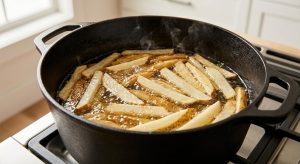
To melt cheese properly, you need a vessel that absorbs heat slowly and radiates it gently and evenly. You want the thermal retention in natural stoneware or high-quality enameled cast iron. The traditional Swiss vessel is called a caquelon, which is a heavy, wide, shallow ceramic pot specifically designed to distribute heat perfectly across its base while keeping the cheese warm for hours. If you do not own a caquelon, a heavy-bottomed enameled cast iron Dutch oven is an absolutely flawless substitute. It provides the thick, protective thermal mass required to keep your delicate emulsion safe from the harsh, direct flames of your stove.
The Foolproof, Science-Backed Fondue Formula
We have covered the chemistry, the ingredients, and the gear. Now it is time for the execution. Melting cheese is not a race; it is a slow, deliberate coaxing. Follow this exactly, or you’ll be scrambling to rescue a ruined dinner at the last minute while your guests awkwardly pretend not to notice your rising panic.
The Ratios
For a generous dinner portion for four adults, you will need:
- 1 pound (16 oz) of high-quality cheese (e.g., 8 oz Gruyère, 8 oz Emmental), freshly grated on the large holes of a box grater.
- 1 level tablespoon of starch (potato starch or cornstarch).
- 1 cup (8 oz) of dry, highly acidic white wine.
- 1 clove of garlic, halved.
- 1 teaspoon of fresh lemon juice (your acidic insurance policy).
- A splash of Kirsch (optional, but highly recommended for authentic flavor).
- A pinch of freshly grated nutmeg and white pepper.
The Step-by-Step Execution
- Prep the Cheese: In a large bowl, aggressively toss your freshly grated cheese with the starch until every single shred is lightly and evenly coated. Do not skip this.
- Aromatize the Pot: Rub the cut side of the garlic clove all over the inside of your ceramic or enameled cast iron pot. This leaves behind a subtle, fragrant layer of essential garlic oils without overpowering the delicate dairy. You can leave the garlic halves in the pot or discard them.
- Heat the Liquids: Pour the wine and the lemon juice into the pot and place it over medium-low heat on your stove. Bring the liquid to a gentle, trembling simmer. Do not let it boil. Boiling wine will violently shock the cheese proteins the second they hit the liquid, causing instant coagulation.
- The Slow Melt: Once the wine is simmering, reduce the heat to low. Add the starch-coated cheese one small handful at a time.
- The Figure-Eight Technique: Using a wooden spoon, stir the cheese continuously in a figure-eight motion. Do not stir in a circle! Circular stirring encourages the proteins to clump together in the center of the pot into a giant ball. The figure-eight motion constantly disrupts the proteins, forcing them to remain separated and suspended in the liquid.
- Patience: Do not add the next handful of cheese until the previous handful is completely melted and seamlessly incorporated into the liquid. This process should take about 10 to 15 minutes of uninterrupted focus.
- The Final Polish: Once all the cheese is melted and the mixture is bubbling very lazily, stir in the Kirsch, the nutmeg, and the white pepper. The final texture should be thick, glossy, and coat the back of your spoon like heavy cream.
Troubleshooting: Bringing It Back From the Brink
Even with the best intentions, stoves can be unpredictable, and sometimes an emulsion threatens to break. Do not panic. You can fix this, because the whole point is to host a relaxed dinner party, not a stressful kitchen nightmare.
If the fondue is too thick:
Do not add water. Water will dilute the flavor and mess with the emulsion. Simply warm up a splash of extra white wine in a separate small saucepan or the microwave, and vigorously whisk it into the cheese until the desired consistency is reached.
If the fondue is too thin:
You likely did not use enough starch, or your cheese had an unusually high moisture content. In a small ramekin, whisk together one teaspoon of starch with one tablespoon of cold wine (or Kirsch) to create a smooth slurry. Pour this slurry into the gently bubbling cheese and stir continuously for three minutes until the starches swell and thicken the pot.
If the fondue begins to separate (The Emergency Protocol):
If you see pools of oil forming on the surface, your emulsion is breaking due to either excessive heat or a lack of acid. Immediately remove the pot from the heat source. In a small bowl, aggressively whisk together one teaspoon of fresh lemon juice and one teaspoon of cornstarch. Whisk this emergency slurry directly into the broken cheese. The sudden influx of cold acid will shock the proteins back into submission, and the fresh starch will bind the escaped fat. Whisk vigorously until the glossy texture returns.
Mindful Dipping: Curating the Perfect Communal Spread
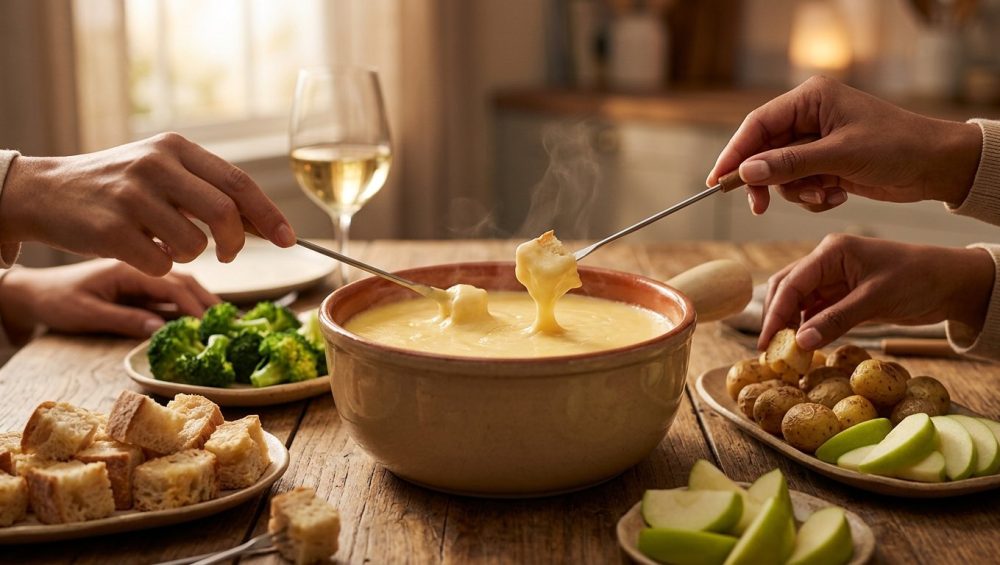
Congratulations. You have successfully conquered the chemistry of melted cheese. Now, it is time to focus on the experience. A fondue night is not just a meal; it is an interactive, highly engaging culinary activity. These mindful communal gatherings are about connection, lingering conversation, and the shared joy of dipping things into liquid gold. To elevate the experience, your dippers must be as thoughtfully curated as your cheese.
The Bread
Bread is the undisputed king of the fondue pot, but you cannot use fresh, squishy bread. Soft bread will instantly disintegrate the moment it hits the heavy cheese, leaving sad, soggy crumbs floating in your beautiful emulsion. You need structural integrity. Buy a high-quality artisan baguette or a rustic sourdough loaf the day before your party. Cut it into one-inch cubes and leave them out on a baking sheet overnight to dry out slightly. If you forget, lightly toast the cubes in a 300°F oven for ten minutes. The bread should have a firm, crusty exterior with enough chew to grip the cheese securely.
The Acidity and Crunch
Eating a massive pot of melted dairy is incredibly rich and heavy on the palate. You absolutely must provide dippers that offer sharp acidity and crisp textures to cut through the fat and prevent palate fatigue.
- Cornichons and Pickled Onions: These are mandatory. The sharp, vinegary bite of a tiny French pickle completely resets your taste buds between bites of heavy cheese.
- Tart Apples and Pears: Slices of crisp, tart Granny Smith apples or firm Bosc pears offer a brilliant, juicy contrast to the savory, salty Gruyère.
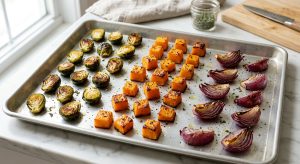
- Blanched Vegetables: Raw vegetables are too hard, but mushy vegetables will fall off the fork. Blanch broccoli florets, cauliflower, and asparagus spears in heavily salted boiling water for exactly two minutes, then immediately shock them in an ice bath to lock in their bright color and tender-crisp texture.
- Roasted Baby Potatoes: Boil or roast tiny, waxy potatoes (like fingerlings or baby golds) until just tender. Their creamy, earthy interiors pair beautifully with the sharp cheese.
The Etiquette and Pacing
Once the fondue is perfectly emulsified on the stove, carefully transfer the heavy ceramic pot to your table burner. Keep the flame underneath as low as humanly possible—just enough to maintain a lazy, occasional bubble. If the fondue boils on the table, it will break.
Encourage your guests to pace themselves. Fondue is meant to be eaten slowly over the course of an hour or two. Remind everyone to stir the pot in a figure-eight motion with their bread every time they dip; this communal stirring naturally maintains the emulsion and keeps the cheese from settling and scorching on the bottom. And remember the golden rule of Swiss fondue etiquette: if you drop your bread into the pot, you owe the table a bottle of wine (or you have to clean the kitchen).
The Final Scrape: The Religieuse
If you have managed your temperature correctly throughout the night, you will be rewarded with the greatest prize in the world of cheese: the religieuse. This is the thin, golden, intensely savory crust of toasted cheese that forms at the very bottom of the caquelon at the end of the meal. Turn off the burner, use a wooden spatula to carefully pry this crispy, caramelized layer off the bottom of the pot, and divide it among your guests. It is the ultimate salty, crunchy finish to a spectacular meal.
You do not need a culinary degree to pull off a flawless fondue night. You just need a basic respect for food chemistry, a high-quality pot, a decent bottle of dry white wine, and the patience to stir in a figure-eight until the magic happens. By understanding how tartaric acid and starches manipulate casein proteins, you have completely eliminated the guesswork and the anxiety of a broken sauce. Now, go buy a block of Gruyère, banish that toxic Teflon pot to the recycling bin, and invite your friends over. You are officially ready to melt.