The Cold, Hard Truth About Your Takeout Habit
Listen to me very carefully. You are a capable, intelligent adult. You can file your own taxes, navigate complex office politics, and somehow manage to keep at least a few of your houseplants alive. So why, pray tell, does the mere thought of turning on your stove send you spiraling into a state of absolute panic? If your oven is currently being used as an expensive storage cabinet for your winter sweaters, we need to have a serious talk.
You have likely convinced yourself that cooking is a mystical art form reserved for people with culinary degrees, boundless free time, and an innate ability to perfectly julienne a carrot. You tell yourself that ordering delivery is just easier. It is convenient. It is a necessary survival tactic for a busy professional. But let us look at the reality of that so-called convenience. You spend twenty minutes scrolling through a delivery app, paralyzed by indecision. You finally pay an exorbitant markup, a delivery fee, a service fee, and a tip, only to wait an hour for a lukewarm, soggy container of noodles that arrives looking like it was dropped down a flight of stairs.
The financial drain of this habit is frankly astounding. According to recent cost of living data from Numbeo, the average meal prepared at home is approximately 75% less expensive than dining out. Read that again. You are paying a 75% premium for the privilege of eating mediocre, tepid food out of a cardboard box while sitting on your couch. Over the course of a year, that takeout habit is costing you thousands of dollars—money that could be spent on a vacation, a savings account, or literally anything other than cold french fries.
Beyond the financial ruin, there is the psychological toll. Cooking anxiety is a very real, heavily documented phenomenon in the modern era. Entire generations have grown up relying on ultra-processed convenience foods and app-based delivery, leading to a profound disconnect from the basic human skill of feeding oneself. But here is the secret the restaurant industry does not want you to know: cooking a phenomenal weeknight dinner is not about talent. It is about technique, preparation, and avoiding the common pitfalls that trip up every novice. Once you learn to identify and fix these rookie kitchen mistakes, the entire process transforms from a terrifying ordeal into a highly manageable, even enjoyable, part of your evening routine.
Shifting Your Mindset: From Kitchen Novice to Confident Cook
If you want to master the weeknight dinner, the very first thing you must do is lower your impossibly high expectations. You are not competing on a high-stakes television cooking show. Gordon Ramsay is not going to burst through your kitchen door to yell at you because your onions are unevenly diced. Your goal on a Tuesday night is not to create a Michelin-starred masterpiece; your goal is to put a nutritious, delicious, and hot meal on the table without losing your mind or burning down your apartment.
We need to reframe how you view the act of cooking. It is not a performance. It is a fundamental life skill, much like driving a car or doing laundry. When you first learned to drive, you were probably terrified of merging onto the highway. Now, you do it while listening to a podcast and drinking iced coffee. Cooking operates on the exact same principle of muscle memory and repetition. You will make mistakes. You will occasionally overcook a piece of chicken or aggressively over-salt a soup. This is not a failure; it is data collection. Every ruined meal teaches you a lesson that a successful meal never could.
When discussing weekday meals, my absolute, unwavering philosophy is that time is money. You do not have three hours to spend simmering a complex ragù after a grueling nine-to-five workday. You need strategies that maximize flavor while minimizing active prep time. This means embracing shortcuts, understanding heat control, and learning how to multitask efficiently. While weekend cooking can be a sprawling, romanticized project, weeknight cooking is a tactical operation. You get in, you execute the mission, and you get out. By adopting this pragmatic approach, you will slowly begin to build a peaceful daily habit that nourishes both your body and your wallet, entirely replacing the frantic, last-minute scramble for the takeout menu.
The Absolute “No-Go” Rule: Purging Toxic Kitchen Gear
Before we even discuss recipes, we have to address the elephant in the room—or rather, the toxic hazard sitting in your cupboards. I have absolutely zero patience for cheap, peeling, heavily scratched non-stick pans. If you are currently cooking your eggs on a heavily worn, suspiciously flaky black surface that you bought at a discount store five years ago, I want you to walk into your kitchen right now and throw it directly into the trash. I am entirely serious.
For decades, the cookware industry sold us on the lie of effortless, non-stick convenience, coating their pans in per- and polyfluoroalkyl substances (PFAS). These are notoriously known as “forever chemicals” because they do not break down in the environment or in the human body. When you heat cheap non-stick pans to high temperatures, or when that fragile coating inevitably begins to scratch and flake, those chemicals leach directly into your food. The health implications are staggering, linked to everything from immune system suppression to liver damage and increased cancer risks.
Thankfully, the legal landscape is finally catching up to the science. As of January 1, 2026, forward-thinking states like Colorado and Maine have officially implemented full bans on the sale of cookware containing intentionally added PFAS. This is a monumental victory for public health. However, political roadblocks still exist; in late 2025, California’s governor shockingly vetoed a similar, highly supported bill, citing absurd concerns over a lack of “affordable options” for consumers. Let me be brutally clear: poisoning yourself is not a cost-saving measure. A heavy-duty, pre-seasoned cast-iron skillet costs roughly twenty-five dollars and will literally outlast you.
You must commit to banishing toxic kitchen gear from your home immediately. You do not need mystery metals or chemical coatings to cook well. For your weeknight arsenal, invest in safe, high-quality, durable materials. A carbon steel skillet will build a natural, completely safe non-stick patina over time. High-quality stainless steel is virtually indestructible and perfect for achieving a hard sear on proteins. Enameled cast iron is a dream for soups and stews. Yes, cooking on these surfaces requires a slight learning curve regarding temperature control and the proper use of cooking fats, but the payoff is a lifetime of safe, spectacular meals.
Building Your Weeknight Arsenal: Essential Tools for Beginners
One of the greatest scams perpetrated against the home cook is the idea that you need a kitchen that looks like a high-end culinary boutique. You do not need a twenty-piece knife block containing blades you will never use. You do not need single-use gadgets like avocado slicers, strawberry hullers, or garlic presses that are impossible to clean. Clutter is the enemy of efficiency, and a cluttered kitchen will only amplify your cooking anxiety.
To execute flawless weeknight dinners, you only need a highly curated selection of kitchen essentials every beginner needs. First and foremost is a high-quality, eight-inch chef’s knife. This is an extension of your arm. Do not buy a flimsy, lightweight knife; look for something with a full tang (where the metal extends all the way through the handle) and keep it ruthlessly sharp. A dull knife is infinitely more dangerous than a sharp one because it requires you to apply excessive force, which leads to slipping and emergency room visits.
Pair that knife with a massive, heavy wooden or thick plastic cutting board. I cannot stress this enough: throw away those tiny, slippery glass cutting boards immediately. They destroy your knife edges and slide around the counter like ice skates. Place a damp paper towel underneath your cutting board to anchor it firmly to your countertop.
Next, you need an instant-read digital meat thermometer. This is non-negotiable. The number one reason beginners hate cooking meat is because they are terrified of giving themselves food poisoning, so they cook their chicken breasts until they resemble dry, chalky hockey pucks. A thermometer eliminates all guesswork. If the chicken registers 165°F (74°C), it is safe to eat. Period. No more cutting into the center of a beautiful steak to check the color and ruining all the juices.
Finally, you need heavy-duty stainless steel mixing bowls, a sturdy pair of metal tongs, and a reliable skillet (as discussed in the previous section). Master these few core tools, and you will find that the physical act of cooking becomes significantly faster, safer, and infinitely more enjoyable.
The Architecture of a Foolproof Weeknight Dinner
Beginners often fail because they treat recipes like rigid, unforgiving legal contracts. If a recipe calls for a specific type of obscure mushroom and the grocery store is out of it, the beginner panics and abandons the entire meal. To master weeknight cooking, you must stop relying entirely on step-by-step instructions and start understanding the underlying architecture of a meal.
Almost every satisfying dinner can be broken down into a simple, adaptable formula: Protein + Vegetable + Carbohydrate + Flavor Bomb (Sauce/Acid/Spice). Once you internalize this formula, you can open your refrigerator, look at a random assortment of ingredients, and immediately see a meal. Got some chicken thighs, a slightly wilted head of broccoli, and some rice? Roast the chicken and broccoli on a single sheet pan with olive oil and garlic powder, serve it over the rice, and hit it with a heavy squeeze of fresh lemon juice (the acid/flavor bomb).
To execute this properly, you must learn to decode pretentious recipe jargon that makes cooking sound vastly more complicated than it is. When a chef tells you to “sweat the onions,” they just mean to cook them over medium-low heat until they are soft and translucent, without letting them turn brown. When they say “deglaze the pan,” they simply mean pouring a liquid (like broth, wine, or even water) into a hot skillet to loosen all those incredibly flavorful, caramelized brown bits stuck to the bottom.
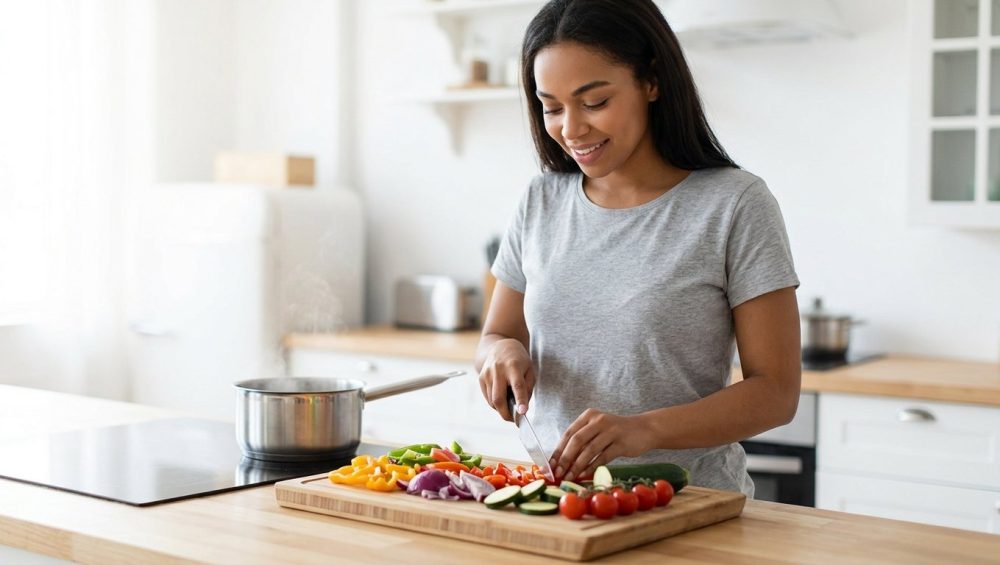
The most critical architectural concept you must adopt is “mise en place,” a French culinary phrase that translates to “putting in place.” In practical terms, this means you must chop all your vegetables, measure out your spices, and have your ingredients sitting in little bowls before you ever turn on the stove. If you are frantically trying to mince garlic while your onions are already burning in the pan, you have already lost the battle. Prepping your ingredients beforehand is the ultimate secret to stress-free cooking.
Grocery Shopping for People Who Hate Grocery Shopping
Cooking a weeknight dinner actually begins two days prior, in the aisles of your local grocery store. If your current shopping strategy consists of wandering aimlessly through the store while hungry, throwing random, disconnected items into your cart, and hoping they magically assemble themselves into a meal, you are setting yourself up for failure.
Efficiency in the kitchen requires a strategically stocked pantry. Your pantry is your foundation. You should always have high-quality olive oil, a neutral cooking oil (like avocado or grapeseed), kosher salt, whole black peppercorns (and a grinder), soy sauce, a mild vinegar (like apple cider or rice vinegar), and a core lineup of dried spices (garlic powder, smoked paprika, cumin, and crushed red pepper flakes). With these staples on hand, you can make almost anything taste spectacular.
Next, we need to completely destigmatize the freezer aisle. There is a pervasive, snobby myth in the culinary world that everything must be bought fresh from a local farmer’s market. While fresh produce is wonderful, frozen vegetables are picked at the absolute peak of ripeness and flash-frozen immediately, locking in their nutrients. Having bags of frozen peas, spinach, corn, and broccoli florets means you are never more than five minutes away from adding a healthy green component to your dinner.
When you do buy fresh produce, buy strategically. Do not buy delicate greens like spinach or arugula unless you plan to eat them within forty-eight hours. Instead, invest in hardy vegetables that can survive for weeks in your crisper drawer without turning to mush. Cabbage, carrots, hearty potatoes, onions, and whole squash are the ultimate weeknight warriors. They wait patiently for you until you are ready to cook them.
Time-Saving Hacks That Actually Work
When it is 6:30 PM on a Wednesday and you are exhausted, the last thing you want to do is spend forty-five minutes prepping ingredients. This is where we deploy aggressive time-saving tactics. First, let us discuss the “lazy tax.” Yes, buying pre-chopped onions, minced garlic in a jar, or pre-washed bags of broccoli florets costs more money. But if paying an extra two dollars is the difference between you cooking a healthy meal at home or spending thirty dollars on delivery, pay the lazy tax. It is a completely valid weeknight strategy.
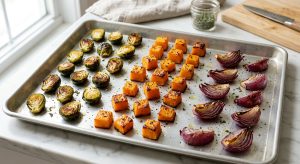
If you prefer to prep your own ingredients, learn the art of component batch-cooking. I do not advocate for the type of extreme meal prep where you cook seven identical, depressing portions of chicken and rice on a Sunday and eat them out of plastic tubs all week. Instead, prep components. Roast a massive tray of assorted vegetables on Sunday afternoon. Cook a large batch of quinoa or brown rice. Make a jar of a versatile vinaigrette. During the week, your only job is to quickly sear a fresh protein and assemble it with the components you already prepared.
Another massive time-saver revolves around workflow and cleanliness. The absolute best tool for rapidly moving chopped ingredients from your cutting board to your skillet—and for scraping away discarded vegetable peels—is the kitchen’s unsung hero, the stainless steel bench scraper. It keeps your workspace pristine.
Furthermore, you must adopt the golden rule of professional kitchens: Clean As You Go. If you have five minutes while your pasta water is coming to a boil, do not stand there staring at the pot like a zombie. Wash your cutting board. Wipe down the counter. Put the spices back in the cabinet. By the time your meal is finished cooking, your kitchen should be nearly spotless, leaving you with nothing more than a single plate and a fork to wash after you eat.
Five Idiot-Proof Weeknight Recipes to Start Your Journey
Theory is wonderful, but execution is what puts dinner on the table. Here are five extraordinarily simple, highly adaptable weeknight meals designed specifically for people who claim they cannot cook. These recipes rely on minimal active prep and maximize bold flavors.
The “I Forgot to Thaw the Chicken” Sheet Pan Miracle
Sheet pan meals are the ultimate weeknight hack because the oven does ninety percent of the work. Preheat your oven to 400°F (200°C). Take a package of pre-cooked chicken or pork sausages and slice them into thick coins. Roughly chop two bell peppers and one large red onion. Toss everything directly on a heavy-duty baking sheet with two tablespoons of olive oil, a generous pinch of kosher salt, black pepper, and a teaspoon of Italian seasoning. Spread it all out into a single, even layer—if the pan is crowded, the food will steam instead of roasting. Roast for 25 minutes until the vegetables are caramelized and the sausage is deeply browned. Serve as is, or stuff it into a toasted hoagie roll.
The “Fancy but Fake” 15-Minute Pasta
Boil a large pot of water and salt it heavily until it tastes like the ocean. Drop in half a pound of dried pasta (spaghetti or linguine works best). While the pasta cooks, heat a quarter cup of good olive oil in a large skillet over medium-low heat. Add four cloves of thinly sliced garlic and a pinch of red pepper flakes. Let the garlic gently sizzle until it is fragrant and barely golden—do not let it brown, or it will turn bitter. When the pasta is one minute away from being done, use tongs to drag it directly from the boiling water into your garlic oil skillet. Add a splash of the starchy pasta water, a handful of grated Parmesan cheese, and a squeeze of fresh lemon juice. Toss vigorously until a glossy, creamy sauce forms.
The “Clean Out the Fridge” Fried Rice
Fried rice is not a strict recipe; it is a garbage disposal for your leftover vegetables. The only strict rule is that you must use day-old, cold rice. Freshly cooked rice has too much moisture and will turn into a gummy paste in the skillet. Heat a large skillet or wok over medium-high heat with a splash of neutral oil. Scramble two eggs, remove them, and set them aside. Add whatever chopped vegetables you have—carrots, peas, diced bell peppers, or broccoli stems. Sauté for three minutes. Crank the heat to high, add your cold rice, and break it up with a spatula. Let it sit undisturbed for a full minute to develop a crispy crust on the bottom. Toss in a few tablespoons of soy sauce, a tiny drizzle of toasted sesame oil, and your cooked eggs.
The “Too Tired to Chew” Comforting Soup
When you are exhausted and fighting off a cold, making soup from scratch sounds terrible. So, we cheat. Pour a high-quality, store-bought box of chicken or vegetable broth into a pot and bring it to a simmer. Add a splash of soy sauce and a teaspoon of grated ginger (you can buy this in a tube). Toss in a handful of frozen dumplings or wontons directly from the freezer. Let them simmer for five minutes until they float. In the last thirty seconds, throw in two huge handfuls of fresh baby spinach. The residual heat will wilt the greens instantly. Ladle it into a massive bowl and top with a drizzle of chili oil.
The “Impress Yourself” Pan-Seared Salmon
Fish terrifies beginners, but it is actually the fastest protein you can cook. Buy two salmon fillets. Pat them incredibly dry with paper towels—moisture is the enemy of a good crust. Season generously with salt and pepper. Heat a stainless steel or carbon steel skillet over medium-high heat until it is ripping hot. Add a tablespoon of neutral oil. Gently lay the salmon in the pan, skin-side down. Press down lightly with a spatula for ten seconds so the skin makes full contact with the metal. Now, walk away. Do not touch it. Do not peek. Let it sear undisturbed for about four to five minutes until the skin is crispy and naturally releases from the pan. Flip it, cook for one more minute, and remove it from the heat. Squeeze a lemon over the top. Mastering this simple technique is how I stopped burning dinner every night and finally started eating restaurant-quality seafood at home.
Surviving the Inevitable Kitchen Disasters
Even armed with the best tools and intentions, things will occasionally go sideways. You will get distracted by a text message and burn your garlic. You will misread a label and add a tablespoon of cayenne pepper instead of paprika. The difference between a novice and an experienced home cook is not that the experienced cook never makes mistakes; it is that the experienced cook knows how to pivot and fix them without throwing the entire meal into the trash.
Let us talk about the most common disaster: over-salting. If you taste your soup, sauce, or stew and realize it tastes like a salt lick, do not panic. You cannot magically extract salt from a liquid, but you can balance it. Your first line of defense is acid. A heavy squeeze of fresh lemon juice or a splash of apple cider vinegar will immediately cut through the harsh salinity and trick your palate. If it is still too salty, add a pinch of sugar or a splash of heavy cream to mellow out the aggressive flavors.
What if you burn the bottom of a stew or a pot of rice? The absolute worst thing you can do is take a spoon and scrape the blackened bits off the bottom of the pot, mixing that acrid, bitter ash into the rest of your perfectly good food. Instead, immediately remove the pot from the heat. Carefully transfer the unburnt top layers of the food into a clean pot, leaving the scorched disaster completely untouched at the bottom of the original vessel. Soak the burnt pot in hot, soapy water, and pretend it never happened.
Learning the chemistry behind these quick fixes is the ultimate key to surviving kitchen disasters. Cooking is an organic, fluid process. If your vegetables get a little too charred in the oven, chop them up, toss them in a vinaigrette, and call it a “rustic roasted vegetable salad.” Confidence in the kitchen is largely about marketing your mistakes as intentional flavor choices. Once you realize that almost any error can be salvaged with a little acid, fat, or creative rebranding, you will finally eliminate kitchen chaos for good.
Your Path to Culinary Independence
You now possess the unvarnished truth, the required mindset, the knowledge to avoid toxic pitfalls, and the exact architectural blueprints needed to conquer your kitchen on a chaotic Wednesday evening. There are no more valid excuses.
The transition from a takeout-dependent novice to a capable, efficient home cook will not happen overnight. There will still be evenings where you are simply too exhausted to look at a spatula, and ordering a pizza is the only logical choice. That is perfectly fine. The goal here is not militant perfection; the goal is empowerment. By equipping yourself with safe, reliable tools, understanding the basic formulas of flavor, and giving yourself the grace to learn through trial and error, you are taking back control of your diet, your budget, and your time.
So, tonight, I want you to delete one of those delivery apps from your phone. Walk into your kitchen, turn on some music, preheat your oven, and chop an onion. You are entirely capable of doing this, and I promise you, the results will taste infinitely better than anything arriving in a sweaty plastic bag. Now, get cooking.