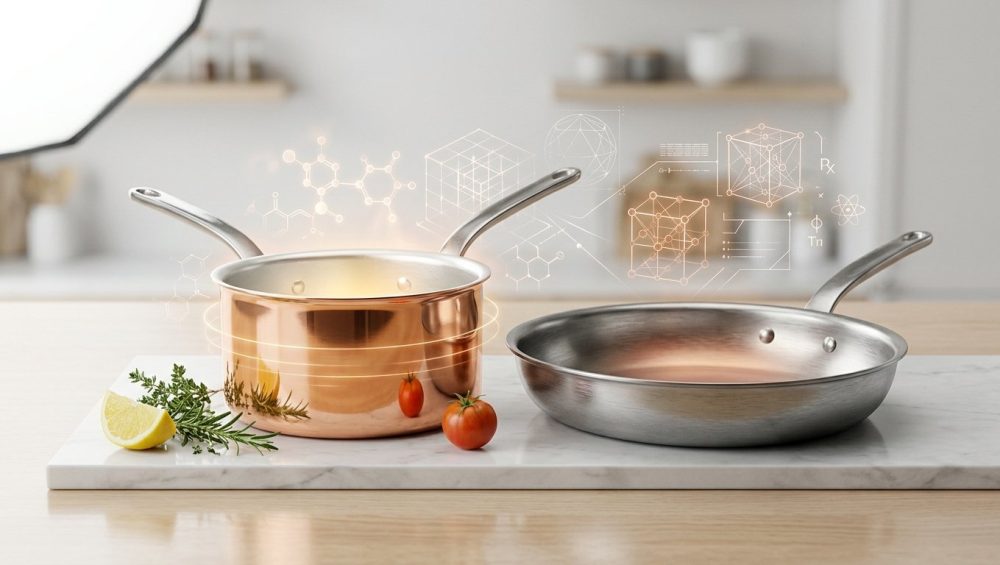
Let’s get one thing straight before we dive into the metallurgical deep end: you do not need a culinary degree to cook like a Michelin-starred chef. What you do need is a deep understanding of your tools, a blatant refusal to use cheap, toxic garbage, and a little bit of basic physics. I am here to help you decode pretentious recipe jargon and understand exactly why professional chefs and serious home cooks obsess over the precise metallurgical properties of copper cookware.
We have all been there. You are standing over the stove on a Tuesday night, desperately trying to perfectly sear a beautiful, expensive piece of fish or coax a delicate butter sauce into an emulsion, only for the pan to betray you. The sauce breaks, the fish sticks, and the smoke alarm sings its familiar, mocking song. You blame yourself. But let me tell you a secret: it is probably your pan. If you are cooking on a fifteen-dollar mystery-metal skillet you bought on clearance, you are fighting a losing battle against thermodynamics.
Today, we are stripping away the culinary mysticism and looking at the hard, cold, scientific data behind copper cookware. We are going to examine its thermal conductivity, its specific heat capacity, the critical differences between tin and stainless steel linings, and the stringent safety standards that govern heavy metal leaching. By the end of this definitive masterclass, you will understand exactly why copper is the undisputed king of the kitchen, and how mastering it can permanently elevate your daily cooking.
The Thermodynamics of Copper: Why It Cooks Better Than Your Cheap Pans
To truly appreciate copper, we have to talk about thermodynamics. Do not let the word intimidate you; we are simply talking about how heat moves. When you turn the dial on your stove, you want your pan to respond immediately. You want the heat to spread evenly across the entire base and up the sidewalls, enveloping your food in a consistent thermal embrace. Ruining a delicate hollandaise because your pan retained heat for too long is one of the seven rookie kitchen mistakes that can easily be avoided by upgrading your equipment.
Thermal Conductivity: The Speed of Heat
Thermal conductivity is a fundamental physical property that dictates a material’s ability to conduct heat. In the scientific community, this is measured in Watts per meter-Kelvin (W/m·K). The higher the number, the faster and more efficiently the material transfers heat. Let us look at the data for common cookware materials at room temperature:
- Silver: ~429 W/m·K
- Copper: ~401 W/m·K
- Aluminum: ~237 W/m·K
- Cast Iron: ~50 W/m·K
- Stainless Steel: ~15 to 30 W/m·K
Silver is technically the most thermally conductive metal on earth, but unless you are cooking for a royal family with an unlimited budget, solid silver pans are out of the question. Copper is the absolute next best thing, boasting a thermal conductivity of 401 W/m·K.
Compare that to stainless steel, which sits at a pathetic 15 to 30 W/m·K. When you place a cheap, thin stainless steel pan over a gas flame, the heat stays exactly where the flame touches the metal. This creates aggressive “hot spots.” The center of your pan will be scorching hot, burning your onions to a crisp, while the edges remain lukewarm and practically raw. Copper, on the other hand, possesses highly mobile free-moving electrons that transfer heat incredibly efficiently. The moment the flame touches the bottom of a copper pan, the heat races outward, distributing itself perfectly evenly across the entire surface area. There are no hot spots. There are no cold zones. There is only absolute, uniform temperature control.
Thermal Diffusivity and Specific Heat Capacity: The Responsiveness Factor
Thermal conductivity only tells half the story. The other crucial metric is specific heat capacity. This is defined as the amount of energy (in Joules) required to raise the temperature of one kilogram of a substance by one Kelvin (J/kg·K). In simpler terms, it measures how much thermal energy a material can absorb and store before it actually gets hot.
Let us look at the specific heat capacities of our kitchen metals:
- Water (for context): 4200 J/kg·K
- Aluminum: 897 J/kg·K
- Stainless Steel (AISI 304): ~477 J/kg·K
- Copper: 385 J/kg·K
Notice that copper has a remarkably low specific heat capacity compared to aluminum and stainless steel. This means it requires very little energy to heat up. While a heavy cast iron skillet might be one of your beginner cooking essentials, it behaves entirely differently than copper. Cast iron takes forever to preheat because it is absorbing massive amounts of energy, but once it is hot, it stays hot for a very long time.
Copper’s combination of high thermal conductivity and low specific heat capacity gives it an unparalleled “thermal diffusivity”. It heats up almost instantly, but more importantly, it cools down the exact second you remove it from the heat source. If a delicate caramel or a sensitive butter sauce is getting too hot, simply turning off the gas flame will immediately arrest the cooking process. A heavy cast iron or stainless steel pan will hold onto that residual heat for minutes, continuing to cook—and ultimately ruin—your food long after the burner is off. Copper gives you the agility to stop cooking on a dime, which is the ultimate secret to professional-level precision.
The Linings: Tin vs. Stainless Steel (And Why Bare Copper is a No-Go)
If copper is so scientifically perfect, why aren’t all pans just solid blocks of bare copper? The answer lies in chemistry. Copper is a highly reactive metal, and to make it safe for everyday culinary use, it must be lined with a non-reactive barrier. And frankly, if you are serious about banishing toxic kitchen gear, understanding the science behind safe, lined copper is the best place to start.
The Reactive Nature of Bare Copper (Copper Toxicity)
Bare copper reacts aggressively with acidic foods. If you attempt to simmer a tomato sauce, reduce a wine-based pan sauce, or cook anything containing citrus or vinegar in an unlined copper pan, the acids will chemically strip the copper. This creates toxic copper salts, such as copper sulfate and copper acetate, which leach directly into your food.
The FDA strictly cautions against the use of unlined copper cookware for general cooking because consuming these leached copper compounds in sufficient quantities can cause severe gastrointestinal distress, including nausea, vomiting, and diarrhea.
There are only two highly specific exceptions in the culinary world where bare copper is used: jam pans and egg white beating bowls. When making fruit jams, the high concentration of sugar acts as a buffer, preventing the acid in the fruit from reacting dangerously with the copper. When whipping egg whites, copper ions migrate into the egg whites and react with the protein conalbumin, creating an incredibly stable, voluminous foam that is impossible to achieve in a glass or stainless steel bowl. For literally everything else—from searing steaks to sautéing vegetables—your copper must be lined.
The Traditionalist’s Choice: Tin-Lined Copper
For centuries, the gold standard for lining copper cookware has been pure tin. Tin is an elemental metal that bonds chemically with copper, creating a beautifully smooth, naturally non-stick surface. It is completely inert, meaning it will never react with your acidic tomatoes or wine reductions.
However, tin has one major physical limitation: it has a very low melting point of approximately 450°F (232°C). For many modern home cooks who are used to blasting their pans on maximum heat while scrolling through their phones, this sounds terrifying. But let us look at the actual science of cooking. Most beginner kitchen tools simply lack the thermodynamic responsiveness required for precision sugar work or delicate protein searing, causing cooks to overcompensate with excessive heat.
The Maillard reaction—the chemical process responsible for the beautiful, savory brown crust on a seared steak—begins at around 285°F. Deep frying typically occurs between 350°F and 375°F. Even high-heat cooking oils will begin to aggressively smoke and break down at 400°F to 425°F. Therefore, if your pan is reaching 450°F, your food is already burning, and your kitchen is filling with noxious smoke. The only way to melt a tin lining is to leave an empty pan on a high flame, which is a fundamental user error. When food and fat are in the pan, they absorb the thermal energy, keeping the surface temperature well below the melting point of tin.
Tin is naturally hydrophobic and incredibly slick. Eggs will practically float across a well-buttered tin surface. It provides the non-stick convenience of toxic Teflon, but with the durability and safety of a pure, natural element.
The Modern Workhorse: Stainless Steel-Lined Copper
If the idea of monitoring pan temperatures gives you anxiety, modern metallurgy has provided a brilliant alternative: bimetallic stainless steel-lined copper. In this manufacturing process, a thick layer of pure copper (usually around 2.3mm to 2.5mm) is permanently bonded to a micro-thin layer of austenitic stainless steel (usually 0.2mm).
Stainless steel is virtually indestructible. It is completely non-reactive, immune to acidic foods, and can withstand blistering oven temperatures up to 800°F without degrading. You can use metal spatulas, aggressively whisk sauces, and scrub it with abrasive sponges without fear of damaging the lining. The key to surviving kitchen disasters when working with high-end metals is knowing precisely how your pan will react to sudden temperature changes, and stainless-lined copper gives you an incredibly wide margin for error.
You might be wondering: if stainless steel has terrible thermal conductivity (15 W/m·K), doesn’t lining a copper pan with it ruin the copper’s performance? The answer is no, because the stainless steel layer is so microscopically thin. The massive thermal engine of the thick copper base completely overwhelms the slight insulating effect of the thin steel lining. You get 95% of the thermal responsiveness of pure copper, combined with the bulletproof durability of stainless steel. It is the ultimate weekday workhorse for the busy home cook who demands professional results but doesn’t have the time to baby their equipment.
Heavy Metal Leaching and Safety Standards: The “No-Toxic-Garbage” Rule
As your sassy, fiercely protective culinary guide, I have a strict “no-toxic-garbage” rule for my kitchen. We do not cook our family’s meals on peeling, flaking, chemically-laden mystery metals. When discussing copper and its linings, we must address the critical topic of heavy metal safety and the stringent regulations that separate premium cookware from cheap, dangerous knockoffs.
FDA and European Safety Regulations on Cookware
The United States Food and Drug Administration (FDA) has incredibly strict protocols regarding heavy metal leaching in cookware. To test a pan, the FDA requires boiling a 4% acetic acid solution (essentially strong vinegar) in the vessel for two hours, letting it sit for a full 24 hours, and then analyzing the liquid for measurable amounts of leached lead or other toxic heavy metals.
This is not a hypothetical concern. In August and September of 2025, the FDA issued severe, updated warnings regarding imported cookware made from cheap aluminum alloys (often marketed under names like Hindalium or Hindolium) and brass. These cheaply manufactured, unverified pans were found to be leaching significant, highly dangerous levels of lead directly into food during standard cooking processes. Lead is a devastating neurotoxin with absolutely no safe level of exposure; it causes severe neurological changes, fatigue, stomach pain, and irreversible developmental issues in children.
Once you master temperature control, you will effectively cure cooking anxiety and approach every meal with complete confidence, knowing your tools are safe. Authentic, high-quality copper cookware manufactured by reputable heritage brands in France, Italy, and the United States uses 99.9% pure, elemental copper and lines it with pure tin or high-grade stainless steel. There are no mystery alloys, no hidden brass fillers, and absolutely zero lead. When you invest in premium copper, you are not just paying for thermal conductivity; you are paying for rigorous metallurgical purity and the safety of your family.
The Dangers of Peeling Non-Stick vs. The Safety of Lined Copper
Let us contrast the safety profile of lined copper with the cheap, non-stick pans lining the shelves of every big-box store. Traditional non-stick pans rely on PTFE (Polytetrafluoroethylene) and various PFAS “forever chemicals” to create a slick surface. When these pans are heated past 500°F—which happens in minutes on a standard gas stove—the chemical bonds begin to break down, releasing toxic fumes that can cause polymer fume fever in humans and are famously lethal to pet birds.
Furthermore, as these cheap pans inevitably scratch and degrade, they shed microscopic flakes of toxic plastic directly into your scrambled eggs. Tin-lined copper, conversely, is an entirely natural, elemental non-stick surface. If you happen to scratch a tin lining with a fork, the worst that happens is a tiny bit of the underlying copper is exposed. Since copper is an essential trace mineral required by the human body for survival, a microscopic exposure from a scratched pan is entirely harmless (provided you aren’t boiling vats of tomato sauce on the exposed spot).
Maintenance Protocols: Keeping Your Copper Pristine
There is a pervasive myth that copper cookware requires hours of grueling, pretentious maintenance. This is simply not true. Yes, copper oxidizes and develops a patina when exposed to heat and oxygen, but managing it is straightforward and deeply satisfying.
Daily Cleaning and Polishing (The Non-Pretentious Way)
First and foremost: never, under any circumstances, put a copper pan in the dishwasher. The caustic detergents and prolonged heat will aggressively tarnish the copper, dull the stainless steel, and severely degrade a tin lining. Taking these simple steps to culinary artistry means respecting the thermodynamics of your cookware, and that includes washing them by hand.
For daily cleaning, warm water, a gentle dish soap, and a soft sponge are all you need. If you have a tin-lined pan, remember that tin is a soft metal; abrasive scouring pads will scratch it. If you have stubborn, stuck-on food, simply fill the pan with water, add a drop of soap, and let it simmer gently on the stove for ten minutes. The debris will wipe away effortlessly.
As for the exterior, copper will naturally shift from a bright, shiny penny color to a deep, matte bronze. Many serious cooks prefer this patina—it is a badge of honor that proves the pan is actually used to create incredible food, rather than just hanging on a wall for aesthetic clout. However, if you want to restore that mirror shine for a dinner party, you do not need expensive, toxic chemical polishes. Simply cut a lemon in half, dip it in coarse kosher salt, and rub it over the copper. The citric acid and the mild abrasive of the salt will instantly strip away the oxidation, revealing the brilliant metal underneath in seconds.
Retinning: When and How to Resurface
If you choose the traditional route of tin-lined copper, you will eventually need to have the pan retinned. Embracing the true art of the kitchen requires a deep respect for the tools that make flawless execution possible, and retinning is a beautiful, centuries-old artisan craft.
How do you know when it is time? The general rule of thumb is to inspect the cooking surface. If the soft, silver-colored tin has worn away enough to reveal the bright orange copper underneath, and the total area of exposed copper is roughly the size of a US quarter (or a Euro coin), it is time to send it to a professional retinner.
The retinning process is fascinating. The artisan will chemically strip the old tin, apply a flux to prevent oxidation, heat the bare copper pan over a massive forge, and melt pure tin ingots directly into the vessel. They then use a tightly wound cotton pad to rapidly wipe the molten tin across the surface, leaving a perfectly smooth, flawless new lining. A well-cared-for tin lining can last a home cook 10 to 20 years before needing replacement. It is the ultimate sustainable cookware—rather than throwing a scratched Teflon pan into a landfill every two years, a copper pan can be infinitely restored and passed down through generations.
Practical Application: What to Actually Cook in Copper
Understanding the specific heat capacity and thermal conductivity of copper is academically interesting, but how does this physics lesson translate to your Tuesday night dinner? If your goal is mastering modern recipes that demand absolute precision, investing in copper is a game-changer. Here is where the metal truly flexes its culinary muscles.
Temperature-Sensitive Masterpieces (Sauces, Sugars, Proteins)
1. Emulsion Sauces (Hollandaise, Béarnaise, Beurre Blanc):
These classic French sauces are the terror of the home cook. They are delicate emulsions of liquid (water, wine, or vinegar) and liquid fat (clarified butter or egg yolks). They require a highly specific temperature window to stay stabilized. If the pan gets just a few degrees too hot, the proteins in the egg yolks will scramble, the fat will separate, and your luxurious sauce will instantly “break” into a greasy, curdled mess. Copper’s low specific heat capacity means that the moment you see the sauce getting dangerously close to breaking, you can pull the pan off the heat, and the temperature drops instantly, saving the emulsion.
2. Caramel and Sugar Work:
Melting sugar into caramel is a high-wire act. Sugar transitions from a beautiful, complex amber liquid to a bitter, acrid, burnt disaster in a fraction of a second. In a cheap stainless steel pan with hot spots, the sugar directly over the flame will burn while the sugar at the edges hasn’t even begun to melt. Copper’s 401 W/m·K thermal conductivity ensures that the entire floor of the pan is the exact same temperature. The sugar melts uniformly, caramelizes uniformly, and when you achieve the perfect color, removing it from the heat stops the cooking process dead in its tracks.
3. Searing Proteins:
For an aggressive, screaming-hot sear on a thick ribeye steak, cast iron is still a fantastic tool because of its massive heat retention. However, for more delicate proteins like sea scallops, flaky white fish, or a skin-on chicken breast, a stainless-steel lined copper pan is unparalleled. You can get the pan hot enough to trigger a beautiful Maillard reaction crust, but you maintain the agility to dial the heat back instantly so the delicate interior of the fish doesn’t turn to rubber.
When cooking with a tin-lined pan, use your cooking fat as your thermal speedometer. Add your butter or high-heat oil to the cold pan, then turn on the heat. When the butter begins to foam and lightly brown, or when the oil begins to shimmer (well below the 450°F danger zone), your pan is perfectly preheated and ready for the food.
The Verdict: Is the Investment Worth It for the Home Cook?
Copper cookware is undeniably expensive. It is a premium, artisan-crafted product that utilizes highly valuable elemental metals. But as a busy professional who values efficiency, safety, and uncompromising quality, I firmly believe it is one of the greatest investments you can make in your culinary journey.
You do not need a twenty-piece set. Start with a single, high-quality, stainless-steel lined copper sauté pan or a tin-lined saucepan. Experience the sheer thrill of turning a dial and watching your food respond instantly. Experience the peace of mind that comes from knowing you are cooking on pure, safe, strictly regulated materials rather than toxic, peeling plastics.
Cooking should not be a stressful battle against unpredictable, cheap equipment. It should be a joyful, precise, and deeply rewarding craft. By understanding the metallurgical properties of copper—its unmatched thermal conductivity, its low specific heat capacity, and the vital role of its linings—you are no longer just following recipes. You are mastering the physics of food. And that, my friends, is how you cook like a true expert.