
Listen up, weekend culinary warriors. We need to have a serious talk about the reality of home cooking. I don’t care how many beautifully curated, soft-lit food blogs you read—nobody is born knowing how to perfectly sear a scallop or julienne a carrot without nearly losing a digit. I certainly wasn’t. I learned my way around the kitchen through sheer stubbornness, a ridiculous amount of trial and error, and setting off my smoke detector so many times my neighbors thought it was my kitchen timer.
You do not need a culinary degree to make mind-blowing food. You just need a little patience, a willingness to fail, and the common sense to learn from those failures. I am a massive advocate for the home cook, which is why I am skipping the long, fluffy backstory about my grandmother’s rustic Italian villa (spoiler: she lived in Ohio and used canned tomatoes) and getting straight to the point.
Even after years of cooking, I still mess up. In fact, this week alone, I made several boneheaded errors because I was rushing, distracted, or simply arrogant. But every failure is just a lesson in disguise. If you are serious about fixing rookie kitchen mistakes, you have to be willing to look your culinary disasters right in the eye. Let’s break down the seven blunders I committed this week, the science behind why they ruined my dinner, and exactly how you can avoid making the same embarrassing missteps.
Mistake 1: Crowding the Pan (The Soggy Sizzle Tragedy)
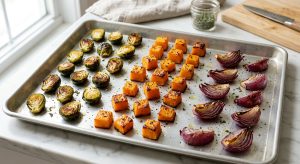
Tuesday night, I was starving, exhausted, and trying to cook a massive batch of mushrooms for a quick weeknight pasta. Instead of cooking them in two batches like a rational human being, I dumped the entire pound of sliced creminis into my skillet at once. The result? A grey, rubbery, steaming pile of sadness.
The Science of the Maillard Reaction
When you crowd a pan, you are committing a crime against one of the most fundamental principles of cooking: the Maillard reaction. Discovered by French chemist Louis-Camille Maillard in 1912, this is the complex chemical reaction between amino acids and reducing sugars that gives browned food its distinctive, savory flavor. It is the reason a seared steak tastes infinitely better than a boiled one, and why golden-brown toast is a revelation compared to raw bread.
Here is the catch: the Maillard reaction requires specific temperatures to occur. The reaction begins between 285°F and 330°F (140°C to 165°C), and it reaches its absolute peak efficiency between 330°F and 390°F (165°C to 200°C). If your pan drops below this temperature range, your food will not brown.
When you dump a massive mountain of cold, moisture-rich food into a hot skillet, the temperature of the pan plummets immediately. Furthermore, as the food heats up, it releases water. Water cannot exceed 212°F (100°C) before turning into steam. Because the pan is too crowded for that steam to rapidly evaporate and escape, the moisture gets trapped at the bottom of the skillet. Instead of searing your food at 350°F, you end up boiling it in its own juices at 212°F.
How to Actually Get a Crust
If you want a gorgeous, golden-brown crust on your mushrooms, chicken thighs, or steak, you have to give your ingredients personal space.
First, thoroughly pat your ingredients dry with a paper towel before they ever touch the heat. Surface moisture is the enemy of browning because it delays the temperature rise necessary for the Maillard reaction to kick in. Second, cook in batches. Yes, I know you are in a hurry. I know that time is money during the weekday rush. But cooking two batches of mushrooms properly will actually take less time than waiting for a crowded pan of watery mushrooms to boil off their excess liquid. Leave at least a quarter-inch of space between pieces of food in the pan. If you hear a vigorous sizzle when the food hits the oil, you are on the right track. If it sounds like a muted, bubbling jacuzzi, you have crowded the pan. Pull half the food out immediately and try again.
Mistake 2: Clinging to Toxic, Peeling Non-Stick Pans
I have a very strict “No-Go” rule when it comes to kitchen gear, and this week, I broke it. I was at a vacation rental, and the only pan available was a cheap, lightweight, terrifyingly scratched non-stick skillet. Against my better judgment, I tried to use it to sear a piece of fish over high heat. The kitchen immediately filled with an acrid, chemical smell, and I ended up throwing the fish directly into the trash.
The Ugly Truth About PFAS
Let me be brutally honest: if your non-stick pans are peeling, flaking, or heavily scratched, they belong in the garbage. Most conventional non-stick pans are coated with polytetrafluoroethylene (PTFE), which belongs to a family of synthetic chemicals known as per- and polyfluoroalkyl substances, or PFAS. These are widely referred to as “forever chemicals” because they do not easily break down in the environment or in the human body.
When you heat a traditional PTFE-coated pan over high heat, things get dangerous. PTFE starts to break down and decompose at temperatures above 260°C (500°F), releasing highly toxic fumes into the air. Even worse, recent research assessing PFAS migration indicates that using damaged non-stick cookware can transfer these chemicals directly into your food, with some models suggesting that cooking just 4 to 70 meals in a compromised pan can push you into a toxicity danger zone. These chemicals have been linked to severe health issues, including kidney and testicular cancer, as well as hormone disruption.
Safe Alternatives That Actually Work
Stop buying cheap mystery-metal skillets every eight months. It is terrible for your health, terrible for the environment, and a massive waste of money. If you are serious about banishing toxic kitchen gear from your life, you need to invest in durable, safe alternatives.
For high-heat searing, cast iron and carbon steel are your best friends. They are incredibly inexpensive, completely non-toxic, and when properly seasoned, they become naturally non-stick over time. For acidic foods and general cooking, a high-quality, heavy-bottomed stainless steel skillet is practically indestructible. If you absolutely must have a non-stick pan for cooking delicate items like eggs, seek out reputable, high-quality ceramic-coated pans that explicitly state they are manufactured without PFAS, PFOA, lead, or cadmium. And remember: non-stick pans are for low-to-medium heat only. Never preheat an empty non-stick pan, and never use metal utensils on them.
Mistake 3: Blindly Trusting Prep Times in Recipes
On Wednesday, I decided to try a new recipe from a glossy culinary magazine. The recipe claimed the total prep time was “15 minutes.” An hour and a half later, I was still chopping butternut squash, my kitchen looked like a war zone, and I was dangerously close to ordering a pizza.
The “Five-Minute Onion” Lie
One of my biggest pet peeves in the culinary world is the blatant deception of recipe prep times. Recipe developers often assume that you have the knife skills of a Michelin-starred sous-chef, or worse, they assume that your ingredients are magically pre-chopped, peeled, and measured before the clock even starts ticking. They will casually write “caramelize the onions (5 minutes)”—which is a scientific impossibility, as true caramelization requires slow, low heat for at least 30 to 45 minutes to properly break down the sugars.
When you are trying to pull off the perfect 30-minute meal on a Tuesday night, blindly trusting these arbitrary timeframes is a guaranteed recipe for stress, burnt garlic, and a ruined dinner.
Reclaiming Your Weeknight Sanity
If you want to eliminate kitchen chaos, you have to start practicing mise en place. This is a French culinary phrase that translates to “everything in its place.” Before you even think about turning on the stove, read the recipe all the way through. Yes, the entire thing. Then, chop all your vegetables, measure out your spices into little bowls, and have your cooking oils and utensils within arm’s reach.
By taking the time to prep your ingredients beforehand, you remove the frantic, panicked energy from cooking. You will no longer be frantically mincing garlic while your oil smokes on the stove. When you are decoding pretentious recipe jargon, always multiply the stated prep time by at least two, especially if you are a beginner. Give yourself the grace and the time to cook at your own pace. Time is money, but rushing leads to mistakes that waste both.
Mistake 4: Slicing Meat Straight Out of the Pan
Thursday night was steak night. I nailed the sear, hit the perfect internal temperature of 130°F for medium-rare, and immediately transferred the beautiful piece of meat to my cutting board to slice it. Within seconds, a massive pool of flavorful, savory juices flooded the board, leaving the steak itself dry, chewy, and deeply disappointing. I had broken the cardinal rule of cooking meat: I didn’t let it rest.
Why Resting Meat is Non-Negotiable
This is not pretentious chef-speak; this is basic thermodynamics and biology. When you apply high heat to a piece of meat, the muscle fibers contract and tighten up. This intense contraction squeezes the natural moisture out of the outer layers of the meat and drives those juices toward the cooler center of the cut.
If you take a knife and slice into that meat the very second it comes off the heat, you are essentially puncturing a high-pressure water balloon. All of those concentrated juices in the center will immediately spill out onto your cutting board, leaving the actual muscle fibers dry.
However, if you remove the meat from the heat and let it rest, the temperature slowly equalizes. As the meat cools slightly, the tightly coiled muscle fibers begin to relax. This relaxation allows the juices that were driven to the center to redistribute evenly throughout the entire piece of meat. The moisture is reabsorbed into the cellular structure of the protein, meaning that when you finally do slice into it, the juices stay inside the steak where they belong.
The Patience Protocol
Resting your meat is the easiest, lowest-effort way to instantly elevate your cooking. For a standard steak, chicken breast, or pork chop, you need to let it rest for at least 5 to 10 minutes. For larger cuts, like a whole roasted chicken or a prime rib, you are looking at a minimum of 20 to 30 minutes of resting time.
Transfer the meat to a warm plate or a cutting board with a juice groove. If you are worried about the meat getting cold, you can loosely tent it with a piece of aluminum foil—just make sure not to wrap it tightly, or you will trap the steam and ruin that beautiful, crispy crust you worked so hard to achieve. Use this resting time to quickly whip up a pan sauce or toss a salad. Patience in the kitchen pays off in flavor.
Mistake 5: Sending Fresh Herbs to the Fridge to Die
I bought a gorgeous, vibrant bunch of fresh basil on Friday to make a Caprese salad. I tossed the plastic bag of basil directly into my refrigerator’s crisper drawer. By Saturday afternoon, the leaves had turned completely black, slimy, and utterly unusable. I had practically thrown five dollars directly into the garbage.
The Great Produce Wilting Epidemic
Household food waste is a massive, expensive problem. Storing your fresh produce incorrectly is a surefire way to waste your hard-earned money. Most novice cooks assume that the refrigerator is a magical preservation box for all organic matter. This is a fundamental misunderstanding of plant biology.
Basil, for instance, is a tropical plant. It absolutely despises the cold. When exposed to refrigerator temperatures, the cell walls of the basil leaves rapidly break down, causing them to turn black and mushy almost overnight. Other herbs, like cilantro and parsley, are hardier, but tossing them into the fridge in a flimsy plastic produce bag suffocates them and traps ethylene gas and moisture, accelerating rot.
Proper Herb CPR
If you want to build a beautifully organized dream kitchen, you need to learn how to properly store your ingredients. Treat your soft herbs (like cilantro, parsley, and mint) exactly like a bouquet of cut flowers. Snip a half-inch off the bottom of the stems, place them upright in a glass jar with an inch or two of fresh water, and loosely cover the top with a plastic bag. Store this arrangement in the fridge, changing the water every few days. They will last for weeks.
For basil, do the exact same thing—snip the stems and place them in a jar of water—but leave the jar out on your kitchen counter at room temperature. For woody herbs (like rosemary, thyme, and sage), wrap them loosely in a slightly damp paper towel and place them in a resealable bag or airtight container in the crisper drawer. Stop throwing your money away on rotted greens.
Mistake 6: Using a Dull Knife Because It Feels “Safer”
On Saturday morning, I was rushing to dice a slippery bell pepper for an omelet. Because my favorite chef’s knife was dirty, I grabbed an old, notoriously dull utility knife from the back of the drawer. As I pressed down on the skin of the pepper, the blade refused to bite. Instead, it slipped sideways, barely missing my index finger and skidding across the cutting board. It was a terrifying wake-up call.
The Illusion of Dull Blade Safety
There is a persistent, incredibly dangerous myth among kitchen novices that a sharp knife is more dangerous than a dull one. This could not be further from the truth. A sharp knife does exactly what you tell it to do. It bites into the food effortlessly, allowing you to use a light, controlled grip and a smooth slicing motion.
A dull knife, on the other hand, requires brute force. When a blade is blunt, it cannot easily pierce the tough outer skin of an onion, a tomato, or a bell pepper. You have to push down harder, applying excessive downward pressure. This dramatically increases the likelihood that the blade will roll or slip off the curved surface of the food and go hurtling directly toward your stabilizing hand. Furthermore, when a dull knife does cut you, it creates a jagged, ragged tear that takes significantly longer to heal than the clean slice of a honed blade.
Upgrading Your Arsenal
You cannot cook efficiently or safely without a sharp knife. It is the most critical tool in your kitchen. If you are serious about upgrading your beginner kitchen tools, start by investing in a high-quality, 8-inch stainless steel or carbon steel chef’s knife.
More importantly, learn how to maintain it. Buy a honing steel and use it every single time you cook. A honing steel doesn’t actually sharpen the blade; rather, it realigns the microscopic teeth on the edge of the knife that get bent out of shape during normal chopping. Once or twice a year, take your knives to a professional sharpener, or invest in a high-quality whetstone and learn how to grind a new edge yourself. A sharp knife will cut your prep time in half and keep your fingers intact.
Mistake 7: Panicking When Things Go Wrong Instead of Pivoting
Sunday evening was supposed to be my relaxing, elaborate weekend cooking project. I was making a slow-simmered beef stew. In a moment of distraction, the lid popped off my salt shaker, and a massive mound of kosher salt dumped directly into the pot. My heart sank. I immediately thought the entire pot was ruined, and I legitimately considered throwing the whole thing down the sink and ordering takeout.
The Over-Salting Debacle
Oversalting a dish is a chef’s worst nightmare, and it happens to the best of us. When faced with a culinary disaster, the natural instinct of a beginner is to panic, assume the dish is a total loss, and give up. But cooking is rarely a pass/fail exam; it is an ongoing exercise in delicious problem-solving.
There are multiple scientifically backed ways to neutralize and balance out excess salt in a dish. The easiest and most effective method is dilution. If you over-salt a soup or a stew, you can simply add more unsalted liquid—like water or low-sodium broth—and bring it back to a simmer. You can also increase the volume of the recipe by adding bulky, unsalted ingredients. Tossing in extra mild vegetables (like cauliflower or broccoli), cooked plain rice, or unsalted potatoes will help absorb the extra flavor and dilute the overall salinity of the dish.
Cooking is Just Delicious Problem Solving
If dilution isn’t an option (for example, if you over-salted a pan sauce or a roasted vegetable), you need to lean on the culinary power of balance. You can distract the palate from the saltiness by introducing a competing flavor profile. Adding a splash of acid—like a squeeze of fresh lemon juice or a dash of apple cider vinegar—can cut through the harshness of the salt and round out the flavors.
Alternatively, you can mask the salty flavor by introducing fat or dairy. Stirring in a knob of unsalted butter, a splash of heavy cream, or a dollop of plain yogurt coats the tongue and significantly mellows out the overpowering saltiness. Finally, a tiny pinch of white or brown sugar can help neutralize the sodium, though you must be extremely careful not to accidentally turn your savory stew into a dessert.
Learning how to save ruined meals is what separates a nervous novice from a confident home cook. The next time you make a massive mistake, take a deep breath. Stop, taste the food, and think about what it needs. Are you capable of surviving kitchen disasters? Absolutely. You just have to pivot.
The kitchen is not a place for perfection; it is a place for experimentation, learning, and growth. You are going to burn things. You are going to over-salt things. You are occasionally going to set off the smoke alarm. But as long as you are cooking with safe, non-toxic gear, prioritizing your time efficiently, and refusing to let a little failure chase you out of the kitchen, you are doing it right. Now go sharpen your knives, throw away that peeling non-stick pan, and get back to cooking. You’ve got this.