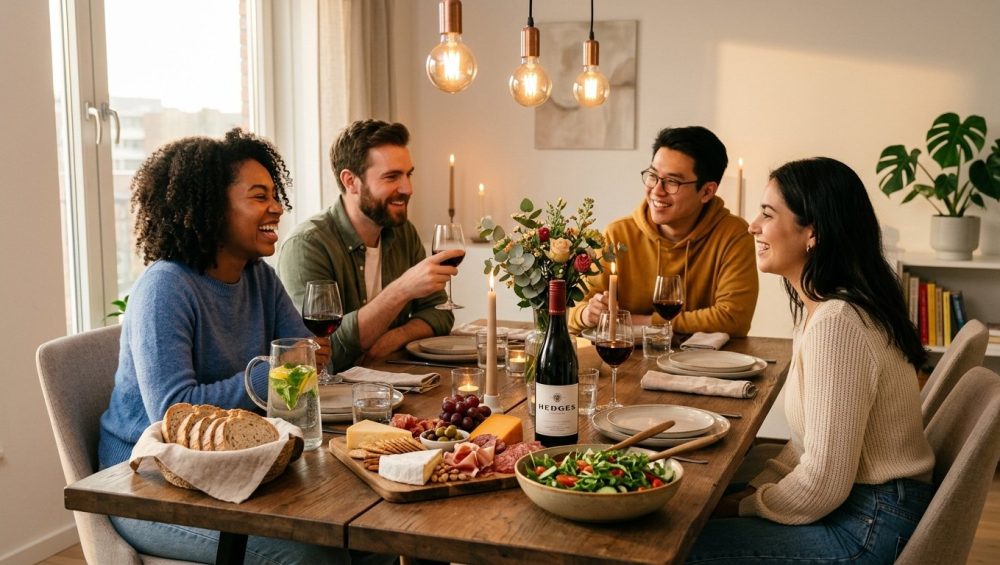
Listen to me, my beautiful, culinarily challenged friend. You are staring down the barrel of a Saturday night, you have somehow convinced other human beings to come to your home for a meal, and now you are spiraling. You can barely boil water without setting off the smoke detector, your oven is currently being used as a storage unit for old mail, and the thought of timing a roast while simultaneously emulsifying a vinaigrette makes you want to fake a sudden illness and move to another country.
Take a deep breath. Pour yourself a glass of whatever is open on your counter. You are in exactly the right place.
As someone who learned to cook through a humiliating series of trial, error, and minor kitchen fires, I am here to tell you a fundamental truth: anyone can throw a mind-blowing, Instagram-worthy dinner party without possessing a shred of actual culinary skill. You do not need a degree from Le Cordon Bleu. You do not need to spend 48 hours making a demi-glace from scratch. Weekdays are for survival, but weekends are for smoke and mirrors. We are going to rely on clever store-bought upgrades, strategic preparation hacks, and a heavy dose of ambiance to make your guests think you are Martha Stewart’s cooler, less-stressed cousin.
Welcome to your masterclass on how to host a beautiful dinner party when your cooking skills are hovering at absolute zero. We are going to fake it ’til we make it, and we are going to look fabulous doing it.
The Psychology of Hosting: Why No One Actually Cares About the Food
Before we talk about a single ingredient, we need to dismantle the toxic perfectionism that is currently paralyzing you. If you are terrified of hosting, you are not alone. A recent British survey revealed that half of the respondents find throwing a dinner party to be more stressful than going to work, and a quarter of them actually find it more traumatic than sitting down for a job interview.
Let that sink in. People would rather be interrogated about their five-year plan by a hostile hiring manager than serve a plate of food to their friends.
A significant share of this anxiety is rooted in intense self-consciousness. We worry that our guests will judge our mismatched furniture, our dusty baseboards, and our inability to perfectly sear a scallop. But here is the secret that professional event planners and seasoned hosts know: no one is coming to your house for the food. If they wanted a flawless, Michelin-starred culinary experience, they would go to a restaurant. They are coming to your house for a connection. They want to feel taken care of, they want to laugh, and they want to escape their own stressful lives for a few hours.
The stuffy, overly formal ways of entertaining at home are dead and buried. Industry experts note that the biggest entertainment trends for 2026 prioritize community and comfort over strict etiquette rules. The modern dinner party is about “intentional design over formality”. It is about warmth. If you serve your guests a bucket of takeout fried chicken but you do it by candlelight with a great playlist and a relaxed smile on your face, they will talk about what a brilliant host you are for years. Your anxiety is the only thing that can ruin the night. So, we are going to eliminate the stress by completely removing the pressure to “cook” in the traditional sense.
The “Fake It ‘Til You Make It” Menu Strategy
In the early 2000s, a visionary named Sandra Lee popularized the concept of “Semi-Homemade” cooking—the brilliant philosophy of combining fresh ingredients with store-bought items to create meals that taste like they were made from scratch. We are going to take that philosophy and elevate it for the modern 2026 aesthetic. Your new mantra is: Assembly over cooking.
The Art of the Elevated Store-Bought Appetizer
When guests arrive, they are usually hungry and a little socially awkward. You need to put food in their hands immediately, but you should absolutely not be standing over a hot stove frying anything when the doorbell rings.
The Hummus Illusion: Buy the most expensive, highest-quality store-bought hummus you can find. Do not serve it in the plastic tub. Scrape it into a wide, shallow, beautiful ceramic bowl. Use the back of a spoon to create deep, swooping swirls in the hummus. Now, pour a generous glug of high-quality extra virgin olive oil into those swirls. Sprinkle it heavily with flaky sea salt, a dash of smoked paprika, and a handful of toasted pine nuts or a heavy dusting of za’atar. Serve it with warm pita bread (just throw the store-bought pita directly on your oven racks for three minutes). Your guests will think you soaked chickpeas for two days.
The Cheese Board Geometry: A charcuterie board requires zero cooking, just minor architectural skills. The trick to making it look expensive is abundance. Gaps are your enemy. Start by placing three small bowls on a large wooden board—fill one with olives, one with Marcona almonds, and one with fig jam. Next, add your cheeses: one hard (like a sharp cheddar or Manchego), one soft (like a double-cream Brie), and one funky (like a blue or goat cheese). Fold prosciutto into little ribbons and fan out some salami. Finally, fill every single remaining gap with fresh grapes, dried apricots, and crackers. It looks like a Renaissance painting, and all you did was open packages.
The Freezer Aisle Savior: If you want a hot appetizer, head to the freezer aisle. Pre-made Japanese-style gyoza (potstickers) are a massive crowd-pleaser and incredibly easy to prepare. You can pan-fry them in minutes to get a perfect golden-brown, crispy exterior. Serve them on a beautiful platter with a dipping sauce made from equal parts soy sauce and rice vinegar, topped with a dash of sesame oil and sliced green onions.
The Main Event: Assembly Over Cooking
The main course is where amateur hosts panic. They try to make a beef Wellington or a complicated risotto, end up sweating profusely in the kitchen for two hours, and completely ignore their guests. We are not doing that.
The Rotisserie Chicken Glow-Up: The grocery store rotisserie chicken is the greatest gift to the culinarily challenged host. Buy two of them. While they are still warm, shred all the meat off the bones (discarding the skin and bones). Now, you have two options. Option A: Toss the shredded chicken with a high-end, store-bought pesto sauce, fold in some fresh arugula, and serve it over fresh pappardelle pasta (buy the fresh pasta from the refrigerated section—it cooks in three minutes and tastes infinitely better than dried). Option B: Heat up a premium jarred tikka masala or butter chicken simmer sauce. Fold the shredded rotisserie chicken into the warm sauce, stir in a splash of heavy cream to make it rich, and serve it over microwaveable jasmine rice. Top with a mountain of fresh cilantro.
The “Toss It in a Nice Bowl” Rule: The golden rule of the semi-homemade dinner party is that presentation is 90% of the battle. If you order high-quality takeout—say, incredible Thai curries or a mountain of authentic street tacos—do not let a single cardboard box or plastic container touch your dining table. Transfer everything into your own beautiful serving dishes. Garnish the takeout with fresh herbs, a squeeze of fresh lime, or a drizzle of good olive oil. It instantly elevates the food from “lazy Friday night” to “curated dining experience.”
Dessert: The Ultimate Cheat Code
Baking is a science, and science has no place at a stress-free dinner party. Do not attempt to bake a cake if you do not know what you are doing.
The Affogato: This is an Italian dessert that literally translates to “drowned,” and it is the most sophisticated, zero-effort dessert on the planet. Buy a pint of ultra-premium vanilla bean gelato. Put one large scoop into a pretty glass or mug for each guest. Brew a pot of strong espresso or very strong coffee. Bring the glasses of ice cream and the hot coffee to the table, and pour the hot coffee over the cold ice cream right in front of them. It is interactive, it is delicious, and it requires zero skill.
The Upgraded Pound Cake: Buy a plain, buttery pound cake from the bakery section of your grocery store. Slice it thick. Right before serving, toast the slices in a pan with a little butter until they are golden brown and crispy on the edges. Top each warm slice with a dollop of store-bought mascarpone cheese (or whipped cream) and a handful of fresh berries that you’ve let sit in a spoonful of sugar and a squeeze of lemon juice for ten minutes. It tastes like a rustic European tart.
A Word on Gear: Banishing the Toxic Junk from Your Table
As your sassy sous-chef, I need to have a very serious word with you about your kitchen equipment. I know you are trying to save money, but I have absolute zero patience for cheap, peeling, toxic kitchenware. If you are going to serve food to people you love, you are not going to do it out of a scratched-up, mystery-metal pan you bought for ten dollars in college.
The era of toxic cookware is over. Conventional non-stick pans are often coated with a class of thousands of man-made “forever chemicals” known as PFAS, which includes PTFE (commonly known by the brand name Teflon). These chemicals do not break down in the environment or in the human body. When you use cheap non-stick pans, especially over high heat, the coatings flake, scratch, and degrade, releasing microplastics and nanoplastics directly into your food.
If that isn’t terrifying enough, heated PTFE pans release toxic fumes. These fumes are so deadly that pet birds can die from exposure when the pan is heated to just 326°F. In humans, inhaling these fumes causes a condition literally called “Teflon Flu”—which results in severe flu-like symptoms. In 2024 alone, the Washington Post reported 267 cases of Teflon Flu. We are not poisoning our dinner party guests. Absolutely not.
If your non-stick pan has scratches, throw it in the garbage immediately. You need to invest in safe, durable, high-quality equipment that will last you for decades and won’t leach chemicals forever into your beautiful semi-homemade meals.
What to use instead:
- 100% Pure Ceramic: Brands like Xtrema make cookware entirely out of ceramic, meaning there is no synthetic coating to scratch off whatsoever. It is incredibly safe and holds heat beautifully.
- Enameled Cast Iron: If you want to look like a serious home cook, buy an enameled cast iron Dutch oven from a brand like Staub or Le Creuset. The heavy cast iron core provides perfect heat distribution, while the porcelain enamel coating is completely non-toxic, non-reactive, and requires no complicated seasoning. Plus, they look so gorgeous that you can take them straight from the stove to the center of your dining table as a serving piece.
- Stainless Steel: For everyday cooking, a high-quality stainless steel set (like Misen, All-Clad, or Demeyere) is indestructible. Yes, there is a slight learning curve to cooking on stainless without food sticking, but it will never release toxic chemicals into your food.
Invest in a few good, non-toxic pieces. Your health, and the health of your guests, is worth it.
Ambiance: The Smoke and Mirrors of Dinner Parties
If the food is the baseline, the ambiance is the magic trick. You can serve mediocre food in a beautifully lit, wonderful-smelling room, and people will think it was the best meal of their lives. Conversely, you can serve a culinary masterpiece under harsh, fluorescent lighting, and everyone will want to go home early.
Lighting: Your Best Friend and Cheapest Decorator
I cannot stress this enough: Turn off the “big light.” The overhead ceiling light is the enemy of a good dinner party. It makes everyone look tired, it highlights the dust on your shelves, and it makes your living room feel like a dentist’s waiting area.
You want to create a moody, glowing, flattering environment. Rely exclusively on secondary lighting: table lamps, floor lamps, and an absolute absurd amount of candles. Buy a pack of cheap unscented tea lights and scatter them everywhere—on the dining table, on the coffee table, in the bathroom, on the kitchen counters. The flickering, warm light hides a multitude of sins, including the fact that your store-bought pound cake is slightly lopsided. (Note: Only use unscented candles in the dining room and kitchen. Scented candles will violently clash with the smell of the food. Save the fancy cedarwood and vanilla candles for the bathroom.)
Tablescaping for Beginners
Setting a beautiful table does not mean you need to go out and buy a $500 matching set of fine china. In fact, that is incredibly dated. The biggest interior and entertaining trends for 2026 are all about warmth, personality, and spaces that feel “collected, not coordinated”.
Event planners note that hosts are completely ditching matched sets in favor of one-of-a-kind plates, mismatched glassware, and layered, textured linens. This is fantastic news for you. You can mix your everyday white plates with a few vintage salad plates you found at a thrift store. You can use different colored wine glasses. It doesn’t look messy; it looks intentionally bohemian and chic.
Furthermore, 2026 design trends are leaning heavily into warm, earthy colors—think terracotta, sage green, dusty blue, and creamy beiges. “Green is the new neutral,” and incorporating natural, earthy tones makes a space feel timeless and organic. To hack this trend, buy a relatively inexpensive sage green or terracotta linen table runner. Toss it casually down the center of the table (do not iron it, the wrinkles make it look rustic and expensive). Add a few small, low vases of fresh flowers. Keep the floral arrangements low so your guests can actually see each other across the table.
The Playlist: Setting the Vibe
Silence at a dinner party is deafening. You need a continuous, carefully curated soundtrack to fill the awkward gaps in conversation and set the tempo for the evening.
- Arrival (Upbeat but relaxed): Think soul, funk, or upbeat indie pop. You want energy in the room as people walk in.
- Dinner (Mellow and rhythmic): Transition to bossa nova, warm jazz, or lo-fi instrumental beats. The music should be loud enough to recognize the tune, but quiet enough that the person at the end of the table doesn’t have to shout to be heard.
- Post-Dinner (Late night vibes): As the wine flows and people get comfortable, you can slowly turn the volume up and transition to nostalgic hits, R&B, or whatever makes your specific friend group want to sing along.
The Step-by-Step Dinner Party Timeline for the Culinary Challenged
The number one reason people get stressed out when hosting is a lack of time management. If you are running around vacuuming the rug while your guests are standing in the hallway holding their coats, you have failed the timeline. Here is your foolproof, anxiety-eliminating schedule.
One Week Before: The Planning Phase
The Guest List: Keep it small. If you are an anxious host, do not invite twelve people. Invite four to six people. When building your guest list, practice the art of “people matching”. Don’t just invite people from the exact same social circle. Mix and match—invite a coworker, a childhood friend, and a neighbor. Bringing people together who have different backgrounds often sparks the most lively, fascinating conversations.
The Menu: Decide on your semi-homemade menu. Write down every single ingredient you will need, including the garnishes (do not forget the fresh parsley and lemons; they are the cheap lipstick and mascara of the food world).
Three Days Before: The Grocery Run
Go to the grocery store now. Do not wait until Saturday morning when the aisles are packed with screaming children and the produce section looks like a war zone. Buy all your non-perishables, your wine, your frozen appetizers, and your hearty vegetables. (If you are doing the rotisserie chicken hack, wait to buy the chicken until the day of, or buy it now and plan to serve it cold/reheated in a sauce).
The Day Before: Prep and Polish
Selective Cleaning: Listen to me carefully: You do not need to deep clean your entire house. Your guests are not going to inspect the grout in your guest bedroom. Practice “selective cleaning”. Thoroughly clean the bathroom your guests will use (fresh hand towel, full soap dispenser, lit candle). Wipe down the kitchen counters. Tidy the living room and the dining area. Then, shut the doors to every other room in the house.
Set the Table: Set the entire dining table the night before. Put out the plates, the mismatched glassware, the silverware, the napkins, and the candles. Doing this 24 hours in advance provides a massive psychological relief. When you wake up on the day of the party, the hardest part is already done.
The Day Of: Assembly and Chill
Morning: Buy any last-minute fresh items (like the rotisserie chicken, fresh bread, or delicate herbs).
Three Hours Before: Wash and prep your garnishes. Slice your lemons. Arrange your cheese board, cover it tightly with plastic wrap, and put it in the fridge (take it out an hour before guests arrive so the cheese comes to room temperature).
One Hour Before: Empty the dishwasher and the trash cans. You will need empty bins and an empty dishwasher at the end of the night. Turn off the overhead lights. Turn on the lamps. Light the candles. Start the playlist.
Thirty Minutes Before: Get dressed. Pour yourself a glass of wine or a cocktail. This is a non-negotiable step. You must have a drink in your hand and a relaxed look on your face when the first guest arrives. If you are stressed, your guests will be stressed. If you are relaxed, they will immediately feel at ease.
Signature Drinks Without the Mixology Degree
Do not offer to make individual, shaken cocktails for your guests. You are not a bartender, and you will end up spending the entire first hour of your party covered in sticky simple syrup, vigorously shaking a tin while your guests stare at you.
The Batch Cocktail: Make a pitcher drink. A massive jug of Sangria, a pitcher of Margaritas, or a batch of Aperol Spritzes. Mix it hours in advance and keep it in the fridge. When guests arrive, all you have to do is pour it over ice and hand it to them. Add a slice of dehydrated citrus or a sprig of fresh rosemary to the glass, and it instantly looks like a $18 craft cocktail.
The Wine Cheat Code: If you are buying wine and know nothing about wine, do not panic. Go to a dedicated wine shop (not the grocery store) and find an employee. Say these exact words: “I am hosting a casual dinner party, I am serving [insert food here], and my budget is $15 to $20 a bottle. What do you recommend?” They will be thrilled to help you, and they will hand you something infinitely better than the mass-produced swill on the bottom shelf of the supermarket. Buy three bottles for a party of six.
Crisis Management: When Things Go Wrong
Despite your best efforts, things will inevitably go wrong. The mark of a great host is not perfection; it is recovery.
What if the food is terrible? Let’s say you burn the store-bought gyoza, or the takeout you ordered is inexplicably delayed by an hour. Do not have a meltdown. Acknowledge it, laugh about it, and pivot. This is why you bought a massive amount of cheese and crackers. If the main course is a disaster, order pizzas. Pour more wine. Ten years from now, your friends won’t remember the perfect rotisserie chicken, but they will absolutely remember the hilarious night the oven broke and you all ate delivery pizza by candlelight.
Handling Unexpected Guests: Sometimes a guest will ask to bring a plus-one at the last minute, or a friend drops by unannounced. Do not panic. Keep a “decluttering basket” in your living room to quickly stow away everyday clutter. Keep a few extra boxes of fancy crackers and shelf-stable dips in your pantry specifically for this scenario. It is amazing how much easier last-minute hosting becomes when you know you can whip up a snack board in three minutes.
Dietary Restrictions: When you invite people, always ask if they have allergies or dietary restrictions. If someone is gluten-free or vegan, do not attempt to cook a complicated vegan meal from scratch if you don’t know how. Go back to the semi-homemade rule. Buy a high-quality, pre-made vegan/gluten-free dish from a specialty grocery store, put it in a nice bowl, and heat it up. Make sure they have plenty to eat, but don’t break your back trying to become a specialized chef overnight.
Conclusion: Your Dinner Party Manifesto
Hosting a dinner party is an act of vulnerability. You are opening up your private sanctuary and inviting people into your messy, imperfect life. It is entirely natural to feel a spike of anxiety. But remember, the era of the stuffy, judgmental, white-glove dinner party is over.
Your friends love you. They want to sit at your table, drink your wine, and complain about their bosses. They do not care if the pasta sauce came from a jar, as long as it is served with a smile and a mountain of Parmesan cheese. They do not care if the cake is store-bought, as long as they get to eat it while laughing with you.
So banish the toxic, peeling pans from your kitchen. Turn off the big overhead light. Light a dozen cheap candles. Buy the rotisserie chicken with pride. Throw it all into a beautiful bowl, pour yourself a massive glass of wine, and open the front door. You’ve got this. Now go fake it ’til you make it.