The Myth of the Modern Culinary Masterpiece
Let’s get one thing straight right out of the gate: cooking today can feel like an absolute spectator sport, and frankly, it is exhausting. You open up Instagram, TikTok, or whatever digital void you currently stare into, and within thirty seconds, you are bombarded by a twenty-two-year-old “content creator” effortlessly whipping up a fourteen-component, Michelin-styled dinner while simultaneously narrating their morning skincare routine. They are using tweezers to place micro-greens on a scallop, their kitchen is suspiciously spotless, and you are sitting there wondering if it’s too late to just microwave a frozen burrito and call it a night.
Take a deep breath. Pour yourself a generously sized glass of wine. I am here to tell you a fundamental truth that the culinary elite do not want you to know: professional-level results are entirely achievable in your standard, slightly cramped, aggressively average home kitchen. You do not need a culinary degree. You do not need a kitchen island the size of a landing strip. And you certainly do not need to feel intimidated by modern recipes.
The reality is that the landscape of home cooking has fundamentally shifted. We are no longer just boiling potatoes and roasting a chicken on Sundays. According to the 2025 Plate of the Nations report, which analyzed nearly a billion home-cooked meals, dinner is no longer a local affair; in a staggering 83% of global markets, the most-cooked dish of the year actually originated from another country. We are traveling the world from our stovetops, blending global flavors, and trying techniques that used to be locked away in the back-of-house of high-end restaurants. At the same time, economic realities—like the fact that food-away-from-home prices are currently outpacing grocery inflation—are forcing more of us to tie on an apron and figure it out for ourselves.
But “figuring it out” does not mean suffering through complicated, pretentious chef-speak. My goal here is to strip away the illusion of complexity. We are going to demystify the modern recipe, translate the jargon, optimize your Tuesday night cooking routine, and—perhaps most importantly—throw away the toxic garbage equipment that is actively ruining your food and your health. Welcome to the masterclass. Let’s get cooking.
Decoding the Pretentious Lexicon of Modern Recipes
If you have ever read a modern cookbook and felt like you needed a Rosetta Stone to understand the instructions, you are not alone. The culinary world loves to gatekeep its knowledge behind a wall of fancy French terminology and scientific jargon. Let’s break down the most common offenders so you can read a recipe without rolling your eyes.
Sous Vide: It’s Just Fancy Boiling in a Bag
“Sous vide” is French for “under vacuum,” which sounds incredibly sophisticated until you realize the technique essentially involves putting a piece of meat into a plastic ziplock bag and dropping it into a bucket of warm water. That’s it. That is the great culinary secret.
Chefs love to talk about sous vide as if it requires a PhD in thermodynamics, but it is actually the most foolproof cooking method on the planet. You use a precision cooker (an immersion circulator) to heat a water bath to the exact temperature you want your food to reach. If you want a medium-rare steak, you set the water to 130°F (54°C). The meat sits in the water, comes up to 130°F, and then stops cooking. It cannot overcook. You could leave it in there while you go watch three episodes of reality television, and it will still be perfectly medium-rare. Once you take it out of the bag, it looks gray and terrifying, so you simply sear it in a screaming hot pan for thirty seconds on each side to build a crust. It is the ultimate cheat code for the weekend perfectionist who wants to serve a mind-blowing, perfectly edge-to-edge pink steak without the stress of timing it perfectly.
Emulsification, Spherification, and Other “-ations” You Actually Don’t Need
Modernist cuisine brought us a whole host of “-ations,” most of which you can entirely ignore unless you are trying to win a reality cooking show. Spherification is the process of turning liquids into little caviar-like pearls using sodium alginate. It is a fun party trick, but I promise you, nobody actually wants olive oil pearls on their Tuesday night salad. Leave the chemistry set in the garage.
Emulsification, however, is an “-ation” you actually need to understand, because it is the secret to every good sauce and dressing you will ever make. Oil and water hate each other. Left to their own devices, they will separate faster than a terrible blind date. Emulsification is the act of forcing them to hold hands and play nicely, creating a smooth, creamy liquid. How do you do it? You need a mediator—an emulsifier. Mustard, egg yolks, honey, and mayonnaise are all excellent emulsifiers. If your vinaigrette keeps separating into a sad, oily puddle, add a teaspoon of Dijon mustard and whisk it like it owes you money. Boom. Emulsified.
“Deconstructed”: When the Chef Got Lazy but Charged Double
If you see the word “deconstructed” on a menu or in a recipe, it usually means the chef decided not to put the dish together and is passing the labor onto you under the guise of “art.” A deconstructed cheesecake is just a pile of graham cracker crumbs next to a smear of cream cheese and a sad strawberry. Do not do this at home. Your family will not be impressed; they will just wonder why you didn’t finish baking the pie. Construct your food. We live in a civilized society.
The Weekday Warrior’s Guide to Modern Efficiency
I am a massive advocate for spending five hours on a Sunday slow-braising short ribs, but let’s be incredibly real: when it is 6:15 PM on a Wednesday, you are tired, the dog is barking, and you need to get food on the table before you resort to eating cereal out of the box. Time is money, and efficiency is your best friend. Here is how modern home cooks are surviving the weekday grind.
Air Fryers: The Convection Oven’s Better-Marketed Cousin
If you feel like you can’t escape the cult of the air fryer, the numbers back you up. The global air fryer market was valued at an astonishing $1.4 billion in 2024 and is projected to skyrocket to $2.9 billion by 2034, growing at a compound annual growth rate (CAGR) of 7.8%. In fact, nearly 60% of U.S. households currently own one.
But let’s demystify this magical appliance right now: an air fryer does not actually “fry” anything. There is no deep vat of bubbling oil. An air fryer is simply a compact, highly efficient countertop convection oven. It uses a heating element and a powerful fan to circulate hot air rapidly around your food. Because the cooking chamber is so small, the heat transfer is intense and immediate, which is why it cooks food faster and makes it crispier than your standard kitchen oven.
To get the most out of it, you need to understand its limitations. Do not put wet batters (like traditional tempura) in an air fryer; the fan will just blow the wet goop everywhere, and you will spend your evening scraping baked-on cement off the basket. Do use it for roasting vegetables (Brussels sprouts in the air fryer are a revelation), reheating leftover pizza (it revives the crust perfectly), and cooking chicken thighs. And please, toss your food in a little bit of oil first. It is an “air fryer,” not a magic wand—a light coating of fat is what conducts the heat and creates that beautiful, golden-brown crunch.
The Instant Pot / Pressure Cooker Revival
The pressure cooker used to be a terrifying, whistling, rattling stovetop hazard that your grandmother used, which occasionally exploded and embedded carrots into the ceiling. Enter the modern electric pressure cooker (like the Instant Pot), which has completely revolutionized weekday cooking.
The science is simple: by sealing the pot and trapping the steam, the internal pressure rises. This high pressure increases the boiling point of water from 212°F (100°C) to about 250°F (120°C). Because the liquid is hotter, the food cooks exponentially faster. You can take a tough, cheap cut of pork shoulder that would normally take four hours to braise in the oven and turn it into melt-in-your-mouth pulled pork in 45 minutes. It is the ultimate tool for turning cheap, tough proteins into weeknight luxury. Just remember that it requires liquid to build steam; if you try to pressure cook a dry chicken breast, you will be rewarded with a piece of meat that has the exact texture of a hockey puck.
Sheet Pan Meals: Peak Modern Brilliance
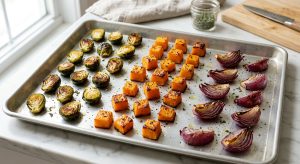
If there is one modern recipe trend I will defend to my dying breath, it is the sheet pan meal. The concept is pure, unadulterated genius: chop up your protein, chop up your vegetables, toss them in olive oil and spices, dump them on a single rimmed baking sheet, and roast them at 400°F.
The secret to a successful sheet pan meal is understanding cooking times. You cannot put delicate asparagus on the same pan as thick, dense potatoes at the exact same time and expect them both to survive. The potatoes need a 20-minute head start. Learn to stage your ingredients. Put the hard root vegetables in first, add the chicken ten minutes later, and throw the delicate greens on for the last five minutes. You get a fully composed, highly flavorful meal with exactly one pan to wash. That is what I call weekday winning.
Ingredients You Keep Seeing (and How Not to Ruin Them)
Modern recipes have rapidly expanded the standard home pantry. We are no longer limited to salt, pepper, and a dusty jar of dried oregano. Global flavors have taken over, but if you don’t know how to use these trendy ingredients, they will just sit in your fridge until they achieve sentience. Let’s break down the heavy hitters.
Miso Paste: Not Just for Soup Anymore
If you only associate miso with the cloudy soup you get before your sushi arrives, you are missing out on one of the greatest flavor enhancers in the culinary world. Miso is a traditional Japanese paste made from fermented soybeans. It is salty, deeply savory, and packed with umami.
Think of miso paste as a savory cheat code. You do not just use it in Asian dishes. Sneak a tablespoon of white miso into your mashed potatoes instead of salt. Whisk it into a vinaigrette for a salad. Rub it on a piece of salmon before roasting. I even put a teaspoon of it into my chocolate chip cookie dough—the salty, savory depth it adds to the sweet chocolate is absolutely mind-blowing. Keep a tub of it in your fridge; it lasts practically forever because of the fermentation and salt content.
Gochujang, Chili Crisp, and the Heat Revolution
We are living in the golden age of spicy condiments. If you have been paying attention, you know that chili crisp has entirely taken over the culinary zeitgeist. It is no longer just a niche product; the global chili crisp market reached $1.42 billion in 2024 and is projected to hit an incredible $2.64 billion by 2033. It has been dubbed the “new Sriracha,” with over 40 different brands popping up everywhere from specialty Asian markets to Williams Sonoma,.
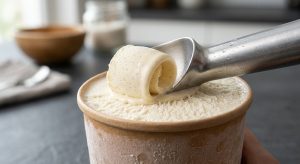
Chili crisp is a Chinese condiment consisting of dried chilis, oil, garlic, shallots, and often a hit of MSG or salt, creating a textural, tingly, umami-rich experience. The beauty of chili crisp is its versatility. You don’t cook with it; you finish with it. Spoon it over fried eggs, drizzle it on roasted vegetables, toss your noodles in it, or—if you are feeling adventurous and trust the TikTok trends—spoon it over vanilla ice cream. The combination of sweet, creamy dairy and spicy, salty crunch is bizarrely addictive.
Similarly, Gochujang is a Korean fermented chili paste. Unlike chili crisp, which is an oil-based finishing condiment, Gochujang is thick, sticky, sweet, and spicy. It is meant to be cooked into sauces, marinades, and stews. Thin it out with a little soy sauce, sesame oil, and vinegar, and you have an incredible glaze for chicken wings or a dipping sauce for dumplings.
Nutritional Yeast and the Vegan Flavor Bomb
Affectionately known as “nooch” in the plant-based community, nutritional yeast looks like yellow fish food but tastes like a savory, cheesy miracle. It is an inactive yeast that is packed with B-vitamins and possesses a deeply nutty, cheesy flavor profile. Even if you are a dedicated carnivore, you should have this in your pantry. Toss your freshly popped popcorn in olive oil and a heavy dusting of nutritional yeast, and you will never go back to powdered fake butter again. It’s also brilliant for thickening and flavoring dairy-free cream sauces or sprinkling over roasted broccoli.
Aquafaba: Yes, It’s Bean Water. Yes, It Works.
This is the one that sounds like a prank. Aquafaba is the viscous, slightly cloudy liquid leftover in a can of chickpeas (garbanzo beans). For decades, we poured it down the drain. Then, some brilliant modern cooks realized that the protein and starch structure of this bean water mimics egg whites almost perfectly.
If you whip aquafaba with a hand mixer, it will foam up and form stiff peaks, exactly like an egg white meringue. You can use it to make vegan macarons, egg-free mayonnaise, or a perfectly frothy whiskey sour without the raw egg risk. It sounds disgusting, but I promise you, once it is whipped and sweetened, it tastes absolutely nothing like beans.
The Hardware Reality Check: Stop Poisoning Yourself with Cheap Pans
Alright, grab your wine, because this is where I get incredibly strict. I have zero patience for toxic, cheap kitchenware. If you are going to put time, money, and love into cooking beautiful meals, you cannot do it in a scratched-up, peeling, $15 pan you bought at a discount store five years ago. It is not just bad for your food; it is actively terrible for your health.
The Teflon Tragedy: Why Your Non-Stick Belongs in the Trash
Let me be unequivocally clear: the traditional non-stick pan is a chemical disaster. For decades, non-stick coatings like Teflon were made using PTFE (polytetrafluoroethylene) and PFOA, which belong to a massive class of synthetic chemicals known as PFAS, or “forever chemicals”,. They are called “forever chemicals” because they do not break down easily in the environment or in your body,.
Recent 2024 and 2025 studies continue to sound the alarm on PFAS exposure, linking these chemicals to severe endocrine disruption, reproductive hormone issues, and an increased risk of kidney and testicular cancers,. You might think you are safe because your new pan says “PFOA-free” on the label. Do not be fooled by clever marketing. When PFOA was phased out, manufacturers simply substituted it with similar chemicals (like GenX) that carry many of the exact same toxic risks. In fact, a 2023 global survey found that a shocking 79% of all non-stick pan samples tested were still coated with PTFE.
Here is the truly terrifying part: when you heat a PTFE-coated pan above 500°F (260°C)—a temperature easily reached if you preheat an empty pan on a high burner—the coating rapidly degrades and emits toxic fumes,. These fumes can cause a condition literally known as “Teflon flu” in humans, and they are notoriously fatal to pet birds,.
Furthermore, if you use a metal spatula and scratch that cheap coating, you are serving up plastic with your dinner. An analysis showed that a single broken patch in a PTFE coating can release up to 2.3 million micro- and nanoparticles of plastic into your food in just 30 seconds of cooking.
If your non-stick pan has a scratch, a chip, or is starting to flake, throw it in the trash immediately. Stop poisoning yourself for the convenience of an easy-to-flip omelet.
Carbon Steel and Cast Iron: The Unkillable Workhorses
So, what do you use instead? You turn to the unkillable workhorses of the professional kitchen: carbon steel and cast iron.
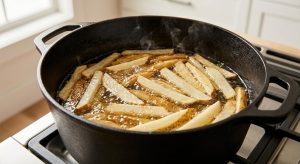
Cast iron is heavy, holds heat like a furnace, and will literally outlive you. Carbon steel is cast iron’s lighter, more agile cousin—it heats up faster, is easier to toss, and is the pan of choice in French bistros. Both of these pans require a process called “seasoning.” Seasoning is not about adding salt and pepper; it is the scientific process of polymerizing cooking oil. When you rub a microscopic layer of oil onto the pan and heat it past its smoke point, the oil breaks down and bonds with the metal, forming a slick, hard, naturally non-stick surface.
Yes, they require a tiny bit of maintenance. You cannot put them in the dishwasher, and you should dry them immediately after washing so they don’t rust. But in return, they will give you the best sear on a steak you have ever had, they will never peel toxic flakes into your food, and they will only get better the more you use them.
Stainless Steel: The Secret to the Perfect Pan Sauce
You also need one high-quality, heavy-bottomed, fully-clad stainless steel skillet. Stainless steel is not non-stick, and that is exactly the point. When you sear a piece of chicken or steak in stainless steel, the proteins stick to the bottom of the pan, brown, and eventually release. They leave behind a crusty, brown residue stuck to the metal.
In the culinary world, that brown residue is called the fond, and it is culinary gold. It is concentrated flavor. After you remove the meat, you place the pan back on the heat, pour in a splash of wine, chicken broth, or even water, and use a wooden spoon to scrape up all those brown bits. Let the liquid reduce, swirl in a pat of cold butter, and you have just created a restaurant-quality pan sauce in three minutes. You cannot do that in a non-stick pan because the fond never forms.
The Science of Flavor Building (Minus the Lab Coat)
You can have the best ingredients and the safest pans in the world, but if you do not understand how to build flavor, your food will always taste like it was made by an amateur. Professional chefs do not have magical palates; they just understand the basic science of balancing taste.
Acid is Your Best Friend
This is the number one mistake home cooks make. You taste a soup, a stew, or a sauce you just made, and you think, “It’s missing something.” Your immediate instinct is to reach for the salt shaker. You add salt. You taste it again. Now it just tastes like salty, flat soup.
What your dish is actually missing is acid. Acid brightens food, cuts through heavy fats, and makes flavors pop on your palate. If your rich, heavy beef stew tastes muddy, a splash of red wine vinegar or a squeeze of fresh lemon juice stirred in right at the end of cooking will completely transform it. If your roasted vegetables taste dull, hit them with some balsamic glaze. Always keep lemons, limes, and an arsenal of vinegars (apple cider, white wine, rice vinegar) on hand. Before you blindly add more salt, ask yourself: does this need a hit of acid?
The Maillard Reaction: Why Brown Equals Good
We have touched on browning a few times, but you need to respect the science behind it. The Maillard reaction is a chemical reaction between amino acids and reducing sugars that gives browned food its distinctive, complex flavor. It is the reason a seared steak tastes infinitely better than a boiled one, and why a golden-brown piece of toast is delicious while plain white bread is boring.
To achieve the Maillard reaction, you need high heat, and you must eliminate moisture. Water is the absolute enemy of browning. Water boils at 212°F (100°C), but the Maillard reaction doesn’t really kick into high gear until around 300°F (150°C). If your meat is wet when it hits the pan, the heat energy goes into boiling off the water rather than browning the meat. You will end up steaming your expensive steak in its own juices, resulting in a sad, gray exterior.
Always, always pat your proteins bone-dry with a paper towel before cooking them. Furthermore, do not overcrowd your pan. If you cram two pounds of mushrooms into a small skillet, they will release all their moisture at once, drop the temperature of the pan, and boil in their own liquid. Cook in batches. Give your food room to breathe, let the moisture evaporate, and let the Maillard reaction do its beautiful work.
Modern Plating and Presentation Without the Tweezers
We eat with our eyes first, but let’s not lose our minds. You are cooking for your family, your friends, or yourself—you are not trying to earn a Michelin star on a Thursday evening. Stop trying to make fancy swooshes with your sauces using the back of a spoon; half the time it just looks like an accident.
Instead, focus on the fundamental rules of rustic, appetizing presentation:
- Color Contrast: Brown food tastes incredible, but a plate of brown meat, brown potatoes, and brown gravy looks like a depression-era ration. Garnish with fresh herbs. Throw a bright, acidic green salad on the side. Contrast is key.
- Height: Do not spread your food out flat across the plate like a map. Mound your mashed potatoes or grains in the center, lean your sliced protein against it, and casually drape your vegetables. Height creates visual interest and makes the portion look more generous.
- The Rule of Odds: For some psychological reason, the human brain finds odd numbers more visually appealing than even numbers. If you are plating scallops, shrimp, or meatballs, serve three or five, not four. It sounds ridiculous, but it instantly makes a plate look more professional.
- Clean the Rim: Before you carry the plate to the table, take a damp paper towel and wipe the rim of the plate clean of any errant drips or fingerprints. A clean rim acts as a frame for the food and instantly elevates the presentation from “messy home cook” to “I know what I’m doing.”
Conclusion: Your Kitchen, Your Rules
At the end of the day, demystifying modern recipes is about taking back control of your kitchen. The culinary world is full of noise, trends, and people trying to sell you gadgets you don’t need or intimidate you with techniques you don’t have to master.
You do not need to be a professional to make mind-blowing food. You just need to understand the basic rules of the game: embrace efficiency when you are tired, invest in non-toxic, durable tools that actually work, balance your flavors with salt and acid, and don’t be afraid to experiment with global ingredients that bring the world to your dining table.
Cooking should be a joy, not a chore, and certainly not a performance for social media. So throw out that peeling Teflon pan, buy a jar of chili crisp, pour yourself another glass of wine, and get into the kitchen. You’ve got this.