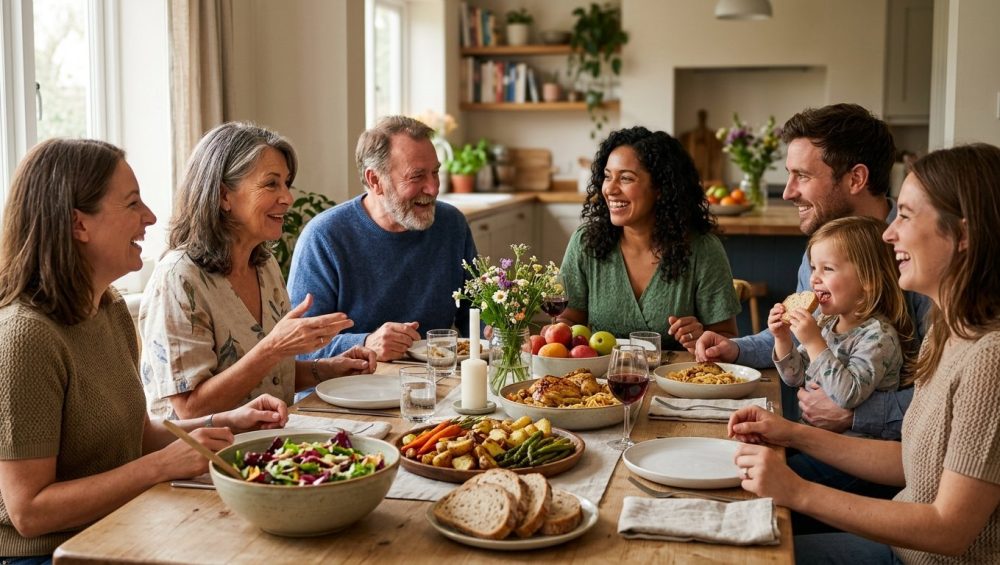
Let’s get one thing straight right out of the gate: nobody actually cares if your linen napkins are hand-folded into the shape of a swan, and absolutely no one is judging the fact that you didn’t spend twelve hours clarifying a consommé. If you are sweating over a meticulously plated, Michelin-wannabe tasting menu while your guests are awkwardly standing in your living room holding empty wine glasses and making small talk with your cat, you are doing it wrong. I say this with love, but you are completely missing the point of having people over.
As a home cook who has learned the hard way—by setting off the smoke detector, ruining expensive cuts of meat, and having panic attacks over soufflés that collapsed like my patience on a Monday morning—I am here to tell you that the best dinner parties are the ones where the host actually sits down. The ultimate goal of inviting people into your home is connection. It is about creating a space where everyone can exhale, tell inappropriate jokes over a bottle of wine, and eat something deeply satisfying.
You do not need a culinary degree to make mind-blowing food, and you certainly do not need to sacrifice your sanity to be a good host. Weekdays are for ruthless efficiency and clever hacks, which buys us the time to be perfectionists on the weekends. But even weekend entertaining shouldn’t feel like a punishment. In this definitive masterclass, we are going to dismantle the myth of the “perfect host,” upgrade your kitchen gear (because I refuse to let you poison your friends with cheap pans), and walk through a foolproof blueprint for effortless meals that actually foster meaningful moments. Grab a glass of whatever you’re drinking, and let’s get into it.
The Science and Psychology of Sharing a Meal (Why We Gather)
Before we start talking about braising liquids and crispy chicken skin, we need to understand why we are putting ourselves through the ordeal of hosting in the first place. We live in an era of hyper-convenience, where you can have a lukewarm burrito delivered to your doorstep by a drone. Yet, we still crave the physical act of gathering around a table.
The Cold, Hard Data on Happiness
If you think sharing a meal is just a nice, folksy tradition, the data politely disagrees. According to the 2025 World Happiness Report, which analyzed data from over 150,000 people across 142 countries, sharing meals is one of the strongest predictors of subjective well-being. In fact, researchers from Oxford, Harvard, and UCL found that how often you share a meal with others is just as influential in predicting your happiness as your income level, and it can reveal more about your well-being than your employment status.
Let that sink in. Sharing a plate of pasta with a friend gives you the same statistical happiness boost as a pay raise. People who always share lunches and dinners report an average of one extra point in their life evaluation (on a 0 to 10 scale) compared to those who dine alone. To put that into perspective, an increase of one point across a population is massive—it’s the kind of jump that would move a country’s global happiness ranking up by several spots.
Unfortunately, we are moving in the wrong direction. In the United States, solitary eating has increased by 50% over the last two decades, with over a quarter of people now eating all their meals alone. This makes the act of hosting a dinner party not just a fun Friday night activity, but a necessary rebellion against an increasingly isolated world.
The “Host Anxiety” Epidemic
So, if eating together is scientifically proven to make us happier, why do so many of us dread hosting? The answer is simple: perfectionism and “Host Anxiety.” A 2023 survey of 2,000 adults revealed that 76% of hosts feel immense pressure to ensure their guests have a good time, and half are terrified that something will go wrong with the food. Furthermore, 47% of people stress out about getting their house perfectly clean before guests arrive, and a significant portion worry about timing the meal so everything is hot at once.
We have been brainwashed by glossy lifestyle magazines and curated social media feeds into believing that entertaining requires an immaculate home, a flawless tablescape, and a menu that requires three days of prep. This over-preparation is the number one barrier to authentic connection. When you are stressed, your guests are stressed. They can smell your anxiety over the scent of the roasting garlic. The antidote to Host Anxiety is embracing the philosophy of effortless entertaining.
The Core Philosophy of Effortless Entertaining
If you want to create meaningful moments, you have to engineer your evening so that you are actually present for them. This requires a fundamental shift in how you approach cooking for a crowd.
The 80/20 Rule of Dinner Parties
The Pareto Principle states that 80% of your results come from 20% of your efforts. This applies perfectly to dinner parties. Your guests are going to remember the warmth of the greeting, the quality of the conversation, and the overall vibe of the night. They are not going to remember if you made your own puff pastry from scratch. Spend 20% of your effort on high-impact elements: a killer main course that requires no last-minute fussing, decent wine, and good lighting. Let the other 80% go.
Prep Now, Party Later
The golden rule of stress-free hosting is that you should never be chopping an onion while your guests are in the house. Your menu must be designed around dishes that can be prepped in advance. Braises, stews, marinated meats, and assembled appetizers are your best friends. If a recipe requires you to stand over a hot stove aggressively whisking a sauce for ten minutes right before serving, banish it from your dinner party repertoire. You are a host, not a short-order cook.
Outsourcing is Not a Dirty Word
There is no shame in buying a high-quality component to save time. If you have a phenomenal local bakery, buy the damn baguette. If there is a fantastic gelateria down the street, pick up a pint for dessert. You do not get a medal for making everything from scratch. You get a medal for being a relaxed, engaging host who isn’t crying in the pantry at 8:00 PM.
A Non-Negotiable PSA on Your Kitchen Gear (The “No-Go” Rule)
Before we even look at a recipe, we need to have a serious talk about your equipment. As your sassy, protective culinary guide, I have zero patience for cheap, toxic kitchenware. If you are still cooking on flimsy, scratched non-stick pans that you bought for $15 at a big-box store five years ago, I need you to march into your kitchen and throw them in the trash immediately. I am not being dramatic; I am looking out for your health.
Ditch the Peeling Non-Stick (PFAS and the “Forever Chemical” Nightmare)
Traditional non-stick coatings (like Teflon, or PTFE) rely on a class of synthetic chemicals known as PFAS (per- and polyfluoroalkyl substances). These are notoriously dubbed “forever chemicals” because they do not break down in the environment or in the human body. Recent research from 2025 and 2026 is absolutely damning: a single scratch on a non-stick pan can release thousands—and in severe cases, millions—of toxic microplastic particles and PFAS compounds directly into your food.
When these pans are heated above 500°F (260°C), the coating begins to degrade, releasing invisible, toxic fumes that can cause “polymer fume fever”—a condition with flu-like symptoms. Worse, long-term exposure to PFAS has been scientifically linked to a terrifying laundry list of health issues, including kidney and testicular cancer, severe endocrine disruption, thyroid disorders, and reproductive harm. You would never knowingly serve your loved ones a side of cancer-causing microplastics, so why are you searing their dinner on a flaking chemical slick? Stop it.
The Only Three Pans You Actually Need
You do not need a 14-piece cookware set. You need three high-quality, non-toxic, durable workhorses that will last a lifetime and give you professional-level results.
- The Enameled Cast Iron Dutch Oven: This is the undisputed king of effortless entertaining. Brands like Le Creuset or Staub are investments, but they are worth their weight in gold. Enameled cast iron provides incredible heat retention, is entirely non-toxic, and goes seamlessly from the stovetop to the oven to the dining table as a gorgeous serving vessel. This is what you will use for your braises, stews, and roasts.
- The Fully Clad Stainless Steel Skillet (10 or 12-inch): For searing, sautéing, and building pan sauces, nothing beats heavy-gauge, tri-ply (or 5-ply) stainless steel. It is indestructible, safe, and allows you to build a proper “fond” (those caramelized browned bits at the bottom of the pan that are the secret to restaurant-quality flavor).
- The Carbon Steel Pan: If you are terrified of losing your non-stick egg pan, carbon steel is your savior. It is lighter than cast iron, heats up in a flash, and once properly seasoned, it becomes naturally non-stick without a single synthetic chemical in sight. It requires a tiny bit of maintenance (just wipe it out and keep it oiled), but it will outlive you.
The Master Menu: Foolproof, Low-Stress Recipes
Now that we have thrown away your toxic pans and adjusted your mindset, let’s talk about the food. The following recipes are designed to maximize flavor while minimizing active cooking time when your guests are present. They are rustic, forgiving, and deeply comforting.
The “I Tried Really Hard” Mezze Board (No-Cook Starter)
When guests arrive, they are usually hungry and holding a drink. You need something for them to graze on immediately, but you should not be cooking it. Enter the Mezze Board. It looks incredibly impressive, requires zero cooking, and encourages communal sharing.
The Strategy: Instead of a standard cheese and cracker plate, lean into Mediterranean flavors. They are vibrant, pair beautifully with wine, and can sit at room temperature for hours without getting weird.
- The Dips: Buy a high-quality hummus and a vibrant tzatziki. Sassy Sous-Chef Hack: Transfer store-bought hummus to a beautiful ceramic bowl, use the back of a spoon to create a deep swirl in the center, and aggressively drizzle it with your best extra virgin olive oil. Sprinkle with smoked paprika, toasted pine nuts, and fresh parsley. Suddenly, it looks like you made it from scratch.
- The Crunch: Warm pita bread (tossed in the oven for 3 minutes), sturdy cucumber spears, and radishes.
- The Brine: A mix of high-quality olives (Castelvetrano are the superior olive, do not fight me on this), marinated artichoke hearts, and stuffed grape leaves.
- The Cheese: A block of good feta drizzled with honey and fresh thyme, and maybe some halloumi if you feel like giving it a quick sear in your stainless steel pan right before the doorbell rings.
Assemble this on a massive wooden board 30 minutes before anyone arrives. It is a visual centerpiece that says, “I have my life together,” even if you are secretly wearing sweatpants under your apron.
The One-Pan Wonder: Crispy Chicken Thighs with Schmaltzy Potatoes
If you are cooking for a smaller group (4-6 people) and want something that feels like a Sunday roast but takes a fraction of the effort, this is your holy grail. Chicken breasts dry out if you look at them wrong; bone-in, skin-on chicken thighs are virtually indestructible and far more flavorful.
The Technique:
- Prep (Can be done a day ahead): Season 6-8 bone-in, skin-on chicken thighs aggressively with kosher salt, black pepper, smoked paprika, and garlic powder. Leave them uncovered in the fridge overnight. This dries out the skin, which is the scientific secret to shatteringly crisp results.
- The Base: Chop 1.5 pounds of baby Yukon gold potatoes into halves. Toss them with olive oil, salt, and rosemary. Spread them in an even layer on a large, heavy-duty sheet pan.
- The Assembly: Nestle the chicken thighs directly on top of the potatoes.
- The Bake: Roast at 425°F (220°C) for about 40-45 minutes.
Why this works: As the chicken roasts, the fat renders out of the skin (schmaltz) and drips directly onto the potatoes beneath them. The potatoes effectively confit in chicken fat, becoming crispy on the outside and creamy on the inside, while the chicken skin becomes impossibly crunchy. You have a protein and a starch done in one pan. Throw a simple arugula salad with a lemon vinaigrette on the side, and you have a complete, spectacular meal.
The “Set It and Forget It” Braised Short Ribs
For a dinner party that screams “elegance” but requires almost zero active work, braised beef short ribs are the ultimate cheat code. They are rich, decadent, and impossible to mess up as long as you give them enough time.
The Technique:
- The Sear: In your enameled cast iron Dutch oven, heat a little oil until shimmering. Season your bone-in English-cut short ribs heavily with salt. Sear them in batches until a deep, dark mahogany crust forms on all sides. Do not rush this; color equals flavor. Remove the beef and set aside.
- The Aromatics: In the beef fat left in the pan, sauté a classic mirepoix (diced onions, carrots, celery) until softened. Stir in two tablespoons of tomato paste and cook until it rusts in color. Add three cloves of smashed garlic and a few sprigs of fresh thyme and rosemary.
- The Deglaze: Pour in an entire bottle of dry red wine (something you would actually drink, like a Cabernet or a Côtes du Rhône). Scrape up all the beautiful browned bits from the bottom. Let it reduce by half.
- The Braise: Nestle the short ribs back into the pot. Add enough high-quality beef stock so the liquid comes about halfway up the sides of the meat. Bring to a simmer, cover with a heavy lid, and transfer to a 325°F (160°C) oven for 2.5 to 3 hours.
The Magic: You can (and should) do this entirely the day before. Braises taste exponentially better on day two because the flavors have time to meld. When your guests arrive, all you have to do is gently reheat the pot on the stove. Serve the ribs over a bed of creamy polenta or mashed potatoes. The meat will literally fall off the bone when you look at it. It is rich, luxurious, and requires you to do absolutely nothing while your guests are present.
The Build-Your-Own Taco or Bowl Bar
If you are hosting a larger crowd or a more casual weekend get-together, plated meals become a logistical nightmare. The solution is the “Build-Your-Own” format. It is interactive, fun, and naturally accommodates picky eaters without making you feel like a short-order cook.
The Strategy:
- The Main: Slow-cook a massive pork shoulder (Carnitas) or a batch of shredded chicken tinga. Keep it warm in a slow cooker or your Dutch oven.
- The Carbs: Warm corn and flour tortillas, or a massive pot of cilantro-lime rice.
- The Fixings: This is where you shine. Set out bowls of diced white onion, fresh cilantro, crumbled cotija cheese, sliced radishes, jalapeños, lime wedges, and at least two types of salsa.
- The Guacamole: Make it fresh right before serving, but prep all the components (chopped onions, jalapeños, cilantro) in advance so you just have to mash the avocados and mix it together.
People love customizing their food. It sparks conversation (“Wait, you don’t like cilantro?”) and completely removes the pressure of plating individual portions.
Navigating Dietary Restrictions Without Losing Your Mind
We live in a modern world where at least one of your guests will be gluten-free, dairy-free, vegan, or on a paleo kick. The old-school host would panic and cook three separate meals. The smart host engineers a menu that is naturally inclusive.
The “Deconstructed” Strategy
Do not try to make a vegan, gluten-free lasagna. It will taste like sadness and take you five hours. Instead, use the “Build-Your-Own” strategy mentioned above. A taco bar is inherently adaptable. The vegan guest can load up on black beans, rice, and guacamole. The gluten-free guest uses corn tortillas. The keto guest eats a bowl of meat and cheese. Everyone is happy, and you only cooked one core meal.
Naturally Inclusive Dishes
When planning a plated meal, lean into cuisines that naturally accommodate restrictions. Asian and Middle Eastern flavor profiles are fantastic for this. A massive platter of roasted vegetables with tahini dressing, alongside a beautiful piece of roasted salmon, is naturally gluten-free and dairy-free. If you have a vegan guest, swap the salmon for a hearty main of roasted cauliflower steaks or spiced chickpeas. Stop relying on heavy cream and wheat flour as crutches, and dietary restrictions suddenly become a non-issue.
Curating the Vibe (Because Ambience Hides Imperfections)
You could serve your guests a Michelin-star meal, but if they are eating it in a sterile, brightly lit room while sitting on uncomfortable chairs in dead silence, they will not enjoy it. Ambience is the secret sauce of entertaining. It makes the food taste better, the wine flow faster, and the conversation run deeper.
Ban the “Big Light” (The Psychology of Ambient Lighting)
If there is one hill I am willing to die on, it is this: Turn off the overhead ceiling light. The “Big Light” is the enemy of intimacy. Interior design experts and psychologists agree that harsh, flat overhead lighting makes a space feel clinical, uninviting, and interrogatory. Nobody looks good, and nobody feels relaxed under a blinding 5000K LED bulb.
Instead, you need to master ambient and layered lighting. Studies in lighting psychology show that warm light tones (specifically Correlated Colour Temperature between 2700K and 3000K) encourage melatonin production, lower stress levels, and signal to the body that it is time to unwind.
Your Lighting Checklist:
- Dimmers: If you must use overhead fixtures, they must be on a dimmer switch. Bring them down to a soft glow.
- Lamps: Scatter table lamps and floor lamps in the corners of the room. This creates pools of warm light and soft shadows, making the room feel cozy and expansive.
- Candles: You cannot have too many unscented candles on the dining table. The flickering light is universally flattering and instantly elevates a Tuesday night dinner into an “event.” (Note: Always use unscented tapers or tealights on the table; you want your guests to smell the braised short ribs, not a “Vanilla Pumpkin Spice” candle).
The Playlist Strategy
Silence is awkward. The clinking of silverware against plates in a quiet room is enough to trigger a panic attack. Music fills the dead air and sets the tempo for the evening.
- Arrival: Upbeat, welcoming, but not intrusive. Think classic soul, upbeat jazz, or indie folk. It should be loud enough to recognize, but soft enough that people don’t have to shout.
- Dinner: Bring the tempo down. Acoustic covers, bossa nova, or lo-fi beats. It should act as an auditory cushion for the conversation.
- Post-Dinner: If the wine is flowing and the energy is up, slowly transition to upbeat throwbacks. Let the room dictate the vibe.
Strategic Seating
If you are hosting more than six people, do not let them choose their own seats. Left to their own devices, couples will sit next to each other and talk to the same person they talk to every day. As the host, it is your job to mix the energy. Put the quiet observer next to the gregarious storyteller. Split up the couples. A simple place card (even just a piece of cardstock with a handwritten name) removes the awkward “where should I sit?” dance and shows that you put thought into the evening.
The Art of the Imperfect Ending: Desserts That Don’t Require a Pastry Degree
Baking is a science; cooking is an art. If you are not a natural baker, a dinner party is not the time to attempt a three-tiered genoise sponge cake with a mirror glaze. Dessert should be a sweet, effortless punctuation mark at the end of the meal, not a source of anxiety.
The Affogato Hack
This is the greatest dessert cheat code in culinary history. It requires two ingredients, zero cooking, and looks incredibly sophisticated.
- Buy the highest quality vanilla bean gelato or ice cream you can find.
- Brew a pot of strong espresso or very dark coffee.
- Scoop the ice cream into pretty glasses or bowls.
- Bring the bowls and a pitcher of the hot espresso to the table. Pour the hot espresso over the cold ice cream in front of your guests.
The contrast of hot and cold, bitter and sweet, is phenomenal. Serve it with a store-bought biscotti or a piece of dark chocolate, and your guests will think you are a genius.
The Rustic Galette (Pie’s Lazy Cousin)
If you absolutely must bake something, make a galette. A pie requires a perfect crust, precise crimping, and a terrifying blind-baking process. A galette is literally a pie that gave up on being perfect and decided to be “rustic” instead.
- Buy a high-quality store-bought pie crust (or make a simple shortcrust if you have a food processor and 5 minutes).
- Roll it out flat on a piece of parchment paper.
- Toss sliced seasonal fruit (apples in the fall, peaches or berries in the summer) with a little sugar, lemon juice, and cornstarch.
- Pile the fruit in the center of the dough, leaving a two-inch border.
- Fold the edges of the dough up and over the fruit, pleating it as you go. It is supposed to look messy.
- Brush the crust with an egg wash, sprinkle with coarse sugar, and bake at 400°F (200°C) until golden brown and bubbly.
Serve it warm with a scoop of vanilla ice cream. It slices beautifully, tastes exactly like pie, and requires zero technical skill.
The Cleanup: Don’t Let It Ruin the Night
The meal was a success, the wine is empty, and your guests are heading home. You turn around and look at your kitchen, which now resembles an active disaster zone. This is the moment that makes people swear off hosting forever. But it doesn’t have to be.
Clean As You Go (But Don’t Be Annoying)
The first rule of kitchen management is “Mise en place” (everything in its place), and the second is “clean as you go.” While the onions are sautéing, wash the cutting board. When the short ribs go into the oven for three hours, load the dishwasher and wipe down the counters. By the time your guests arrive, your kitchen should be 90% clean.
However, once the guests are eating, stop cleaning. There is nothing more uncomfortable for a guest than watching their host aggressively scrub a roasting pan while they are trying to enjoy their dessert. It signals that the night is over and they are a burden.
The “Leave It for Tomorrow” Rule
When the party is over, do not spend an hour scrubbing pots. You are tired, you have had a few glasses of wine, and you deserve to bask in the glow of a successful evening. Do the bare minimum:
- Put the leftover food in Tupperware and get it in the fridge.
- Fill the dirty pots with warm, soapy water and leave them on the stove to soak.
- Run the dishwasher if it is full.
Leave the rest for tomorrow morning. The enameled cast iron will be infinitely easier to clean after a 12-hour soak anyway. Go to bed.
The Final Pour
Hosting a dinner party is not a competitive sport. It is not an audition for a cooking show, and it is certainly not a test of your worth as a human being. It is simply an invitation to share space, time, and nourishment with the people you care about.
When you strip away the toxic non-stick pans, the harsh overhead lighting, the overly complicated menus, and the suffocating pressure of perfectionism, what you are left with is the pure, unadulterated joy of connection. You are left with the laughter that echoes over a shared board of cheese, the comfort of a slow-braised meal, and the lingering warmth of an evening well spent.
So, put down the tweezers, turn off the big light, and pour yourself a glass of wine. You’ve got this. Now go invite someone over.