Listen, we need to have a serious talk about what is happening inside your pantry right now. You know exactly what I’m talking about. Tucked away in the dark corners of your cabinets are those sad, plastic jars of pre-ground spices you bought during the great grocery panic of 2018. They have lost their color, their aroma, and frankly, their dignity. You’re tossing spoonfuls of this dusty, flavorless sawdust into your weeknight curries and wondering why your food doesn’t taste like the vibrant, mind-blowing dishes at your favorite local restaurant.
I’ll tell you why: your spices are dead. And if you think you’re fixing the problem by throwing whole spices into a cheap electric blade grinder, you are actively committing culinary homicide.
I am a firm believer that absolutely anyone can cook like a seasoned expert without spending thousands of dollars on a culinary degree. But you cannot fake good flavor. You cannot shortcut the foundational building blocks of a dish. Weeknights are for efficiency, yes, but efficiency should never mean sacrificing the very soul of your meal. If you want to transform your food from “edible” to “extraordinary,” you need to stop relying on stale powders and harsh, heat-generating electric blades.
You need to embrace the magic of crushing. You need a heavy, unpolished granite mortar and pestle.
The Tragedy of the Spice Aisle (And Your Sad, Dusty Pantry)
Let’s get a little scientific for a second. The entire reason spices taste good—the reason they bring heat, warmth, earthiness, and floral notes to your food—is due to volatile organic compounds and essential oils trapped inside their cellular matrices. The active compound in turmeric is curcumin; in black pepper, it’s piperine; in cardamom, it’s a complex mix of terpenes like eucalyptol and terpinyl acetate.
The keyword here is volatile. These oils are fragile. They are highly susceptible to degradation from four primary enemies: oxygen, light, heat, and moisture.
When a commercial spice company harvests whole seeds, bark, or pods, those volatile oils are safely locked away inside intact cell walls. But the moment those spices are pulverized into a fine powder in a massive industrial facility, their protective barrier is obliterated. The surface area of the spice increases exponentially, exposing all those delicate oils to the air.
From the second that spice is ground, the clock starts ticking. Food science studies have shown that ground spices lose their volatile aromatic compounds three to four times faster than whole spices. In fact, ground cumin can drop below 50% of its sensory potency in just 10 to 12 months, whereas whole cumin seeds retain over 90% of their essential oil profile for up to four years when stored correctly.
By the time that jar of ground coriander is shipped to a warehouse, sits on a brightly lit supermarket shelf for six months, and then languishes in your kitchen cabinet right above the heat of your stove, it is essentially culinary ash. It’s no wonder ambient moisture gets in and causes the powder to turn into hard bricks. You are adding colored dirt to your food.
The Science of Flavor: Why Electric Blade Grinders Are Ruining Your Food
“But wait!” you say, feeling very proud of yourself. “I buy whole spices and grind them myself in that little $15 electric coffee grinder I bought online!”
Put the grinder down and step away from the counter.
I know time is money, especially on a Tuesday night when you just want to get dinner on the table. But those cheap electric blade grinders are absolute massacrers of flavor. They are designed for convenience, not for culinary excellence. To understand why, we have to look at the physics of what happens inside that little plastic chamber.
The Problem with Shearing (Chopping vs. Crushing)
An electric blade grinder does not grind. It chops. The high-speed metal blades spin at thousands of revolutions per minute (RPM), violently shearing through the spices.
When you slice through a spice with a blade, you are cleanly cutting through the cell walls. This mechanical action is incredibly inefficient at releasing the trapped essential oils. Instead of coaxing the oils out to coat the resulting powder, the blade simply fractures the dry material into smaller and smaller pieces. This is the exact same reason why using your food processor to make delicate sauces often results in a watery, disjointed mess rather than a creamy, emulsified masterpiece. Blades slice; they do not smash. And smashing is what we want.
The Heat Death of Volatile Oils
Here is the real crime of the electric blade grinder: heat generation.
Grinding is a highly energy-intensive process. In commercial milling, only about 1% of the total input energy is actually used to reduce the particle size of the spice; the remaining 99% is dissipated as heat. When those dull little blades in your countertop grinder spin at 3,000 RPM, they generate a massive amount of friction.
Volatile oils are, by definition, eager to evaporate. Many of the most complex, beautiful floral and citrus notes in spices begin to evaporate at temperatures just above room temperature. When you run an electric blade grinder, the temperature inside that small, enclosed chamber spikes rapidly. You are literally cooking your spices before they ever hit the pan. The heat vaporizes the delicate top notes of the essential oils, leaving behind only the harsh, bitter base compounds.
This is why industrial spice manufacturers are increasingly turning to cryogenic grinding—using liquid nitrogen to freeze spices to -190°C before milling—just to prevent the heat of the machines from destroying the flavor. Since you probably don’t have a tank of liquid nitrogen next to your toaster, you need a different solution. If you absolutely must use a mechanical device for large batches of tough spices, at least invest in a true burr pepper grinder, which crushes rather than chops. But for true, unadulterated flavor extraction, we must look to the past.
Enter the Heavyweight Champion: The Granite Mortar and Pestle
The mortar and pestle is one of the oldest kitchen tools in human history, dating back to 35,000 BC. There is a reason it has survived millennia of technological advancement and remains the tool of choice for serious chefs worldwide. It doesn’t rely on electricity, it doesn’t have a motor that can burn out, and it doesn’t destroy your food with friction-induced heat.
The Mechanics of the Crush: Cell Wall Obliteration
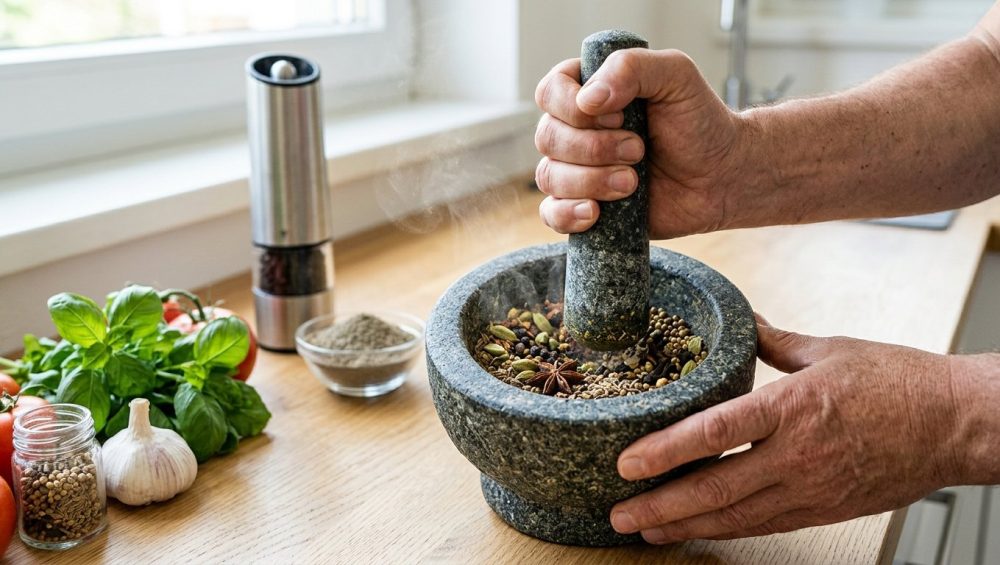
When you place whole toasted cumin seeds into a heavy stone bowl and bring down a solid stone club, you are not slicing. You are crushing, bruising, and macerating.
This blunt-force trauma completely obliterates the plant’s cell walls. Instead of cleanly cutting the cells in half, the rough texture of the stone grips the spice and tears the cells open, forcefully squeezing out every last drop of the essential oils. The oils are released into the bowl, coating the crushed particles and creating a deeply fragrant, slightly damp powder that is exponentially more flavorful than anything a blade could produce. Because this process is manual and relies on heavy weight rather than high-speed friction, it generates virtually zero heat. The volatile oils remain intact, perfectly preserved for your dish.
Emulsions and Pastes: Where the Magic Actually Happens
The magic of the mortar and pestle goes far beyond dry spices. It is the ultimate tool for creating rustic, restaurant-quality wet pastes and emulsions.
Have you ever wondered why your homemade pesto tastes bitter when you make it in a blender? High-speed blades tear through basil leaves, rupturing the cells in a way that aggressively releases polyphenol oxidase—the enzyme responsible for browning and bitterness. The blades also shear the olive oil, which contains bitter compounds called polyphenols that are normally bound up in larger molecules. When the blender’s blades smash those molecules apart, the oil turns harsh and acrid.
In a mortar and pestle, you gently bruise the basil leaves. You press the garlic into a creamy paste, mellowing its harsh sulfur compounds. You slowly work the pine nuts and olive oil into the bruised leaves, creating a thick, luxurious, stable emulsion that a machine simply cannot replicate. It takes a little more elbow grease, but the reward is a sauce that will make you weep with joy.
Buying Guide: How to Choose a Mortar and Pestle That Doesn’t Suck
If you are going to commit to this, you need the right gear. I have a strict “no-go” rule when it comes to cheap, toxic kitchen gear. You are going to be grinding heavy stone against heavy stone; if you buy a cheap, poorly manufactured product, you are going to end up eating stone dust. Let’s break down exactly what you should be looking for.
Material Matters: Why Unpolished Granite Wins
When it comes to the ultimate, all-purpose kitchen workhorse, unpolished granite is the undisputed king.
Granite is incredibly dense and hard. This means it can withstand the heavy, repetitive pounding required to crack tough spices like coriander seeds or black peppercorns without chipping or cracking. But the real secret lies in the unpolished interior.
An unpolished granite mortar has a slightly rough, abrasive surface. This texture acts like microscopic teeth, gripping the spices and herbs so they don’t go flying out of the bowl when you strike them. The friction created between the rough pestle and the rough mortar makes short work of even the most stubborn ingredients. Furthermore, granite is non-porous once properly conditioned. It will not absorb the pungent odors of yesterday’s garlic paste, meaning your delicate cardamom sugar won’t taste like a spicy curry.
The “No-Go” Materials: Marble, Wood, and Mystery Metals
Walk into any big-box home goods store, and you will see shelves lined with beautiful, shiny marble mortar and pestles. Walk right past them.
Marble is gorgeous, but it is a relatively soft stone compared to granite. The interior of a marble mortar is often polished to a smooth finish, which means your peppercorns are just going to slip and slide around the bowl like they’re at a roller rink. While marble is acceptable for very soft, delicate tasks (like bruising basil), it is completely useless for hard spices.
Wood is another terrible idea for an all-purpose mortar. Wood is highly porous. It absorbs moisture, holding onto the volatile oils from your spices and the juices from your garlic. Over time, a wooden mortar becomes a breeding ground for bacteria and will permanently taint everything you make in it with a ghost-flavor of past meals.
Finally, avoid stainless steel or mystery metal alloys. Stainless steel is entirely too smooth to provide the necessary friction for grinding. Plus, the aggressive pounding of metal on metal can shed microscopic shavings into your food, leaving a metallic tang that makes food taste bitter. And just like using a glass cutting board is the reason your knives get dull so fast, using the wrong material for a mortar and pestle will ruin your ingredients and your patience.
Size and Weight: Go Big or Go Home
Do not buy a cute little three-inch mortar and pestle. They are useless novelties designed to look pretty on a shelf.
When you are grinding spices or mashing avocados for guacamole, you need room to move. A tiny bowl will result in ingredients flying all over your countertops. You want a mortar with a minimum capacity of two to three cups (usually around 6 to 8 inches in diameter).
Weight is equally crucial. The mortar needs to be heavy enough that it stays firmly planted on your counter while you apply aggressive force. If you have to hold the bowl down with one hand to keep it from sliding away, it’s too light. A good granite mortar should feel like a small boulder. The pestle itself should also be heavy, broad at the base, and comfortable in your hand. The weight of the pestle should do most of the crushing work for you; you are just there to guide it.
How to Season, Clean, and Care for Your Granite Beast
So, you’ve purchased a massive, unpolished granite mortar and pestle. You cannot use it right out of the box. I repeat: DO NOT put food in it yet.
Because the interior is unpolished stone, the manufacturing process leaves behind microscopic particles of granite dust and loose grit. If you don’t properly cure the bowl, that grit is going to end up in your teeth.
The Initial Cure (Don’t Skip This!)
Seasoning a new granite mortar (or a Mexican molcajete made of volcanic rock) is a one-time process that smooths out the roughest microscopic edges and cleans the stone. Put on a good podcast, because this takes a little muscle.
- The Water Wash: Rinse the mortar and pestle thoroughly with plain warm water and scrub it with a stiff brush. Absolutely no soap. Let it air dry completely.
- The Rice Grind: Throw a handful of uncooked, dry white rice into the bowl. Add a splash of water to help it grip. Now, start grinding. Push the pestle hard against the bottom and sides of the bowl, working the rice into a powder. As you grind, the rice will turn gray as it picks up the stone dust. Discard the gray rice powder, wipe out the bowl, and repeat this process with fresh rice. You must keep doing this until the ground rice remains pure, snow-white.
- The Aromatics: Once the rice is white, dump it out. Toss in four peeled cloves of garlic, a teaspoon of coarse rock salt, and a teaspoon of whole cumin or black peppercorns. Smash them all together into a wet, fragrant paste, rubbing it all over the entire interior surface of the bowl. This acts as a final polish and conditions the stone, filling in any remaining microscopic pores.
- The Final Rinse: Discard the paste (do not eat it, it still has trace stone dust in it). Rinse the mortar thoroughly with warm water, let it dry, and you are officially ready to cook.
Daily Maintenance (Put Down the Soap!)
Taking care of a granite mortar is incredibly simple, provided you follow one strict rule: NEVER use soap.
Granite is porous enough that soap can become trapped in the microscopic crevices, which will make your next batch of guacamole taste like dishwashing liquid. To clean your mortar, simply rinse it under hot water immediately after use. Use a stiff-bristled kitchen brush to scrub away any stuck-on food particles. If you’ve made something particularly oily or pungent, you can grind a little dry white rice or coarse salt to absorb the lingering odors, then rinse it out. Always let it air dry completely before storing it away to prevent any mold from forming in residual moisture.
Real-World Applications: What to Make First
You’ve got your heavy granite beast perfectly seasoned and sitting proudly on your counter. It’s time to put it to work. While this tool shines during leisurely weekend cooking projects, it is also a secret weapon for elevating fast weeknight meals.
The Ultimate Pesto (That Actually Stays Green)
We’ve already discussed why blades ruin pesto, so let’s do it the authentic Genovese way.
Start by tossing a peeled clove of garlic and a pinch of coarse sea salt into your mortar. Pound it until the garlic breaks down into a sticky, smooth paste. The salt acts as an abrasive to help break down the garlic fibers. Next, add a handful of toasted pine nuts and crush them into the garlic until you have a thick, creamy paste.
Now, add your fresh basil leaves a handful at a time. Do not bash them violently. Use a firm, circular grinding motion against the sides of the bowl to gently bruise the leaves, tearing their cell walls and releasing their bright green essential oils. Once the basil is broken down, stir in your finely grated Parmigiano-Reggiano. Finally, slowly drizzle in high-quality extra virgin olive oil while stirring gently with the pestle until a glorious, thick emulsion forms. The resulting sauce will be vibrant, intensely aromatic, and entirely devoid of the bitter, oxidized notes you get from a blender.
Weeknight Spice Rubs and Marinades
When you are rushing to get a chicken breast or a piece of fish on the table, you need maximum flavor in minimum time.
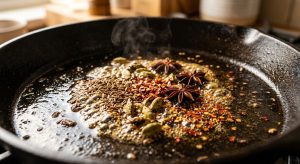
Toss a teaspoon of whole cumin seeds, coriander seeds, and black peppercorns into a dry skillet over medium heat for just 60 seconds until they become fragrant. Dump the toasted spices into your mortar and crush them into a coarse powder. The aroma that hits your face will be intoxicating.
Now, build a marinade directly in the bowl. Add a pinch of salt and a clove of garlic. (Pro tip: if you want to avoid harsh allium flavors, adding your garlic first and mashing it with salt neutralizes the bite). Smash it into the spices. Add a splash of olive oil, a squeeze of fresh lemon juice, and maybe a dollop of tomato paste. If you really want a deep, caramelized umami backbone, take the time to fry your tomato paste in a pan before adding it to the mortar.
Mix it all together, and you have a complex, restaurant-quality wet rub that will completely transform a boring weeknight protein. If you are making a curry, take those freshly crushed spices and spend two minutes blooming them in oil in your skillet before adding your liquids. The fat will carry those freshly extracted volatile oils throughout the entire dish, creating a depth of flavor that pre-ground dust could never achieve.
The Final Verdict: Elevate Your Cooking Without a Culinary Degree
Cooking is not about complicated techniques or pretentious jargon. It is about understanding your ingredients and treating them with the respect they deserve. Spices are the lifeblood of a flavorful kitchen, and treating them like cheap, indestructible colored sand is the fastest way to guarantee mediocre meals.
By ditching the stale pre-ground powders and the harsh, heat-generating electric blade grinders, you are taking a massive step toward culinary artistry. A heavy, unpolished granite mortar and pestle isn’t just a kitchen tool; it is a time machine. It connects you to thousands of years of human cooking history, forcing you to slow down, engage your senses, and actually smell the food you are preparing.
Yes, it takes a little more physical effort than pushing a button on a plastic machine. Yes, it takes up a bit of counter space. But the moment you crush your first batch of toasted cumin seeds and that warm, earthy, citrusy aroma fills your kitchen, you will understand. You will never look at that sad little spice aisle the same way again. Now go clean out your pantry, throw away that dust from 2018, and get to crushing. You’ve got dinner to make.