Pour yourself a generous glass of Pinot Grigio, grab your favorite cutting board, and gather around, my lovely weekend culinary hobbyists. We need to have a serious, intervention-style conversation about one of the greatest tragedies currently unfolding in home kitchens across the globe. I am talking about the rubbery, sad, waterlogged, gummy baked potato.
You know exactly the kind of potato I am talking about. You order it at a mediocre chain restaurant, or worse, you make it at home following some outdated family advice. You cut into it expecting a snowy, fluffy, cloud-like interior, and instead, you are met with a dense, translucent, gluey mass that tastes like wet cardboard. It is a culinary crime, and I have absolutely zero patience for it.
As a busy professional who learned to cook through sheer trial, error, and setting off the smoke detector more times than I care to admit, I am here to tell you that you do not need a degree from Le Cordon Bleu to roast a mind-blowing potato. You just need to understand a tiny bit of basic food science and banish a few terrible habits from your cooking routine. Once you master this simple, inexpensive technique, you will possess the ultimate secret weapon for stress-free weekend entertaining: The Mindful Potato Bar.
Let’s ditch the pretentious chef-speak, roll up our sleeves, and transform this humble root vegetable into an absolute masterpiece.
The Science of Starch: Why Your Potatoes Are Gummy
To fix a ruined potato, we first have to understand what a potato actually is. I promise I will keep the science lesson tight and relevant to your food, but you cannot skip this part if you want professional-level results in your standard home kitchen.
A raw potato is composed of roughly 80 percent water. Yes, you read that correctly. Despite feeling like a dense, heavy rock, that spud is mostly liquid. The rest of the potato is made up of complex carbohydrates, specifically microscopic starch granules. When you apply heat to a potato, a magical chemical process called starch gelatinization occurs.
As the internal temperature of the potato rises, those tiny starch granules begin to absorb the surrounding water. They swell, they soften, and eventually, they burst open, separating from one another. This separation is what creates that highly coveted, mealy, fluffy texture that absorbs butter like a sponge. However, there is a massive catch. If that 80 percent water content does not have a way to evaporate and escape as steam during the baking process, the starch granules essentially drown. They absorb too much moisture, clump together, and turn into a dense, gummy paste. We all know exactly why your mashed potatoes turn to glue when you overwork them in a food processor, and the exact same starchy science applies to a trapped, steaming baked potato.
This brings us to the most critical rule of potato selection: You must use the right potato. Potatoes generally fall into two categories: waxy and starchy. Waxy potatoes, like red bliss or fingerlings, have a low starch content and a very high moisture content. If you try to bake a waxy potato, it will always turn out gluey, no matter what you do. For the ultimate baked potato, you must use a high-starch, low-moisture potato. The Russet (often sold as the Idaho potato) is the undisputed gold standard for baking. Its thick skin and mealy interior are mathematically designed by nature to yield a fluffy center.
The Foil Trap: The Biggest Crime in Potato History
If I could banish one cooking myth from the face of the earth, it would be the catastrophic idea that you should wrap your baked potatoes in aluminum foil. I despise this practice with every fiber of my being.
Why do so many people do this? Because we saw restaurants doing it. But here is the brutal, honest truth: restaurants do not wrap potatoes in foil to make them taste better. They wrap them in foil so they can hold them in warming drawers for hours without the skins drying out. It is an industrial holding technique, not a culinary enhancement.
When you wrap a potato in aluminum foil, you are creating a miniature, airtight sauna. As the potato cooks and releases its internal moisture, that steam hits the foil barrier, condenses, and rains right back down onto the potato skin. You are no longer baking or roasting the potato; you are boiling and steaming it in its own juices. The skin becomes a pale, rubbery, flaccid mess, and the interior turns into a waterlogged, gummy disaster. Much like how you are ruining your nonstick pans with those cheap, chemical-laden aerosol cooking sprays, wrapping a potato in foil is an act of total kitchen self-sabotage.
If you want a steamed potato, buy a steamer basket. But if you want a true baked potato with a shatteringly crisp, deeply savory skin and a snowy, cloud-like interior, you must throw the foil in the recycling bin immediately.
The Masterclass Method: How to Bake the Perfect Potato
Now that we have established the ground rules, let’s get down to the actual technique. This method requires very little active time, making it incredibly efficient, but it does require patience during the bake.
Step 1: The Scrub and the Absolute Dry
Start with large, uniform Russet potatoes. You want them to be roughly the same size so they cook at the exact same rate. Scrub them vigorously under cold water to remove all the dirt. Now, here is the crucial part: you must dry them completely. I mean bone-dry. Use a clean kitchen towel or paper towels and aggressively dry the skin. If you leave water on the outside of the potato, it will steam the skin during the first twenty minutes of baking, delaying the crisping process.
Step 2: The Steam Vents
Remember that 80 percent water content? We need to give it an escape route. Take a standard dinner fork and aggressively prick the potato 8 to 10 times all over. Do not be gentle; stab it about half an inch deep. These holes act as microscopic chimneys, allowing the internal steam to vent out into the oven rather than remaining trapped inside the flesh.
Step 3: The Skin Treatment
The skin of a baked potato should be so delicious that your guests fight over it. To achieve this, we need to trigger the Maillard reaction—the chemical reaction between amino acids and reducing sugars that gives browned food its distinctive flavor. Rub each completely dry potato with a generous coating of neutral, high-heat oil. I prefer avocado oil or standard olive oil (not extra virgin, which has a lower smoke point and can taste bitter when scorched).
Once oiled, aggressively coat the outside with coarse kosher salt. Do not use standard iodized table salt; it dissolves too quickly and will make the potato taste like a salt lick. Coarse kosher salt clings to the oil, draws out residual moisture from the skin through osmosis, and creates an incredible, savory crunch.
Step 4: The High-Heat Bake
Preheat your oven to 400°F (or 425°F if you want an aggressively crispy skin). Do not place the potatoes on a baking sheet, as the bottom will sit in its own pooled oil and steam. Instead, place the potatoes directly on the middle wire rack of your oven. (Pro tip: place a piece of bare aluminum foil or a catch pan on the bottom rack to catch any oil drips and save yourself from a smoke detector incident).
Bake the potatoes for 50 to 60 minutes. But how do you know when they are truly done? You do not guess. If you want foolproof, professional results, you need to stop trusting your oven dial and start using a digital instant-read meat thermometer. A baked potato is perfectly cooked and fully gelatinized when the absolute center reaches an internal temperature of 205°F to 210°F. If you pull it at 190°F, it will be hard and waxy. If you let it go to 220°F, it will turn to dust. Hit that 205°F sweet spot, and you will have achieved perfection.
The Crucial Post-Bake Ritual: The Immediate Squeeze
Your potatoes have hit 205°F. You pull them out of the oven. Your kitchen smells like a rustic European bakery. You are tempted to let them sit on the counter for twenty minutes while you finish prepping your dinner.
Do not do it.
If you let an intact baked potato rest, the residual heat will continue to generate steam inside the skin. With nowhere to go, that steam will condense and turn your perfectly fluffy interior back into a gummy nightmare.
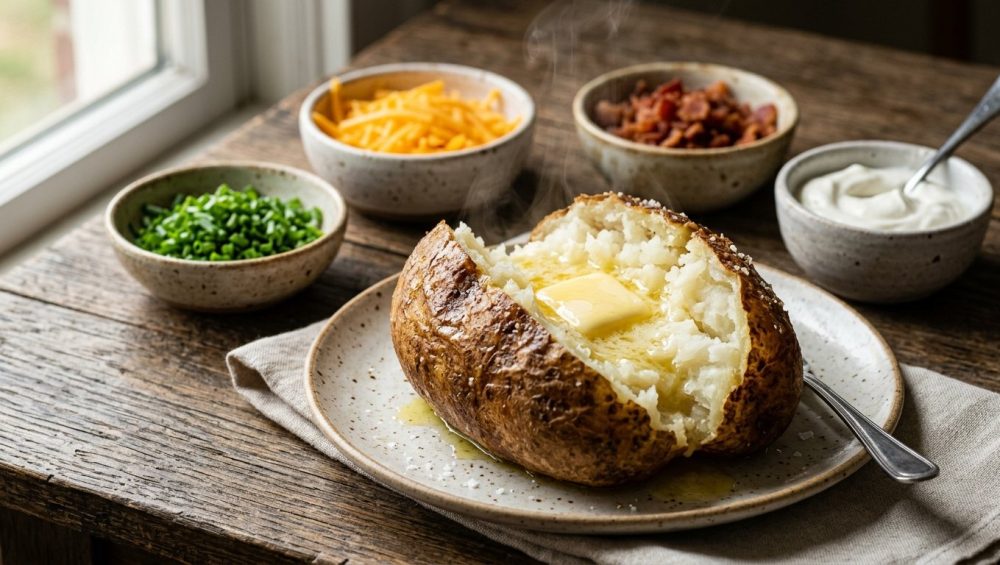
The second those potatoes come out of the oven, you must act. Using a kitchen towel to protect your hands, immediately slice them open lengthwise. Then, push the two ends of the potato toward the center. This “blossoming” action fractures the flesh, maximizes the surface area, and allows a massive plume of steam to escape instantly. Only after they have been opened and vented can you let them sit for a few minutes before serving.
Equipment Warning: Keep the Toxic Gear Out of My Kitchen
As your favorite sassy sous-chef, I have a strict, non-negotiable rule when it comes to kitchen equipment: I absolutely despise cheap, toxic, poorly made gear. If you are going to spend your precious weekend crafting beautiful food, you cannot use tools that actively work against you.
When you are roasting toppings for your potato bar (which we will get to in a moment), you need reliable baking sheets. If you are still using those flimsy, dark-coated, peeling non-stick sheet pans from a discount big-box store, throw them in the trash today. The non-stick coating degrades at high temperatures, leaches mystery chemicals into your food, and the thin metal warps violently. There is a very specific scientific reason why your baking sheets warp and sound like a gunshot in the middle of a roasting session: cheap metal cannot handle rapid thermal expansion.
Instead, invest in heavy-duty, bare aluminum half-sheet pans. They are inexpensive, they conduct heat beautifully, they never peel, and they will last you a lifetime. Pair them with a stainless steel wire cooling rack, and you have a professional-grade roasting setup.
Furthermore, when you are mixing your delicate sour cream sauces or compounding your butter, pay attention to your utensils. If you’ve ever wondered why your silicone spatulas smell like soap when you use them, it is because cheap silicone is loaded with plastic fillers that absorb harsh dishwasher detergents. Upgrade to 100% platinum-grade silicone spatulas. They are heat-resistant, completely inert, and will never transfer a soapy, chemical taste to your beautiful food.
The Mindful Potato Bar: Stress-Free Weekend Entertaining
Now that you possess the sacred knowledge of the perfect baked potato, it is time to leverage this skill to reclaim your weekends.
Hosting a dinner party can be an incredibly stressful, expensive endeavor. We have all been there: sweating over a hot stove, trying to time three different dishes perfectly, while your guests awkwardly stand in your kitchen drinking your good wine. It is exhausting, and it completely defeats the purpose of mindful, joyful gathering.
Enter the Mindful Potato Bar.
This concept is the ultimate culinary hack for the everyday home cook. First, it is ridiculously budget-friendly. A ten-pound bag of premium Russet potatoes costs less than a single fancy cocktail. By making the inexpensive potato the star of the show, you free up your budget to splurge on high-quality, luxurious toppings.
Second, it accommodates absolutely everyone. In today’s world of complex dietary restrictions, hosting can feel like navigating a minefield. With a potato bar, the meal is inherently gluten-free. Vegans can load up on roasted vegetables and olive oil. Carnivores can pile on the chili and bacon. Picky children can just eat butter and cheese. Everyone curates their own perfect plate, and you get to look like a wildly accommodating, effortless host.
Most importantly, 90 percent of the work is done before your guests even ring the doorbell. While the potatoes are doing their hour-long stint in the oven, you can set out all of your toppings in beautiful, mismatched ceramic bowls. By the time it is time to eat, your only job is to pull the potatoes from the oven, slice them open, and hand your guests a plate.
The Master Topping Matrix
A potato bar is only as good as its toppings. Because the potato itself is a blank, starchy canvas, you need to provide toppings that hit all the major flavor profiles: salt, fat, acid, and crunch. Here is my definitive guide to setting up a mind-blowing topping station.
Category 1: The Dairy Foundation
You cannot have a baked potato without rich, melting dairy. Provide a high-quality, European-style cultured butter. The higher butterfat content and slight tang make a massive difference.
Next, you need sour cream or full-fat Greek yogurt. But do not just serve it plain. Whip it with a splash of fresh lemon juice, a pinch of salt, and a mountain of freshly chopped chives. (Side note: you might be wondering why your kitchen knives go dull so incredibly fast when prepping massive amounts of chives and scallions. Stop using hard bamboo cutting boards that destroy your blade’s edge, and switch to a forgiving end-grain wood or soft rubber board).
Finally, the cheese. You need a sharp, aged cheddar or a nutty Gruyère. Whatever you do, grate it yourself from a solid block. We have all experienced the heartbreak of finding out why your cheese sauce breaks and turns into a greasy, clumpy mess when you try to melt pre-shredded cheese. Those bags are coated in cellulose and anti-caking agents that completely ruin the melting texture. Grate your own cheese. Your guests are worth the extra three minutes of arm workout.
Category 2: The Hearty Proteins
To elevate the potato from a side dish to a main course, you need robust proteins.
Thick-cut, applewood smoked bacon is mandatory. Bake it on a wire rack over your bare aluminum sheet pan until shatteringly crisp, then chop it into glorious, fatty dust.
If you want to get creative, a deeply savory, slow-simmered beef chili turns a baked potato into a legendary winter meal. Alternatively, this is a brilliant way to repurpose leftovers from your weekday cooking. If your leftover chicken breast turns out dry after sitting in the fridge, shredding it with two forks and tossing it in a rich, tangy, gently warmed barbecue sauce is the ultimate culinary redemption. Piled high on a fluffy potato with some sharp cheddar and red onions, no one will ever know it was a Thursday night leftover.
Category 3: The Roasted Veggies
This is where the magic happens for your plant-based friends. Please, for the love of all things holy, stop throwing away sad veggies that are starting to wilt in your crisper drawer. Broccoli florets, bell peppers, and slightly soft cherry tomatoes are absolutely perfect for roasting.
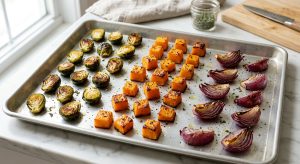
Toss your vegetables in olive oil, salt, and smoked paprika, and roast them on a heavy-duty sheet pan. Just remember to give them plenty of space to breathe. If you overcrowd the roasting pan, you will quickly discover why your roasted veggies get soggy instead of developing a beautiful, caramelized char. The steam needs room to escape, just like it does in our potatoes.
Category 4: The Acid and Crunch
A loaded baked potato is heavy. It is rich, fatty, and dense. To balance the palate, you must provide elements of acid and crunch.
Set out bowls of quick-pickled red onions, spicy pickled jalapeños, and briny Kalamata olives. The sharp, vinegary bite will cut right through the heavy butter and cheese, making every bite taste vibrant and alive. For crunch, alongside the bacon, offer toasted pumpkin seeds, crispy fried onions, or even crushed kettle chips. Texture is the secret difference between a boring home-cooked meal and a restaurant-quality experience.
The Ultimate Weekender’s Triumph
Cooking does not have to be a stressful chore, and entertaining does not require a week of sleepless nights and a maxed-out credit card. By understanding the simple food science behind starch gelatinization, respecting the ingredients, and firmly rejecting terrible habits like the aluminum foil trap, you can elevate the most basic ingredients into something truly spectacular.
The Mindful Potato Bar is more than just a dinner party concept; it is a testament to the fact that anyone can cook like an expert. It proves that professional-level results are achievable in a standard home kitchen, provided you use safe, high-quality gear and a little bit of common sense.
So, this weekend, skip the expensive takeout. Buy a bag of heavy, dirt-covered Russets. Pre-heat your oven, grab your meat thermometer, and invite your favorite people over. Pour the wine, set out the bowls of glorious, freshly grated cheese and crispy bacon, and enjoy the absolute triumph of an effortless, perfectly executed meal. You’ve earned it.