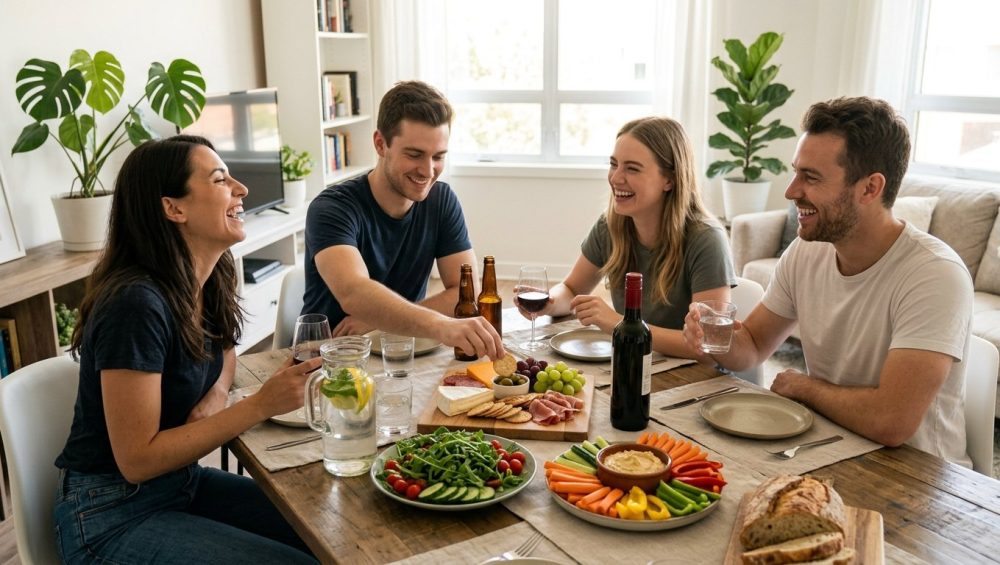
So, you have decided to invite actual human beings over to your home for a meal, and now you are staring at your kitchen like it is a crime scene waiting to happen. I get it. You are used to surviving on cereal, takeout, and whatever you can microwave in under three minutes. The thought of hosting a gathering probably makes your blood run cold. But here is the secret that the culinary elite do not want you to know: you do not need a culinary degree, a massive kitchen, or a trust fund to host an incredible, memorable evening. You just need a solid game plan, a dash of common sense, and the willingness to cheat a little bit.
Welcome to your definitive masterclass on planning mindful gatherings with absolutely zero kitchen experience. We are going to bypass the pretentious chef-speak, ignore the ridiculously complicated recipes, and focus on what actually matters: feeding your friends without losing your mind. If you are ready to stop hyperventilating into a paper bag and start acting like the effortless host you were born to be, grab a glass of wine and let us get to work.
The Psychology of Hosting: Why We Panic and How to Stop
Let us address the elephant in the room: hosting is terrifying for most people. If you feel a knot in your stomach at the mere thought of cooking for others, you are far from alone. A comprehensive 2024 poll revealed that 57% of adults actively dislike hosting because they feel they can never truly relax, and a third of people experience genuine anxiety at the thought of having more than ten guests in their home. We have been conditioned by social media to believe that a dinner party must look like a curated magazine spread, complete with a five-course tasting menu and a tablescape that costs more than your monthly rent.
It is time to aggressively reject that narrative. We are not throwing a formal 1950s dinner party; we are hosting a mindful gathering.
What exactly is a mindful gathering? According to recent event planning trends for 2025 and 2026, the era of stiff, formal entertaining is dead. People are now gravitating toward wellness-centric, low-stress environments that prioritize genuine connection over performative perfection. A mindful gathering is intentional. It is about creating a safe, welcoming space where your friends can unplug, unwind, and actually talk to each other. The food is merely the excuse to get everyone in the same room.
When you shift your mindset from “I have to perform like a Michelin-starred chef” to “I am creating a cozy space for my friends to relax,” the pressure immediately dissipates. You do not need to prove your worth through complicated reduction sauces or perfectly symmetrical vegetable cuts. Your friends are coming over to see you, not to judge your knife skills. If you can learn to overcome your kitchen-related panic, you will realize that the energy you project as a host dictates the energy of the entire room. If you are stressed, your guests will be stressed. If you are relaxed, laughing, and handing out drinks, your guests will follow suit—even if the main course is slightly burnt.
The Art of the Invitation and Setting Expectations
Before you even chop an onion, you have to invite people. In the age of casual text messages, the way you invite your guests sets the entire tone for the evening. Do not send a vague “Hey, want to come over for food sometime this weekend?” That breeds confusion. People will not know if they should bring anything, how to dress, or if they should eat a snack beforehand.
Be specific, but keep it casual. Try something like: “I am hosting a low-key taco night this Saturday at 7 PM. I have got the food and a batch of margaritas covered! Feel free to bring whatever else you would like to drink. Wear sweatpants if you want.”
This instantly lowers the stakes. You have told them exactly what to expect (tacos, casual attire) and what to bring (their own niche beverages). Setting clear expectations is the first step in eliminating both host and guest anxiety.
The Gear You Actually Need (And What to Throw Away Immediately)
Before we even talk about food, we need to have a serious intervention about your kitchen cabinets. I have a strict, non-negotiable rule when it comes to culinary equipment: I do not tolerate toxic, cheap, peeling garbage. If you are going to cook for people you care about, you are not going to do it on a cheap, scratched Teflon pan that is flaking mystery chemicals into your food.
The science on this is no longer up for debate. A major 2026 study from Michigan State University demonstrated that exposure to PFAS—the infamous “forever chemicals” found in traditional nonstick cookware—can actively weaken the immune system and persist in the human body for nearly a decade. Furthermore, late 2025 research from the University of North Carolina highlighted that these toxic compounds easily leach into our meals through damaged nonstick pans, making it a pervasive household hazard. It is officially time to toss out those hazardous pans and upgrade to materials that will not slowly poison your dinner guests.
You do not need a massive arsenal of gadgets to host a great party. You only need a few high-quality, durable essentials. Here is the holy trinity of safe, effective kitchenware:
The Enameled Cast Iron Dutch Oven
This is the ultimate secret weapon for the clueless cook. An enameled cast iron Dutch oven is heavy, retains heat brilliantly, and requires zero complicated maintenance. You can use it to slow-roast meats, simmer stews, or bake bread. Best of all, it is gorgeous enough to go straight from the stovetop to the dining table, saving you from washing an extra serving dish.
A High-Quality Stainless Steel Skillet
Stainless steel is virtually indestructible, completely non-toxic, and gives you the kind of hard, caramelized sear on meats and vegetables that makes food actually taste good. Yes, there is a slight learning curve to prevent sticking (hint: get the pan hot before adding oil), but mastering it is a rite of passage.
A Real Chef’s Knife and a Solid Wood Board
Stop trying to chop onions with a dull, flimsy paring knife on a plastic cutting board that slips around your counter. A sharp, well-balanced 8-inch chef’s knife is the most important tool you will ever own. Pair it with a heavy wooden cutting board. These are the absolute basic equipment for new cooks that will immediately elevate your efficiency and safety.
The Instant-Read Meat Thermometer
If you are terrified of undercooking meat and giving your friends food poisoning, or overcooking it until it resembles a leather shoe, this little tool will change your life. You do not need to guess if the chicken is done by poking it or cutting it open and letting all the juices bleed out. You just insert the probe. If it says 165°F, you are safe. It completely removes the guesswork from cooking proteins.
Designing a Foolproof Menu When You Have Zero Kitchen Experience
If you have virtually no culinary skills, your menu design is where you will either win or lose this battle. Let me give you the single most important rule of entertaining: Never, under any circumstances, attempt a brand-new recipe on the night of a party. Your gathering is not the time to experiment with a complicated soufflé or a delicate seafood dish.
Instead, we are going to lean heavily into the “Assemblage” technique. If we look at the fast-casual dining trends dominating 2026, consumers are moving away from stuffy, rigid meals and demanding bold, global flavors with extreme customization. People want to build their own bowls, choose their own spice levels, and control their portions. You can easily replicate this dynamic, interactive dining experience in your own dining room, which conveniently takes the pressure entirely off you as the chef.
You do not need to slave over a hot stove to create effortless everyday meals that look incredibly impressive. Here are three foolproof, low-stress menu templates designed specifically for beginners.
Template 1: The Interactive Taco Bar
Tacos are the ultimate party food because they are universally beloved, inherently customizable, and require almost zero actual cooking. Your job is simply to provide the components.
- The Protein: Do not stand over a stove frying individual batches of meat. Use a slow cooker or your Dutch oven to make a massive batch of pulled pork carnitas or shredded chicken. You literally drop the meat in the pot with some spices and broth, turn it on, and walk away for six hours.
- The Base: Warm corn and flour tortillas. Pro-tip: wrap them in a damp towel and microwave them right before serving so they do not crack.
- The Toppings: This is where you cheat. Buy the high-quality, artisanal salsas from the store. Buy the pre-crumbled cotija cheese. Slice some radishes, chop some fresh cilantro, and quarter a mountain of limes. Put everything in small, mismatched bowls. It looks incredibly aesthetic and requires zero culinary skill.
Template 2: The Mediterranean Grazing Feast
Sometimes, the best dinner is just a massive board of elevated snacks. A grazing feast feels luxurious and abundant, yet it is essentially just strategic grocery shopping.
- The Dips: Good quality store-bought hummus (which you will aggressively doctor up by swirling olive oil and sprinkling paprika on top to make it look homemade), tzatziki, and baba ganoush.
- The Substantive Bites: Warm pita bread, falafel (the frozen ones baked in the oven are fantastic), and perhaps some simple marinated chicken skewers that you baked on a sheet pan.
- The Accents: Marinated artichoke hearts, Kalamata olives, feta cheese blocks drizzled with honey, and fresh cucumber slices.
When you lay this all out on a massive wooden board or a butcher block, it looks like a rustic culinary masterpiece. You didn’t even need to translate confusing culinary terminology to pull it off.
Template 3: The One-Pot Wonder
If you want to serve a traditional sit-down meal, your best friend is a braise or a stew. Why? Because these dishes are virtually impossible to ruin, and they actually taste better if you make them a day in advance. Think about a hearty beef bourguignon, a rich vegetable curry, or slow-braised short ribs. You do all the chopping and simmering long before your guests arrive. When it is time to eat, you simply reheat the pot, boil some pasta or rice, and toss a simple green salad with a sharp vinaigrette.
The Art of Prep: Cheating Time Like a Pro
Time is your most valuable currency when hosting. If you are frantically chopping garlic and sweating over a hot stove when your guests walk through the door, you have already failed the prep game. The secret to being a relaxed host is treating your timeline like a military operation. You need to build a calmer cooking workflow by breaking the work into impossibly small, manageable chunks over the course of a week.
One Week Out: The Brain Dump
This is when you finalize your menu, confirm your guest list, and write down every single ingredient you will need. Do not rely on your memory. Check your pantry for the basics—olive oil, salt, pepper, spices. There is nothing worse than realizing you are out of salt twenty minutes before dinner.
Three Days Out: The Grocery Run
Do your shopping now. Do not wait until the day before the party, when the grocery store is guaranteed to be out of the one specific herb you desperately need. Buy your non-perishables, your meats, and your sturdy vegetables. If you need delicate items like fresh seafood or fragile greens, you can grab those the day before, but get the heavy lifting done early.
The Day Before: Chop, Marinate, and Hide the Clutter
This is your power day. Anything that can be done today, must be done today.
- Wash and chop all your vegetables. Store them in airtight containers in the fridge.
- Make any dressings, sauces, or dips. Flavors meld and improve overnight anyway.
- Marinate your proteins.
- Clean your house. Focus strictly on the areas guests will actually see: the bathroom, the living room, and the dining area. Shove all your everyday clutter into a bedroom and firmly shut the door. No one is going to inspect your closets.
Two Hours Before: The Final Countdown
Your food is mostly prepped. Now, you set the table. You pull out the serving dishes and put sticky notes on them so you know exactly what food goes into which bowl. You empty the dishwasher so you have space for dirty plates later. You take a shower, put on an outfit that makes you feel confident, and pour yourself a glass of wine. When the doorbell rings, you will be holding a drink, not a spatula.
Beverage Strategy: You Are Not a Bartender
One of the fastest ways to ruin your own night is to offer to make made-to-order cocktails for your guests. You will spend the entire evening shaking, stirring, and squeezing limes in the corner while everyone else is having fun without you.
Instead, embrace the batch cocktail or the DIY drink station. Make a massive pitcher of margaritas, sangria, or a spiked lemonade hours before the party and keep it in the fridge. When guests arrive, point them to the pitcher and a bucket of ice.
Dedicate a specific corner of your kitchen or a side table to beverages. Put out a cheap galvanized tub filled with ice, beer, and white wine. Leave the red wine and a stack of glasses next to it. Also, provide a non-alcoholic option that is not just tap water—sparkling water with lemon wedges or a craft kombucha shows you actually care about your sober or sober-curious friends. By decentralizing the drinks, you force guests to serve themselves, which encourages mingling and completely removes you from the role of the overworked bartender.
Setting the Vibe: Aesthetics on a Budget
You do not need a sprawling, architectural digest-worthy home to host a beautiful gathering. You can absolutely entertain in cramped apartments and tiny dining rooms if you understand how to manipulate the atmosphere. The vibe of your party is dictated by three things: lighting, music, and the table setting.
The Golden Rule of Lighting
I cannot stress this enough: turn off the “Big Light.” Overhead lighting is the enemy of intimacy. It makes your home look like a bleak corporate office and casts terrible shadows on everyone’s faces. Instead, rely on lamps, string lights, and an aggressive amount of candles. Scatter cheap, unscented tea lights in small glass jars across your dining table and living room. The warm, flickering glow instantly hides the fact that you haven’t dusted your baseboards and makes everyone look incredibly attractive.
The Rule of Scent
While we are talking about aesthetics, let us discuss scent. I know you want your house to smell nice, but please, for the love of all things culinary, do not light a heavy “Vanilla Pumpkin Spice” or “Lavender Breeze” candle right next to the dining table. Artificial floral or sweet scents clash violently with the smell of savory food and will actually ruin your guests’ palate. If you want to eliminate the smell of your dog or the garlic you were just frying, simmer a small pot of water on the stove with some lemon peels and a sprig of rosemary an hour before guests arrive. Once the food is served, the only thing your house should smell like is dinner.
The Soundtrack
Silence is awkward. The sound of people chewing is even more awkward. You need a continuous, curated playlist that runs for at least four hours so you do not have to touch your phone once the party starts. Choose music that fits the mood—lo-fi beats, smooth jazz, or vintage soul. Keep the volume loud enough to fill the dead air, but soft enough that people do not have to yell over it to have a conversation.
The Table Setting
Forget everything you know about formal dining etiquette. You do not need matching fine china or crystal goblets. In fact, a slightly mismatched table feels far more authentic and inviting. Mix and match your plates. Use mason jars or simple tumblers for wine. Buy a cheap bouquet of grocery store flowers, chop the stems incredibly short, and put them in three small water glasses down the center of the table. It looks effortlessly chic and prevents your guests from having to crane their necks around a massive floral arrangement just to speak to the person across from them.
Navigating Dietary Restrictions Without Losing Your Mind
We are living in 2026, which means it is practically guaranteed that at least one of your guests will be vegan, gluten-free, dairy-free, or adhering to some highly specific wellness protocol. As a novice cook, this can feel like an absolute nightmare.
Do not panic, and more importantly, do not attempt to cook five completely different meals to accommodate everyone. That is a one-way ticket to a nervous breakdown.
The smartest approach is to build a modular meal where the base is naturally compliant with the most restrictive diet, and the allergens are served strictly on the side as optional add-ons. For example, if you serve the Interactive Taco Bar, corn tortillas are naturally gluten-free. Black beans and fajita vegetables are naturally vegan. The cheese and sour cream (dairy) and the pulled pork (meat) are kept in their own separate bowls. Your vegan, gluten-free friend can build a massive, satisfying veggie taco, while your carnivorous friend can load up on pork and cheese. Everyone eats the same core meal, everyone feels respected, and you only had to cook once.
If someone has a severe, life-threatening allergy (like peanuts or shellfish), the safest route is to simply ban that ingredient from your kitchen entirely for the night. It is not worth the risk, and it is a small sacrifice to ensure your friend stays out of the emergency room.
The Host’s Mindset: What to Do When Things Go Wrong
Let me give you a harsh but liberating truth: something is going to go wrong. You will burn the garlic. You will drop a spoon on the floor. You will realize you completely forgot to serve the side salad until everyone is already eating dessert.
When disaster strikes, you have a choice. You can absolutely melt down, apologize profusely, and ruin the vibe of the entire evening. Or, you can laugh it off, pour more wine, and pivot.
If you burn the main course beyond recognition, do not cry. Order a stack of premium pizzas, plate them on your nice dishes, and declare it an impromptu pizza party. Your friends will love it. They are not there to judge your culinary execution; they are there to spend time with you. If you can learn to stop stressing over hosting mistakes, you will realize that perfection is deeply boring. The mishaps are what make the night memorable.
There is a famous culinary philosophy that basically states: if you burn the toast, you don’t throw the whole breakfast away; you just scrape off the burnt part and keep going. Your party is the same way. The ability to pivot gracefully is the true mark of a great host. If a guest spills red wine on your rug, throw some salt on it and keep the conversation moving. If the chicken is taking an extra forty-five minutes to roast, hand everyone another drink and put out an extra bowl of potato chips. You have the power to salvage your disastrous culinary blunders simply by refusing to let them ruin your mood.
Hosting a mindful gathering is not about proving your worth as a domestic god or goddess. It is an act of generosity. It is opening your doors, sharing your space, and saying, “I care about you enough to feed you.” As long as there is music playing, drinks flowing, and a host who is actually present and smiling, your gathering will be a resounding success. So take a deep breath, throw away that toxic nonstick pan, and send out those invitations. You have absolutely got this.