The Tragedy of the Mushy Vegetable
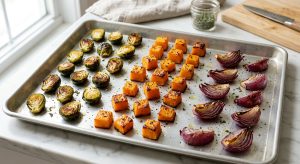
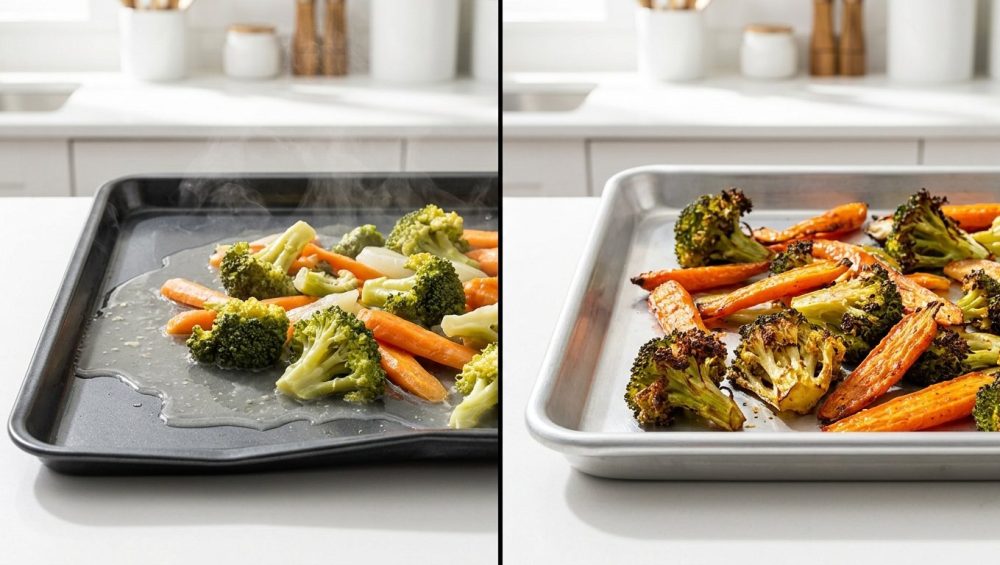
Picture this: It is a busy Tuesday night. You are exhausted from work, but you have committed to cooking at home because you are a responsible adult who buys fresh produce. You meticulously chop a beautiful head of broccoli, toss it in a generous glug of expensive extra-virgin olive oil, sprinkle it with flaky sea salt, and spread it across your baking sheet. You slide it into a 400-degree oven, anticipating those glorious, crispy, restaurant-quality caramelized edges. Twenty-five minutes later, you pull the pan out, and your heart sinks. Instead of a culinary triumph, you are staring at a sad, grey, limp, watery mess.
You blame yourself. You assume you lack some innate culinary talent that only professional chefs possess. Listen to me, weekend warriors: it is not you. It is your terrible, cheap, fundamentally flawed baking sheet.
As a home cook who has set off the smoke detector more times than I care to admit, I am here to tell you that you absolutely do not need a culinary degree to produce mind-blowing food. You just need to understand a few basic principles of physics and, more importantly, you need to stop sabotaging yourself with garbage equipment. Time is money, and spending your precious weekday evenings roasting vegetables only to have them taste like hot, wet sadness is a complete bankruptcy of your time. We are going to fix this right now. We are going to dive deep into the thermal dynamics of your oven, and I am going to explain exactly why you need to throw your current baking sheet into the recycling bin and upgrade to a commercial-grade, bare aluminum half-sheet pan.
The Physics of the Perfect Roast: A Thermodynamic Masterclass
I have zero patience for pretentious chef-speak, but if we are going to fix your soggy dinners, we need to talk about thermodynamics. Roasting is a dry-heat cooking method. When you place a pan of vegetables into a hot oven, you are utilizing three forms of heat transfer: convection (the hot air circulating around the food), radiation (the infrared heat emitting from the oven walls), and conduction (the direct physical contact between the hot metal pan and the food).
The ultimate goal of roasting is to trigger the Maillard reaction. Named after the French chemist Louis Camille Maillard, who first described it in 1912, this is a complex, non-enzymatic browning process. It occurs when amino acids (proteins) and reducing sugars react under high heat to form a complex mixture of molecules called melanoidins. These melanoidins are responsible for the rich, brown color and the incredibly savory, complex aromas that make roasted food taste so irresistible.
Here is the catch: the Maillard reaction does not just happen at any temperature. It only kicks into high gear and proceeds rapidly at temperatures between 280°F and 330°F (140°C to 165°C).
This brings us to the ultimate enemy of browning: moisture. Water is a stubborn molecule. At standard atmospheric pressure, water undergoes a phase change and boils at 212°F (100°C). As long as there is liquid water present on the surface of your food, the temperature of that surface absolutely cannot exceed 212°F. All the thermal energy from your oven goes into the latent heat of vaporization—turning that liquid water into steam—rather than raising the temperature of the food’s surface.
If your vegetables are sitting in a puddle of water, they are physically incapable of reaching the 280°F threshold required for the Maillard reaction. You are not roasting them; you are boiling them in their own juices. You are steaming them. And this is exactly where your current baking sheet is setting you up for failure.
The Culprit: Why Your Current Baking Sheet is Ruining Your Life
Take a walk into any big-box supermarket and look at the bakeware aisle. You will see stacks of dark-colored, lightweight, non-stick coated baking sheets. They look sleek, they are marketed as “easy clean-up,” and they are absolute culinary disasters.
The Warping Problem and the Puddle of Despair
Let’s talk about thermal expansion. When metal is exposed to heat, it expands. If a baking sheet is made from cheap, thin metal—like 20-gauge or 22-gauge steel—it lacks the structural integrity to handle this expansion uniformly. I am talking about those cheap, flimsy pans that warp the second they encounter a respectable oven temperature.
You know exactly what I am talking about. You put the pan in the oven, and ten minutes later, you hear a loud BANG! from the kitchen. The thin metal has buckled under the thermal stress, twisting one corner violently into the air. When the pan warps, it creates hills and valleys. All the olive oil you carefully drizzled, along with the natural water released by the cooking vegetables, immediately runs down into the valleys, forming a puddle.
The vegetables stranded on the dry hills burn to a crisp, while the vegetables trapped in the valley sit in a pool of liquid, furiously boiling at 212°F and turning to mush. Understanding the thermal dynamics of your cookware is the first step in preventing loud oven pops and the resulting uneven, steamed tragedy that follows.
The Dark Coating Disaster
Beyond the warping, most of these cheap pans feature a dark, nearly black non-stick coating. In the world of thermodynamics, color matters immensely due to a property called emissivity. Dark surfaces absorb and emit radiant heat far more aggressively than light, shiny surfaces.
In an oven, a dark baking sheet acts like a thermal magnet, absorbing the radiant infrared heat from the oven floor at an accelerated rate. This sounds great in theory, but in practice, it means the bottom of your food cooks significantly faster than the top. By the time the ambient convection heat of the oven has managed to cook the top of your broccoli, the bottom is completely charred and bitter. You are left with a vegetable that is burnt on one side and steamed on the other.
The Toxic Truth About Dark Non-Stick Coatings
We need to address the elephant in the kitchen. You all know my absolute “No-Go” rule: we must actively banish toxic kitchen gear from our homes. I have zero tolerance for mystery metals and degrading chemical coatings, and this is where the dark supermarket baking sheet goes from being a culinary nuisance to a legitimate health hazard.
The vast majority of these dark pans are coated with Polytetrafluoroethylene (PTFE), universally known by the brand name Teflon. PTFE is a synthetic fluoropolymer that provides that slick, non-stick surface. Now, manufacturers will swear up and down that PTFE is perfectly safe and inert under normal cooking conditions. And they are technically correct—if you are cooking at low temperatures.
However, we are roasting. Proper roasting requires high heat, usually between 400°F and 450°F. The fatal flaw of PTFE is its temperature threshold. At temperatures above 500°F (260°C), the chemical bonds in the PTFE coating begin to break down and decompose. When this happens, the pan releases microscopic particles and toxic fluorocarbon gases into the air.
Inhaling these toxic fumes causes a documented medical condition known as “polymer fume fever,” commonly referred to as the “Teflon flu”. Symptoms include severe headaches, chills, fever, muscle aches, and chest tightness, which typically hit you 4 to 10 hours after exposure. Furthermore, if you own pet birds, these fumes are famously lethal to them; a bird’s highly efficient respiratory system will absorb the toxins, often killing the animal in minutes.
You might think, “Well, I only roast at 400°F, so I’m safe.” Think again. As we will discuss shortly, achieving a perfect roast requires preheating your pan. If you place an empty, lightweight non-stick pan into a hot oven or on a burner, it can easily eclipse the 500°F danger zone in just two to three minutes. Because the pan has no food in it to absorb the thermal energy, the coating takes the full brunt of the heat and begins to off-gas. Non-stick coatings are fundamentally incompatible with the high-heat techniques required for proper browning. It is time to ditch them permanently.
The Hero: The 18-Gauge Bare Aluminum Half-Sheet Pan
Enter the savior of your weeknight dinners: the commercial-grade, bare aluminum half-sheet pan. This is the undisputed workhorse of every professional restaurant kitchen and bakery in the world, and it is the only baking sheet you should ever allow in your home.
First, let’s clarify the terminology. It is called a “half-sheet” pan because it measures 18 by 13 inches, which is exactly half the size of a full commercial sheet pan (26 by 18 inches). A full sheet pan will not fit in a standard residential oven, making the half-sheet the perfect maximum-capacity size for home cooks.
Demystifying the Gauge System
When shopping for one of these pans, you will see them advertised as “18-gauge” or “13-gauge.” The gauge system is an archaic measurement standard that actually originated in the British wire industry before standard and metric systems were widely adopted.
It is crucial to understand that gauge numbers are not universal across different metals. For example, 18-gauge standard steel is approximately 0.0478 inches (1.214 mm) thick. However, 18-gauge aluminum is slightly thinner, measuring exactly 0.0403 inches (1.024 mm) thick.
For home roasting, 18-gauge aluminum is the absolute Goldilocks standard. It provides enough thickness and thermal mass to resist warping under high heat, but it is still lightweight enough to handle easily with one hand while scraping vegetables onto a serving platter. If you buy a thinner pan (like a 20-gauge, which is only 0.032 inches thick), you risk warping. If you buy a thicker pan (like a 10-gauge), it becomes unnecessarily heavy and takes too long to heat up.
Why Bare Aluminum Reigns Supreme
The magic of bare aluminum lies in its extraordinary thermal conductivity. Thermal conductivity is the measure of a material’s ability to transfer heat. Aluminum has a thermal conductivity rating of approximately 235 W/m·K at room temperature.
What does this mean for your dinner? It means that when you place an aluminum pan in a hot oven, it absorbs the heat and distributes it rapidly and evenly across the entire surface of the metal. There are no hot spots. The Brussels sprout sitting in the back left corner receives the exact same amount of thermal energy as the Brussels sprout sitting dead center. This guarantees an incredibly even, uniform browning across your entire batch of food.
Furthermore, aluminum’s high conductivity means it also cools down incredibly fast. When you pull the pan out of the oven, the metal sheds its heat almost instantly. This prevents carryover cooking, ensuring that your perfectly roasted vegetables do not turn to mush while sitting on the counter waiting to be served.
The Rimmed Edge: Structural Integrity
A proper commercial half-sheet pan features a rolled, rimmed edge. This is not just to keep your asparagus from rolling off into the abyss of your oven. The rim is tightly rolled around a thick, galvanized steel wire. This wire acts as a structural skeleton, providing immense rigidity to the aluminum sheet. It locks the metal in place, ensuring that even when the aluminum rapidly expands under a 450-degree thermal load, the pan remains dead flat and perfectly level. No popping, no warping, no puddles.
Bare Aluminum vs. The Impostors
You might be wondering why we don’t just use other materials. Let’s break down why bare aluminum absolutely destroys the competition.
The Stainless Steel Illusion
Stainless steel is a fantastic material for many kitchen applications. It is virtually indestructible, highly resistant to corrosion, and completely non-reactive. Many people assume that a heavy stainless steel baking sheet would be the ultimate upgrade.
They are wrong. Stainless steel has notoriously abysmal thermal conductivity—it is roughly 15 times less conductive than aluminum. Because it cannot distribute heat efficiently, a stainless steel baking sheet is highly prone to localized hot spots. The areas directly above the oven’s heating elements will scorch your food, while the areas in between will leave your food pale and steamed. To make stainless steel viable for baking, manufacturers have to bond it with an aluminum core, which makes the pan astronomically expensive and incredibly heavy. Save your money.
The Glass and Ceramic Catastrophe
Glass and ceramic baking dishes are insulators, not conductors. They actively resist the transfer of heat. When you put a glass dish of vegetables into the oven, it takes a massive amount of time and energy just to heat the glass up to the cooking temperature. By the time the dish is hot enough to trigger the Maillard reaction, the internal structure of your vegetables has completely broken down into a soggy mess.
Thermal shock is a massive issue here, which is why we often hear horror stories about shattering glass baking dishes when they are moved from a hot oven to a cool countertop. Furthermore, because insulators hold onto heat for a very long time, a glass dish will continue to aggressively cook your food for twenty minutes after you take it out of the oven. Bare aluminum is superior in every single metric.
How to Achieve Restaurant-Quality Caramelization at Home
Now that you have thrown away your toxic, warped nightmare and purchased a gleaming $15 commercial aluminum half-sheet pan, you need to know how to use it. Gear is only half the battle; technique is the rest.
The Thermal Jump-Start
The absolute best trick for roasting is starting with a hot pan, allowing the heat to immediately begin searing the food. When you turn your oven on to preheat, put your empty bare aluminum pan inside. Let it heat up with the oven.
Because aluminum is such a phenomenal conductor, it will hold a massive amount of thermal energy by the time the oven beeps. When you carefully pull the hot pan out and drop your oil-coated vegetables onto it, you should immediately hear a loud, aggressive sizzle. That is the sound of conductive heat transfer instantly evaporating surface moisture and kick-starting the Maillard reaction on contact. You will quickly realize that preheating your roasting surface is the ultimate game-changer for texture, giving you a deeply caramelized bottom crust that is impossible to achieve starting from a cold pan.
The Crowding Sin
I see this mistake constantly. You buy a massive bag of carrots, and you try to cram every single one of them onto a single sheet pan. They are overlapping, touching, and fighting for space.
Remember our physics lesson? Vegetables are mostly water. As they heat up, that water escapes as steam. If your vegetables are packed shoulder-to-shoulder, that steam gets trapped in the micro-climate between them. The ambient temperature around the vegetables plummets to 212°F, and the Maillard reaction stops dead in its tracks. Giving your ingredients enough breathing room is the secret to rescuing soggy roasted vegetables from a watery grave.
You must leave at least half an inch of negative space around every single piece of food on that pan. The hot oven air needs pathways to circulate, whisking the escaping steam away and allowing the dry radiant heat to do its job. For example, if you want to master the art of perfectly browned mushrooms, you must allow their intense moisture to evaporate into the air, not onto their neighbors. If you have too much food, use two pans. Never crowd.
The Role of Fat and Salt
You cannot roast without fat. Aside from flavor, fat serves a crucial thermodynamic purpose. The surface of a vegetable is not perfectly flat; it is covered in microscopic ridges and valleys. If you place a dry vegetable on a flat metal pan, only the very peaks of those ridges touch the hot metal.
Fat is a brilliant conductor of heat, effectively accelerating the browning process by filling the microscopic gaps between the food and the pan. The oil creates a continuous thermal bridge, ensuring that the entire surface area of the vegetable is subjected to high-heat conduction. Coat your vegetables thoroughly, but do not drown them.
Salt is equally important, but timing is everything. Salt draws water out of plant cells through osmosis. If you salt your zucchini and let it sit in a bowl for twenty minutes before roasting, it will weep a massive amount of water. When you transfer it to the pan, you are bringing all that water with it, which will instantly cool down your preheated pan and cause steaming. Toss your vegetables with salt at the very last possible second before they hit the hot aluminum.
Caring for Your Bare Aluminum Pan
This is where people get intimidated, but pan care is incredibly simple if you follow a few basic rules.
First and foremost: never, ever put a bare aluminum pan in the dishwasher. Dishwasher detergents are highly alkaline, and the combination of those harsh chemicals with the scalding hot water will cause a chemical reaction that oxidizes the aluminum. You will open your dishwasher to find that your shiny pan has turned a dull, chalky, powdery grey. It will leave a dark metallic residue on your hands and your food. Hand wash your pan with warm water, standard dish soap, and a non-abrasive sponge.
Secondly, be aware of reactivity. Bare aluminum is a reactive metal, meaning it can react chemically with highly acidic or highly alkaline foods. If you are roasting a dish heavily coated in tomatoes, vinegar, or lemon juice, the acid can pit the surface of the aluminum and impart a slightly metallic taste to the food. When cooking highly acidic foods, simply line your pan with a sheet of parchment paper or a silicone baking mat to create a barrier.
Also, avoid aerosol cooking sprays; they contain emulsifiers like soy lecithin that polymerize into a sticky, impossible-to-remove residue, which is notoriously famous for ruining your nonstick coating on other cookware and will absolutely gunk up your beautiful aluminum. Stick to regular liquid oils.
Finally, you must embrace the patina. Over time, as you roast at high temperatures, microscopic layers of polymerized cooking oil will bake into the surface of your aluminum pan. It will lose its silver shine. It will turn golden brown, then deep amber, and eventually, it will look dark and splotchy.
Do not try to scrub this off with steel wool. This is a badge of honor. That polymerized oil acts as a natural, non-toxic, non-stick seasoning—very similar to how you build a seasoning on a cast-iron skillet. Furthermore, as the pan darkens naturally over time, its emissivity actually increases, meaning your well-loved, ugly, stained aluminum pan will actually roast and caramelize vegetables even better than a brand new one.
The Final Word
Cooking incredible food at home does not require magic, and it certainly does not require expensive, toxic, gimmicky equipment. It requires an understanding of how heat works and the willingness to use the right tool for the job.
Your oven is a powerful tool, but it relies entirely on the surface you place inside it. By ditching the flimsy, warping, PTFE-coated disasters of the past and embracing the commercial reliability of an 18-gauge bare aluminum half-sheet pan, you are setting yourself up for a lifetime of perfectly crispy, deeply caramelized, intensely flavorful roasted meals.
Stop boiling your food in a puddle of despair. Respect the Maillard reaction, give your vegetables some breathing room, and let the conductive power of bare aluminum do the heavy lifting. Now, pour yourself a glass of wine, preheat your oven, and go roast something beautiful. You’ve got this.