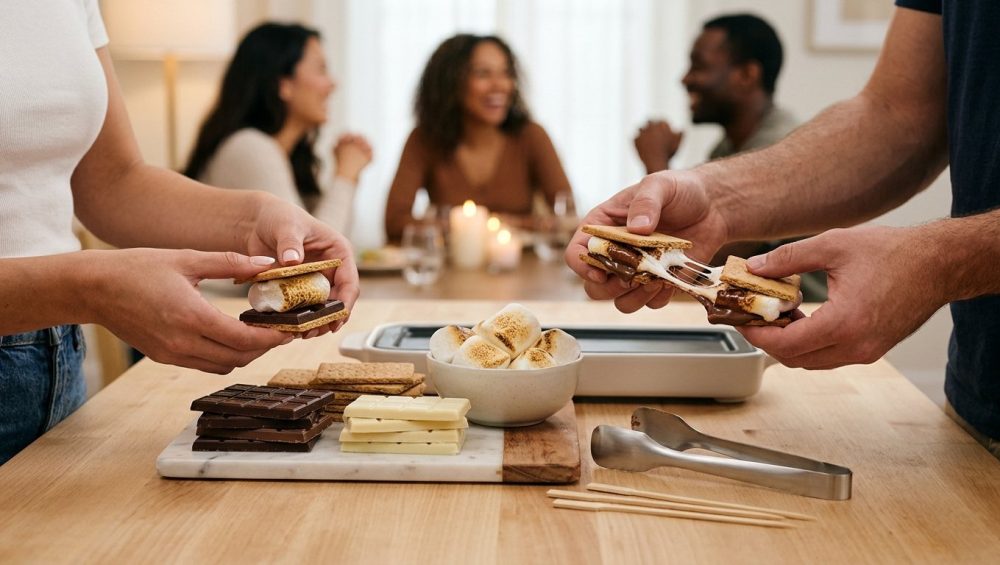
Picture this: You have just pulled off a phenomenal, multi-course meal. The wine is flowing, the vibe is perfect, and you are ready to transition into dessert. You bring out a beautifully arranged platter of graham crackers, marshmallows, and thick, premium squares of expensive chocolate. Your guests roast their marshmallows over your carefully curated indoor flame, assemble their pristine little sandwiches, and take a confident bite.
Crunch.
The graham cracker shatters into a million dusty pieces. The marshmallow violently ejects itself out the side, landing directly on your best friend’s jeans. And the chocolate? It remains a stubborn, rock-hard brick, actively mocking your culinary aspirations.
We have all been there. It is the universal tragedy of the home s’more. But as your resident sassy sous-chef, I am here to tell you that this dessert disaster is entirely preventable. You do not need a fancy pastry degree to fix this; you just need a basic understanding of thermal dynamics and a stubborn refusal to settle for mediocre techniques. If you want to host a relaxed dinner party, you cannot leave the final course up to chance.
We are going to dive deep into the culinary science of chocolate melting points, the thermodynamic failures of the modern marshmallow, and exactly how to set up an interactive, mess-free indoor s’mores station. Consider this your definitive masterclass in dessert redemption.
The Thermodynamics of a S’more: Why the Math Doesn’t Work
Let’s get one thing straight right out of the gate: the traditional s’more is a structural and thermodynamic failure. We are relying on a toasted puff of sugar and air to somehow generate enough heat to melt a dense, crystalline block of cocoa butter. The math simply does not add up. I am all for cutting corners to survive simple weeknight dinners, but when the weekend arrives, I demand absolute perfection. And perfection requires science.
The Heat Capacity and Chemistry of a Marshmallow
To understand why your chocolate refuses to yield, we must first examine the marshmallow. A standard commercial marshmallow is essentially a stabilized foam—a delicate, aerated matrix of gelatin, corn syrup, sugar, and a whole lot of empty space. Air is a phenomenal insulator, which means it is an absolutely terrible conductor of heat.
When you roast a marshmallow over an open flame, the exterior undergoes the Maillard reaction. This is the beautiful chemical process where amino acids and reducing sugars react under heat to create complex, caramelized flavor compounds and that gorgeous golden-brown crust. The very outer skin of that marshmallow might reach temperatures well over 250°F. However, the interior remains entirely insulated. Even if the center gets gooey and molten, it barely breaches 150°F.
More importantly, the marshmallow has an incredibly low thermal mass. Thermal mass is the ability of a material to absorb, store, and release heat energy. Because a marshmallow is roughly 60% air, it contains very little actual heat energy, despite feeling blazing hot to the touch. When you squish that hot marshmallow between two cold graham crackers and a thick square of room-temperature chocolate, the marshmallow rapidly loses its heat to the surrounding environment. It simply does not possess the thermal payload required to transfer enough energy into the chocolate to initiate a phase change.
The Rigid Reality of Chocolate’s Melting Point
Now, let’s look at the adversary: the chocolate bar. Chocolate is a highly complex emulsion of cocoa solids, sugar, and cocoa butter. The structural integrity of chocolate is entirely dependent on cocoa butter, a notoriously stubborn fat that exhibits a property known as polymorphism. This means cocoa butter can crystallize into six completely different structural forms, labeled Form I through Form VI.
When commercial chocolate is manufactured, it undergoes a precise heating and cooling process called tempering. Tempering forces the cocoa butter to crystallize into “Form V” crystals. Form V is the holy grail of chocolate making; it is what gives high-quality chocolate its glossy, mirror-like finish, its satisfying, sharp snap when you break it, and its resistance to melting instantly in your warm hands.
However, Form V crystals are incredibly stable and require a specific, sustained amount of heat to break down. Form V cocoa butter has a melting point of approximately 93°F (33.8°C). While 93°F might sound relatively low (it is just below human body temperature, which is exactly why chocolate famously melts in your mouth), transferring that heat from a rapidly cooling, low-mass marshmallow through a thick, dense square of chocolate takes time. By the time the heat actually penetrates the surface of the chocolate, the marshmallow has already cooled down to room temperature, leaving you with a hard, unyielding brick of cocoa.
Chocolate Selection: Stop Buying the Wrong Bars
If you want to master the art of the kitchen, you have to start respecting your ingredients. The single biggest mistake enthusiastic home cooks make when setting up a s’mores bar is grabbing the thickest, most premium, artisanal chocolate bars they can find. Thick chocolate is the absolute enemy of a relaxed dessert experience.
The Cocoa Butter Conundrum
Not all chocolate is created equal, and not all chocolate melts at the exact same temperature. The melting profile of any given chocolate bar is dictated by its specific ratio of cocoa solids, cocoa butter, milk fats, and sugar, as well as the microscopic particle size achieved during the manufacturing process known as conching.
During conching, heavy rollers grind the chocolate for hours or even days, coating every microscopic particle of sugar and cocoa solid with cocoa butter. The finer the particle size, the smoother the chocolate melts. But even the most beautifully conched chocolate is bound by its fat content.
Dark vs. Milk vs. White: The Melting Hierarchy
To build a foolproof s’more, you must understand the melting hierarchy of your chocolate options.
- Dark Chocolate: Dark chocolate contains the highest percentage of cocoa solids and the lowest amount of sugar and milk fat. Because of this dense, fat-lean composition, dark chocolate has the highest melting point, typically ranging from 86°F to 90°F (30°C to 32°C). While dark chocolate offers a sophisticated, pleasantly bitter flavor profile that pairs beautifully with cloyingly sweet toasted marshmallows, it is the absolute hardest chocolate to melt in a standard s’more application.
- Milk Chocolate: This is the classic, nostalgic s’more choice for a very good scientific reason. The addition of milk solids and milk fats physically disrupts the rigid crystal structure of the cocoa butter. This lowers the overall melting point to a much more manageable 84°F to 88°F (29°C to 31°C). Milk chocolate is significantly more responsive to the gentle, fleeting heat of a marshmallow.
- White Chocolate: White chocolate contains zero cocoa solids; it is purely an emulsion of cocoa butter, sugar, and milk solids. Because of its incredibly high milk fat content and lack of dense cocoa particles, white chocolate has the lowest melting point of the three, typically turning liquid between 82°F and 84°F (28°C to 29°C). It melts rapidly and creates a wonderfully gooey, albeit incredibly sweet, dessert.
The “Thinness” Factor: Surface Area is Your Best Friend
Even if you make the smart choice and select a high-quality milk or white chocolate, a thick, chunky square is still going to ruin your night. In the world of culinary heat transfer, surface area is everything. You want to maximize the physical area of chocolate that comes into direct contact with the hot marshmallow, while simultaneously minimizing the distance the heat has to travel to reach the center of the chocolate square.
Stop buying thick artisan bars for s’mores. You need wafer-thin chocolate. Look for chocolate specifically manufactured in delicate, thin squares, or use a sharp, heavy chef’s knife to shave a high-quality baking block into thin, curling ribbons. The thinner the chocolate, the less thermal energy is required to force that phase change, and the faster you achieve that perfect, gooey consistency.
The “No-Go” Rule on Fake Chocolate
Here is where I get incredibly serious. I have built my entire culinary philosophy on banishing toxic kitchen gear and heavily processed junk from the home kitchen, and I must issue a strict warning against “mockolate.”
Many cheap, mass-produced, chocolate-flavored bars on the market replace expensive cocoa butter with cheap, hydrogenated vegetable oils or palm kernel oil. These oils have artificially engineered melting points designed specifically to withstand hot shipping trucks and sit on a shelf for three years. Because they lack the Form V crystal structure of true cocoa butter, they do not melt smoothly on the palate; they turn into a waxy, greasy, unpalatable sludge that coats the roof of your mouth. Always read the ingredient label. If cocoa butter is not listed as the primary fat, immediately put it back on the shelf. If you are wondering what to use instead, stick strictly to pure, high-quality chocolate with a short, highly recognizable ingredient list.
The Masterclass on Ambient Warming: Melting Without the Mess
We have firmly established that the marshmallow cannot do the heavy lifting. Therefore, as the host, you must intervene. The absolute secret to a flawless s’more is pre-warming the chocolate before the marshmallow ever makes contact. We are not talking about melting the chocolate into a sloppy puddle; we are talking about gentle, controlled ambient warming to bring the chocolate right to the precipice of its melting point.
The Radiant Heat Method
The radiant heat method is brilliant in its sheer simplicity. When you set up your indoor roasting station, arrange your wafer-thin squares of chocolate on a heat-safe platter and strategically position it near the ambient heat of your roasting flame.
You must monitor this closely. You are utilizing the invisible radiant heat emitting from the flame to gently warm the cocoa butter crystals. The goal is to bring the chocolate up to about 80°F—just warm enough that it begins to visibly soften, lose its sharp snap, and take on a slightly duller finish. By the time the hot marshmallow is applied, the chocolate is already thermodynamically primed to melt instantly.
The Warm Plate Trick
For a much more controlled, elegant approach, utilize the warm plate trick. This is one of those brilliant little communal gatherings hacks that makes you look like an absolute culinary professional.
Before bringing out your dessert spread, place a heavy ceramic or natural stoneware serving platter in a low oven (around 150°F) for ten to fifteen minutes. Carefully remove the warm plate (using oven mitts, obviously) and arrange your chocolate squares directly on the surface. The immense thermal mass of the ceramic will hold the heat and gently, continuously transfer it into the chocolate via direct conduction. The chocolate will soften beautifully without losing its physical shape.
The Microwave Micro-Burst Technique
If you forgot to warm a plate and need a rapid fix, you can use the microwave, but you must proceed with extreme caution. Chocolate scorches violently and seizes into a grainy, burnt mess if overheated even slightly. Place your chocolate squares on a microwave-safe plate and heat them on 50% power in strict 10-second micro-bursts. Check the chocolate after every single burst. You only want to take the chill off the cocoa butter, not liquefy it.
The Pre-Melted Fondue Approach
If you want to bypass the structural issues of a traditional s’more entirely and eliminate the risk of shattering graham crackers, pivot to the deconstructed fondue approach. Melt your high-quality chocolate in a proper double boiler on the stove until it is perfectly smooth, glossy, and fluid. Transfer it to a small, pre-warmed ceramic bowl or a dedicated fondue pot.
Guests can roast their marshmallows, achieve their desired level of char, and simply dip them directly into the molten chocolate, followed by a quick dusting of crushed graham cracker crumbs. It eliminates the physical pressure required to build a sandwich, guarantees perfectly melted chocolate every single time, and significantly reduces the sticky mess on your dining table.
Building the Ultimate Indoor S’mores Station
We survive the chaotic weekdays by using clever shortcuts, but the weekend is when we get to slow down and be absolute perfectionists. Building a stunning indoor s’mores station is a weekend project that requires the right equipment. You cannot just light a random scented candle on your coffee table and hope for the best.
Ditching the Campfire: Safe Indoor Roasting Tools
Let me be unequivocally clear on this point: you cannot roast marshmallows over just any open flame indoors. Scented candles will infuse your delicate marshmallows with toxic soot, black smoke, and artificial floral perfumes. Furthermore, standard industrial chafing fuels (like the cheap, wick-based cans used under generic buffet trays) often contain methanol or diethylene glycol. These chemicals burn with toxic fumes that are absolutely not safe for direct food contact, and they can leave a nasty, chemical residue on your food.
I have zero patience for dangerous, cheap kitchen setups. If you are roasting indoors, you must purchase food-safe, clean-burning ethanol gel cans. Ethanol is a natural alcohol that burns incredibly cleanly, producing only carbon dioxide, water vapor, and heat, making it perfectly safe for roasting food directly over the flame. Brands like Sterno manufacture specific “S’mores Heat” cans designed exclusively for this culinary purpose.
Alternatively, invest in a dedicated tabletop electric s’mores maker equipped with a stainless steel heating coil. These devices provide consistent, safe, radiant heat without the risks of an open flame. If you are tired of your cheap baking pans violently warping under the broiler and are constantly wondering what to buy instead, apply that exact same critical eye to your indoor roasting gear. Invest in safety and durable quality.
The Skewer Situation: Metal vs. Wood
Do not hand your guests short, flimsy toothpicks to roast marshmallows over an open flame. You need proper beginner kitchen tools to execute this safely.
If you use wooden bamboo skewers, you must soak them in water for at least thirty minutes prior to the party; otherwise, they will ignite, and you will have a miniature torch on your hands. The superior choice is a set of long, reusable stainless steel roasting forks with heat-resistant wooden or silicone handles. Stainless steel conducts a small amount of heat into the center of the marshmallow, helping to warm the interior slightly faster without burning the exterior.
Graham Cracker Upgrades and Alternatives
The standard, mass-produced graham cracker is simply too thick, too dry, and structurally unsound. When you bite into it, it does not yield to the pressure of your teeth; it shatters explosively, forcing the marshmallow out the sides and onto your table. You need to upgrade your base carbohydrate vehicle to something that offers a satisfying crunch but yields easily.
- Thin Crisp Cookies: Look for ultra-thin, European-style butter cookies or delicate waffle crisps. They provide the necessary structural support to hold the sandwich together without the explosive shattering effect.
- Digestive Biscuits: A staple in British baking, digestive biscuits have a slightly crumbly, tender, sandy texture that pairs beautifully with soft marshmallows and melted chocolate. They absorb moisture well and bite cleanly.
- Pretzel Crisps: If you want to dramatically elevate the flavor profile, use flat pretzel crisps. The added burst of surface salt cuts directly through the intense, cloying sweetness of the marshmallow and chocolate, creating a beautifully balanced, complex bite.
Marshmallow Dynamics: Store-Bought vs. Gourmet
While the classic, jet-puffed store-bought marshmallow is a nostalgic staple, it is heavily stabilized with modified cornstarch and industrial-grade gelatin to withstand months of fluctuating temperatures on a supermarket shelf. They toast reasonably well, but their interior texture can remain slightly rubbery and resistant to melting.
If you want to truly impress your guests, seek out gourmet, artisanal marshmallows from a local confectioner, or—if you are feeling particularly ambitious—make your own from scratch. Homemade marshmallows use pure, high-quality gelatin and simple sugar syrups without the heavy industrial stabilizers. Because of this, they have a significantly lower melting point and a delicate, cloud-like texture that practically dissolves upon contact with heat. They caramelize much faster over a flame and create a vastly superior, molten center.
Hosting a Relaxed, Interactive Dessert Night
The true beauty of an indoor s’mores station is not just the elevated food; it is the overall experience. It is the ultimate secret weapon for mastering the art of effortless hosting. By setting up a beautiful, interactive station, you effectively shift the burden of dessert preparation entirely from the host to the guests, fostering a playful, deeply engaging environment.
Pacing the Dessert Course
When you serve a formal, plated dessert, there is a subtle, unspoken pressure for everyone to sit quietly, eat quickly, and move on. A s’mores station aggressively shatters that rigid formality. It forces people to physically slow down. You cannot rush a perfectly roasted marshmallow. It requires patience, careful attention, and a willingness to embrace a little bit of sticky mess.
Set up your roasting skewers, your safely contained ethanol flames, and your pre-warmed platters of wafer-thin chocolate directly in the center of the dining table. Allow the dessert course to stretch out lazily over an hour. Pour some rich red wine or brew a pot of dark roast coffee, dim the overhead lights, and let the warm, ambient glow of the roasting flames set a relaxed, intimate mood.
Fostering Communal Connection
There is something deeply primal, nostalgic, and universally comforting about gathering around a fire, even a tiny, safely controlled indoor one. It naturally encourages conversation and playful banter. Guests will inevitably debate the merits of the perfectly slow-roasted, golden-brown marshmallow versus the aggressively charred, instantly flaming marshmallow. They will laugh when someone accidentally drops their cracker, and they will bond over the shared experience of creating their own perfect bite.
This is the very essence of hosting mindful gatherings. You are not just feeding people sugar; you are carefully curating a tactile, interactive experience that naturally encourages them to put down their phones, be fully present, and connect with one another over a shared culinary project.
Conclusion
The dark days of shattered graham crackers, cold, unyielding chocolate bricks, and sticky frustration are officially over. By understanding the thermodynamic limitations of a fluffy marshmallow, selecting the right ultra-thin chocolate based on its cocoa butter content, and employing gentle, calculated ambient warming techniques, you have effectively hacked the s’more.
You do not need a fancy culinary degree to make mind-blowing food at home; you just need to flat-out refuse to accept mediocrity in your kitchen. So, ditch the toxic fuel cans, pre-warm your heavy ceramic serving plates, slice your chocolate thin, and invite your friends over for an interactive dessert experience that is as flawless as it is fun. Now get out there, light a completely food-safe fire, and show that stubborn cocoa butter exactly who is boss.