Listen, I know exactly why you are here. You are tired of staring blankly into your refrigerator at 6:30 PM, hoping a fully plated, Michelin-star dinner will magically materialize between the half-empty jar of mayonnaise and the sad, wilting celery. You are exhausted by the endless cycle of expensive takeout that leaves you feeling sluggish, and you are officially ready to graduate from “person who occasionally boils pasta” to a legitimate home cook. Welcome to the club. Grab a glass of wine, tie your apron, and let’s get to work.
I am going to let you in on a little secret that the culinary elite don’t want you to know: cooking is not magic. It is not an exclusive, velvet-roped VIP section reserved only for people who spent $80,000 at Le Cordon Bleu. It is simply a combination of basic science, a little bit of intuition, and the willingness to occasionally set off your smoke detector while learning. If you can read, follow directions, and trust your own taste buds, you can make mind-blowing, restaurant-quality food in your very own kitchen.
And frankly, it is in your best interest to start. We are living in 2026, and the data is overwhelmingly in favor of getting back to the stove. The recent 2025-2026 State of Home Cooking report from HelloFresh revealed that a massive 71% of people find cooking to be a stress-relieving activity, and 83% believe that eating with others is better for their mental health than eating alone. Furthermore, a 2025 World Happiness Report analysis showed that across 142 countries, people who regularly eat meals with others report feeling significantly happier, more supported, and less lonely. Cooking is not just a chore to feed your physical body; it is a vital ritual for your mental health.
But right now, you are intimidated. You see the glossy food magazines and the hyper-edited TikTok chefs, and you think “kitchen artistry” means using tweezers to place micro-greens onto a foam you made out of asparagus. It doesn’t. Kitchen artistry, at its core, is just knowing how to coax the absolute best flavor out of basic ingredients. It is about building a foundation of simple secrets that you can rely on whether you are throwing together a desperate Tuesday night dinner or hosting a lavish Saturday night dinner party.
We are going to break it all down. No pretentious chef-speak, no fluff, just the cold, hard, delicious facts.
The Foundation: Setting Up Your Kitchen Without Buying Toxic Garbage
Before we even talk about food, we need to talk about your gear. You cannot build a masterpiece with broken tools, and you certainly cannot build one with tools that are actively poisoning you.
The “No-Go” Rule: Ditching the Mystery Metals and Peeling Plastics
I have zero patience for cheap, toxic kitchenware. If you are currently cooking your eggs in a scratched-up, peeling non-stick pan that you bought for $12 at a discount store five years ago, I want you to walk into your kitchen right now and throw it in the garbage. I am completely serious.
Those cheap non-stick coatings are historically made with PFAS (per- and polyfluoroalkyl substances), notoriously known as “forever chemicals” because they do not break down in the environment or in the human body. When you heat those cheap pans, or when the coating inevitably scratches and flakes off into your scrambled eggs, you are ingesting a toxic chemical cocktail. The regulatory landscape has finally woken up to this nightmare. By 2026, states like Washington, Maine, Massachusetts, New York, and Minnesota have enacted strict bans or reporting requirements on intentionally added PFAS in consumer products, specifically targeting cookware.
If the government is actively banning these materials from being manufactured, why on earth are you still using them to sear your salmon? The “convenience” of a pan that easily releases a pancake is not worth the health risks. We are adults now. We use real cookware.
The Holy Trinity of Safe, High-Quality Cookware (Stainless, Cast Iron, Carbon Steel)
You do not need a 15-piece matching cookware set. Those sets are a scam designed to sell you pots you will never use. You only need a few high-quality, non-toxic workhorses that will literally outlive you.
First, a Stainless Steel Skillet. This is your everyday workhorse. It is non-reactive, meaning you can cook highly acidic foods (like tomatoes or wine reductions) without the metal leaching into your food. A high-quality, fully clad stainless steel pan (where aluminum or copper is sandwiched between layers of steel for even heat distribution) is perfect for searing meats, sautéing vegetables, and building pan sauces. Yes, things might stick to it at first, but that is a user error, not a pan error. You just need to learn temperature control.
Second, a Cast Iron Skillet. Cast iron is the undisputed king of heat retention. Once it gets hot, it stays hot, making it the absolute best tool for putting a dark, crusty sear on a steak or baking a crispy-edged cornbread. It does require a tiny bit of maintenance—you need to keep it seasoned with a microscopic layer of polymerized oil—but it is virtually indestructible. Plus, cooking in cast iron can actually add a small amount of dietary iron to your food.
Third, an Enameled Cast Iron Dutch Oven. This is your weekend MVP. It is a heavy, thick-walled pot coated in a glass enamel that requires no seasoning. It is what you will use to braise short ribs, simmer stews, boil pasta water, and bake crusty sourdough bread. It is an investment piece, but it is the cornerstone of kitchen artistry.
The Only Knives You Actually Need (Spoiler: It’s Not a 24-Piece Block)
Much like the massive cookware sets, the giant wooden block of 24 knives sitting on your counter is a waste of money and space. You only need three knives to conquer 99% of culinary tasks.
- The Chef’s Knife (8-inch): This is the extension of your arm. You will use it for chopping onions, slicing meat, mincing garlic, and smashing ginger. Spend good money on a high-carbon stainless steel chef’s knife. Hold it by pinching the base of the blade with your thumb and index finger, not by gripping the handle like a tennis racket.
- The Paring Knife (3 to 4-inch): This is for off-the-board, delicate work. Peeling an apple, hulling strawberries, or meticulously deveining shrimp.
- The Serrated Bread Knife (10-inch): You need this to slice through crusty bread without crushing the soft interior, and it also happens to be the absolute best tool for slicing ripe tomatoes without tearing their delicate skin.
Keep your chef’s knife razor-sharp. A dull knife is the most dangerous tool in the kitchen because it requires you to apply more force, which leads to slipping, which leads to a trip to the emergency room.
Flavor Artistry 101: How to Make Food Actually Taste Good
Now that your kitchen is stripped of toxic garbage and equipped with proper tools, we need to talk about flavor. The reason restaurant food tastes better than your home cooking is not because chefs have access to magical ingredients. It is because they understand the fundamental building blocks of flavor and they are not afraid to use them aggressively.
Salt, Fat, Acid, Heat (The Non-Pretentious Version)
If you haven’t read Samin Nosrat’s brilliant book on this subject, consider this your crash course. These four elements dictate whether your food tastes flat and boring or vibrant and complex.
Salt: Home cooks drastically under-salt their food. Throw away your iodized table salt—it tastes metallic and bitter. Buy a box of Kosher salt (Diamond Crystal is the industry standard because its hollow, flaky structure allows you to pinch and sprinkle it evenly). You must salt your food at every single stage of the cooking process, not just at the end. Salting early draws out moisture, concentrates flavor, and physically alters the protein structures in meat to make it more tender.
Fat: Fat is a flavor carrier. It coats the tongue and allows aromatic compounds to linger. We do not fear fat in this kitchen. Butter, extra-virgin olive oil, duck fat, and bacon grease are your friends. Use neutral, high-smoke-point oils (like avocado or grapeseed) for searing at high temperatures, and save your expensive, grassy extra-virgin olive oil for finishing a dish off the heat.
Acid: This is the secret weapon that most new cooks completely ignore. If you taste a soup or a sauce and think, “This needs something, but I don’t know what,” it almost certainly needs acid, not more salt. A squeeze of fresh lemon juice, a splash of apple cider vinegar, or a dash of white wine cuts through heaviness, balances richness, and makes the other flavors pop.
Heat: Heat is the transformative element. It changes the texture and chemical composition of your food. Which brings us to the most important scientific concept you will ever learn in the kitchen.
The Maillard Reaction: Why Brown is the Color of Flavor
If you take nothing else away from this masterclass, remember this: color equals flavor. When you throw a pale, grey, boiled chicken breast onto a plate, you are committing a culinary crime.
The golden-brown crust on a seared steak, the crispy edges of a roasted potato, the deep amber color of a toasted marshmallow—these are all the result of the Maillard reaction. Discovered by French chemist Louis-Camille Maillard in 1912, this is a complex chemical reaction between amino acids (proteins) and reducing sugars that occurs when food is subjected to high heat.
Here is the exact science you need to know: the Maillard reaction rapidly kicks into high gear at temperatures between 285°F and 330°F (140°C to 165°C), reaching peak efficiency up to 390°F (200°C). Below 285°F, your meat will just awkwardly steam in its own juices and remain a depressing, flavorless grey. Above 390°F, you cross over from caramelization into pyrolysis, which is a fancy scientific term for burning your food to a bitter, carcinogenic crisp.
To achieve this magical browning, you must obey two strict rules. First, moisture is the enemy of browning. Water boils and turns to steam at 212°F (100°C). Because the Maillard reaction requires temperatures well above 285°F, any surface moisture on your meat will prevent the temperature from rising high enough until all that water evaporates. By the time the water is gone, your steak is overcooked in the middle. Always, always, always pat your proteins aggressively dry with paper towels before they hit the pan. Second, you need a hot pan. This is why we use stainless steel or cast iron. Pre-heat the pan, add your oil, wait until it shimmers, and then add your dry, salted meat. Do not crowd the pan, or the trapped steam will ruin your crust.
Aromatics: The Unsung Heroes of the Weekday Slog
Aromatics are the vegetables and herbs that you sweat down in fat at the very beginning of a recipe to build a deep, savory foundation. Every major culinary tradition has its own base. The French have mirepoix (two parts onion, one part celery, one part carrot). The Italians have soffritto (similar to mirepoix, often minced finer and cooked in olive oil). The Cajun/Creole “Holy Trinity” is onion, celery, and green bell pepper.
If you want your weekday soups, stews, and sauces to taste like they took all day, you must take the time to properly sauté your aromatics. Do not rush this step. Cook them over medium-low heat until the onions are translucent and sweet, releasing their aromatic compounds into the cooking fat. This 10-minute investment is the difference between a dish that tastes like it came from a can and a dish that tastes like artistry.
Weekday Survival Hacks: Time is Money, But Taste is King
I am a realist. I know you do not have three hours to execute a multi-course tasting menu on a Wednesday after sitting in traffic and enduring back-to-back Zoom meetings. Weekday cooking is about ruthless efficiency. We need maximum flavor with minimum active time.
Mise en Place: The French Term for “Get Your Act Together”
“Mise en place” translates to “everything in its place.” In a professional kitchen, this means having every single ingredient chopped, measured, and staged in little bowls before the stove is even turned on.
As a home cook, skipping your mise en place is the number one reason you burn your garlic, overcook your chicken, and generally hate the cooking process. If you are frantically trying to mince an onion while your oil is smoking in the pan, you have already lost control of the kitchen.
Take the extra seven minutes before you start cooking to chop your vegetables, measure your spices, and set out your proteins. When the actual cooking begins, you will feel like a serene, highly-paid television chef effortlessly tossing ingredients into a pan, rather than a panicked hostage to your own stove.
Batch Prepping Elements, Not Whole Meals
The internet is obsessed with “meal prep”—the bleak Sunday ritual of cooking five identical portions of chicken, broccoli, and brown rice, packing them into identical plastic containers, and eating the exact same depressing meal for five days straight. Do not do this. By Wednesday, you will be so bored you will order a pizza anyway.
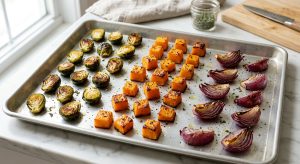
Instead, prep elements. Roast a massive tray of seasonal vegetables (carrots, Brussels sprouts, sweet potatoes) tossed in olive oil and salt. Cook a large batch of a versatile grain, like quinoa or farro. Wash and dry your salad greens so they are ready to grab. Make a jar of an incredible, punchy vinaigrette (olive oil, Dijon mustard, apple cider vinegar, honey, salt, and pepper).
During the week, you can mix and match these elements. Toss the roasted veggies and grains with arugula and vinaigrette for a salad. Fry an egg and put it over the grains. Wrap the veggies in a tortilla with some black beans. You are cooking once, but eating a variety of distinct meals. That is kitchen artistry meeting time management.
The Magic of the Pan Sauce: Elevating the Humble Chicken Breast
Let us talk about the greatest trick in the culinary playbook: the pan sauce. This technique takes roughly three minutes and will make you look like an absolute genius.
When you sear a piece of meat (like a chicken breast or a pork chop) in your stainless steel skillet, you will notice a layer of browned, sticky bits stuck to the bottom of the pan. Those bits are called fond, and they are concentrated flavor bombs resulting from the Maillard reaction. Do not wash that pan!
Once your meat is done, remove it to a plate to rest. While the pan is still hot, pour in a splash of liquid—chicken stock, white wine, or even just water. The liquid will immediately boil and bubble. Use a wooden spoon to scrape all those delicious browned bits off the bottom of the pan. This process is called deglazing. Let the liquid reduce by half so the flavor concentrates. Turn off the heat. Now, for the magic: toss in a tablespoon of cold butter and swirl the pan vigorously until the butter melts and emulsifies into the liquid, creating a glossy, rich, velvety sauce. Pour that directly over your meat. You have just transformed a basic weeknight protein into a $35 restaurant entrée.
Weekend Masterpieces: Unleashing Your Inner Perfectionist
The weekend is your time to slow down. This is when time is no longer money; time is an investment in your craft. This is when cooking transitions from a survival mechanism to a pure, stress-relieving hobby.
Braising: The Ultimate Low-Effort, High-Reward Flex
Braising is the technique of taking a tough, inexpensive cut of meat (like beef short ribs, pork shoulder, or lamb shanks) and cooking it low and slow in a covered pot with a small amount of liquid. It is the ultimate culinary flex because it sounds incredibly fancy, but the oven does 90% of the work.
Here is the masterclass:
- Sear: Heavily salt your meat and sear it aggressively in your Dutch oven until it has a deeply browned crust on all sides. Remove the meat.
- Aromatics: Add your chopped onions, carrots, and celery to the fat left in the pan. Sauté until soft. Add a tablespoon of tomato paste and cook it until it turns a rusty brick red.
- Deglaze: Pour in a hearty glug of red wine, scraping up the fond.
- Simmer: Return the meat to the pot. Add enough stock (beef or chicken) so the liquid comes about halfway up the sides of the meat. Do not submerge it entirely; we are braising, not boiling. Toss in a few sprigs of fresh thyme and a bay leaf.
- Wait: Put the lid on the Dutch oven and slide it into a 300°F (150°C) oven for 3 to 4 hours.
Over those hours, the tough collagen in the meat slowly breaks down and melts into rich gelatin. The result is meat so tender you can cut it with a spoon, sitting in a luxuriously thick, intensely flavored sauce. Serve it over a pile of buttery mashed potatoes or creamy polenta, and watch your dinner guests weep with joy.
Plating Like a Pro (Without the Tweezers)
We eat with our eyes first. You can make the most delicious braised short rib in the world, but if you slop it onto a paper plate, it loses its magic. Plating is where the “artistry” becomes literal. You do not need to be pretentious about it, but you should follow a few basic visual rules.
First, use a large, wide, rimmed bowl or a large white plate. Negative space (the empty white space around the food) makes the dish look elegant and intentional. If your plate is overflowing, it looks like a trough.
Second, build height. Don’t spread your food out flat. Place your starch (like mashed potatoes) in the center of the plate, rest your protein on top of the starch, and spoon the sauce over the meat, letting it pool slightly around the base.
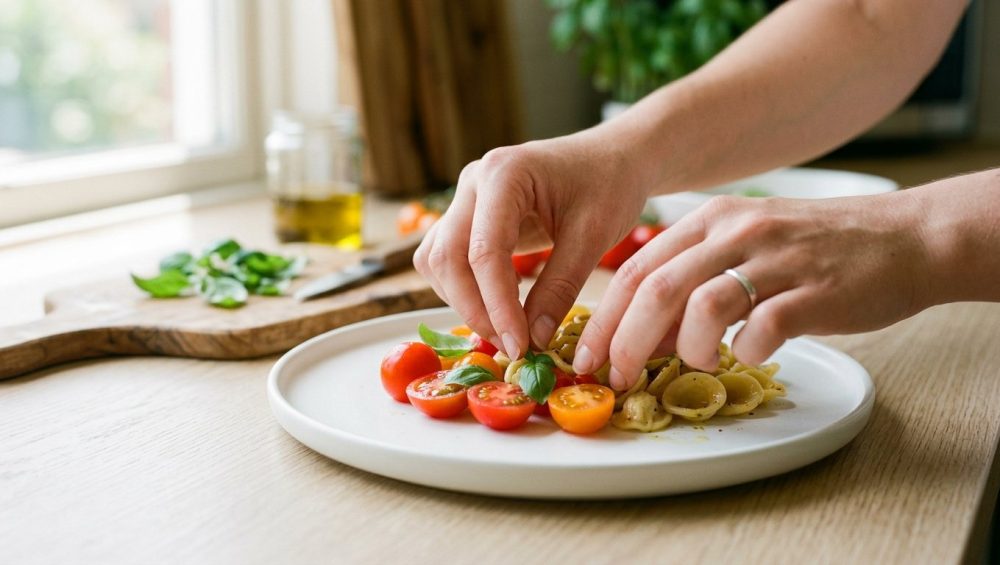
Third, contrast your colors. If you are serving brown meat on top of white potatoes, the dish desperately needs a pop of vibrant green. A handful of fresh, roughly chopped parsley, some delicate chives, or a side of bright, blistered green beans provides the visual contrast that makes the dish pop.
The Art of Improvisation: Cooking Without a Recipe
The ultimate goal of kitchen artistry is liberation. Recipes are fantastic training wheels, but relying on them strictly forever means you are just following instructions, not truly cooking. True confidence comes when you can look at a random assortment of ingredients in your pantry and intuitively know how to turn them into dinner.
Trusting Your Palate: Taste as You Go
The biggest mistake new cooks make is blindly following a recipe’s measurements without tasting the food. A recipe might tell you to add a half teaspoon of salt. But the recipe author doesn’t know what brand of salt you are using, how salty your chicken stock is, or how acidic your tomatoes are.
You must taste your food constantly. Taste it after you add the aromatics. Taste it after it simmers. Taste it right before you serve it. If it tastes flat, add salt. If it tastes heavy and cloying, add a squeeze of lemon juice or a splash of vinegar. If it is too spicy, add a touch of dairy (like cream or yogurt) or a pinch of sugar to balance the heat. Your palate is your greatest tool. Train it by paying attention to what you are tasting.
The Pantry Staple Formula
When you want to ditch the recipe, rely on a basic culinary formula. Almost every satisfying meal can be broken down into four components:
Grain + Protein + Vegetable + Sauce/Dressing = Dinner.
If you have rice (grain), a can of chickpeas (protein), some wilted spinach (vegetable), and a quick tahini-lemon dressing (sauce), you have a fantastic meal. If you have pasta (grain), Italian sausage (protein), roasted zucchini (vegetable), and a garlic-parmesan olive oil base (sauce), you have a masterpiece.
Once you internalize this formula, you stop seeing random ingredients in your fridge and start seeing endless combinations. You learn to swap ingredients based on what you have. No chicken? Use beans. No spinach? Use kale. No lemon? Use vinegar. This is the essence of culinary improvisation.
The Mental Game: Why We Bother Doing This
Let us take a step back from the stove for a second and look at the bigger picture. Why are we putting in this effort? Why not just rely on the endless stream of app-delivery convenience that modern society affords us?
Because cooking is one of the few remaining analog activities in a hyper-digital world that fully engages all five of your senses. It forces you to be present. You cannot doom-scroll on your phone while actively searing a steak, or you will ruin the steak. Clinical psychology actually utilizes cooking as a form of behavioral activation, noting that the predictable, structured routine of preparing a meal significantly reduces cognitive load and provides a tangible sense of accomplishment.
When you chop vegetables, you are practicing mindfulness. When you smell the Maillard reaction developing in the pan, you are engaging your sensory memory. When you successfully pull off a pan sauce, you are building self-efficacy and confidence. Studies have consistently shown that the act of cooking for yourself and others reduces anxiety, fosters intergenerational connection, and anchors your day with a grounding, restorative practice.
In an era marked by constant stimulation and digital exhaustion, the simple, tactile act of transforming raw ingredients into a nourishing meal is a profound act of self-care. It is a rebellion against the idea that we are too busy to take care of ourselves.
Conclusion: Your Kitchen, Your Rules
Kitchen artistry is not about perfection. It is not about never burning a piece of toast or magically knowing how to perfectly julienne a carrot on your first try. It is about taking ownership of your food, your health, and your time.
It is about throwing away the toxic, peeling pans that are doing you harm. It is about understanding the glorious science of a hot skillet and a dry piece of meat. It is about knowing that a squeeze of lemon and a pinch of Kosher salt can fix almost anything.
You are going to make mistakes. You will over-salt a soup. You will accidentally turn a beautiful piece of fish into a flaky, dry disaster. That is part of the process. Laugh it off, order a pizza if you have to, and try again tomorrow. The kitchen is yours to command. Now, turn on the stove, get that pan ripping hot, and go make something delicious. You’ve absolutely got this.