The Culinary Awakening: Why You Need to Stop Fearing Your Own Kitchen
Let us get one thing straight right out of the gate: you do not need a culinary degree, a trust fund, or a kitchen that looks like a pristine television set to make mind-blowing food. If you are currently surviving on a rotation of lukewarm delivery food, microwaved tragic meals, and the occasional scrambled egg, it is time for a serious intervention. The kitchen is not a torture chamber designed to highlight your inadequacies. It is simply a room with heat sources and sharp objects, and with a little bit of guidance, you can absolutely dominate it.
I learned to cook not by gracefully whisking sauces in a Parisian culinary school, but by setting off my smoke detector so many times my neighbors thought it was a new ambient music genre. I have burned the garlic, I have over-salted the soup, and I have definitely cried over a collapsed cake. But through trial, error, and a stubborn refusal to eat another sad, soggy takeout fry, I figured it out. And if I can figure it out, you can too. The goal here is not perfection; the goal is empowerment. Once you start unlocking kitchen creativity, you will realize that taking control of your own meals is one of the most liberating things you can do as an adult.
The Takeout Trap and the Illusion of Convenience
We need to talk about the massive lie that is the modern food delivery app. We have been sold this narrative that tapping a screen and waiting forty-five minutes for a sad, lukewarm burger is somehow saving us time and energy. It is not. According to comprehensive data from late 2025, food delivery apps have increased convenience-driven ordering by a staggering 340%, while simultaneously reducing home-cooking frequency by 28%. But here is the kicker: that same data reveals that relying on these apps contributes to an 18% increase in daily caloric intake and a significant reduction in dietary diversity. You are paying a premium to eat worse.
And let us talk about that premium. The financial reality of avoiding your kitchen is grim. Between the end of 2024 and the end of 2025, the Consumer Price Index showed that the cost of dining out rose by 4.1%, vastly outpacing the 2.4% increase in the cost of groceries. In real numbers, Americans save an average of $12 every single time they opt to cook at home instead of eating at an inexpensive restaurant. That means if you are ordering delivery just a few times a week, you are literally eating away thousands of dollars a year—money that could be spent on a vacation, investments, or literally anything other than cold pizza and delivery fees. Mastering the perfect 30-minute meal is your best defense against this ridiculous financial drain.
Redefining “The Art of the Kitchen” for the Real World
The “art of the kitchen” sounds incredibly pretentious, I know. It conjures up images of tweezers arranging micro-greens on a plate the size of a hubcap. Let us aggressively redefine that. For the everyday weekend culinary hobbyist and busy professional, the art of the kitchen is about balancing ruthless efficiency on a Tuesday night with joyful, unhurried experimentation on a Sunday afternoon.
It is about knowing how to extract maximum flavor from minimal ingredients without spending three hours on your feet after a long workday. It is about confidently walking into a grocery store, ignoring the overpriced pre-packaged garbage, and knowing exactly what to do with a whole chicken and some root vegetables. You absolutely do not need to decode pretentious recipe jargon to make a meal that makes your friends beg for the recipe. You just need a solid foundation, a healthy dose of common sense, and the willingness to learn from your inevitable mistakes.
The Foundation: Equipping Your Kitchen Without Getting Scammed
If you are going to embrace cooking, we need to have a very serious conversation about your gear. The kitchenware industry is a minefield of cheap, toxic garbage marketed as “convenient.” I have absolutely zero patience for flimsy gadgets that break after three uses, and I harbor a fiery, deep-seated hatred for cheap non-stick pans. If your frying pan has a peeling, scratched black coating that is slowly flaking off into your scrambled eggs, throw it in the trash immediately. You are not seasoning your food; you are poisoning yourself.
The Toxic Truth About Cheap Cookware
I am not being dramatic here; the science is horrifying. Those cheap non-stick pans are coated with PFAS (per- and polyfluoroalkyl substances), commonly known as “forever chemicals” because they refuse to break down in the environment or in your body. A February 2026 study found that specific PFAS compounds are strongly linked to accelerated biological aging, particularly in middle-aged men. Let that sink in: your cheap frying pan might literally be aging you faster.
If that is not enough to make you ditch the toxic gear, consider the impact on younger generations. A groundbreaking January 2026 study revealed that exposure to these forever chemicals may triple the risk of metabolic dysfunction-associated steatotic liver disease (MASLD) in adolescents. Furthermore, April 2026 research demonstrated that long-term PFAS exposure actively weakens the adult immune system, reducing the body’s ability to produce protective antibodies when facing new viruses. There is absolutely no culinary convenience worth compromising your immune system or your liver. Investing in a few high-quality beginner kitchen tools made from safe, durable materials is non-negotiable.
The Holy Trinity of Non-Toxic Kitchen Gear
You do not need a 14-piece cookware set. You need three things to cook 95% of the meals you will ever make. This is the Holy Trinity of kitchen gear.
First, a heavy-bottomed, fully clad stainless steel skillet. Yes, food will stick to it if you do not know how to use it. The trick is heat control: get the pan hot first, then add your oil, then add your food. When the protein is properly seared, it will naturally release from the pan. Stainless steel is indestructible, non-toxic, and gives you the beautiful fond (those browned bits on the bottom of the pan) necessary for making incredible pan sauces.
Second, an enameled cast-iron Dutch oven. This is your heavy lifter for soups, stews, braises, and even baking bread. The enamel coating means you do not have to fuss with seasoning the cast iron, and it provides a perfectly safe, even-heating environment that will outlive you if you treat it right.
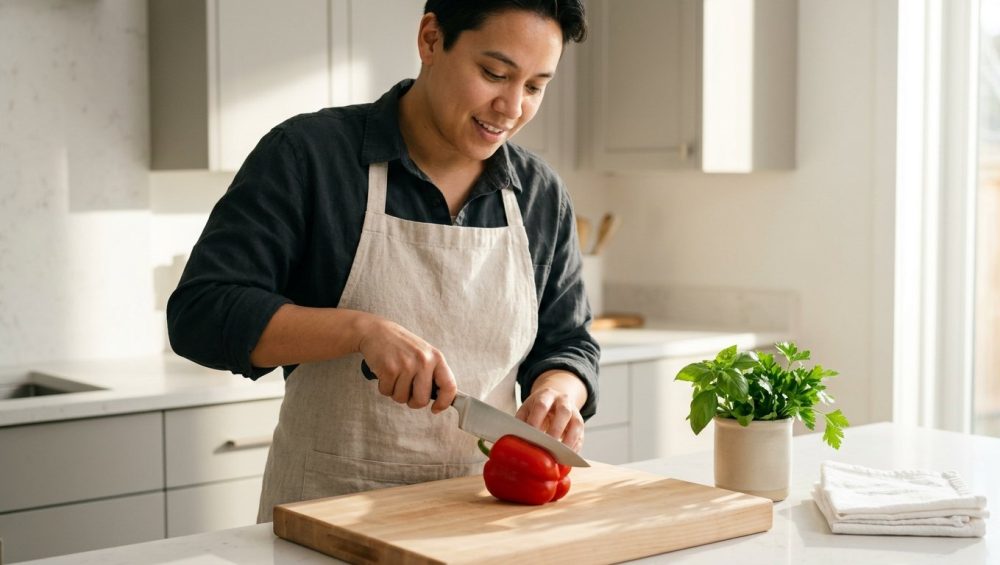
Third, a massive, solid wood cutting board and a high-quality, sharp 8-inch chef’s knife. Glass cutting boards will ruin your knives, and small plastic boards will slip around and cause you to chop off a finger. Stocking up on these beginner cooking essentials will instantly elevate your cooking experience from a frustrating chore to a seamless process.
Cutting Out the Clutter: Gadgets You Don’t Need
The kitchen industry preys on novice cooks by selling highly specific, single-use gadgets. You do not need an avocado slicer; you have a knife. You do not need a garlic press; you have a knife and a cutting board. You do not need a strawberry huller, a banana slicer, or a specialized meat-shredding claw. These items do nothing but clog your drawers, waste your money, and make your kitchen feel chaotic.
Instead, invest in versatile, multi-use tools. A simple metal bench scraper, for instance, costs about ten dollars and is infinitely useful. You can use it to scoop up chopped vegetables, clean flour off your counters, divide dough, and smash garlic. It is truly your kitchen’s unsung hero. Keep your workspace lean, functional, and devoid of plastic junk.
Aesthetically Pleasing vs. Practically Indestructible: Striking the Balance
We all want a kitchen that looks like it belongs in an architectural magazine, but aesthetics should never, ever override function. A beautiful marble countertop is useless if you are terrified to spill lemon juice on it. A gorgeous copper pan is a nightmare if you do not have the patience to polish it constantly. You want a kitchen that looks inviting but can withstand the absolute chaos of a Tuesday night dinner rush.
Setting Up a Workspace That Doesn’t Make You Cry
Your physical workspace directly impacts your mental state while cooking. If you are constantly shoving aside mail, dirty coffee mugs, and random clutter just to find a square foot of space to chop an onion, you are going to hate cooking. Maintaining a permanently organized kitchen is not just about making the room look pretty; it is a vital psychological tool for stress management.
In fact, psychologists have studied this extensively. Research published in early 2026 highlights that people who clean as they cook score significantly higher in conscientiousness and emotional regulation. Cleaning as you go is not about rigid perfectionism; it is a proactive coping mechanism that reduces visual chaos, thereby preventing small stressors from snowballing into overwhelming anxiety. When you wipe down your cutting board immediately after using it, or load the dishwasher while the pasta is boiling, you are doing your future self a massive favor. You are maintaining control over your environment, which translates to feeling in control of the cooking process itself.
The Magic of Mise en Place for the Chaotic Cook
“Mise en place” is a fancy French culinary term that simply means “everything in its place.” It is the single most important habit you can adopt to stop hating the cooking process. Before you turn on a single burner, read the recipe all the way through. Chop your onions, mince your garlic, measure out your spices, and have your proteins ready to go.
If you try to chop vegetables while your oil is already smoking in the pan, you are going to burn your food, panic, and end up ordering Thai takeout in tears. Prevent the standard rookie kitchen mistakes by respecting the prep phase. Cooking is 80% preparation and 20% execution. When your ingredients are prepped and waiting in little bowls, the actual act of cooking becomes a peaceful, almost meditative assembly process rather than a frantic race against the clock.
Weekday Survival Mode: Maximum Flavor, Minimum Tears
Let us be brutally honest: nobody wants to spend two hours cooking a complicated meal on a Wednesday night after back-to-back meetings and a miserable commute. Weekday cooking is about survival, but it does not have to taste like survival. Time is money, and your energy is finite. This is where we ruthlessly prioritize efficiency and lean heavily on strategic shortcuts.
The Art of the Strategic Shortcut
There is zero shame in buying pre-washed spinach, canned beans, or high-quality store-bought curry paste. The goal of weekday cooking is getting a nutritious, delicious meal on the table before you lose your mind, not proving that you can mill your own flour. A jar of good marinara sauce can be transformed into a spectacular meal with the addition of some fresh basil, a splash of heavy cream, and a handful of parmesan cheese.
Frozen vegetables are another hill I will gladly die on. They are flash-frozen at the peak of freshness, meaning they often retain more nutrients than the sad, wilted broccoli that has been sitting in your crisper drawer for a week. Tossing frozen peas into a pasta dish or roasting frozen green beans with olive oil and garlic powder is a perfectly valid way to get your greens. We all need a reliable rotation of simple meals for mindful moments that do not require an hour of active chopping and stirring.
Batch Prepping Like a Boss (Without Losing Your Weekend)
I absolutely despise the trend of “meal prepping” that involves spending six hours on a Sunday boxing up identical, joyless portions of dry chicken breast and unseasoned brown rice. That is a punishment, not a lifestyle. Instead, practice component prepping.
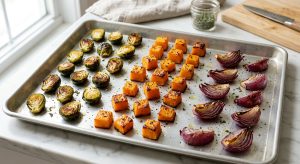
Roast a massive tray of mixed vegetables (sweet potatoes, bell peppers, red onions) on Sunday. Cook a large batch of a versatile grain, like quinoa or farro. Whisk together a large mason jar of a punchy vinaigrette. Now, during the week, you can mix and match these components. Throw the veggies and grains into a bowl with some feta cheese and dressing for a quick lunch. Toss the veggies into a tortilla with some black beans for a ten-minute dinner. You are saving time without condemning yourself to eating the exact same meal five days in a row.
Mastering the 30-Minute Dinner Illusion
The secret to a 30-minute dinner is overlapping your tasks. If you are making pan-seared chicken thighs with roasted potatoes and a side salad, you do not do these things sequentially. You preheat the oven and get the potatoes roasting first, because they take the longest. While they roast, you sear the chicken. While the chicken cooks, you throw the salad together. By the time the chicken has rested, the potatoes are done.
It requires a bit of mental choreography, but once you practice the timing, you will realize that a hot, fresh, home-cooked meal is actually faster than waiting for a delivery driver to navigate your apartment complex.
The Weekend Flex: Channeling Your Inner Perfectionist
Weekdays are for survival; weekends are for flexing. When Saturday rolls around and you actually have the luxury of time, the kitchen transforms from a utility room into a creative studio. This is when you pour yourself a glass of wine, put on a playlist that makes you feel like an absolute boss, and tackle the projects that require patience.
Why Bother With “Fancy” Cooking?
If weekday cooking is about feeding your body, weekend cooking is about feeding your soul. There is an immense, profound satisfaction in taking raw, disparate ingredients and transforming them into something spectacular through the sheer application of heat, time, and technique.
Baking a loaf of sourdough bread, slowly braising short ribs in red wine until they fall apart, or taking the time to properly laminate pastry dough—these are acts of creation. They require you to slow down, to pay attention to sensory details, and to be entirely present in the moment. In a world where we spend most of our days staring at screens and answering emails, working with our hands to create something tangible and delicious is incredibly grounding. These are the absolute must-have tools for your mental well-being: patience, curiosity, and a willingness to embrace the process.
Tackling Intimidating Proteins and Sauces
The weekend is the time to conquer your culinary fears. Intimidated by cooking a whole fish? Buy one, watch a five-minute tutorial, and throw it in the oven packed in salt. Terrified of breaking a Hollandaise sauce? Get out your whisk and some butter, and if it breaks, whisk in a splash of boiling water to fix it. If it completely fails, throw it out and try again. It is just butter and egg yolks; it is not a mortgage application.
Learning to make a proper pan sauce will change your life. After you sear a steak or a pork chop, you are left with a pan full of browned bits. Do not wash that pan. Put it back on the heat, pour in some wine or chicken broth, and scrape up the bits. Let the liquid reduce by half, turn off the heat, and vigorously swirl in a few tablespoons of cold butter until the sauce is glossy and thick. Pour that over your meat, and you have just replicated a $50 restaurant dish for about five dollars.
Hosting Without Hiding in the Pantry
Eventually, you are going to want to show off your new skills. Hosting a dinner party is the ultimate test of a home cook, but it is also the source of unnecessary, self-inflicted misery. I have seen too many hosts spend their entire own party sweating over a hot stove, snapping at their spouses, and emerging only to serve the food before collapsing in exhaustion. That is not hosting; that is catering your own event for free.
The Myth of the Perfect Dinner Party
Your friends do not care if your napkins perfectly match your table runner, and they certainly do not care if you made the puff pastry from scratch. They are there for the company, the free alcohol, and the fact that they did not have to cook. The most memorable dinner parties are the ones where the host is relaxed, laughing, and actually sitting at the table.
Curating a Stress-Free Menu
The golden rule of hosting is this: never, under any circumstances, cook a recipe for the first time for a dinner party. You are begging for a disaster. Stick to your greatest hits—the dishes you can make with your eyes closed.
Furthermore, design a menu where 80% of the work can be done before the doorbell rings. Do not plan a menu that requires you to actively sauté, fry, or whisk three different things at the exact moment your guests are ready to eat. Braises, stews, and roasted meats are your best friends because they happily sit in a warm oven, completely ignoring you until you are ready to serve them. Prepare your salads in advance (just wait to dress them), have your appetizers laid out on the coffee table, and make a dessert that can be pulled straight from the fridge. When you plan a menu around your own sanity, you actually get to enjoy the party you paid for.
The Final Verdict: Your Kitchen, Your Rules
The journey from a clueless, takeout-dependent novice to a confident home cook is not a straight line. You will still have days where you burn the toast, overcook the chicken, or simply look at your stove with profound exhaustion and order a pizza anyway. That is completely fine. The art of the kitchen is not about achieving Michelin-star perfection every single night.
It is about reclaiming your autonomy. It is about knowing that you have the skills, the knowledge, and the right equipment to feed yourself well. It is about rejecting the toxic, cheap gadgets that the industry tries to push on you, and refusing to hand over your hard-earned money to delivery apps that serve you mediocre food at a premium price.
When you embrace your kitchen, you stop seeing it as a chore and start seeing it as a space of potential. You learn to trust your senses—to know when a pan is hot enough just by holding your hand over it, to know when a cake is done by the smell filling the room, and to know exactly how much salt a soup needs just by tasting it.
So, clean out your drawers, throw away that peeling non-stick pan, sharpen your knife, and turn on the stove. The kitchen is yours to conquer, and I promise you, the results are going to be delicious.