Welcome to the weekend. You survived another grueling Monday-through-Friday gauntlet of thirty-minute meals, one-pan wonders, and whatever leftovers you managed to scrape together before rushing out the door. During the week, time is money, and efficiency is our only religion. But the weekend? The weekend is when we pour a generously sized mimosa, tie on a proper apron, and actually enjoy the culinary process. Today, we are tackling a brunch classic that strikes an irrational amount of fear into the hearts of everyday home cooks: the French crepe.
For some reason, society has convinced us that making crepes requires a culinary degree from Le Cordon Bleu, a specialized commercial griddle, and a wooden spreading tool that looks like a miniature rake. I am here to tell you that this is absolute, pretentious nonsense. Making a flawless crepe is nothing more than understanding a little bit of basic flour chemistry and having the patience to let your ingredients mingle. Even the most clumsy cooks can master this simple technique with a standard home kitchen setup.
If you have ever excitedly whipped up a batch of batter, immediately poured it into a hot skillet, and ended up chewing on something that resembles a yoga mat, you are not alone. The tragedy of the rubbery crepe is a tale as old as time, but it ends today. We are going to break down exactly why your batter is fighting you, why your cookware might actually be making you sick, and how to effortlessly set up a communal brunch gathering that allows you, the host, to actually sit down and enjoy your own party.
The Science of the Swirl: Why Your Crepes Turn to Rubber
The Gluten Trap
Let us get one thing straight: baking and batter-making are sciences. When you haphazardly throw flour, eggs, and milk into a bowl and aggressively whisk them together, you are not just mixing ingredients; you are initiating a complex chemical reaction. Wheat flour contains two specific proteins called gliadin and glutenin. The moment these proteins come into contact with water (which is present in your milk and your eggs), they link arms and form an elastic network known as gluten.
Gluten is a wonderful thing when you are baking a crusty, chewy loaf of artisanal sourdough bread. It provides structure and bite. But when you are making a delicate, paper-thin French crepe, an overdeveloped gluten network is your absolute worst enemy. Every time you whisk, blend, or stir your batter, you are encouraging those gluten strands to tighten up and become more elastic. If you take that freshly blended, highly stressed batter and immediately pour it into a screaming hot pan, those tight gluten proteins instantly seize up and contract. The result? A thick, chewy, thoroughly unappetizing disc of rubber. Understanding why your batter needs to rest is the single most important hurdle to clear on your journey to brunch perfection.
The Hydration Station
So, how do we disarm the gluten trap? We do absolutely nothing. We let the batter sit in the refrigerator and chill out. Resting your crepe batter is not a polite suggestion from a fussy French chef; it is a mandatory scientific requirement for success.
When the batter rests, two magical things happen. First, those tight, stressed-out gluten strands finally relax. They lose their rubber-band-like tension, which means when the batter eventually hits the hot pan, it will spread out thinly and easily without snapping back on itself. Second, and equally important, is the process of starch hydration. Flour is packed with microscopic, dry starch granules. It takes time—hours, in fact—for these stubborn little granules to fully absorb the surrounding liquid.
As the starches hydrate and swell, the batter naturally thickens and homogenizes without you having to add a single extra tablespoon of flour. This creates a batter that is incredibly thin and elastic, yet structurally sound enough to be flipped without tearing. For the absolute best results, you need to let your crepe batter rest in the refrigerator for a minimum of one hour, though letting it hydrate for four hours or even overnight is the true secret to a flawless, delicate texture. Chilling the batter also helps it set up perfectly when it hits the hot pan, giving you a delicate edge that is structurally sound.
The “Teflon Flu” Epidemic: Why Your Non-Stick Pan is Garbage
The 400-Degree Danger Zone
Here is where I must inevitably climb onto my soapbox, because I cannot in good conscience teach you how to make beautiful food if you are cooking it on a toxic, peeling chemical hazard. If you are planning to pour this painstakingly rested batter onto a ten-dollar, heavily scratched non-stick pan you bought at a big-box store five years ago, we need to have a serious intervention.
To achieve those beautiful, lacy, golden-brown edges on a crepe, your pan needs to be hot. Specifically, we are aiming for a surface temperature of around 400 degrees Fahrenheit (204 degrees Celsius). At this temperature, the batter immediately sizzles and sets the moment it hits the metal, preventing it from sticking. However, this exact temperature is a massive problem for cheap PTFE (commonly known as Teflon) non-stick coatings.
When cheap non-stick pans are heated to high temperatures, their chemical coatings begin to break down and off-gas toxic fumes. This is not some fringe conspiracy theory; it is a documented medical reality. Heated PTFE pans release toxic fumes so potent that pet birds can literally drop dead from exposure at just 326 degrees Fahrenheit. If that isn’t terrifying enough, these fumes actively sicken humans, causing a miserable condition known as “polymer fume fever,” or the “Teflon flu”. This illness mimics severe viral flu symptoms, including fever, body aches, chills, and respiratory distress. In 2024 alone, America’s Poison Centers reported a staggering 267 suspected cases of this exact illness linked directly to overheated non-stick cookware. If you are tired of your cheap skillets losing their slip and poisoning your indoor air quality, it is time to throw them in the trash where they belong.
The Only Pans You Should Actually Use
You do not need a synthetic chemical coating to cook a crepe without sticking. You need real, high-quality, durable cookware that respects your food and your health. For crepes, I aggressively advocate for carbon steel pans. Carbon steel is the traditional, authentic choice in French kitchens for a reason. It is relatively lightweight, it conducts heat beautifully, and most importantly, when properly seasoned with natural cooking oils, it builds up a completely natural, slick, non-stick patina.
A well-seasoned carbon steel pan can handle 400 degrees Fahrenheit all day long without breaking a sweat, and it will never release invisible toxic fumes into your kitchen. If you do not want to deal with the maintenance of seasoning carbon steel, a high-quality enameled cast iron skillet or a specialized ceramic-titanium crepe pan are fantastic, safe alternatives. Stop compromising your health for the sake of convenience.
The Golden Rules of Crepe Batter
The Blender is Your Best Friend
When it comes to actually mixing the batter, leave your whisk in the drawer. The modern home cook’s secret weapon for flawless crepe batter is a standard countertop blender. Throwing all of your ingredients into a blender and blitzing them for thirty seconds completely homogenizes the liquid and the fat, ensuring there are absolutely no hidden lumps of dry flour.
If you absolutely must mix by hand, please, for the love of all things culinary, use a metal whisk or a high-quality wooden spoon. Using cheap, degrading silicone tools is a fantastic way to ensure your spatulas taste like soap and ruin the delicate flavor profile of your batter. The standard ratio for a foolproof batter is incredibly simple: one cup of all-purpose flour, two large eggs, half a cup of whole milk, half a cup of water, a quarter teaspoon of salt, and two tablespoons of melted butter. Using a combination of milk and water is crucial; milk provides richness and helps the crepe brown thanks to its lactose and proteins, while the water keeps the batter light and thin, preventing the final product from tasting like a heavy pancake.
Brown Butter: The Non-Negotiable Flavor Bomb
If you want to take your crepes from “pretty good” to “mind-blowing,” you need to upgrade your fat. Do not just melt your two tablespoons of butter in the microwave. Put that butter in a small saucepan over medium heat and let it cook until the water evaporates and the milk solids begin to toast.
This process, known as the Maillard reaction, transforms ordinary butter into beurre noisette, or brown butter. It takes about three extra minutes, but it infuses the fat with an incredibly deep, nutty, caramelized aroma that will perfume your entire kitchen. Whisking this liquid gold into your crepe batter adds a layer of sophisticated flavor that makes the crepes taste like they were purchased from a high-end Parisian street cart, even if you are just eating them in your pajamas.
Mastering the Heat and the Flip
The First Crepe is Always a Sacrifice
Before we discuss technique, we need to manage expectations. In the culinary world, it is a universally accepted truth that the first crepe is a sacrifice to the kitchen gods. It will likely be ugly, it might tear, and it will probably be a little too thick. Do not panic, and do not throw your pan across the room. The first crepe exists solely to test the heat of your pan and the slickness of your seasoning.
We have discussed how utilizing proper pan temperatures can help you stop ruining your salmon, and the exact same thermodynamic principles apply to the delicate crepe. You want your pan over medium to medium-high heat. Lightly slick the surface with a tiny amount of butter or neutral oil—just enough to give it a shine, not enough to deep-fry the batter.
The 30-Second Sizzle
When your pan is properly preheated to that 400-degree sweet spot, it is time to pour. Lift the pan completely off the heat source. Pour roughly three to four tablespoons of your rested batter directly into the center of the pan. Immediately—and I mean without a second of hesitation—tilt your wrist in a circular motion, swirling the pan so the batter races to the edges and coats the bottom in a paper-thin, translucent layer.
Place the pan back on the heat. Because the batter is so thin and the pan is so hot, the cooking process is violently fast. You are going to let it cook for exactly 30 to 45 seconds. Do not poke it. Do not prod it. Watch the edges; they will begin to dry out, curl away from the pan slightly, and turn a beautiful golden brown. The top surface of the crepe will lose its wet, raw shine and turn matte.
Once you see these visual cues, slide a thin offset spatula or a butter knife under one of the lacy edges to lift it. Grab the edge with your fingertips, confidently lift the crepe, and flip it over. Cook the second side for a mere 10 to 15 seconds. It does not need long; you are just setting the batter and adding a few golden freckles to the presentation side. Slide it off onto a plate, and repeat the process.
The 2025 Brunch Reality: Why We’re Eating at Home
The Economics of Eggs and Flour
Let us take a moment to address why mastering the home brunch is so vital right now. Going out for weekend brunch used to be a fun, relaxing luxury. Today, it is a stressful, overpriced endurance test. You spend forty-five minutes standing on a crowded sidewalk, only to be ushered to a tiny, cramped table where you are charged twenty-five dollars for a plate of eggs and an uninspired stack of pancakes, plus another eighteen dollars for a mediocre bloody mary.
Consumers are waking up to this absurdity. According to a sweeping 2025 consumer report on entertaining trends, a staggering 59% of people have actively cut back on dining out, with weekend brunch being one of the first casualties. Instead, driven by inflation and a desire for genuine connection, people are transforming their own dining rooms into DIY cafes.
The organizational skills required to host a relaxed dinner party translate perfectly to a Sunday morning brunch gathering. When you cook at home, you control the environment, the music, the quality of the ingredients, and most importantly, the budget. A massive batch of crepe batter costs roughly three dollars to produce. You can feed six of your closest friends an absolute feast for the price of one single restaurant cocktail. Home entertaining is no longer just a trend; it is the smart, sophisticated reality of modern socializing.
The Blueprint for a Stress-Free Crepe Bar
Prep Like a Pro, Sleep Like a Baby
The biggest mistake home cooks make when hosting a morning gathering is trying to do everything on Sunday morning. If you are whisking batter, chopping fruit, and grating cheese while your guests are arriving, you are going to be miserable, sweaty, and stressed. The secret to a flawless brunch is aggressive, unapologetic prep work.
You do not need to invest in massive aesthetic kitchen upgrades to make your dining room look like a chic Parisian cafe; you just need to be organized. On Saturday night, blend your crepe batter, cover it tightly, and put it in the fridge to rest and hydrate overnight. While you are at it, prep your toppings. Wash and slice your strawberries, grate your cheeses, and put them in their serving bowls. Cover them with plastic wrap and stack them in the fridge. When Sunday morning rolls around, your kitchen will be pristine, and your only job will be turning on the stove and popping a bottle of sparkling wine.
The Holding Pattern: Keeping Crepes Warm
The ultimate goal of the crepe bar is to have all the crepes cooked before anyone actually sits down to eat. You do not want to be trapped at the stove acting as a short-order cook while your friends are laughing in the other room. But how do you cook twenty crepes and keep them warm without them turning into a soggy, steaming block of mush?
We all know the sheer disappointment of watching fresh waffles go soft and soggy under a cloche, and crepes suffer a similar, albeit stickier, fate if mismanaged. The secret is parchment paper and a low oven. Preheat your oven to a gentle 200 degrees Fahrenheit (93 degrees Celsius). Place a large baking sheet inside. As you finish cooking each crepe, transfer it to the baking sheet and immediately place a square of parchment paper or wax paper directly on top of it. Stack the next crepe on top of the paper, and repeat. The paper prevents the delicate crepes from steaming together and tearing when you try to separate them later, while the gentle heat of the oven keeps them perfectly warm and pliable for up to an hour.
The Filling Station: Sweet, Savory, and Everything Between
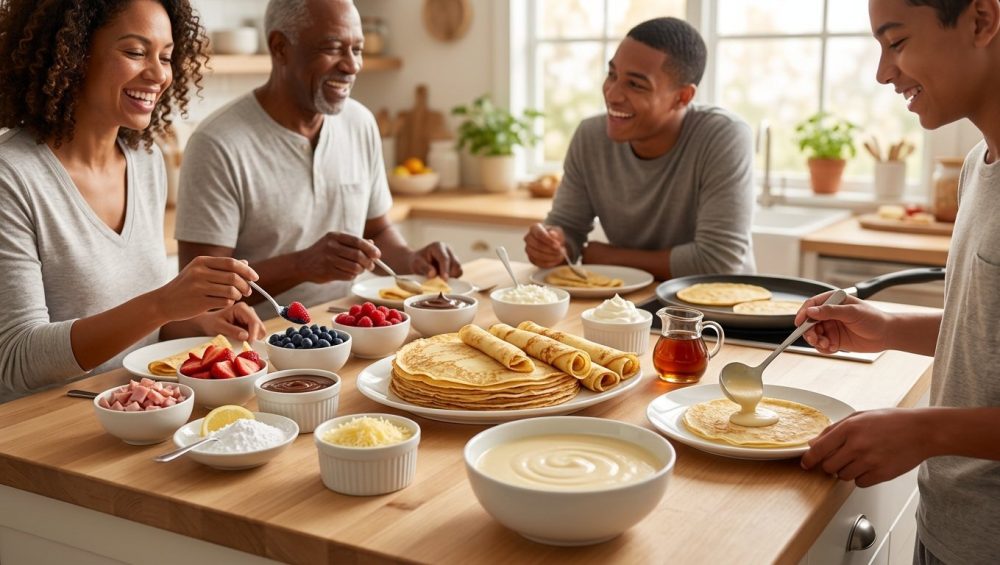
Once your towering stack of crepes is safely resting in the oven, it is time to set the stage. Clear off your kitchen island or dining table and create an interactive, build-your-own crepe bar. This takes all the pressure off you as the host. You provide the canvas; your guests provide the creativity.
Divide your station into two distinct zones: The Savory Zone and The Sweet Zone.
For the Savory Zone, think classic French bistro. Offer bowls of freshly grated Gruyere or sharp white cheddar. Provide platters of thinly sliced prosciutto, high-quality smoked ham, sautéed mushrooms, caramelized onions, and fresh baby spinach. If you are offering a savory station, ensure your hot proteins are properly cooked and drained; nothing ruins a beautiful Gruyere and ham crepe faster than watching poorly cooked scrambled eggs leak water all over the plate.
For the Sweet Zone, lean into decadence. A jar of high-quality chocolate hazelnut spread is mandatory. Offer bowls of macerated berries, sliced bananas, toasted almond slivers, and freshly whipped cream. However, do not forget the absolute greatest, most beautifully simple crepe filling of all time: a squeeze of fresh lemon juice and a heavy dusting of granulated sugar. It is tart, sweet, crunchy, and utterly perfect.
When your guests arrive, simply pull the warm stack of crepes from the oven, set them at the head of the table, and let everyone go wild. They get the fun of customizing their perfect meal, and you get the luxury of actually sitting down, sipping your mimosa, and enjoying the fruits of your labor.
Cooking beautiful food does not require a commercial kitchen or a culinary degree. It requires a little bit of science, a rejection of toxic shortcuts, and the confidence to let your batter rest. So ditch the expensive restaurant reservations this weekend, fire up your carbon steel pan, and reclaim your Sunday morning. You have got this.