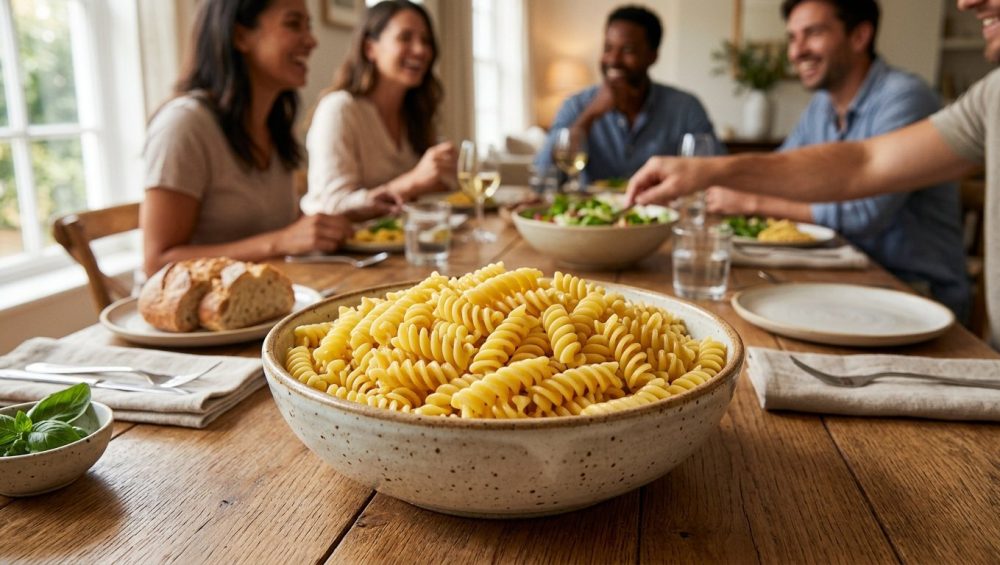
Let’s cut right to the chase. You invited six people over for dinner, and now you are sweating over a boiling pot of water while your guests awkwardly sip Pinot Grigio in the living room. You are frantically trying to time the pasta, the sauce, the garlic bread, and the salad so they all finish at the exact same magical second. Spoiler alert: They won’t. And by the time you finally sit down, your spaghetti has morphed into a singular, gelatinous brain-blob that requires a steak knife to portion.
I have zero patience for the pretentious chef-speak that tells you hosting should be a breeze if you just “prep your mise en place.” The reality for the weekend culinary hobbyist is that entertaining is inherently stressful. In fact, according to recent surveys, eight in ten adults feel the heat when hosting dinner parties, and a staggering 76 percent feel immense pressure to ensure their guests are having a good time. Even worse, half of the people surveyed found throwing a dinner party to be more stressful than actually going to work, and a quarter found it more traumatic than a job interview.
We have been brainwashed by highly curated social media feeds into believing that we must execute a flawless, à la minute, five-course tasting menu while simultaneously looking like we just stepped out of a spa. This wave of anxiety, overwhelm, and pressure that crashes over you the moment you hear someone is coming over has even been dubbed “Guest Stress Syndrome”. The number one culprit behind this misery? Perfectionism.
If you want to master the art of effortless hosting, you have to fundamentally change your approach to entertaining. You need to step away from the stove, pour yourself a generous glass of wine, and actually connect with your friends. The secret to achieving this culinary nirvana? The DIY Noodle Bar.
But here is the catch: to pull off a self-serve, make-ahead pasta station, you need to understand the exact science of why cooked noodles stick together, and more importantly, how to stop it. We are going to dive deep into starch management, hydration techniques, and the restaurant-industry secrets that will allow you to prep your pasta hours in advance without it turning into a sad, sticky brick.
The Molecular Sabotage: Why Your Pasta Clumps
To defeat the enemy, you must first understand the enemy. And in this case, the enemy is starch chemistry. You don’t need a culinary degree to make mind-blowing food, but a basic understanding of what happens inside your boiling pot will save you from a lifetime of gummy noodles.
The Anatomy of a Noodle: Amylose and Amylopectin
Dried pasta is incredibly simple, usually consisting of just durum wheat semolina and water. However, on a molecular level, it is a complex matrix of proteins (gluten) and tightly packed starch granules. These starch granules are made up of two types of complex carbohydrates: amylose and amylopectin.
When your dry pasta hits cold water, nothing happens. But when it hits boiling water, all hell breaks loose. At around 140°F (60°C), the starch granules begin to absorb water and swell aggressively. This process is called starch gelatinization. As the granules swell, some of them inevitably burst, releasing their sticky amylose and amylopectin molecules directly into your cooking water. This is exactly why your pasta water turns cloudy and opaque as it boils.
The Cooling Crisis: Retrogradation and the Sticky Web
While the pasta is hot and moving vigorously in boiling water, the starches remain relatively fluid. When you drain the pasta to serve it immediately, a thin, microscopic layer of this sticky starch gel remains on the surface of the noodles. If you toss it straight into a hot pan of marinara sauce, this surface starch acts as a beautiful binding agent, helping the sauce cling to the noodle.
However, if you are setting up a buffet and allowing that pasta to sit, you are inviting disaster. As the pasta cools down, a process called retrogradation occurs. The gelatinized starch molecules begin to realign and form rigid crystalline structures. Because the noodles are resting against one another in a bowl, the starches on their surfaces literally fuse together. They interlock, dry out, and create a solid, impenetrable web of carbohydrates.
This is why one of the most common rookie kitchen mistakes is draining hot pasta and just leaving it to sit naked in a colander on the counter. Within ten minutes, you will have a solid block of wheat that no amount of stirring can fix.
The Great Water Debate: Debunking Pasta Myths
Before we get to the actual make-ahead techniques, we need to clear up the rampant misinformation surrounding the boiling process itself. If you start with poorly boiled pasta, your noodle bar is doomed before the guests even arrive.
The Overcrowded Pot: A Recipe for Disaster
The primary reason pasta gets overly sticky during the boiling phase is a lack of water. When you try to boil a pound of spaghetti in a tiny, three-quart saucepan, you are creating a highly concentrated starch bath. The pasta doesn’t have enough room to move freely, meaning the strands constantly rub against each other, releasing even more starch into the confined space. You need sheer volume. Use a massive stockpot and at least four to five quarts of water per pound of pasta. This dilutes the released starches and gives the noodles the physical space they need to cook independently.
Salting the Sea: Osmosis and Flavor Penetration
Your pasta water should taste like the ocean. This is non-negotiable. Adding a generous handful of salt to your boiling water does absolutely nothing to prevent the pasta from sticking, but it is the only opportunity you have to season the actual interior of the noodle. If you skip this step, your pasta will be aggressively bland, and no amount of expensive sauce poured over the top will save it.
The Olive Oil Illusion
Somewhere along the line, a terrible rumor started that adding a glug of olive oil to your boiling pasta water will prevent the noodles from sticking. This is a complete myth. Oil is less dense than water; it simply floats on the surface of the rolling boil. It does absolutely nothing to coat the pasta while it cooks. The only thing the oil does is coat the noodles as you pour them out through the colander. This creates an uneven, hydrophobic slick on the surface of your pasta that aggressively repels your carefully crafted sauces. Keep the oil out of the boiling water.
The Sassy Sous-Chef’s Mandatory Gear Check
I am going to pause the cooking lesson for a moment because we need to talk about your equipment. I firmly believe that anyone can cook like an expert in a standard home kitchen, but I have a strict “no-go” rule when it comes to cheap, toxic gear.
The “No-Go” Rule on Toxic Cookware
If you are boiling your pasta in a scratched, peeling, lightweight non-stick pot, I need you to throw it in the trash immediately. I am completely committed to banishing toxic kitchen gear from my home, and you should be too.
Traditional non-stick coatings are made from PTFE (polytetrafluoroethylene), which is a type of PFAS—a class of synthetic “forever chemicals”. When you use damaged, scratched non-stick cookware, it can release literally millions of microplastic and nanoplastic particles directly into your food. These chemicals persist in the human body and the environment for thousands of years and have been linked to a horrifying laundry list of health issues, including thyroid disease and reproductive harm.
The Microplastic Nightmare and Teflon Flu
Even if your non-stick pot isn’t visibly scratched, it is still a massive liability. PTFE begins to break down and release highly toxic fumes at temperatures over 500°F. You might think, “I’m just boiling water, it won’t get that hot.” But if you get distracted by your guests, your water boils dry, and the empty pan sits on a high-BTU burner, it will overheat in minutes. Inhaling these fumes causes a severe, acute reaction known as “Teflon Flu,” which includes chills, fever, and body aches. In 2024 alone, the Washington Post reported 267 cases of this exact phenomenon.
If your cheap baking sheets keep warping in the oven, or your pots are flaking mystery black specks into your linguine, they are actively working against you.
Safe, Non-Toxic Alternatives for the Home Cook
You do not need toxic coatings to boil water. You need a high-quality, heavy-bottomed, multi-clad stainless steel stockpot. Stainless steel is incredibly durable, entirely non-toxic, and provides the thermal mass necessary to maintain a rolling boil when you drop a pound of cold pasta into the water. You already know how to prevent protein sticking in a hot stainless steel skillet using temperature control, but for boiling pasta, you simply need a clean, safe, heavy pot that won’t poison your dinner guests.
The Restaurant Secret: Mastering the Double Cook
Now that you have a safe pot of heavily salted, rapidly boiling water, it is time to learn how the professionals do it. Have you ever wondered how a high-volume Italian restaurant can serve you a plate of perfectly al dente rigatoni just five minutes after you order? They aren’t boiling dried pasta from scratch while you wait. They use a technique called the “Double Cook”.
This prep-ahead method is the absolute best way to transform your chaotic cooking routine into a peaceful, highly organized system. By doing the heavy lifting hours before your guests arrive, you completely eliminate the bottleneck of the boiling pot.
Step 1: The Initial Boil (Short of Al Dente)
Drop your pasta into the boiling water and stir it immediately, then give it a gentle stir every few minutes to keep the strands separated. You are going to cook this pasta until it is just shy of perfectly al dente. This requires you to actually stand there and taste the pasta. You want it to be cooked through, but still retain a distinct, firm, slightly chalky bite in the very center. If the box says to boil for 10 minutes, pull it at 8 minutes. Remember, the pasta is going to be reheated later. If you cook it all the way to mush now, it will disintegrate on your buffet line.
Step 2: The Controversial Ice Bath Shock
As soon as the pasta hits that slightly undercooked sweet spot, drain it immediately. Do not let it sit in the colander.
Now, under normal circumstances, rinsing cooked pasta is a culinary sin because it washes away the precious surface starches you need to bind your sauce. But we are not under normal circumstances. We are preparing for a multi-hour buffet hold. For a make-ahead noodle bar, surface starch is your worst enemy.
You must immediately plunge the drained pasta into a massive bowl of ice water. This aggressive thermal shock does two crucial things: it instantly halts the carry-over cooking process so your noodles don’t turn to mush, and it violently washes away the sticky exterior starch gel that causes clumping. Leave the pasta in the ice bath for about 60 seconds until it is completely cold to the touch.
Step 3: The Lubrication Phase
Once the pasta is ice cold, drain it again. And I mean really drain it. Shake the colander vigorously. Water and oil do not mix, and if your pasta is soaking wet, the next step will fail.
Transfer the dry, cold pasta to a large mixing bowl. Now, and only now, do you break out the good extra virgin olive oil. Drizzle a very small amount over the noodles and toss them thoroughly with your hands. You are not trying to drown the pasta; a little goes a very long way. The goal is to create a microscopic, hydrophobic barrier around each individual cold noodle. Because the starches have been rinsed away and the temperature is cold, this oil barrier will physically prevent the noodles from fusing together while they sit.
Step 4: Cold Storage and Staging
Once the pasta is lightly oiled and completely separated, transfer it to an airtight container or a vacuum-sealed bag and stash it in the refrigerator. You can do this entire process up to 24 hours in advance. Your pasta is now perfectly staged, completely immune to clumping, and waiting patiently for the party to begin.
Executing the Flawless DIY Noodle Bar
If you want to host a relaxed dinner party, the self-serve buffet model is your ultimate weapon. It removes you from the role of a short-order cook and transforms the meal into an interactive, communal experience. But a successful noodle bar requires strategic setup.
Selecting the Right Pasta Shapes for Staging
Not all pasta shapes are created equal when it comes to holding on a buffet. Long, delicate strands like angel hair, spaghetti, and linguine are incredibly prone to tangling and nesting. Even with the double-cook method, they can become unruly when guests try to portion them out with tongs.
For a stress-free noodle bar, always opt for short, tubular, or highly textured shapes. Rigatoni, penne, cavatappi, and fusilli are your best friends. These shapes have significant structural integrity, and more importantly, they have far less surface area in direct contact with one another when piled in a bowl. This drastically reduces the physical friction and sticking potential. Plus, tubular pastas act like little scoops, holding onto chunky ragùs and creamy sauces perfectly.
Thermal Mass and Holding Vessels
When it is time to set up the buffet, you need to transition your cold, staged pasta into a warm, inviting meal. Using proper batch preservation techniques is essential here. You cannot just dump cold pasta into a room-temperature bowl and expect your guests to be happy.
For large gatherings, investing in a basic chafing dish with a water bath is a game-changer. The water bath provides gentle, indirect, and consistent heat that will keep the pasta warm without scorching the bottom. If you don’t have a chafing dish, use heavy ceramic serving vessels or enameled cast iron braisers that have been pre-warmed in a low oven. These materials have excellent thermal mass and will hold heat for a long time.
Always keep the pasta covered when guests aren’t actively serving themselves. Exposure to the open air will evaporate the surface moisture rapidly, drying out the noodles and causing them to turn brittle. A tight layer of aluminum foil or a proper lid is mandatory.
The Hot Water Refresh Technique
Here is the final, brilliant trick for the noodle bar. When you pull your oiled, cold pasta out of the fridge, you don’t just throw it into the chafing dish. You need to “refresh” it.
Set up a staging area on your stove with a large pot of rapidly boiling water (or even a flavorful broth). Place a portion of your cold pasta into a fine-mesh strainer or a pasta basket, and simply dunk it into the boiling liquid for exactly 15 to 30 seconds.
This brief plunge does three things simultaneously: it rapidly brings the core temperature of the pasta up to serving heat, it melts away the protective oil barrier you applied earlier, and it reawakens the surface starches just enough so that the noodles will eagerly grip your sauces. Give the strainer a vigorous shake, dump the hot, perfectly separated pasta into your warmed serving vessel, and you are ready to go.
If you ever need to rescue a ruined dinner because your pasta has been sitting under the buffet heat for too long and started to dry out, simply hit it with a splash of hot water or a tiny ladle of hot sauce and give it a quick toss. It will revive instantly.
Sauce Staging and Stress-Free Hosting
A noodle bar is only as good as its toppings. While the pasta is the foundation, the sauces are where you get to show off. However, you need sauces that can handle being held at temperature for an extended period without degrading.
The Chemistry of Emulsions on the Buffet
Delicate butter-based sauces or traditional carbonara are terrible choices for a buffet. These sauces rely on fragile temperature-sensitive emulsions. If they get too cold, the fats congeal. If they get too hot, the emulsion breaks, leaving you with a greasy, separated puddle of oil.
Instead, pair your noodle bar with a few foolproof modern recipes that are structurally robust. A deeply simmered Bolognese or a rich, slow-cooked marinara are incredibly stable and will happily sit in a slow cooker on the “warm” setting for hours. If you want a creamy option, stabilized cashew-based vegan alfredos or sauces thickened with a touch of cornstarch hold their texture beautifully under buffet conditions.
Set up your slow cookers at the end of the line. Have your guests grab their bowls, portion out their perfectly separated, warm pasta, and then ladle the hot sauces directly over the top. The residual heat of the sauce will further warm the noodles, creating a perfectly integrated bite.
The Topping Station
To elevate the DIY aspect, surround your sauces with an array of garnishes. Small bowls of freshly grated Parmigiano-Reggiano, toasted pine nuts, torn fresh basil, red pepper flakes, and high-quality finishing olive oil allow your guests to customize their plates. It makes the meal feel interactive, abundant, and incredibly thoughtful—all while requiring absolutely zero active cooking from you during the party.
The Day-Of Timeline for the Relaxed Host
To prove exactly how stress-free this can be, here is the exact timeline you should follow on the day of your gathering. Notice how little time is spent cooking while your guests are actually in your house.
10:00 AM – The Boiling Phase:
Fill your massive, non-toxic stainless steel pot with water. Salt it heavily. Boil your chosen tubular pasta until just shy of al dente. Shock it in the ice bath, drain it thoroughly, toss it with a tiny drizzle of olive oil, and stash it in the fridge. The hardest part of the meal is officially done before lunch.
11:00 AM – Sauce Preparation:
Simmer your marinara or Bolognese. Because you have the time, you can let the flavors develop slowly. Once finished, transfer the sauces to your slow cookers and leave them turned off for now.
3:00 PM – The Staging Zone:
Set up the physical buffet. Arrange your chafing dishes, serving spoons, bowls, and napkins. Chop your garnishes and place them in small bowls covered with plastic wrap.
5:00 PM – The Reheat:
Turn your slow cookers onto the “warm” setting to bring your sauces up to a safe, steaming temperature. Pre-warm your ceramic pasta holding vessels in a low oven.
6:00 PM – Guests Arrive:
You are not chopping onions. You are not watching a pot boil. You are greeting your friends at the door, taking their coats, and pouring yourself a glass of wine.
7:00 PM – The Refresh and Serve:
Excuse yourself to the kitchen for exactly five minutes. Bring a pot of water to a boil. Dunk your cold, staged pasta in the boiling water for 30 seconds to refresh it. Transfer the steaming, perfectly separated noodles into your warmed serving vessels. Announce that the noodle bar is open.
The Sassy Sous-Chef’s Final Word
We need to stop treating home cooking like a competitive sport. The goal of inviting people into your home is connection, not a Michelin-star performance evaluation. In fact, a massive 91 percent of parents report that their families are noticeably less stressed when they simply share a meal together. The food is the vehicle for the gathering, not the other way around.
By utilizing the double-cook method, managing your starch gelatinization, and ditching the toxic, peeling pots that are ruining your food, you take complete control of the kitchen timeline. You eliminate the frantic, last-minute juggling act that causes so much hosting anxiety.
So, the next time you want to have friends over, skip the elaborate, highly-timed plated dinners. Boil your noodles in the morning, shock them cold, oil them up, and embrace the brilliance of the DIY Noodle Bar. Your pasta will be flawless, your guests will be fed, and most importantly, you will actually get to sit down and enjoy the party. Cheers to that.