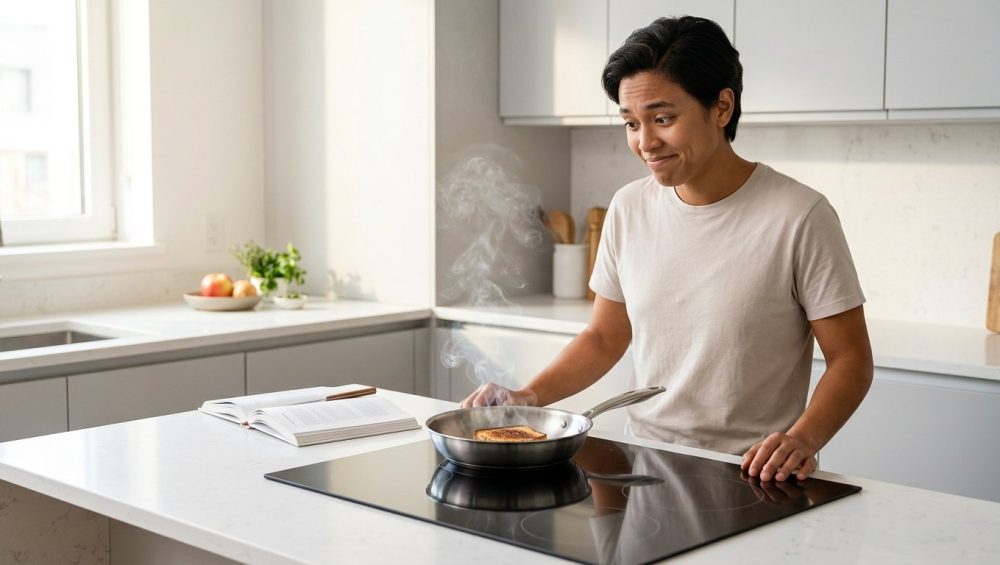
Listen up, weekend warriors, takeout-addicted professionals, and anyone whose smoke detector currently doubles as a dinner bell. We need to have a little chat.
I know exactly where you are right now because I used to be you. I have burned water. I have turned expensive cuts of filet mignon into dry, unchewable hockey pucks. I have set off the fire alarm so many times that my neighbors genuinely thought I was running a highly inefficient crematorium out of my apartment. You are not alone in your culinary clumsiness, and more importantly, your situation is entirely fixable.
The myth of the “natural cook” is the biggest lie ever sold by food media. Nobody comes out of the womb knowing how to perfectly julienne a carrot, emulsify a beurre blanc, or properly sear a scallop. Cooking is not genetic magic; it is a learned skill rooted in basic physics, chemistry, and a whole lot of trial and error. You do not need a culinary degree to make mind-blowing food in a standard home kitchen. You just need a bit of patience, a willingness to make mistakes, and a strict adherence to a few fundamental rules.
Consider this your ultimate, no-fluff, highly researched survival manual. We are going to strip away the pretentious chef-speak, banish the toxic garbage from your cabinets, and teach you how to navigate your kitchen without losing your sanity—or your eyebrows.
The Mindset Shift: From Kitchen Hazard to Confident Cook
Before you even pick up a spatula, we need to address the most common reason beginners fail: panic. Cooking anxiety is a real phenomenon, usually triggered by a chaotic environment and a fundamental misunderstanding of how recipes actually work.
The Magic of Mise en Place
If you take only one piece of advice from this entire masterclass, let it be this: embrace the French concept of mise en place. Literally translated as “putting in place,” it means gathering, measuring, chopping, and organizing all of your ingredients before you even think about turning on the stove.
Most kitchen disasters happen because you are frantically trying to mince three cloves of garlic while your onions are rapidly turning to charcoal in a screaming-hot skillet. When you prep everything in advance, cooking transforms from a high-stakes juggling act into a calm, systematic assembly process. It buys you the mental bandwidth to actually pay attention to the sights, sounds, and smells of your food. Maintaining an organized kitchen is half the battle when it comes to avoiding mid-recipe meltdowns.
Reading the Recipe (Properly)
A recipe is not a casual suggestion; it is a roadmap. Yet, most beginners treat recipes like terms and conditions—scrolling blindly to the bottom and clicking “accept.” Read the recipe all the way through, twice, before you start. Understand the sequence of events. If a recipe calls for “1 cup of walnuts, toasted and chopped,” that means you measure a cup of walnuts, then toast them, then chop them. If it calls for “1 cup of chopped walnuts,” you chop them first, then measure. These subtle distinctions are the difference between a successful dish and one of those classic rookie kitchen mistakes that end up ruining your dinner.
The “No-Go” Rule: Purging Toxic Trash and Upgrading Your Gear
Let’s get one thing straight: I have zero patience for cheap, toxic kitchenware. I am establishing a strict “No-Go” rule right now. If you are still cooking your morning eggs on a scratched-up, ten-year-old non-stick pan that looks like a map of the moon, throw it in the trash immediately. You are actively feeding yourself flaking chemical coatings, and I will not stand for it.
The Bitter Truth About “Forever Chemicals”
Traditional non-stick coatings are made using PFAS (per- and polyfluoroalkyl substances), notoriously known as “forever chemicals” because they do not break down in the environment or in the human body. When these pans are heated past 500°F (which happens much faster than you think on a standard home stove), the coating begins to degrade, releasing toxic fumes that can literally kill pet birds and cause “Teflon flu” in humans.
The regulatory landscape is finally catching up to this nightmare. As of January 1, 2025, Minnesota’s Amara’s Law officially banned the sale of cookware containing intentionally added PFAS. Other states are aggressively following suit, with California rolling out strict prohibitions set to take full effect between 2026 and 2028. If the government is actively outlawing these materials, you have no business keeping them in your home.
What to Buy Instead
You do not need a 15-piece cookware set. You need three good pans. Period.
- A 10-inch or 12-inch Tri-Ply Stainless Steel Skillet: This is your daily workhorse for searing meats, sautéing vegetables, and building pan sauces. It is indestructible, non-toxic, and will last longer than you will.
- A 10-inch Cast Iron or Carbon Steel Skillet: This is your heavy-duty heat retainer. Once properly seasoned, carbon steel and cast iron become naturally non-stick without any of the chemical hazards.
- An Enameled Cast Iron Dutch Oven: Essential for soups, stews, braises, and baking bread.
If you are starting from scratch and want to build a safe, reliable arsenal, take the time to research the beginner kitchen tools you actually need. Stop wasting money on gimmick gadgets and invest in high-quality, durable equipment that offers real value. Even a modest budget can cover the absolute beginner kitchen essentials if you know what to look for.
Knife Skills for the Clumsy: How to Keep All Your Fingers
Let’s talk about blood. Specifically, how to keep yours inside your body where it belongs.
The Dull Knife Epidemic
According to recent 2026 data, over 400,000 emergency room visits annually in the U.S. stem from kitchen knife injuries. You might assume these injuries happen because the knives are too sharp. The reality is the exact opposite. A staggering 67% of kitchen knife accidents involve dull or damaged blades.
A dull knife is the most dangerous object in your kitchen. When a blade is blunt, it cannot effortlessly bite into the skin of an onion or a tomato. Instead, you are forced to apply excessive downward pressure—up to three times more force than a sharp knife requires. When you apply that much force, the blade inevitably slips, deflects off the food, and violently introduces itself to your index finger. Keeping your knives razor-sharp reduces your accident risk by 85%. If you are going to invest in any must-have tools, make it an 8-inch high-carbon steel chef’s knife and a quality whetstone or professional sharpening service.
The Holy Trinity of Knife Safety: Grip, Claw, and Board
1. The Pinch Grip: Stop holding your knife by the handle like you are gripping a tennis racket. This offers zero rotational control. Instead, pinch the actual base of the blade (the bolster) between your thumb and the side of your index finger, wrapping your remaining three fingers loosely around the handle. This makes the knife an extension of your arm.
2. The Claw Method: Your non-dominant hand (the one holding the food) is the one in danger. To protect it, curl your fingers inward like a bear claw. The tips of your fingers should be tucked away, resting on the food, while the flat side of the knife blade rests gently against your knuckles as you slice. If the knife slips, it hits the flat of your knuckle, not your fingertip.
3. The Board Anchor: A sliding cutting board is a one-way ticket to the ER. Before you cut anything, wet a paper towel or a thin dishcloth, wring it out, and lay it flat underneath your cutting board. This creates friction and locks the board securely to the countertop.
Heat Control: Stop Burning Your Food (and Your House Down)
Cooking is simply the application of heat to food. Yet, heat management is where most beginners fail spectacularly. They blast the stove on “High” and pray for the best.
The Science of the Sear
If your food is constantly sticking to your stainless steel pans, you are likely putting cold food into a cold pan. You need to preheat the pan before adding oil. When stainless steel heats up, the microscopic pores in the metal expand and smooth out. If you wait until the pan is properly hot (test this by flicking a drop of water into the pan; it should bead up and dance across the surface like a mercury marble—this is the Leidenfrost effect), then add your oil, then add your food, it will not stick.
Furthermore, you must understand smoke points. Every fat has a temperature limit before it begins to break down, smoke, and taste like acrid burnt plastic.
- Butter: ~302°F (Great for finishing, terrible for high-heat searing).
- Extra Virgin Olive Oil: ~350°F to 410°F (Perfect for sautéing and roasting).
- Canola/Vegetable Oil: ~400°F (Good neutral oil for general cooking).
- Avocado Oil: ~520°F (The king of high-heat searing).
The “Oops” Protocol: Dealing with Grease Fires
Let’s get serious for a moment. Cooking is the leading cause of home fires in the United States, accounting for roughly 49% of all residential fire incidents. Frying equipment is involved in nearly 60% of these disasters, and a terrifying 51% of home cooking fires start with the ignition of cooking oil, fat, or grease.
If your pan catches fire, DO NOT PANIC, AND NEVER, EVER USE WATER. Throwing water on a grease fire causes the water to instantly vaporize into steam, propelling microscopic droplets of burning oil across your kitchen and turning a small pan fire into a catastrophic room fire in literal milliseconds.
How to safely extinguish a grease fire:
- Turn off the heat source immediately.
- Wearing an oven mitt, carefully slide a metal lid or a baking sheet over the pan to cut off the oxygen supply. Leave it there until the pan is completely cool.
- If the fire is small and you cannot cover it, douse it heavily with baking soda or salt. (Never use flour or baking powder, which can be explosive).
- If the flames are spreading, evacuate the house and call emergency services. Your pride is not worth your life.
Flavor First Aid: A Masterclass in Rescuing Ruined Dinners
Even the most experienced home cooks mess up. The difference between a novice and a pro is that the pro knows how to fix it before it hits the table. If you taste your dish and realize it is fundamentally flawed, relying on these smart fixes will save your dinner from the trash can.
The Dish is Too Salty
We have all been there. You sneezed while holding the salt shaker, or you forgot that the chicken broth you used was heavily salted. The old wives’ tale says to throw a raw potato into the pot to “absorb” the salt. This is a myth; the potato just absorbs salty liquid, leaving the remaining liquid exactly as salty as before.
To fix over-salting, you need to trick the palate.
- Add Acid: A squeeze of fresh lemon juice or a splash of apple cider vinegar brightens the dish and distracts the taste buds from the sodium.
- Add Fat: Stirring in a splash of heavy cream, a pat of unsalted butter, or a dollop of sour cream coats the tongue and mutes the harshness of the salt.
- Dilute: If it’s a soup or stew, add more unsalted broth or water, and bulk it up with extra vegetables or unseasoned grains.
The Dish is Too Spicy
You got overly ambitious with the chili flakes, and now your mouth is on fire. Capsaicin (the chemical that makes chilies hot) is fat-soluble, not water-soluble. Drinking water just spreads the fire around.
- Add Dairy: Yogurt, sour cream, milk, or a handful of cheese will bind to the capsaicin and wash it away.
- Add Sweetness: A pinch of sugar, a drizzle of honey, or some agave nectar will counteract the aggressive heat.
- Add Acid: A squeeze of lime juice cuts through the spice profile beautifully, which is why Thai and Mexican cuisines rely so heavily on citrus.
The Dish is Too Sweet or Too Sour
If your marinara sauce tastes like candy because the tomatoes were too sweet, add acid (a splash of vinegar) and a pinch of salt. If your vinaigrette makes your lips pucker because it is too sour, add a liquid sweetener (maple syrup or honey) and a bit more fat (oil) to emulsify and mellow the bite.
The Dish is Just… Bland
If you taste your food and think, “This is boring,” your instinct might be to reach for the salt. While salt is a flavor enhancer, the missing link is usually acid or umami. Try adding a squeeze of fresh lemon juice right before serving. If it still lacks depth, add an umami bomb: a dash of soy sauce, a splash of Worcestershire, a teaspoon of tomato paste, or a sprinkle of Parmesan cheese. These ingredients add savory complexity that salt alone cannot achieve.
Weekday Survival Tactics: Because Time is Money
When discussing weekend culinary projects, I encourage taking your time. But when it comes to weekday meals, time is money, and efficiency is paramount.
The 30-Minute Reality Check
A 2026 survey of Gen Z adults revealed that 60% feel they have less time than ever to cook a proper meal at home, with roughly half reporting they have under 30 minutes on a normal weeknight to prepare dinner. The overall average time Americans spend cooking has been steadily dropping. When you are exhausted from a long commute and a stressful workday, the allure of the takeout app is nearly impossible to resist.
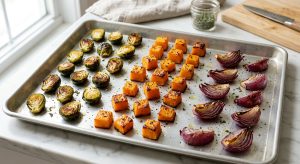
The solution is not to try and cook a complex beef bourguignon on a Tuesday night. The solution is mastering the art of high-efficiency, low-effort cooking. By utilizing simple techniques like sheet-pan roasting and quick pan-searing, you can whip up a flawless 30-minute meal without breaking a sweat. Focusing on simple meals saves your sanity and keeps your grocery budget intact.
The Clean-As-You-Go Philosophy
The main reason people hate cooking is the cleanup. Staring down a sink full of crusty pots and pans after you have just eaten a heavy meal is soul-crushing. You must learn to clean as you go.
While the onions are sautéing for five minutes, wash the cutting board. While the chicken is resting, wipe down the counters. By the time you sit down to eat, the only things left to clean should be your plates and the pan you cooked in.
Pro-tip: If you want to make cleanup a breeze, buy a stainless steel bench scraper. It costs about six dollars and is used by professional bakers to cut dough, but its real power is gathering up piles of vegetable scraps from your cutting board in one swift motion and transferring them to the trash. For maintaining a tidy workspace, the bench scraper is truly the kitchen’s unsung hero.
The Art of the Stress-Free Dinner Party
Eventually, you will feel confident enough to invite people over and feed them. This is where most beginners sabotage themselves. They decide that a casual dinner party is the perfect time to attempt a six-layer, structurally complex soufflé they have never made before.
Stop trying to be a Michelin-starred chef for your friends. Your guests do not care if you used a foam siphon or if your carrots are perfectly brunoised. They care that the food is hot, the drinks are flowing, and the host isn’t having a nervous breakdown in the corner of the kitchen.
Stick to what you know. Serve dishes that can be made entirely in advance, like braises, stews, or baked pastas. The goal of hosting is connection, not culinary acrobatics. Keep the menu foolproof, prep your ingredients the night before, and you’ll be well on your way to effortless hosting.
The Final Bite
Cooking is not an elite club reserved for people with culinary degrees and thousand-dollar knife sets. It is a fundamental human survival skill, an act of self-care, and ultimately, a lot of fun once you get past the initial learning curve.
You are going to burn things. You are going to over-salt things. You might even occasionally trigger that smoke detector. But every mistake is just a data point—a lesson in what not to do next time. Purge the toxic gear, sharpen your knives, respect the heat, and give yourself the grace to be a beginner. Tie your apron, turn on some good music, and get to work. You’ve got this.