The Myth of the Perfect Host (And Why We’re Ditching It)
Let’s get one thing straight right out of the gate: hosting a dinner party does not require a culinary degree, a pristine kitchen that smells like bleach and lavender, or a twelve-step recipe that requires you to forage for wild truffles. If you are currently hyperventilating into a paper bag because you invited four friends over for dinner this weekend and you barely know how to boil water, take a breath.
The culinary world has done a massive disservice to the home cook. Between the pretentious chef-speak on cooking shows and the hyper-curated, aesthetically flawless tablescapes on social media, we’ve been brainwashed into thinking that if we aren’t serving a deconstructed foam over a bed of hand-rolled pasta, we are failing. Nonsense.
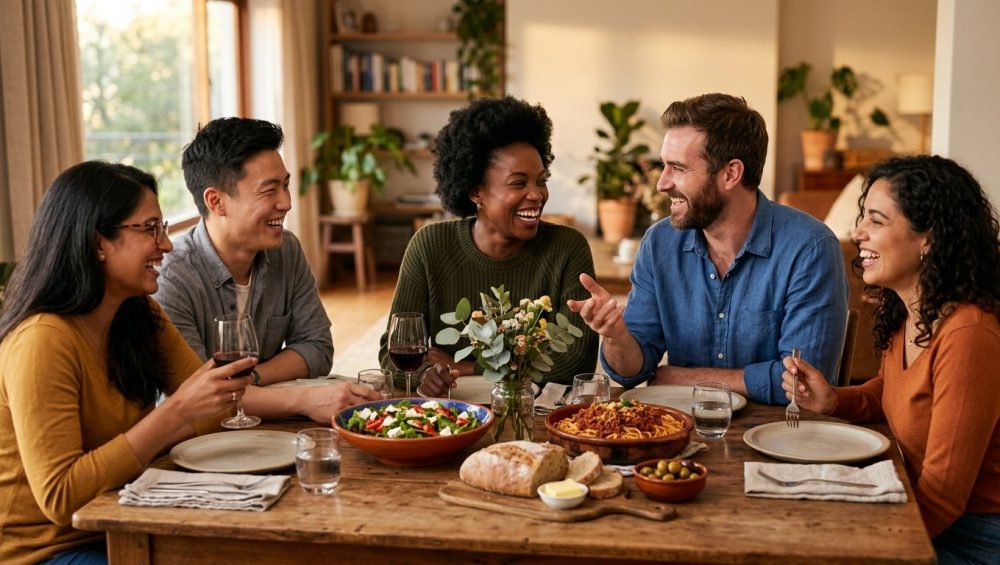
Your friends are not coming over to critique your knife skills. They are coming over because they like you, they want to spend time with you, and they want free food. That’s it. The entire concept of a “perfect host” is a toxic myth designed to sell you expensive linen napkins and anxiety. We are here to talk about mindful gatherings—which is just a polite, slightly woo-woo way of saying “eating good food with people you actually like without having a nervous breakdown in the process.”
What “Mindful Moments” Actually Means in the Real World
“Mindfulness” is a buzzword usually reserved for yoga retreats and expensive meditation apps, but in the context of hosting, it has a very practical translation: presence.
You cannot be present with your guests if you are sweating profusely over a breaking hollandaise sauce while silently cursing the day you were born. A mindful gathering means you have engineered the evening so that you can actually sit down, hold a glass of wine, and listen to the conversation. It means prioritizing the shared experience over culinary acrobatics.
If your menu requires you to be chained to the stove for the two hours your guests are in your home, you have failed the assignment. The goal is connection. The food is simply the vehicle that gets everyone to sit in the same room for a few hours. Straightforward, simple meals are not a compromise; they are a strategic choice that allows you to be a participant in your own party.
The Psychology of Gathering (The Hard Facts)
If you think I’m just giving you a motivational speech to make you feel better about your lack of Michelin stars, let’s look at the actual science. Extensive research into commensality—the act of eating together—shows that shared meals are one of the most vital components of human connection.
Studies from Oxford University’s Department of Experimental Psychology have consistently found that people who eat socially are significantly more likely to feel happy and satisfied with their lives. They have wider social networks and feel more engaged with their communities. Furthermore, research into social anxiety and hosting indicates that the primary stressor for hosts is the fear of negative evaluation regarding the food, while the primary desire for guests is simply social connection.
Read that again. You are stressing over the roast; your guests just want to talk to you. When you pivot your mindset from “I must impress them with my cooking” to “I want to create a warm space for us to connect,” the pressure evaporates. The food needs to be good, yes, but it does not need to be complicated.
Setting the Scene Without Losing Your Mind
You don’t need to hire an interior decorator to make your dining room feel welcoming. You just need to understand a few basic principles of human psychology and sensory experience. People feel comfortable when their environment is warm, unpretentious, and slightly forgiving.
The Atmosphere Hack: Lighting, Music, and Zero Pretense
Let me give you the greatest, cheapest hosting secret in the history of the world: turn off your overhead lights. I don’t care if you spent three hours scrubbing your baseboards or if your apartment is currently a disaster zone. Harsh, overhead lighting makes everyone feel like they are in a dentist’s waiting room.
Get some lamps. Light some unscented candles (never scented on a dining table—vanilla bean and garlic do not mix). Dim lighting instantly makes a room feel intimate, cozy, and forgiving of the dust bunnies you forgot to sweep up.
Next, put on a playlist. Silence is deafening when people first arrive and are trying to figure out where to put their coats. Music fills the awkward gaps. Keep it low enough that people don’t have to shout over it, but upbeat enough to keep the energy moving. Jazz, lo-fi beats, or acoustic covers are foolproof.
Finally, drop the pretense. Do not fold your napkins into swans. Do not bring out the “good china” if you are going to spend the whole night terrified someone will chip it. Authenticity is magnetic. If you serve a hearty stew out of a heavy pot in the middle of the table and hand everyone a spoon, they will feel like family.
The Equipment Check: Ditch the Toxic Trash
Before we even talk about food, we need to have a serious conversation about what you are cooking it in. As a home cook advocate, I have zero patience for the kitchenware industry peddling cheap, toxic garbage to beginners under the guise of “convenience.”
If you have a flimsy, scratched non-stick pan in your kitchen right now, I want you to walk over to your cabinets, take it out, and throw it in the trash. I am dead serious.
Those cheap non-stick coatings are made with PFAS (per- and polyfluoroalkyl substances), often referred to as “forever chemicals.” When you heat these pans too high, or when the coating inevitably scratches and chips, you are leaching these chemicals directly into your food. We are trying to nourish our friends, not serve them a side of synthetic polymers that take centuries to break down in the human body and the environment.
You do not need a 15-piece cookware set from a big-box store. You need a few high-quality, safe, durable pieces.
- Stainless Steel: It is indestructible, it builds incredible flavor through browning (the Maillard reaction), and it will outlast you.
- Cast Iron: The original non-stick. Yes, it requires a tiny bit of maintenance (just dry it and rub a drop of oil on it, it’s not rocket science), but it holds heat beautifully and is 100% non-toxic.
- Enameled Cast Iron: The undisputed king of the dinner party. A heavy Dutch oven (like Le Creuset, Staub, or a budget-friendly Lodge) is safe, versatile, and beautiful enough to carry straight from the oven to the center of your table.
Invest in safe gear. It is the foundation of good, mindful cooking.
The “I Can’t Cook” Menu Blueprint
When you are a beginner looking to host a stress-free gathering, your menu needs to be bulletproof. It needs to rely on time over technique. You are not going to be flipping delicate fish fillets or making a risotto that requires 30 minutes of continuous, aggressive stirring. We are utilizing the “Lazy Genius” approach to feeding people.
Rule #1: Assemble, Don’t Cook (The Art of the Board)
When guests arrive, they are usually hungry, and you usually need another 15 minutes to pull the main course together. Do not make hot appetizers. Frying arancini while trying to greet your friends is a one-way ticket to a meltdown.
Instead, assemble. A massive, beautiful charcuterie or cheese board is the ultimate hosting hack. It looks incredibly impressive, it takes zero cooking skills, and it acts as an interactive centerpiece that gives guests something to do while you finish up.
Get a big wooden board. Throw on two types of cheese (one hard, like aged cheddar or manchego; one soft, like brie or goat cheese). Add some cured meats if you eat meat. Fill the gaps with store-bought roasted nuts, olives, a bunch of grapes, and some good quality crackers or sliced baguette. You have just created a rustic, elegant starter in exactly four minutes.
Rule #2: One Pan to Rule Them All
The enemy of a joyful gathering is the mountain of dishes waiting for you at the end of the night. If your recipe requires a blender, three mixing bowls, a skillet, and a roasting pan, burn the recipe.
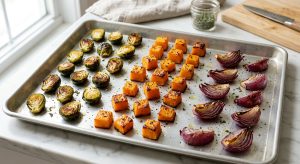
You want meals that happen in one vessel. Sheet pan meals, where proteins and vegetables roast harmoniously on a single baking sheet, are a beginner’s best friend. Dutch oven braises, where everything cooks slowly in one heavy pot, are even better. One pan means one thing to wash. It means your kitchen doesn’t look like a war zone when your guests walk in.
Rule #3: The Make-Ahead Magic
This is the golden rule of mindful hosting: Do the work when nobody is watching.
If a dish cannot be prepped, assembled, or entirely cooked before your doorbell rings, it does not belong on your dinner party menu. Period. You want recipes that actually taste better when they sit for a few hours, or things that can be shoved into the oven the second your guests sit down.
The Masterclass Recipes: Foolproof, Stress-Free, and Actually Delicious
Here are four recipes that embody everything we’ve talked about. They are practically impossible to mess up, they require minimal active time, and they yield professional-level results that will make your friends think you secretly attended culinary school.
The “I Spent All Day on This” Braised Short Ribs (Spoiler: You Didn’t)
Braised meats are the ultimate cheat code for home cooks. They sound incredibly fancy, but the technique is literally just: sear meat, add liquid, put a lid on it, and ignore it for three hours. The oven does 95% of the work, and your house will smell like a rustic French bistro.
The Strategy:
- The Sear: Get your heavy, non-toxic enameled Dutch oven hot. Add a splash of oil. Season 3-4 pounds of bone-in beef short ribs aggressively with salt and pepper. Sear them until they have a deep, dark brown crust on all sides. (This is the Maillard reaction—it’s where the flavor lives. Do not rush this. If it’s grey, it’s sad). Remove the meat.
- The Aromatics: Toss in a chopped onion, a couple of carrots, and some celery. Stir them in the beef fat until soft. Throw in a tablespoon of tomato paste and a few smashed garlic cloves. Cook for two minutes until it smells amazing.
- The Braise: Pour in a couple cups of dry red wine (use something you’d actually drink, not that “cooking wine” garbage from the vinegar aisle). Scrape up the brown bits from the bottom of the pot. Put the ribs back in. Add beef broth until the meat is halfway submerged. Toss in a sprig of rosemary or thyme.
- The Magic: Put the lid on. Put it in a 300°F (150°C) oven. Walk away for 3 hours.
When your guests arrive, the meat will be literally falling off the bone. Serve it straight out of the pot over some mashed potatoes or creamy polenta. You did 20 minutes of actual work, and you look like a culinary god.
The “Forgiving” Sheet Pan Roast Chicken and Veggies
Whole roast chickens can be intimidating because the breast dries out before the dark meat cooks. We are bypassing that entirely by using bone-in, skin-on chicken thighs. They are incredibly forgiving, almost impossible to dry out, and wildly cheaper than breasts.
The Strategy:
- The Base: Take a heavy-duty baking sheet. Toss chopped baby potatoes, carrots, and red onions with a generous glug of good olive oil, salt, pepper, and dried oregano.
- The Protein: Nestle 6-8 bone-in, skin-on chicken thighs among the vegetables. Pat the chicken skin completely dry with a paper towel (moisture is the enemy of crispy skin). Rub the skin with olive oil, salt, pepper, and a little smoked paprika.
- The Roast: Shove it into a 425°F (220°C) oven for about 40-45 minutes.
The chicken fat will render down and roast the potatoes in savory, schmaltzy goodness. Squeeze a fresh lemon over the whole pan right when it comes out of the oven. Bring the entire sheet pan to the table. It’s rustic, it’s gorgeous, and you only have one pan to clean.
The “Fancy but Fake” 15-Minute Pasta Al Limone
Sometimes you decide to have people over on a Tuesday night, and you don’t have three hours to braise meat. You need something fast, elegant, and cheap. Enter Pasta Al Limone. It requires five ingredients and 15 minutes, but it tastes like you’re dining on the Amalfi Coast.
The Strategy:
- The Pasta: Boil a pot of water. Salt it until it tastes like the sea. Drop in 1 pound of long pasta (spaghetti or linguine).
- The Sauce Foundation: While the pasta cooks, melt 4 tablespoons of butter in a large stainless steel skillet over medium heat. Zest two whole lemons directly into the butter. Let it sizzle for one minute.
- The Emulsion: This is the only “technique” you need to learn. One minute before the pasta is done, use tongs to drag the pasta directly from the water into the skillet with the lemon butter. Do not drain the pasta water. Pour about a cup of that starchy, salty pasta water into the skillet.
- The Finish: Turn the heat to low. Toss the pasta vigorously. Add a cup of freshly grated Parmigiano-Reggiano (do not use the powdered stuff in the green cylinder, I am begging you) and the juice of one lemon. Keep tossing. The starch from the water, the melted cheese, and the butter will forcefully bind together into a glossy, creamy sauce.
Serve immediately with extra black pepper. It is bright, rich, and takes less time to make than ordering takeout.
The “Dump and Stir” Dessert: Rustic Berry Galette
Baking pies is stressful. Crimping edges, blind-baking crusts, worrying about soggy bottoms—skip it. Make a galette. A galette is just a pie that gave up on trying to be perfect, which fits our mindful gathering philosophy perfectly.
The Strategy:
- The Cheat: Buy a high-quality, all-butter store-bought pie crust. I give you full permission. Let it thaw and unroll it onto a piece of parchment paper on a baking sheet.
- The Filling: In a bowl, toss 3 cups of fresh or frozen berries (blueberries, raspberries, blackberries) with 1/4 cup of sugar, a squeeze of lemon juice, and a tablespoon of cornstarch (to thicken the juices).
- The Assembly: Dump the berries into the center of the pie crust, leaving a 2-inch border all the way around. Fold the edges of the dough up and over the berries, pleating it loosely as you go. It’s supposed to look messy and rustic.
- The Bake: Brush the crust with a little milk or beaten egg, sprinkle with coarse sugar, and bake at 400°F (200°C) for 35-40 minutes until the crust is golden and the fruit is bubbling.
Serve it warm with a scoop of vanilla ice cream. It is effortlessly beautiful.
The Art of Mindful Hosting (How to Actually Talk to Your Guests)
Having a good menu is only half the battle. The other half is managing your time and your mindset so that you don’t greet your friends looking like you just survived a natural disaster.
The Pre-Party Timeline for Chronic Procrastinators
Hope is not a strategy. You need a timeline. Here is the foolproof countdown for people who usually leave everything to the last minute:
- Two Days Before: Finalize your menu. Do all your grocery shopping. Do not step foot in a grocery store on the day of the gathering; the weekend crowds will drain your will to live.
- The Night Before: Chop your vegetables. Make any marinades or sauces. Put them in airtight containers in the fridge. Set your table. Yes, set the table right now. Put out the plates, the glasses, and the napkins. It takes ten minutes, but doing it the night before is a massive psychological relief.
- Three Hours Before: Start your slow-cooking main course (like the braised ribs). Empty the dishwasher completely. (More on this later).
- One Hour Before: Assemble the cheese board, wrap it in plastic wrap, and leave it on the counter (cheese tastes better at room temperature anyway). Dim the lights. Put on the playlist.
- Thirty Minutes Before: Pour yourself a drink. Sit down. You are done. When the doorbell rings, you will be holding a beverage, smiling, and genuinely happy to see them.
Handling Dietary Restrictions Without a Meltdown
We live in an era of gluten-free, dairy-free, vegan, and keto diets. As a host, you want to be accommodating, but you are not running a custom-order diner.
The trick to handling dietary restrictions without losing your mind is modular cooking. Do not make three completely different meals. Make one meal where the components can be easily separated.
For example, if you have a vegetarian coming, don’t make a giant meat-heavy casserole. Make the sheet pan chicken, but roast the vegetables on a separate pan and add some hearty chickpeas or halloumi cheese to the vegetable pan. If someone is gluten-free, serve the braised ribs with mashed potatoes instead of crusty bread.
Always ask your guests about allergies a week in advance. “I’m so excited to have you over! Let me know if you have any allergies or dietary restrictions I should keep in mind.” It shows you care, and it prevents the terrifying moment of serving a peanut sauce to someone carrying an EpiPen.
The Clean-Up Strategy (Because You’re Not a Maid)
Nothing ruins the zen of a mindful gathering quite like looking at a sink piled high with crusted pots. You need a strategy to mitigate the damage.
- The Empty Dishwasher Rule: I mentioned this in the timeline, but it bears repeating. Start the party with a completely empty dishwasher. As you use prep bowls and spoons, put them directly into the dishwasher. Do not put them in the sink.
- The Soak: When you serve the food, take the 30 seconds to fill your cooking pots with hot water and a squirt of dish soap. Leave them on the stove. By the time your guests leave, whatever is stuck to the bottom will wipe right out.
- The Hard Stop: Once dinner is over, clear the plates to the kitchen. Stack them neatly. Put the leftover food in the fridge. Then stop. Do not spend 45 minutes scrubbing pans while your guests sit alone in the living room. Return to your friends. The dishes will patiently wait for you until tomorrow morning.
Building Your Low-Stress Gathering Toolkit
You don’t need a kitchen full of gadgets to host well, but you do need a few reliable tools and pantry staples that will save you when things go sideways.
Essential (and Safe!) Cookware for the Beginner Host
We already covered the anti-toxic rant, but here is the specific, minimal gear list you need to pull off any dinner party:
- A 5- to 7-Quart Enameled Dutch Oven: The workhorse. It braises, it boils pasta, it bakes bread, it makes soups. It is an investment, but a good one will literally outlive you.
- A 10- or 12-inch Heavy-Bottomed Stainless Steel Skillet: For searing meats, sautéing vegetables, and making pan sauces.
- A Real Chef’s Knife: You only need one good knife. An 8-inch chef’s knife (brands like Victorinox are incredibly affordable and reliable) will do 99% of your kitchen tasks. Keep it sharp; a dull knife is dangerous and frustrating.
- A Reliable Meat Thermometer: This is the ultimate stress-reducer. You will never have to guess if the chicken is done or if the steak is overcooked. An instant-read thermometer (like a Thermapen or a cheaper alternative) guarantees perfectly cooked meat every single time. It takes the anxiety out of the equation.
- Two Heavy-Duty Half-Sheet Pans: Flimsy baking sheets warp in high heat and cook unevenly. Get heavy-duty aluminum sheet pans (like Nordic Ware). They cost about $15 and are essential for roasting.
The Pantry Staples That Save Lives (Or At Least Dinner)
Having a well-stocked pantry means you can elevate simple, cheap ingredients into something that tastes restaurant-quality. Keep these on hand:
- Flaky Finishing Salt (like Maldon): This is different from kosher salt used for cooking. You crush a pinch of flaky salt over your finished dish right before serving. It adds a physical crunch and a burst of flavor that makes food taste instantly “fancy.”
- Good Extra Virgin Olive Oil: Keep the cheap stuff for cooking, but buy one bottle of really good, grassy, peppery olive oil to drizzle over salads, pasta, or your cheese board.
- Real Parmigiano-Reggiano: Buy the wedge. Grate it yourself. The rind can be thrown into soups and stews to add massive umami flavor.
- Dijon Mustard and Acid: A spoonful of Dijon, a splash of apple cider vinegar or lemon juice, and some olive oil will make a better salad dressing in 30 seconds than anything you can buy in a plastic bottle. Acid is the secret to waking up dull food. If your stew or sauce tastes flat, it usually doesn’t need more salt; it needs a squeeze of lemon.
The Final Verdict: Your Table, Your Rules
At the end of the day, the food you serve is secondary to the atmosphere you create. If you burn the chicken, order pizzas, pour more wine, and laugh about it. Some of the most memorable, joyful gatherings I’ve ever been a part of featured disastrous culinary failures that forced everyone to crowd around the kitchen island eating takeout straight from the cartons.
Mindful moments aren’t born from perfection; they are born from ease, authenticity, and the simple willingness to open your door and say, “Come on in, I’m so glad you’re here.”
Stop apologizing for your home. Stop apologizing for your cooking. Ditch the toxic pans, embrace the sheet pan meal, turn down the overhead lights, and reclaim the dinner party for what it was always meant to be: a simple, joyful excuse to sit down with the people you love. Now go empty your dishwasher and invite someone over.