An incredibly comprehensive, highly-researched masterclass article crafted in the “Sassy Sous-Chef” persona, adhering strictly to your formatting and content guidelines.
Listen, I know exactly why you’re here. You just spent an hour staring at a recipe blog, chopped half an onion, cried your makeup off, and somehow managed to set the smoke detector off while boiling water. You’re currently considering ordering takeout for the fourth time this week because your chicken came out looking like a pale, rubbery eraser, and your kitchen looks like a war zone.
Take a deep breath. Pour yourself a glass of whatever gets you through a Wednesday evening.
I’m not here to bore you with a ten-page story about how I learned to make pasta at my imaginary nonna’s knee in the hills of Tuscany. I learned to cook by ruining dinner. I learned by scraping burnt rice off the bottom of cheap pots, serving raw poultry to terrified guests, and spending way too much money on useless kitchen gadgets that ended up in the local thrift store. But here is the absolute, undeniable truth that pretentious culinary bros don’t want you to know: anyone can cook like an expert. You do not need a culinary degree. You do not need a twenty-burner commercial stove. You just need to stop making the same rookie mistakes, learn a few basic principles of food science, and get out of your own way.
We are going to systematically dismantle your kitchen anxiety. I’m going to give you the smart, time-saving weekday hacks that will keep you fed Monday through Friday, so you have the energy to tackle those mind-blowing, elaborate weekend projects. Buckle up. Class is in session.
The Toxic Gear Trap: Purging Your Kitchen Wasteland
Before we even talk about food, we need to have a serious intervention about the absolute garbage you are cooking it in. This is my hill to die on, and I will not apologize for it.
If I walk into your kitchen and see a flimsy, scratched-up, peeling non-stick pan from 2014, I am throwing it in the trash. I don’t care if it was a gift. I don’t care if it’s your “lucky egg pan.” Cheap, toxic kitchenware is the enemy of good food and, frankly, your health. For decades, the cookware industry sold us on the convenience of Teflon (PTFE) and pans coated with “forever chemicals” (PFAS). When these pans are heated past 500°F (260°C)—a temperature you can easily hit if you leave a pan on a high burner for just a few minutes—they start breaking down and releasing toxic fumes. Worse, when that coating inevitably scratches and peels, it flakes directly into your food. You are literally seasoning your scrambled eggs with mystery polymers. Absolutely not.
The Holy Trinity of Safe, Lifetime Cookware
You do not need a 14-piece cookware set. You need three good pans. That’s it. Stop buying cheap aluminum pans that warp the second they look at cold water. Invest in gear that will outlive you.
1. The Heavyweight Champion: Cast Iron Cast iron is cheap, practically indestructible, and holds heat like a dragon’s belly. Yes, it requires a tiny bit of maintenance (wash it, dry it immediately, rub a drop of oil on it—it’s not rocket science), but it is the ultimate tool for getting a steakhouse-quality crust on your weekend ribeye. It is naturally non-stick once properly seasoned, and it leaches zero toxic chemicals into your food.
2. The Restaurant Secret: Carbon Steel If cast iron is a heavy-duty truck, carbon steel is a sports car. It’s what professional kitchens actually use. It seasons exactly like cast iron, making it wonderfully non-stick, but it is lighter, heats up faster, and responds to temperature changes much more quickly. This is your weekday hero for searing chicken thighs, stir-frying vegetables, or sliding out a perfect French omelet. It requires the same basic care as cast iron, but the payoff in your daily cooking efficiency is astronomical.
3. The Workhorse: Tri-Ply Stainless Steel For everything else—boiling pasta, simmering acidic tomato sauces (which eat away at cast iron seasoning), or making pan sauces—you need high-quality stainless steel. Look for “tri-ply” or “fully clad,” meaning it has a core of aluminum sandwiched between stainless steel all the way up the sides, not just on the bottom disk. This prevents those infuriating hot spots that scorch your onions on one side of the pan while leaving the other side raw.
When you upgrade your gear to safe, durable materials, your food cooks more evenly, your sear is better, and you stop ingesting flaking plastic. Win-win.
Prep Panic: Mastering “Mise en Place” Without the Pretense
Let’s talk about the number one reason you hate cooking on a Tuesday night: you are trying to chop vegetables, read a recipe on your phone, and stir a boiling pot simultaneously. This is a recipe for a meltdown.
The French call it mise en place, which literally translates to “putting in place.” Pretentious chefs use it to sound superior, but the concept is just basic kitchen survival. It means having all your ingredients prepped, measured, and ready to go before you even turn on the stove.
The “Chop Now, Cry Later” Strategy
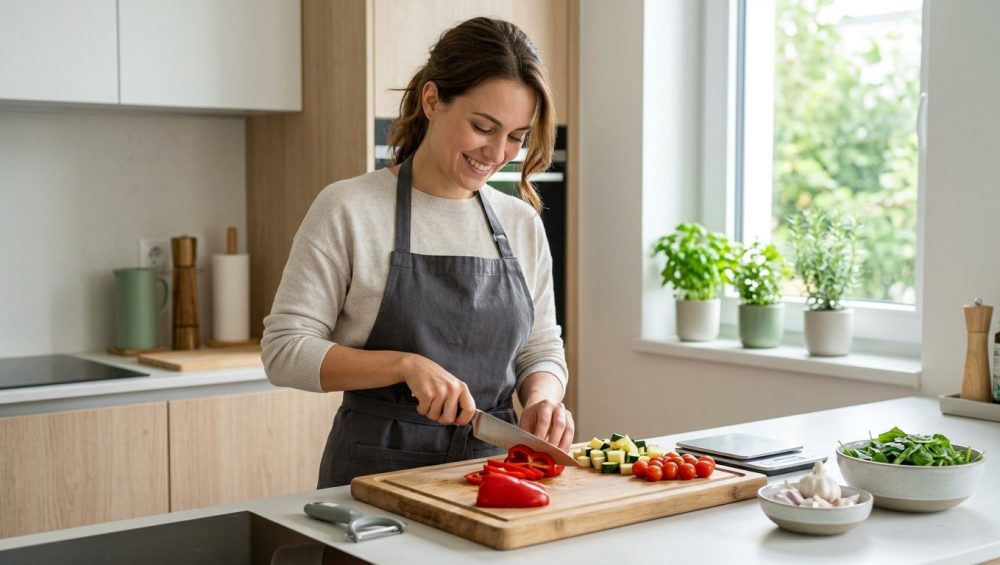
When you are tackling a complex weekend recipe—say, a slow-braised short rib ragu—take your time. Pour the wine. Put on a podcast. Chop your onions, mince your garlic, measure your spices into little bowls, and line them up. By separating the prep from the cooking, you eliminate the panic. You can actually watch how the food behaves in the pan instead of frantically hacking at a carrot while your garlic burns to a bitter, black crisp.
The Weekday Shortcut Arsenal
Now, let’s be realistic. It is 6:00 PM on a Wednesday. You just worked nine hours, traffic was a nightmare, and the idea of spending forty-five minutes doing mise en place makes you want to weep. Time is money, and your weeknight sanity is priceless.
This is where we weaponize the grocery store. I give you full permission to cheat.
1. Frozen Aromatics are Your Best Friend Stop peeling and mincing garlic on a Wednesday. Buy the little frozen cubes of crushed garlic and ginger. They are flash-frozen at peak freshness, contain zero weird preservatives, and you can pop them straight into a hot pan. They will save you ten minutes of sticky fingers and a smelly cutting board.
2. Pre-Chopped Mirepoix Mirepoix (the holy trinity of onions, carrots, and celery) is the base of almost every soup, stew, and sauce. Most grocery stores sell tubs of it pre-chopped in the produce section. Yes, it costs two dollars more. Buy it anyway. Reclaim your evening.
3. The Deli Container System If you insist on chopping your own veggies, do it on Sunday. Chop three onions, a bunch of celery, and some bell peppers. Store them in hard-plastic, reusable deli containers (the exact ones restaurants use) in your fridge. When Tuesday rolls around, your mise en place is already done. You just grab a handful and throw it in the pan.
Temperature Tantrums: Stop Boiling Your Steaks
One of the most tragic rookie mistakes I see is a complete misunderstanding of heat. You are either terrified of your stove and cooking everything on a tepid “medium-low,” resulting in sad, gray, steamed meat, or you crank everything to “high” and wonder why the outside of your chicken breast is charcoal while the inside is raw salmonella-pink.
The Science of the Sear: The Maillard Reaction
If you want your food to taste like it came from a restaurant, you need to understand the Maillard reaction. This is the chemical reaction between amino acids and reducing sugars that gives browned food its distinctive, complex flavor. It’s what makes bread crusty, coffee dark, and seared steak taste like heaven.
Here is the absolute critical fact: the Maillard reaction does not begin in earnest until the surface temperature of the food reaches about 285°F (140°C). Furthermore, water boils and turns to steam at 212°F (100°C).
Why does this matter? Because moisture is the enemy of browning.
If you take a steak out of a plastic package, dripping with liquid, and throw it into a pan, the heat of the pan must first evaporate all that surface moisture before the temperature can rise above 212°F. By the time the water is gone and the meat can finally start to brown, the inside is completely overcooked. You have effectively boiled your steak.
The Fix: Pat your proteins aggressively dry with paper towels before cooking. If you have the time (especially on weekends), salt your meat and leave it uncovered on a wire rack in the fridge overnight. The fridge acts as a dehydrator, drying out the surface for an absolutely legendary sear.
The “Overcrowding” Disaster
You have a pound of diced chicken, and you dump it all into a 10-inch skillet at once. The temperature of the pan plummets. The chicken releases its juices, and because the pan isn’t hot enough to evaporate them quickly, your chicken ends up simmering in a pool of its own cloudy liquid.
The Fix: Cook in batches. It feels like it takes longer, but it actually saves time because the meat sears properly and quickly instead of slowly steaming. Leave at least a quarter-inch of space between pieces of meat in the pan.
The Magic of the Meat Thermometer
If you are poking a chicken breast with your finger and trying to guess if it’s done based on how “springy” it feels, you are playing a dangerous game of gastrointestinal roulette. Professional chefs use thermometers. You should too.
A staggering number of home cooks refuse to use a digital instant-read thermometer, relying instead on cutting meat open (letting all the juices run out) or just cooking it into shoe leather “to be safe.”
Buy a digital instant-read thermometer. It costs twenty dollars. It will instantly elevate your cooking because you will pull your chicken at exactly 160°F (knowing carryover cooking will take it to the safe 165°F), your pork at a juicy 145°F, and your medium-rare steak at 130°F. No more guessing. No more dry, chalky dinners.
Flavor Fails: Why Your Food Tastes Like Sadness
You followed the recipe. You bought the expensive ingredients. But you take a bite, and it just tastes… flat. It’s boring. It lacks that “punch” you get at a good restaurant. You are likely failing in three critical areas: salt, acid, and umami.
You Are Under-Salting (And Using the Wrong Salt)
Let’s clear something up right now: the tiny pinch of salt you are adding at the very end of cooking is doing absolutely nothing. Salt is not a flavor itself; it is a flavor enhancer. It suppresses bitterness and amplifies sweet and savory notes.
First, throw away your iodized table salt. Right now. Iodized salt has a harsh, metallic chemical taste, and the grains are so fine that it is incredibly easy to over-salt your food.
Switch entirely to Kosher salt (Diamond Crystal or Morton’s are the gold standards). The flaky, coarse texture of Kosher salt allows you to grab it with your fingers and distribute it evenly over food. Because the flakes take up more volume, a tablespoon of Kosher salt actually contains significantly less sodium than a tablespoon of table salt, giving you a much wider margin of error.
The Fix: Salt your food at every stage of the cooking process. Salt the onions when they hit the pan (it draws out their moisture and helps them soften). Salt the sauce as it simmers. Taste it. If it tastes bland, it needs salt. Don’t be afraid of it.
The Missing Link: Acid
If a dish tastes heavy, rich, or just feels like it’s missing “something,” your first instinct might be to add more salt. Stop. Nine times out of ten, what it actually needs is acid.
Acid brightens food. It cuts through fat and wakes up the palate. Professional kitchens use acid constantly, but recipes designed for home cooks rarely emphasize it enough.
The Fix: Keep lemons, limes, and a variety of vinegars (apple cider, white wine, rice vinegar) stocked at all times. If your rich beef stew tastes a little muddy, stir in a splash of apple cider vinegar right before serving. If your pan-seared salmon feels too heavy, hit it with a squeeze of fresh lemon juice. That bright, acidic finish is the difference between amateur hour and a restaurant-quality meal.
Umami Hacks for the Weekday Warrior
Umami is the fifth basic taste—the deep, savory, meaty flavor found in mushrooms, tomatoes, Parmesan cheese, and soy sauce. When you simmer a stock for twelve hours on a Sunday, you are building umami. But on a Wednesday, you don’t have twelve hours.
The Fix: Build a secret arsenal of “umami bombs” in your fridge door.
- Anchovy Paste: Squeeze a dab into your tomato sauce or beef stew. I promise it won’t taste like fish; it will just taste incredibly savory and rich.
- Soy Sauce: A splash of soy sauce in a chili or a bolognese sauce adds incredible depth.
- Tomato Paste: Always cook it down in the pan for a few minutes until it turns a rusty brick-red color before adding your liquids. It caramelizes the sugars and intensifies the savory notes.
- MSG: Yes, MSG. The 1980s smear campaign against Monosodium Glutamate was rooted in junk science and xenophobia. MSG is naturally occurring in tomatoes and cheese, and it is perfectly safe. A tiny pinch in your savory dishes will blow your mind.
Timing Disasters: The “Cold Side Dish” Syndrome
There is a special kind of panic that sets in when your beautiful, expensive steak is perfectly rested, but the roasted potatoes are still rock-hard, and the asparagus hasn’t even been washed yet. Managing the timing of multiple dishes is the hardest part of cooking, but it can be hacked.
Reverse Engineering Your Meal
Amateurs start cooking everything at once and hope it all finishes together. That is a recipe for disaster. You need to reverse engineer your timeline based on the resting time of your protein.
Let’s say dinner is at 7:00 PM. You are making roast chicken, mashed potatoes, and green beans.
- The Protein Anchor: A whole roast chicken needs to rest for at least 15 to 20 minutes after it comes out of the oven. If dinner is at 7:00, the chicken needs to be out of the oven by 6:40. If it takes an hour to roast, it goes in at 5:40.
- The Starch: Mashed potatoes can be made well in advance and held warm. You can boil and mash them at 6:00 PM.
- The Quick Veg: Green beans take exactly five minutes to sauté. They don’t go into the pan until 6:50 PM, while the chicken is resting.
The Keep-Warm Tricks
Stop stressing about serving everything piping hot off the stove. Restaurants don’t do that, and neither should you.
- The Cooler Trick: If you are cooking a large piece of meat (like a pork shoulder or a brisket) and it finishes an hour early, wrap it tightly in foil, wrap that in a clean towel, and place it in an empty beer cooler. It will stay dangerously hot for hours while you finish your sides.
- The Double Boiler Hold: If your mashed potatoes or sauces finish early, place them in a heat-proof bowl set over a saucepan of barely simmering water (a makeshift double boiler). Cover with plastic wrap. They will stay perfectly warm without scorching on the bottom.
- Warm Your Plates: Serve hot food on hot plates. Run your dinner plates under hot water and dry them, or pop them in a low 200°F oven for five minutes. It buys you a massive window of grace if your timing is slightly off.
The Cleanup Catastrophe: Clean As You Go or Drown
I have seen the aftermath of a rookie cooking session. Every bowl in the house is dirty, there is flour on the ceiling, and the sink looks like a crime scene. Cooking is only fun if you don’t have to spend two hours scrubbing pots afterward.
The Only Rule That Matters: Clean As You Go
This is not a suggestion; this is a mandatory law of the kitchen. You must clean as you go.
When your onions are sautéing for five minutes, you do not stand there staring at them. You wash the cutting board. You wipe down the counter. When the chicken goes into the oven for twenty minutes, you load the dishwasher. By the time the food is plated, the only dirty items left in the kitchen should be the pan you cooked in and the plates you are eating off of.
Keep a “garbage bowl” on your counter. Rachael Ray popularized this, and as much as I roll my eyes at daytime TV cooking, she was absolutely right. Tossing your onion skins, carrot peels, and empty wrappers into a dedicated bowl on the counter saves you fifteen trips to the trash can and keeps your workspace pristine.
One-Pan Wonders for Weekday Survival
For the love of all that is holy, on a weekday, limit your footprint. Do not use three pots when one will do.
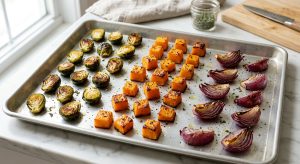
Invest your time in mastering the sheet pan meal. Toss your protein (sausages, chicken thighs, salmon) and your hearty vegetables (broccoli, potatoes, carrots) in olive oil, salt, and spices. Spread them evenly on a heavy-duty rimmed baking sheet (do not overcrowd!), and roast them at 425°F. The oven does all the work, the Maillard reaction takes care of the flavor, and your cleanup consists of washing one single pan.
Alternatively, embrace the heavy-bottomed Dutch oven. You can sear your meat, sauté your aromatics, deglaze with wine, add your liquids, and simmer an entire meal in one vessel. Less cleanup means less dread, which means you will actually want to cook again tomorrow.
Final Thoughts from the Pass
Cooking is not magic. It is a series of basic techniques, a little bit of chemistry, and a lot of trial and error. You are going to burn things. You are going to over-salt a soup. You are going to shatter a glass on the floor while trying to flip a pancake. It happens to literally everyone.
But by ditching the toxic, cheap gear, respecting the science of heat, aggressively seasoning your food, and working smart instead of hard on a Tuesday night, you will transform your kitchen from a room of anxiety into a place of power. You have the tools. You have the knowledge. Now go pour that glass of wine, turn on the stove, and show that dinner who is boss. You’ve absolutely got this.