The Universal Tragedy of the Weeknight Tofu Dinner
Let’s get one thing straight right out of the gate: most home-cooked tofu is an absolute tragedy. I know it, you know it, and your disappointed dinner guests certainly know it. You buy a pale, jiggly block of compressed soybeans with the best of intentions, dreaming of those perfectly caramelized, shatteringly crisp cubes you get at your favorite local pan-Asian restaurant. Instead, you end up with a pan full of sad, crumbly, waterlogged mush that tastes exactly like what it is: wet sponge.
Look, I get it. It is Tuesday night, you are exhausted, and the absolute last thing you want to do is coax flavor out of a notoriously stubborn ingredient. But as your resident Sassy Sous-Chef, I am here to tell you that you do not need a culinary degree, a professional kitchen, or a deep fryer to make mind-blowing plant-based meals. You just need to understand basic food science. If you want to stop eating bland tofu, you have to fundamentally change its cellular structure before it ever hits the frying pan.
The global tofu market is exploding, projected to reach a staggering $4.9 billion by 2034, driven not just by strict vegans, but by everyday flexitarians looking to incorporate more plant-based proteins into their weekly rotation. People are buying this stuff in record numbers, yet the vast majority of home cooks are completely butchering the execution. They take it out of the package, pat it weakly with a paper towel, and throw it into a lukewarm pan. It is a culinary crime. The secret to achieving a dense, meaty, flavor-absorbing texture isn’t found in an expensive marinade or a magical cooking technique. It is found in your freezer.
The Problem With “Straight-Out-of-the-Package” Tofu
To understand why the freezer trick works, we first have to understand why standard tofu prep fails so miserably. Tofu, particularly the firm and extra-firm varieties most commonly used in stir-fries and baking, is essentially a highly saturated suspension of soy protein and water. Even when you buy the “extra-firm” variety, that block is still holding onto a massive amount of liquid.
One of the most common rookie kitchen mistakes is attempting to marinate a block of tofu that is already completely saturated with its own packing water. Think of tofu like a household cleaning sponge. If you take a sponge that is already completely soaked with tap water and drop it into a bowl of soapy water, it cannot absorb the soap. It is already at maximum capacity. This is exactly what happens when you drop wet tofu into a soy sauce marinade. The flavor just slides right off the surface, leaving the interior completely bland and tasteless.
Furthermore, all that internal water is the enemy of crispiness. When you put wet tofu into a hot pan with oil, the water immediately begins to seep out and evaporate. Instead of searing and developing a beautiful, golden-brown crust, your tofu ends up steaming in its own juices. The resulting texture is rubbery on the outside and mushy on the inside. You can press it for an hour under a stack of heavy cookbooks, but conventional pressing only removes the surface water and a small fraction of the internal moisture. To truly transform the block, we need to bring in the heavy artillery: thermodynamics.
The Kitchen Science: What Actually Happens When You Freeze Tofu?
I have zero patience for pretentious chef-speak, so let’s break down the science of freezing tofu using a concept that actually makes sense. Imagine that a block of tofu is made up of millions of microscopic water balloons. The rubber of the balloon represents the soy protein network, and the water inside the balloon is, well, the water suspended within the tofu. This intricate web of protein and water is what gives fresh tofu its smooth, uniform, and somewhat delicate texture.
Now, think back to your middle school science class. What happens to water when it freezes? It expands. Specifically, water expands by about 9% when it turns into ice. When you place a block of tofu into the freezer, the water trapped inside those millions of tiny soy protein balloons begins to freeze and expand. As the ice crystals grow, they act like microscopic daggers, violently stretching, tearing, and puncturing the delicate protein walls.
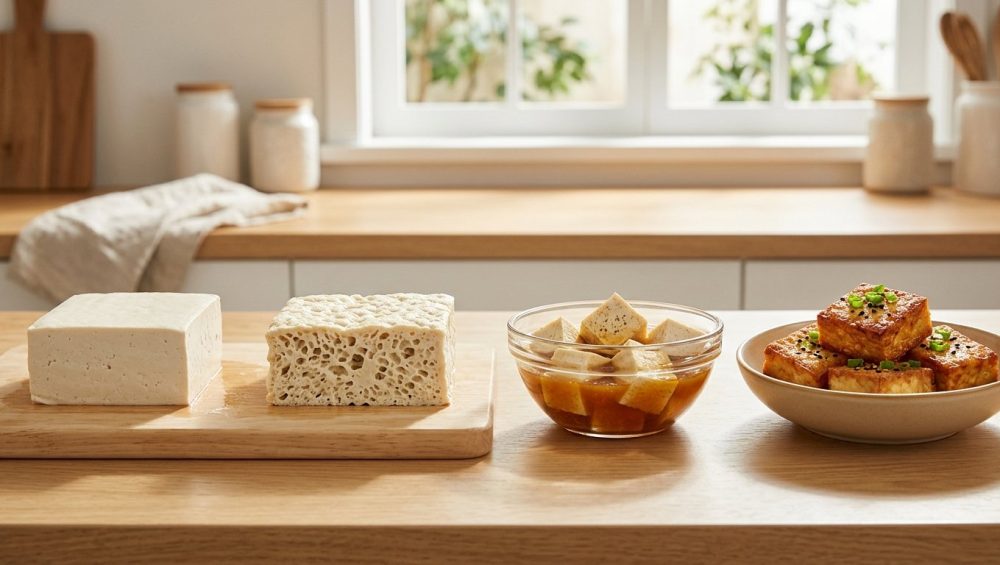
When you eventually remove the tofu from the freezer and allow it to thaw, those sharp ice crystals melt back into liquid water. But the damage to the protein structure has already been done. The “balloons” have been popped. The water easily drains out of the newly formed structural holes, leaving behind a highly porous, cavernous, sponge-like network of soy protein.
This structural transformation achieves two miraculous things. First, because the water can now easily escape, you can press the tofu to remove significantly more moisture than you ever could with a fresh block. Second, those empty microscopic caverns are now perfectly primed to act as a vacuum. When you introduce a marinade to this newly formed sponge, the liquid eagerly rushes into the empty pockets, infusing the tofu with flavor all the way to its absolute core. The resulting texture is dramatically denser, chewier, and remarkably meat-like.
The Sassy Sous-Chef’s Golden Rules of Freezing
Before you go haphazardly throwing soy products into your icebox, there are a few strict rules we need to establish. Not all tofu is created equal, and the way you freeze it dictates the final texture.
Rule 1: Choose the Right Firmness
This method is exclusively designed for Firm, Extra-Firm, or Super-Firm tofu. Do not, under any circumstances, attempt to freeze Silken or Soft tofu. Silken tofu has a completely different, unpressed protein structure designed for blending into smoothies or gently warming in soups. If you freeze silken tofu, the expanding ice crystals will completely obliterate whatever fragile structure it has, and upon thawing, it will disintegrate into a gritty, unappetizing slurry. Stick to the sturdy stuff.
Rule 2: Do NOT Drain It Before Freezing
This is where many home cooks get it wrong. Your instinct might be to open the package, drain the water, and press the tofu before freezing it. Stop right there. Remember the science we just discussed? We want the water. The more water there is inside the block, the larger the ice crystals will be. Larger ice crystals mean larger structural holes, which translates to a much meatier, spongier final texture. Leave the block sealed in its original plastic packaging, completely submerged in its packing water.
Rule 3: Freeze the Whole Block, Not Cubes
While it might seem more efficient to pre-cut the tofu into bite-sized cubes before freezing, this actually works against you. When you freeze small cubes, the cold penetrates them very quickly. Fast freezing creates very small ice crystals. When you freeze the entire, solid block, the freezing process happens much more slowly, especially in the center of the block. Slow freezing encourages the formation of massive, jagged ice crystals, which causes maximum damage to the protein structure. Keep the block whole for the best results.
The Step-by-Step “Zero Effort” Freezer Protocol
As a busy professional, I firmly believe that time is money. I refuse to advocate for weekday recipes that require you to babysit a cutting board for an hour. This prep method is the absolute ultimate cure for weeknight cooking anxiety because it requires literally zero active time. Let the freezer do the heavy lifting.
Step 1: The Deep Freeze
When you get home from the grocery store, simply take the unopened, water-filled plastic tub of firm tofu and throw it directly into the freezer. That is it. That is the entire first step. You need to leave it in there for an absolute minimum of 12 to 24 hours to ensure it is frozen solid all the way through to the core. I highly recommend buying three or four blocks at a time and just keeping them in the freezer permanently so you always have them on standby.
Step 2: The Thaw
When you are ready to cook, you need to thaw the block completely. If the center is still icy, it will not press correctly. You have three options here, depending on your level of desperation:
- The Planner’s Method (Best): Move the frozen block from the freezer to the refrigerator 24 to 48 hours before you plan to cook it. It will thaw gently and evenly.
- The Hot Water Bath (Faster): Submerge the unopened package in a large bowl of hot tap water. Change the water every 20 minutes as it cools down. This takes about an hour or two.
- The Microwave Rescue (Fastest): If it is 6:00 PM and you need dinner immediately, remove the frozen tofu from its plastic packaging (do not microwave the plastic!), place it in a microwave-safe bowl, and nuke it on the defrost setting for 8 to 12 minutes, flipping it halfway through. Be careful, as the escaping water will be boiling hot.
Step 3: The Press
Once the block is entirely thawed, it will look a little strange—slightly yellowed and noticeably porous. This is exactly what you want. Now, you must expel the water. Because the protein structure has been compromised, you can literally pick up the block and gently squeeze it between your hands like a giant yellow sponge. A massive amount of water will pour out.
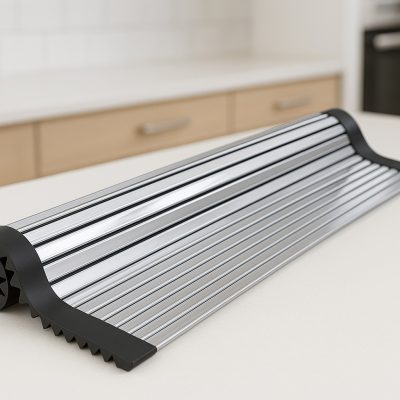
While you can stop there, or stack heavy books on a plate, investing in the genius of a tofu press will save you from a precarious kitchen disaster and yield the driest possible block. Give it 15 to 20 minutes in a dedicated press, and you will be left with a dense, dry, flavor-hungry canvas.
The “Double Freeze” Trick for Advanced Culinary Wizards
If you thought freezing your tofu once was a game-changer, wait until you hear about the double freeze. This technique has been gaining massive traction in modern plant-based cooking circles for its ability to mimic the exact texture of chicken or braised beef.
The concept is exactly what it sounds like: you freeze the block, thaw it completely, and then—without opening the package or pressing it—you put it right back into the freezer for a second round.
Why on earth would you do this? Because the first freeze-thaw cycle creates the initial pockets and tears the protein structure. When you freeze it a second time, the water pools into those newly formed pockets and freezes again, expanding the holes even further and creating distinct, separated layers within the block.
When you finally thaw and press a double-frozen block, it does not just slice cleanly; it literally shreds and flakes apart in layered chunks, exactly like the muscle fibers of cooked poultry. This makes it the ultimate, unrivaled choice for vegan fried chicken, heavy stews, or slow-cooked curries where you want the protein to break apart naturally and absorb thick, rich sauces.
Stop Cooking on Toxic Trash: A Gear Intervention
Before we move on to flavoring and cooking, I need to have a very serious word with you about your kitchen equipment. I have a strict “No-Go” rule on toxic gear, and I will not sit here and teach you the intricate cellular science of freezing tofu just for you to sear it on a chemical slick of mystery metals.
If you are still cooking on a cheap, lightweight non-stick pan that is actively peeling, flaking, or looks like it survived a meteor shower, throw it in the trash today. Right now. I am entirely serious. You are ingesting degraded polymer coatings, and worse, those damaged pans cannot hold the high, even heat required to get a proper sear on your perfectly prepped tofu.
I constantly preach about the essential tools every beginner needs, and a heavy-duty, high-quality skillet is at the absolute top of that list. You need a pan with serious thermal mass—something that won’t drop in temperature the second you add your cold ingredients.
Invest in a solid carbon steel wok or a high-quality, multi-clad stainless steel skillet. Yes, I know you are terrified of your food sticking to stainless steel. But please, for the love of all things culinary, stop ruining your nonstick pans with aerosol cooking sprays that leave impossible-to-remove polymerized residues. All you need to do is learn heat control.
If you preheat a stainless steel pan properly until water droplets dance and skitter across the surface (the Leidenfrost effect), and then add your oil, it becomes virtually non-stick. It will give your frozen-and-pressed tofu a shatteringly crisp, golden crust that a cheap Teflon pan could never even dream of achieving.
Marinades That Actually Penetrate the Sponge
Now that you have your dry, porous, sponge-like tofu and a safe pan to cook it in, it is time to build flavor. Because you have removed the water barrier, your tofu will now absorb marinades with terrifying efficiency. You no longer need to let it sit in the fridge for four hours; 15 to 20 minutes on the kitchen counter is more than enough to infuse it to the core.
However, you cannot just pour plain soy sauce over it and call it a day. A great marinade requires a precise balance of four elements: Fat, Acid, Salt, and Umami.
The Flavor Equation
- Fat: Tofu is naturally very low in fat, which is why it can taste dry if not properly dressed. You need a carrier oil in your marinade to coat the protein and help it crisp up later. Toasted sesame oil, chili oil, or a neutral avocado oil work wonders.
- Acid: Acid brightens the dish and cuts through the heavy soy flavor. Rice vinegar, fresh lime juice, or even a splash of apple cider vinegar will wake up the palate.
- Salt & Umami: This is your savory backbone. Soy sauce, tamari, miso paste, or liquid aminos are essential. Do not be shy here; tofu is a blank canvas that desperately needs aggressive seasoning.
- Aromatics: Fresh minced garlic, grated ginger, and scallions are non-negotiable. If your spices turn into hard bricks in the back of your pantry, throw them away and buy fresh ones. Stale garlic powder will ruin your hard work.
The Sassy Sous-Chef’s Go-To Weeknight Glaze:
Whisk together 3 tablespoons of soy sauce, 1 tablespoon of toasted sesame oil, 1 tablespoon of rice vinegar, 1 tablespoon of maple syrup (for caramelization), a heavy grating of fresh ginger, and two cloves of minced garlic. Toss your torn, frozen-and-pressed tofu chunks in this mixture. Watch in amazement as the liquid disappears into the tofu within minutes.
Cooking Techniques for Unapologetic Crunch
You have frozen it. You have thawed it. You have pressed it. You have marinated it. Now, we bring the heat. The goal here is a deeply caramelized, unapologetically crunchy exterior that gives way to a dense, chewy, satisfying interior.
Method 1: The Cornstarch Pan-Fry
This is the gold standard for stir-fries. After your tofu has absorbed its marinade, toss the chunks in a bowl with 2 to 3 tablespoons of cornstarch or potato starch. The starch binds to the residual moisture on the surface of the tofu, creating a delicate batter. Heat a generous glug of neutral oil in your carbon steel or stainless steel skillet over medium-high heat. Add the tofu in a single layer—do not crowd the pan, or they will steam. Let them sear undisturbed for 3 to 4 minutes per side until deeply golden and crispy.
Method 2: The High-Heat Bake
If you refuse to stand over a hot stove, the oven is your best friend. Preheat it to 400°F (200°C). Toss your marinated tofu with a little extra oil and spread the pieces evenly on a heavy-duty baking sheet lined with parchment paper. Bake for 25 to 30 minutes, flipping halfway through. The dry heat of the oven will evaporate any lingering moisture, shrinking the chunks slightly and leaving them incredibly chewy and firm. Pair your crispy protein with something fresh and vibrant; if you want to stop eating mushy veggies, throw some broccoli florets onto the same sheet pan during the last 15 minutes for a quick high-heat roast.
Method 3: The Air-Fryer Miracle
For the absolute crispiest results in the shortest amount of time, the air fryer reigns supreme. Toss your marinated, starch-coated tofu chunks in the basket and air fry at 390°F for 12 to 15 minutes, shaking the basket violently every 5 minutes. When done right, this double-frozen, air-fried method yields a texture so remarkably close to extra crispy chicken that your carnivorous friends will genuinely do a double-take.
Troubleshooting Your Freezer Failures
Even with a foolproof guide, the kitchen can be a chaotic place. If your frozen tofu experiment went sideways, here is the brutally honest diagnosis of what you did wrong:
- “My tofu crumbled into literal dust when I pressed it.”
You bought Silken or Soft tofu, didn’t you? I warned you. Or, you tried to press it while the center was still frozen solid. Ice does not compress; it shatters. Ensure the block is 100% thawed to room temperature before applying any pressure. - “It is way too chewy, almost like shoe leather.”
You over-pressed it, or you baked it for far too long. While we want to remove the water, we don’t want to dehydrate it into jerky. Next time, ease up on the pressing time, or pull it from the oven 5 minutes earlier. - “It looks great, but it still tastes like absolutely nothing.”
Your marinade was weak, or you didn’t use enough salt. Tofu needs aggressive seasoning. If your marinade tastes perfectly balanced in the bowl, it will be too bland on the tofu. Make your marinades saltier, sweeter, and punchier than you think is strictly necessary.
Final Thoughts from the Sassy Sous-Chef
Cooking brilliant, restaurant-quality food at home is rarely about buying the most expensive ingredients or possessing raw, innate talent. It is about working smarter, not harder. It is about understanding the basic science of the food in front of you and manipulating it to serve your needs.
Freezing your tofu is the ultimate testament to this philosophy. It takes zero culinary skill, costs absolutely nothing, and requires exactly five seconds of active prep time. Yet, it completely revolutionizes an ingredient that has frustrated home cooks for decades. So, the next time you are at the grocery store, grab a few extra blocks of extra-firm tofu, toss them directly into the icy depths of your freezer, and prepare to never eat a sad, mushy weeknight dinner ever again. Now go pour yourself a glass of wine; you’ve earned it.