Welcome to the kitchen. If you are reading this, you have likely found yourself standing in the middle of a high-end culinary supply store, staring blankly at a wall of gadgets, and wondering if you actually need a $45 strawberry huller or a single-use avocado slicer to make a decent Tuesday night dinner. Spoiler alert: You do not.
As someone who learned to cook by setting off the smoke detector more times than I care to admit, I am here to tell you that the culinary industry thrives on making you feel inadequate. They want you to believe that without a culinary degree and a kitchen outfitted like a Michelin-starred restaurant, you are doomed to a life of mediocre takeout and sad, soggy microwave meals. That is pretentious chef-speak, and we have zero patience for it here. You can make mind-blowing, restaurant-quality food in a standard, cramped home kitchen.
And honestly, you probably should be cooking at home. The landscape of food has shifted dramatically. Recent data from 2025 and 2026 shows that eating out costs an average of $20.37 per meal, whereas a home-cooked meal averages a mere $4.31. That is a savings of over $16 every single time you decide to chop an onion instead of opening a delivery app. It is no wonder that an overwhelming 93% of adults plan to cook at home just as much, if not more, over the next year.
But to do that efficiently—because on a weekday, time is money—you need the right tools. You need a curated arsenal of beginner cooking essentials that will actually make your life easier, not clutter up your drawers. This is your definitive, no-fluff masterclass on the kitchen treasures that will transform your cooking from a stressful chore into a seamless, highly rewarding hobby. Grab a glass of wine, pull up a stool, and let’s get to work.
The Foundation: Knives That Won’t Make You Cry (Except for the Onions)
If there is one hill I will happily perish on, it is this: your knife is the most important tool in your kitchen. A dull knife is not just frustrating; it is actively dangerous. When a blade is dull, you have to apply more pressure to cut through food, which drastically increases the chances of the knife slipping and sending you on a highly inconvenient trip to the emergency room.
Why Knife Blocks Are a Complete Scam
Let us address the elephant in the room: the massive, 15-piece wooden knife block sitting on your counter. Throw it out. Well, donate it, but get it out of my sight. Knife blocks are a brilliant marketing scam designed to sell you twelve blades you will never use, alongside three mediocre versions of the ones you actually need. You do not need a “tomato knife.” You do not need a “cheese knife.” You need exactly three knives to conquer 99% of all culinary tasks.
The Only Three Knives You Actually Need
1. The 8-Inch Chef’s Knife: This is your primary weapon. It will do the heavy lifting: dicing onions, mincing garlic, breaking down a chicken, and slicing through tough root vegetables. You want a knife that feels like an extension of your arm. If you are a beginner, you do not need to drop $200 on hand-forged Japanese steel just yet. For an unbeatable budget option, the Mercer Culinary Millennia 8-inch chef’s knife retails for around $18 and features a handle specifically designed to guide your fingers into the proper “pinch grip”. If you want a slight upgrade that is an absolute workhorse, the Victorinox Swiss Classic 8-Inch Chef’s Knife (around $61) is legendary in professional kitchens for its durability and razor-sharp edge right out of the box.
Pro-Tip: Learn the “pinch grip.” Do not grip the handle like a tennis racket. Pinch the actual base of the metal blade between your thumb and index finger, wrapping your remaining three fingers around the handle. It gives you infinitely more control.
2. The Paring Knife: This is a tiny, 3-to-4-inch blade meant for “off-board” work. You use this for tasks where a chef’s knife is too unwieldy: peeling an apple, hulling strawberries, removing the vein from a shrimp, or delicately slicing a clove of garlic. You can buy a fantastic paring knife for under $10.
3. The Serrated Bread Knife: A chef’s knife will crush a crusty loaf of sourdough or mangle a delicate tomato. A serrated knife acts like a saw, using its teeth to grip and tear through tough exteriors without squishing the soft interior. You want one that is at least 9 to 10 inches long so you can comfortably slice through wide artisan loaves.
The Cutting Board Conundrum
If you own a glass cutting board, I want you to walk into your kitchen, pick it up, and place it gently into the recycling bin. Glass, marble, and ceramic cutting boards will instantly destroy the edge of your knives. Every time the steel strikes that rock-hard surface, the microscopic edge of the blade rolls over and dulls.
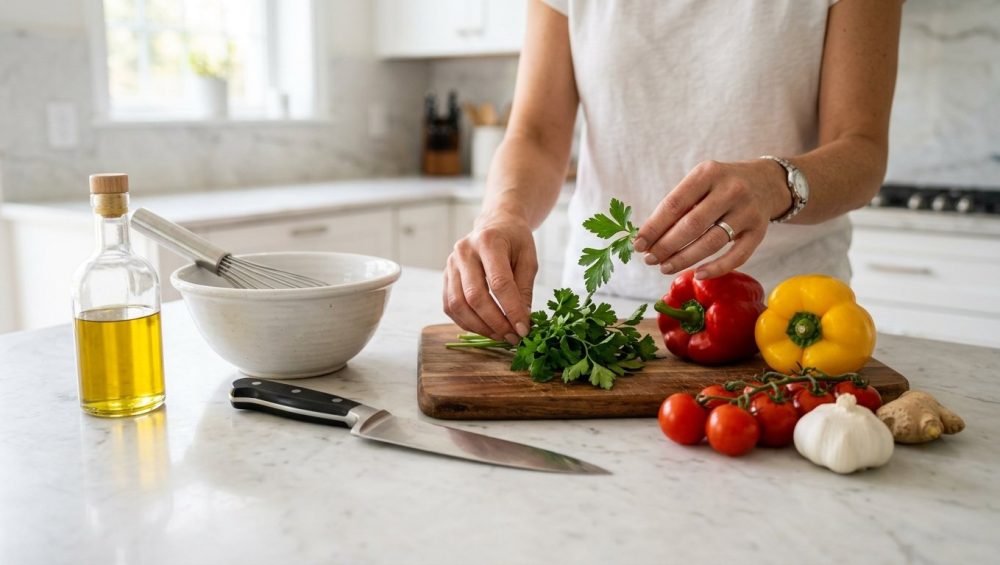
You need two cutting boards. First, a large, heavy wooden board (end-grain maple or walnut) for your vegetables, breads, and general prep. Wood is naturally antimicrobial and gentle on your knives. Second, you need a large, heavy-duty plastic cutting board specifically dedicated to raw meat and seafood. Plastic can be thrown into the dishwasher to be sanitized on high heat, preventing cross-contamination.
Cookware: Banishing Toxic Trash from Your Stove
We need to have a serious conversation about what you are heating your food in. As a home cook, I absolutely despise cheap, peeling, toxic kitchenware. Not only does it cook your food poorly, but it is actively harming your health and the environment.
The Non-Stick Nightmare (PFAS, PFOA, PTFE)
For decades, we have been sold the lie that we need a flimsy, $15 non-stick pan to cook an egg. Those traditional non-stick pans are coated in PTFE (polytetrafluoroethylene), famously known by the brand name Teflon, which belongs to a family of “forever chemicals” called PFAS. These chemicals do not break down in the environment or in your body.
The statistics are terrifying. Studies in 2023 and 2024 revealed that a staggering 79% of non-stick cooking pans tested were still coated with PTFE, despite being labeled “PFOA-free”. When these pans are heated past 500°F (260°C)—which happens very quickly if you preheat an empty pan—the coating begins to degrade and release toxic fumes linked to kidney cancer, testicular cancer, and thyroid disease. The risk is so severe that in 2025, Minnesota became the first U.S. state to outright ban the sale of nonstick cookware coated with PFAS, with several other states slated to enforce similar bans between 2026 and 2028.
Stop buying mystery metals that flake black specks into your scrambled eggs. You will replace a cheap non-stick pan every year. Instead, invest in the following lifetime pieces.
The Stainless Steel Skillet
A high-quality, fully-clad stainless steel skillet (where aluminum or copper is sandwiched between layers of steel for even heating) is the undisputed king of the kitchen. It is indestructible. You can sear a steak at 600 degrees, throw it into the oven, and then deglaze it with wine to make a pan sauce.
The “Sticking” Myth: Beginners hate stainless steel because they think everything sticks to it. It only sticks because you are using it wrong. You must utilize the Leidenfrost Effect. Heat the pan dry over medium heat for a few minutes. Drop a tiny splash of water into the pan. If the water sizzles and evaporates, it is not hot enough. If the water forms a perfect, cohesive bead that dances and glides around the pan like a mercury marble, your pan is perfectly preheated. Wipe the water out, add your oil, and then add your food. Your eggs and chicken will glide around the pan as if it were coated in Teflon.
The Cast Iron and Carbon Steel Workhorses
Cast iron is the original non-stick pan, and it will outlive you, your children, and your grandchildren. A standard 10-inch or 12-inch cast iron skillet costs about $25 and is perfect for achieving a restaurant-quality crust on a steak, baking cornbread, or shallow-frying chicken.
Do not be intimidated by the “seasoning” rules. Seasoning is just oil that has been baked onto the iron until it polymerizes into a hard, slick plastic-like surface. And let me bust the biggest culinary myth right now: You can use soap on cast iron. Modern dish soap does not contain the harsh lye that ruined seasoning in the 1800s. Wash your pan with soap and water, dry it completely on the stove over low heat, and rub a microscopic drop of oil into it before storing.
If cast iron is too heavy for your wrists, look into Carbon Steel. It is the darling of professional restaurant kitchens. It seasons exactly like cast iron, gets just as non-stick, but is significantly lighter and more responsive to temperature changes.
The Enameled Dutch Oven
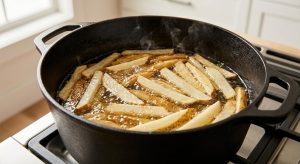
For weekend cooking projects—braising short ribs, making a massive batch of Sunday chili, or baking a crusty loaf of artisan bread—you need an enameled cast iron Dutch oven. The heavy cast iron retains heat perfectly, while the glass-enamel coating means you can cook highly acidic foods (like tomato sauce) for hours without stripping the seasoning or leaching metallic flavors into your food. Look for a 5.5 to 7-quart size.
The Weekday Shortcut: A Safe Non-Stick Alternative
I understand that on a Tuesday morning when you are rushing to work, you just want to fry two eggs without doing a science experiment. If you must have a non-stick pan, prioritize safety. Look for high-quality Ceramic-coated pans from reputable brands that explicitly publish their third-party testing data proving they are 100% free of PFAS, PTFE, lead, and cadmium. Be aware, however, that even the best ceramic pans lose their non-stick properties after a year or two of heavy use. Treat them gently: never use metal utensils, never put them in the dishwasher, and never heat them above medium heat.
Prep Tools and Gadgets: The “Actually Useful” List
Kitchen stores are graveyards of useless gadgets. You do not need a garlic press (it crushes the garlic into a bitter paste and is a nightmare to clean). You do not need an egg separator (use your hands or the eggshell). But you do need these highly functional, multi-purpose treasures.
Measuring Tools: Ditch the Cups, Get a Scale
If you are cooking savory food, measure with your heart. But if you are baking, you must measure with a digital kitchen scale. Measuring cups are wildly inaccurate. Depending on how tightly you pack a cup of flour, the weight can vary by up to 30%. That is the difference between a light, fluffy cake and a dense, heavy brick. A digital scale costs $15, eliminates the need to wash five different measuring cups, and guarantees perfect, replicable results every single time. Switch the unit to grams and never look back.
Mixing Bowls, Spatulas, and Tongs
Nesting Mixing Bowls: Buy a set of lightweight, stainless steel nesting bowls. Glass bowls are incredibly heavy, slippery when wet with oil, and will eventually shatter when you inevitably drop one. Stainless steel is cheap, light, and indestructible.
Silicone Spatulas: Buy seamless, one-piece silicone spatulas. If the head of the spatula detaches from the handle, throw it away—that crevice is harboring a disgusting amount of mold and bacteria. Silicone is heat-resistant up to 600°F, meaning you can use it to scramble eggs in a hot pan without melting plastic into your breakfast.
Tongs: Tongs are an extension of your hands. You want heavy-duty, spring-loaded stainless steel tongs. Get a 9-inch pair for standard pan work and a 12-inch pair for reaching into deep pots or grilling. If you use ceramic or enameled cookware, buy tongs with silicone tips to prevent scratching.
The Microplane Grater: The Secret Weapon
If I could only keep one gadget in my kitchen, it would be the Microplane classic zester. Originally designed as a woodworking tool, this rasp grater is the ultimate flavor-enhancer. Use it to zest lemons and limes without catching the bitter white pith. Use it to grate whole nutmeg over a cream sauce. Use it to turn a clove of garlic into a perfectly smooth paste that melts into a vinaigrette. Use it to shower a mountain of fluffy, cloud-like Parmesan cheese over a bowl of pasta. It is the cheapest way to make your food taste like it was prepared by a professional.
The Instant-Read Thermometer: Stop Guessing
There is a pervasive, terrifying myth that you can tell if a chicken breast is cooked by poking it with your finger and comparing it to the fleshy part of your palm. Unless you have calibrated your hand in a laboratory, this is nonsense. Stop guessing if you are going to give your dinner guests Salmonella.
Buy a high-quality, fast instant-read digital thermometer. Insert the probe into the thickest part of the meat. Chicken is safe at 165°F. A medium-rare steak is 130°F. Pork is perfectly safe (and much juicier) at 145°F.
The Magic of Carryover Cooking: Meat continues to cook after you take it off the heat. If you wait until your steak hits 135°F in the pan, it will rise to 145°F while it rests on the cutting board, resulting in a dry, gray, overcooked disaster. Pull your meat 5 to 10 degrees before your target temperature, tent it with foil, and let the residual heat finish the job perfectly.
Pantry Treasures: Ingredients That Fake Culinary Genius
You can have the best pans in the world, but if your pantry is stocked with stale spices and cheap oil, your food will taste flat. Building a smart pantry is about maximizing flavor with minimal effort.
Fats and Oils: The Foundation of Flavor
You need to understand the concept of a “smoke point.” This is the temperature at which an oil begins to burn, smoke, and release bitter, carcinogenic free radicals.
- High-Heat Oils (For Searing and Frying): Avocado oil, grapeseed oil, or canola oil. These have neutral flavors and high smoke points (above 400°F), making them perfect for searing a steak or roasting vegetables at high temperatures.
- Medium-Heat/Flavor Oils: Extra-virgin olive oil and butter. These burn easily. Use them for gentle sautéing, making salad dressings, or finishing a dish.
- Finishing Oils: A high-quality, robust extra-virgin olive oil or toasted sesame oil. Do not cook with these! They are expensive and heat destroys their complex, volatile flavor compounds. Drizzle them over a finished soup, a plate of pasta, or roasted vegetables right before serving.
The Acid Trip: Waking Up Your Food
If you taste a dish you have cooked and think, “This is missing something, but I don’t know what,” I can almost guarantee you it is not missing salt. It is missing acid. Acid brightens food, cuts through heavy fats, and makes flavors pop on your palate.
Keep a variety of vinegars on hand: Apple cider vinegar for pork and dressings, red wine vinegar for beef stews and robust salads, and rice vinegar for Asian-inspired dishes. But your greatest ally is the humble lemon. A squeeze of fresh lemon juice stirred into a rich chicken soup or a heavy cream sauce right before serving will elevate the dish from heavy and plodding to vibrant and professional.
Umami Bombs: The Depth Creators
Umami is the fifth basic taste (alongside sweet, sour, salty, and bitter). It translates roughly from Japanese as “pleasant savory taste.” It is that deep, meaty, mouth-watering quality that makes food irresistible. You can cheat your way to complex flavor by keeping “umami bombs” in your fridge and pantry.
- Soy Sauce and Fish Sauce: Not just for Asian cuisine. Add a splash of soy sauce to a beef stew or a dash of fish sauce to a tomato marinara. It will not make the dish taste like fish; it will just make the tomatoes taste incredibly rich.
- Tomato Paste: Buy it in a tube, not a can. You usually only need a tablespoon at a time. Squeeze it into your pan when sautéing onions and let it caramelize until it turns a deep rust color.
- MSG (Monosodium Glutamate): Let us banish the xenophobic, anti-science myths right now. MSG is perfectly safe. It is simply a sodium salt of glutamic acid, an amino acid naturally found in tomatoes, Parmesan cheese, and mushrooms. A tiny pinch of MSG in a savory dish will make it taste exponentially better.
Spices: Throw Out the Dusty Jars
If you received a pre-filled, rotating wooden spice rack as a wedding gift five years ago, throw the spices in the trash. Ground spices lose their volatile essential oils within six to eight months. You are currently seasoning your food with colored sawdust.
Buy spices in small quantities. Better yet, buy whole spices (like cumin seeds, coriander seeds, and black peppercorns) and grind them yourself in a cheap coffee grinder or mortar and pestle.
The Blooming Technique: Never sprinkle raw spices into a watery liquid like soup and expect maximum flavor. Spices contain fat-soluble flavor compounds. To unlock them, you must “bloom” the spices. Sauté your spices in oil or butter for 30 to 60 seconds until they become incredibly fragrant, then add your liquids. This technique will fundamentally change how your food tastes.
Salt: The Ultimate Enhancer
Table salt (the stuff in the round blue canister with the umbrella girl) is dense, heavily iodized, and often tastes metallic. It is very easy to over-salt your food with it.
Switch immediately to Diamond Crystal Kosher Salt. The crystals are hollow and pyramid-shaped. This means it is less dense by volume (a tablespoon of Diamond Crystal contains half the sodium of a tablespoon of table salt). It allows you to season your food aggressively and evenly with your fingers without accidentally ruining the dish. It is the industry standard in every professional kitchen on earth.
Time-Saving Weekday Appliances
Remember our core philosophy: Weekends are for elaborate culinary projects; weekdays are for survival and efficiency. While I hate single-use gadgets, I absolutely adore appliances that save me 45 minutes of prep time on a Wednesday night.
The Food Processor
If you are making a massive batch of salsa, pureeing hummus, or trying to hide vegetables in a pasta sauce for picky eaters, a food processor is indispensable. But its real magic lies in the attachment blades. Use the grating disc to shred a two-pound block of cheddar cheese in 10 seconds (pre-shredded bagged cheese is coated in anti-caking agents like cellulose that prevent it from melting smoothly). Use the slicing disc to perfectly slice three pounds of potatoes for a gratin in under a minute. It is your personal, high-speed sous-chef.
The Immersion Blender
Transferring boiling hot soup from a Dutch oven into a standard countertop blender is a recipe for third-degree burns and a kitchen coated in molten tomato puree. An immersion blender (or stick blender) allows you to puree soups, sauces, and refried beans directly in the pot they were cooked in. It saves you from washing a massive blender pitcher, and it can be rinsed clean under the tap in five seconds. You can also use it in a tall jar to make foolproof, thick, creamy mayonnaise from scratch in exactly 60 seconds.
The Multicooker (The Instant Pot)
I am not a fan of slow cookers (Crockpots) because they tend to boil meat into a gray, flavorless mush without developing any seared flavor. However, an electric pressure cooker (like the Instant Pot) is a weekday miracle.
Because it cooks food under high pressure, it raises the boiling point of water, allowing you to cook notoriously slow ingredients in a fraction of the time. You can cook unsoaked, dried black beans from scratch in 40 minutes. You can turn a tough, cheap chuck roast into fall-apart tender pulled beef in an hour. Furthermore, the stainless steel insert allows you to aggressively sear the meat on the “Sauté” function before pressure cooking, ensuring you do not lose out on flavor development.
Conclusion: Your Kitchen, Your Rules
Building a functional kitchen is not about spending thousands of dollars on shiny copper pots that you are too terrified to use. It is about being strategic. It is about banishing the toxic, peeling pans that are ruining your health, throwing away the dull knives that are threatening your fingers, and investing in a curated collection of durable, high-quality tools that empower you to cook with confidence.
The culinary world wants you to believe that cooking is an exclusive club. It is not. Armed with a sharp chef’s knife, a heavy stainless steel skillet, a digital thermometer, and a heavy pinch of kosher salt, you are entirely capable of producing food that rivals your favorite restaurant—and doing it for a fraction of the cost.
Stop being intimidated by the stove. Embrace the mistakes, learn how to preheat your pans, bloom your spices, and for the love of all that is holy, throw away that glass cutting board. Now get in the kitchen and make something spectacular. You’ve got this.